How to Address Coprophagia in Dogs Through Improved Digestion and Nutrient Absorption
You can stop your dog’s poop-eating by improving digestion and nutrient absorption. Add enzyme supplements with 30,000–60,000 HUT protease and 1,000–3,000 FIP lipase per meal to break down proteins and fats. Use enteric-coated probiotics with 1–5 billion CFUs of *Lactobacillus* and *Bifidobacterium* to restore gut balance. Feed highly digestible diets (≥85% ATTD) to reduce undigested nutrients in stool. Signs like greasy, pale feces suggest malabsorption. Remove waste within 30 minutes daily. There’s more to optimizing digestive health effectively.
Notable Insights
- Address underlying digestive disorders that impair nutrient breakdown and increase stool palatability.
- Supplement with digestive enzymes like protease, lipase, and amylase to enhance food breakdown.
- Administer probiotics daily to restore gut microbiome balance and support nutrient absorption.
- Feed a highly digestible diet with >85% digestibility to minimize undigested nutrients in feces.
- Remove feces within 30 minutes and maintain consistent feeding to reduce coprophagia triggers.
Why Digestion Is Behind Your Dog’s Poop-Eating
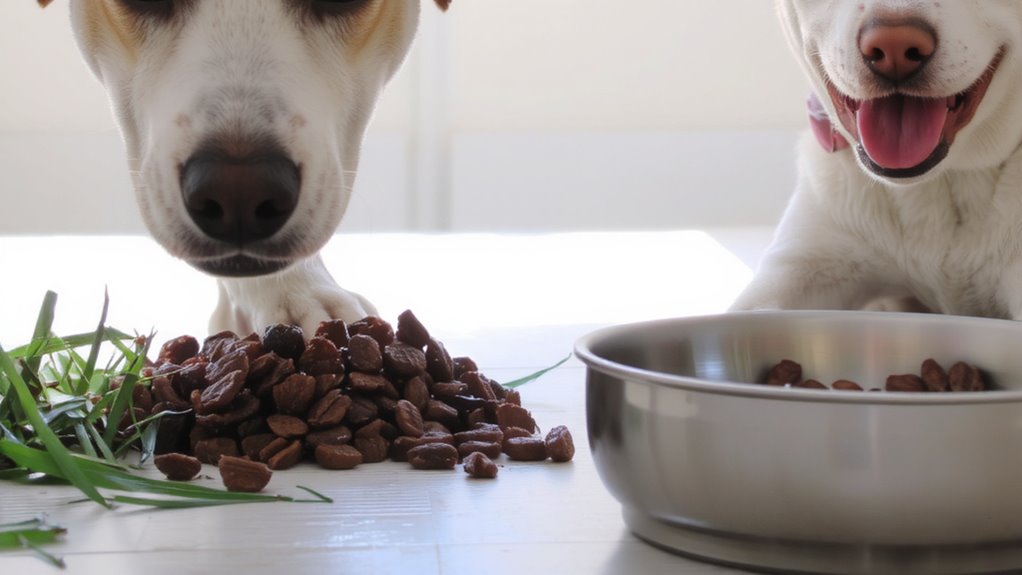
Digestion lies at the heart of your dog’s troubling habit of eating feces. Undigested nutrients in stool can trigger coprophagia. Digestive disorders impair enzyme activity, reducing nutrient breakdown. This leads to malabsorption, leaving feces rich in calories and fat. Your dog may eat poop to reclaim lost energy. Food intolerances worsen this by damaging the intestinal lining. Inflammation from lactose or gluten-like proteins disrupts absorption. Pancreatic insufficiency, a common digestive disorder, decreases lipase and protease output by up to 90%. That means undigested proteins and fats pass into stool. Fecal analysis often shows high fat content (over 15% dry matter) in affected dogs. Stool consistency suffers, too-loose or greasy feces signal maldigestion. These changes increase palatability to the dog. You must address the root cause: inefficient digestion. Correcting underlying issues reduces stool appeal. Nutrient recovery becomes less urgent for your pet.
Add Enzymes That Stop Dogs From Eating Poop
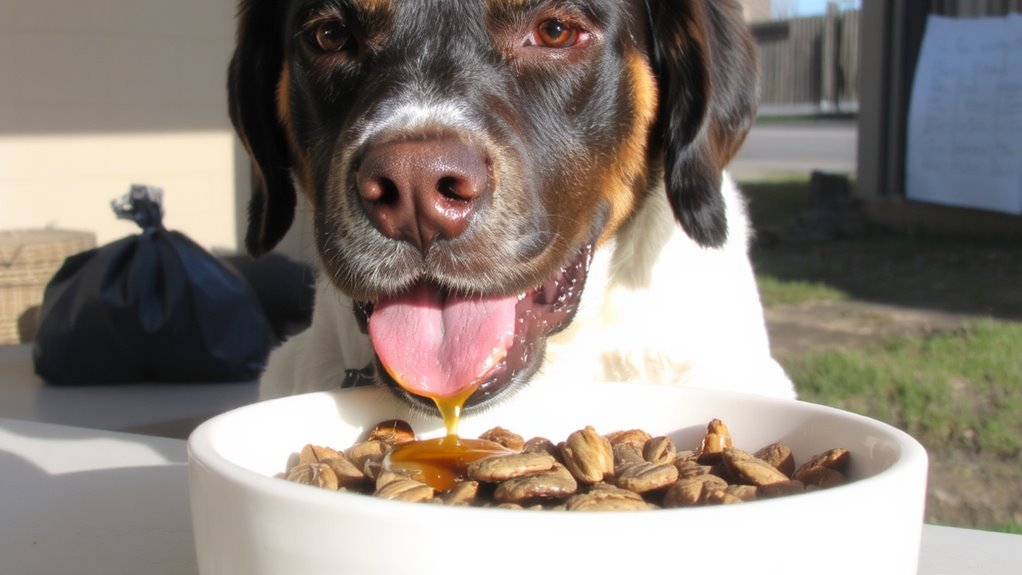
You can stop your dog’s poop-eating by tackling the root cause-poor digestion-with targeted enzyme support. Many dogs suffering from coprophagia have pancreatic insufficiency, meaning their pancreas doesn’t produce enough digestive enzymes. This leads to undigested nutrients in stool, making it smell like food and encouraging consumption. Supplementing with lab-verified digestive enzymes corrects this imbalance. These enzymes break down fats, proteins, and carbs so your dog absorbs nutrients properly. For best results, choose supplements backed by lab testing to ensure potency and efficacy.
| Enzyme Type | Function | Typical Dosage (per meal) |
|---|---|---|
| Amylase | Breaks down carbohydrates | 5,000–10,000 USP units |
| Protease | Digests proteins | 30,000–60,000 HUT units |
| Lipase | Processes fats | 1,000–3,000 FIP units |
| Cellulase | Aids fiber digestion | 500–1,500 CU units |
| Lactase | Breaks down dairy sugars | 500–1,000 ALU units |
Choose enteric-coated powders to survive stomach acid.
Use Probiotics to Fix Gut Health and Stop the Habit
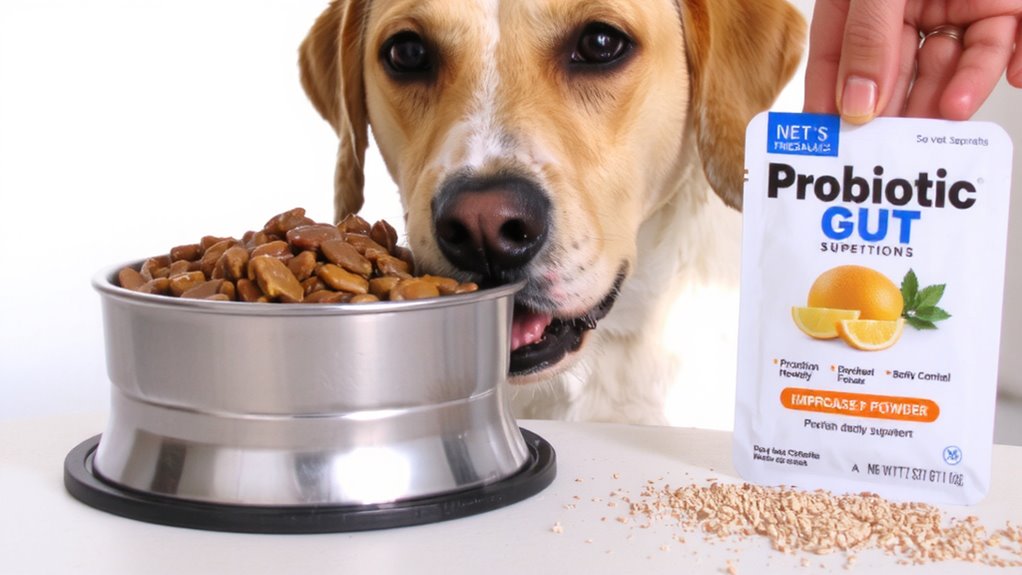
While enzyme support addresses nutrient breakdown, probiotics correct imbalances in your dog’s gut microbiome that may drive coprophagia. You need to restore gut balance to reduce nutrient deficiencies that trigger stool consumption. High-quality probiotics deliver live beneficial bacteria-typically 1–5 billion CFUs per dose-directly to the intestines. These microbes outcompete harmful pathogens and stabilize digestion. Look for strains like *Lactobacillus acidophilus* and *Bifidobacterium animalis*, proven to enhance microbial diversity. Increased microbial diversity improves immune function and short-chain fatty acid production, which supports colon health. Administer probiotics daily for at least four weeks to observe behavioral changes. Capsules or powders with enteric coatings guarantee bacterial survival through stomach acid. Consistent use promotes a resilient gut ecosystem, reducing the urge to eat feces. Proper storage at cool temperatures maintains potency. You’re not just adding bacteria-you’re rebuilding internal balance. Interactive chew toys for Goldendoodles can also help redirect oral fixation and reduce stress-related behaviors that may contribute to coprophagia.
Switch to Food That Prevents Poop-Eating
Choose a highly digestible, nutrient-dense dog food to reduce leftover nutrients in feces that attract coprophagia. Look for formulas with digestibility rates above 85%, measured by apparent total tract digestibility (ATTD). These foods minimize undigested proteins and carbs in stool, reducing its appeal. Incorporate taste enhancement carefully-some palatants increase meal acceptance without compromising digestion. Select brands using natural flavorings rather than fillers that hinder nutrient uptake. A broad food variety helps identify best-suited protein sources and formulations suited to your dog’s metabolism. Rotate between high-digestibility options like novel proteins (venison, salmon) or hydrolyzed diets to assess response. Guarantee each diet meets AAFCO guidelines for complete nutrition. Consistent feeding of appropriate food variety supports long-term adherence and reduces stool consumption. Avoid abrupt switches; shift over 7–10 days to maintain digestive stability. Monitor intake and stool changes closely during adaptation. For chicken-free options that support digestion, consider best chicken-free dog food picks.
Watch for Signs of Poor Nutrient Absorption
Could your dog’s coprophagia stem from what it’s not absorbing? Poor nutrient absorption can drive dogs to eat feces in an attempt to reclaim lost nutrients. Watch for signs like weight loss despite normal appetite, greasy stools, or excessive hunger. These symptoms may point to pancreatic insufficiency, where the pancreas fails to produce enough digestive enzymes. Without adequate enzymes, food passes through undigested. Malabsorption disorders, such as small intestinal bacterial overgrowth or inflammatory bowel disease, can also prevent nutrient uptake. Feces from dogs with these conditions often appear bulky, rancid, and pale due to undigested fat. Diagnosis typically requires blood tests, fecal analysis, and sometimes imaging. Treating the underlying cause-like enzyme supplementation for pancreatic insufficiency-improves digestion. Addressing malabsorption disorders restores nutrient uptake, reducing the instinct to consume feces. Early detection improves outcomes markedly.
Adopt Daily Habits to End Poop-Eating for Good
Often, stopping coprophagia means building consistent daily routines that remove opportunity and reinforce better behaviors. Implement behavioral training using immediate redirection and positive reinforcement when your dog ignores feces. Pair this with environmental enrichment such as puzzle feeders and chew toys to reduce boredom, a key motivator. Daily cleanup is critical-remove feces within 30 minutes, as dogs prefer fresher material. Establish fixed feeding times to regulate digestion and improve nutrient absorption, decreasing the drive to seek nutrients from waste.
| Strategy | Recommended Frequency |
|---|---|
| Behavioral Training Sessions | 2x daily, 5–10 minutes |
| Yard Cleanup | Immediately after defecation |
| Environmental Enrichment Rotation | New toy or puzzle every 48 hours |
Consistency guarantees habit retention. Dogs respond best when routines align with natural foraging cycles and digestive schedules.
On a final note
You can stop coprophagia by improving your dog’s digestion and nutrient absorption. Add digestive enzymes like amylase, protease, and lipase to meals-these break down food more completely, reducing undigested matter in stool. Use probiotics with at least 10 billion CFUs daily, favoring strains like *Lactobacillus acidophilus* and *Bifidobacterium animalis* to balance gut flora. Feed highly digestible, species-appropriate diets with >85% nutrient bioavailability. Pick up waste immediately to remove temptation.