The Role of Vitamin B12 in Treating Malabsorption in Dogs
Vitamin B12 treats malabsorption by restoring cellular function dogs need for energy and nerve health. Your dog’s body can’t absorb B12 when gut inflammation or disease damages the ileum or causes bacterial overgrowth. Without enough cobalamin, even a good diet won’t prevent weight loss or neurological issues. Injections of cyanocobalamin (250–500 µg/kg weekly) bypass absorption problems, correcting levels in 6–8 weeks. You’ll see improvement in stool and energy sooner. There’s more to weigh when choosing the right treatment path.
Notable Insights
- Vitamin B12 is essential for cellular metabolism, red blood cell formation, and neurological function in dogs with malabsorption disorders.
- Gut inflammation or damage impairs B12 absorption, especially in the ileum, worsening malabsorption and nutrient deficiencies.
- Conditions like SIBO, pancreatic insufficiency, and lymphangiectasia reduce B12 availability despite adequate dietary intake.
- Injectable B12 bypasses gut absorption issues, providing effective correction in deficient dogs with gastrointestinal disease.
- Serum B12 levels should be monitored monthly, with supplementation continued until concentrations exceed 350 ng/L.
What Low B12 Does to Your Dog’s Health
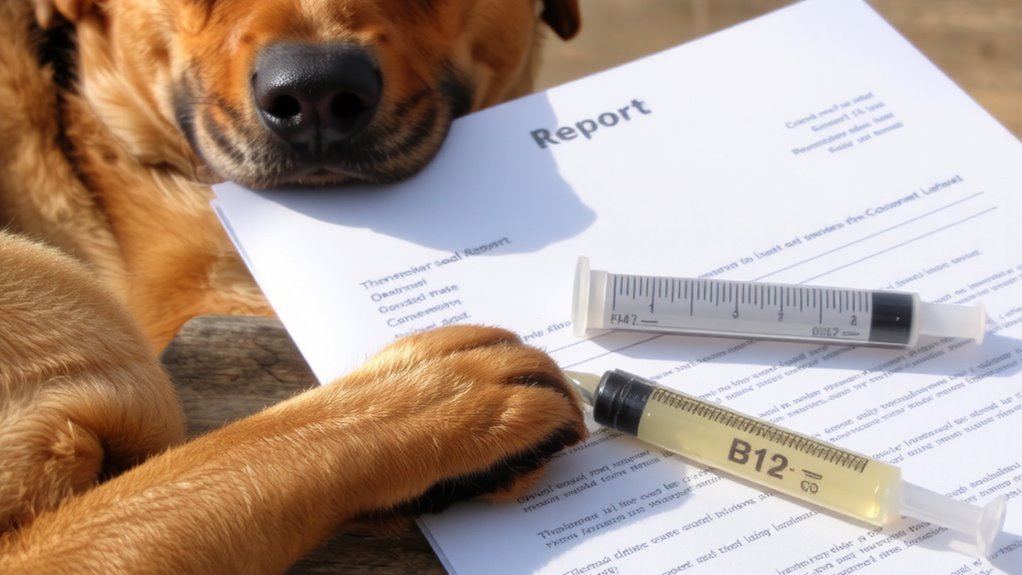
Ever wonder why your dog seems sluggish despite eating well? Low vitamin B12 is often the culprit. Vitamin B12, or cobalamin, is essential for DNA synthesis, red blood cell formation, and neurological function. When levels drop, your dog may exhibit neurological symptoms like ataxia, head tilt, or seizures due to impaired nerve conduction. These occur because B12 is critical for maintaining the myelin sheath that insulates nerves. Concurrent weight loss is common, even with normal food intake, because B12 deficiency disrupts cellular metabolism and energy production. Without adequate B12, enterocytes in the small intestine cannot regenerate properly, worsening malabsorption. Serum concentrations below 250 ng/L confirm deficiency. Left untreated, the condition progresses, leading to severe lethargy, anemia, and irreversible neural damage. B12 supplementation, typically via intramuscular injection at 250–500 µg/kg weekly, corrects deficiency and restores metabolic function effectively.
Why Gut Problems Cause B12 Deficiency in Dogs
Malabsorption isn’t just a digestive issue-it’s often the root of vitamin B12 deficiency in dogs. When gut inflammation occurs, it damages the ileum, the primary site of B12 absorption. Inflamed intestinal lining reduces the number of functional receptors that bind cobalamin, limiting uptake. Gut bacteria overgrow in damaged areas, creating nutrient competition; harmful microbes consume available B12 before your dog’s intestines can absorb it. Conditions like small intestinal bacterial overgrowth (SIBO) exacerbate this theft of essential micronutrients. Additionally, enterocyte dysfunction impairs intrinsic factor production, further decreasing B12 assimilation efficiency. The result is a persistent deficiency, even with adequate dietary intake. Structural and functional gut damage must be addressed to restore proper absorption. Correcting inflammation and microbial imbalances is critical to ensuring that supplemental or dietary B12 reaches systemic circulation where it supports neurological function and red blood cell formation.
Top Diseases That Block B12 Absorption
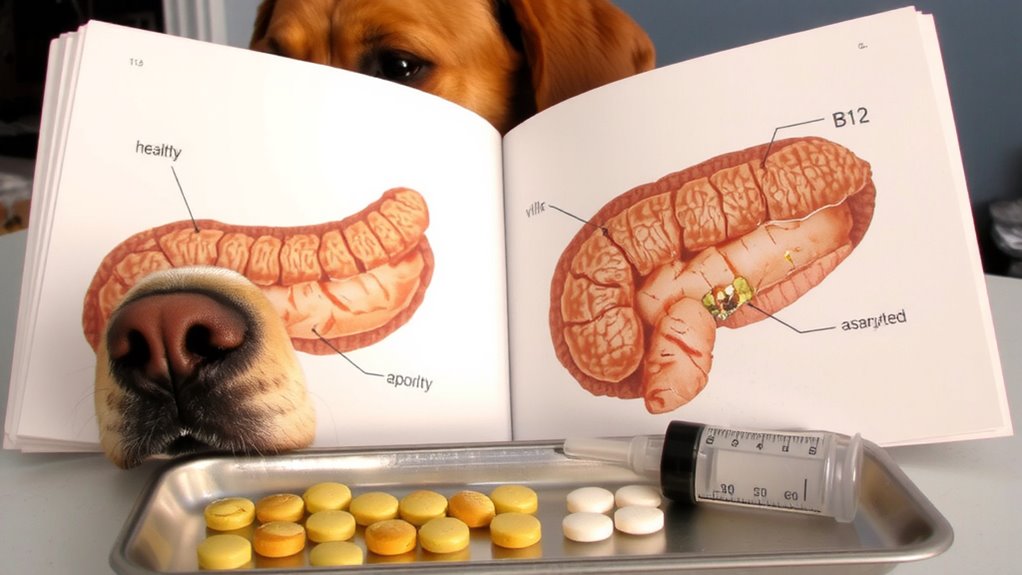
A malfunctioning gut can act like a broken gate-keeping essential nutrients out even when they’re right in front of it. In dogs, several diseases disrupt B12 absorption. Pancreatic insufficiency reduces enzyme output, impairing food breakdown and B12 release. Small intestinal bacterial overgrowth (SIBO) lets bacteria consume B12 before the dog can absorb it. Chronic enteropathies damage the intestinal lining, limiting uptake.
| Disease | Primary Impact on B12 |
|---|---|
| Pancreatic insufficiency | Lacks proteases to free B12 from food proteins |
| Small intestinal bacterial overgrowth | Bacteria scavenge available B12 |
| Lymphangiectasia | Structural damage to absorptive villi |
| Enteritis | Inflammation reduces transporter function |
| Ileal resection | Surgical loss of primary B12 absorption site |
Each condition directly interferes with B12 uptake in the distal ileum.
How Vets Test for B12 Deficiency in Dogs
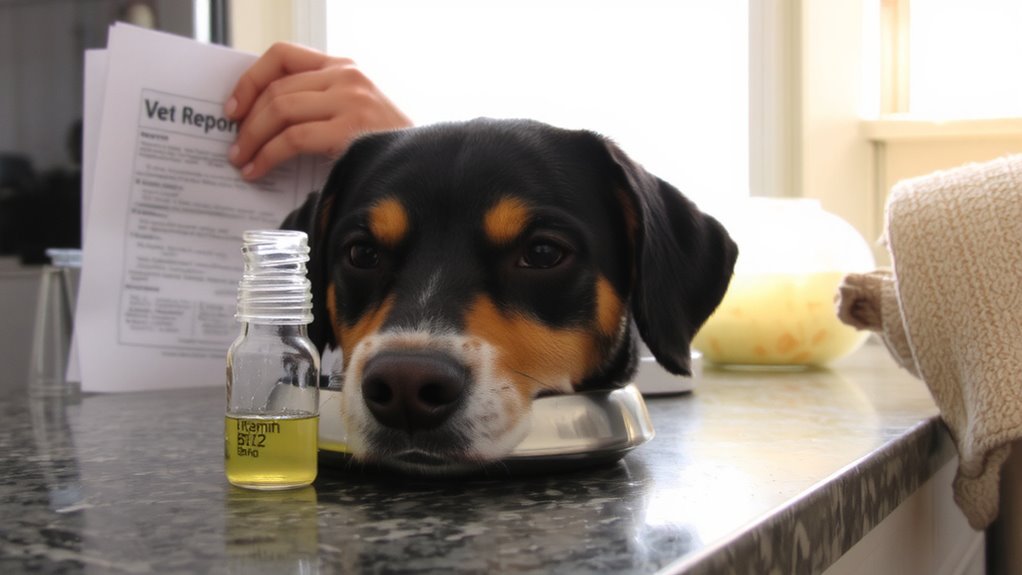
How do veterinarians confirm a B12 deficiency when gut disease is suspected? They rely on blood tests to measure serum cobalamin levels. A result below 250 ng/L usually indicates deficiency, though some dogs show clinical signs even at 300 ng/L. Blood tests are essential because symptoms mimic other conditions. Deficiency often stems not from lack of dietary sources but from impaired absorption due to intestinal damage. Even if your dog eats food rich in B12-like liver, meat, or fish-their diseased gut may fail to absorb it. Testing also includes ruling out other malabsorption causes with fecal exams and additional panels. Early detection via blood tests improves long-term outcomes. The test requires only a small serum sample, processed via competitive chemiluminescent immunoassay for accuracy. Confirming deficiency guides therapy decisions, ensuring your dog receives needed support before irreversible damage occurs.
B12 Supplements for Dogs: Injections vs. Oral
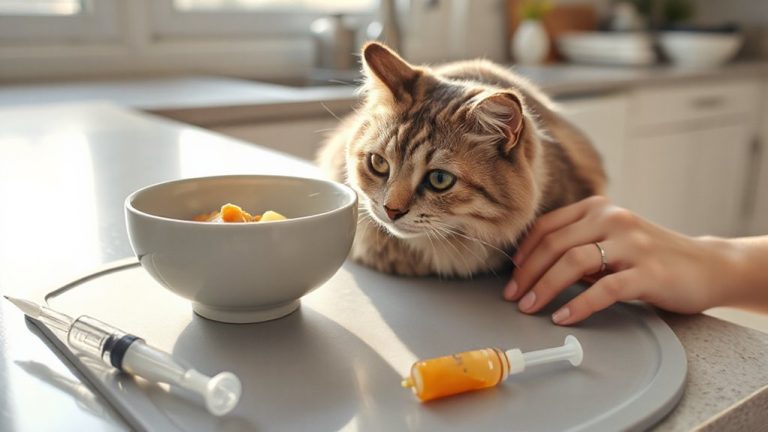
Once a blood test confirms low cobalamin levels, your vet will recommend supplementation to restore B12 stores. Injections are often preferred initially due to reliable absorption, especially in dogs with severe malabsorption. Oral supplements work for maintenance but depend on residual gut function. Dosage timing is critical: injectable cyanocobalamin is typically given every 7 days for 6 weeks, then tapered. Oral doses require consistent daily administration. Improper supplement storage degrades potency-keep liquids refrigerated and tablets away from light. Below are common B12 forms:
| Type | Route | Storage Requirement |
|---|---|---|
| Cyanocobalamin | Injection | Refrigerated, avoid freezing |
| Methylcobalamin | Oral | Cool, dry place |
| Hydroxocobalamin | Injection | Light-protected vials |
| Adenosylcobalamin | Oral | Room temperature, sealed |
Tracking Your Dog’s B12 Recovery at Home
Why does your dog seem sluggish weeks after starting B12 supplementation? B12 recovery is gradual, especially with malabsorption. Monitor your dog’s feeding schedule closely-consistent intake supports nutrient absorption and reflects gastrointestinal stability. Behavioral changes, such as increased activity or improved appetite, indicate rising serum B12 levels. Early improvements may appear in 2–3 weeks, but full correction often takes 6–8 weeks. Use a daily log to record food intake, stool quality, and energy levels. Serum B12 concentrations below 250 pg/mL suggest deficiency; recheck levels after one month. Subcutaneous injections (e.g., 1,000 mcg cyanocobalamin weekly) often yield faster results than oral forms. Oral supplements require consistent administration with meals to enhance uptake. Adjust dosing only under veterinary guidance. Tracking offers objective data, ensuring treatment efficacy and timely intervention if progress stalls. Precision matters-small shifts in behavior or feeding patterns can signal biochemical recovery.
On a final note
Your dog’s B12 levels directly impact energy and neurological function. Without adequate cobalamin, cellular metabolism slows, impairing gut and nerve health. Gut diseases like EPI or IBD disrupt absorption, requiring supplementation. Vets measure serum B12 to confirm deficiency. Injections deliver 250–1,000 mcg subcutaneously weekly, ensuring reliable uptake. Oral forms-500–1,500 mcg daily-work only with intact ileal receptors. Monitor response via symptom improvement and follow-up blood tests at 6–8 weeks.