How Fermented Foods Can Support Digestive Wellness in Dogs – With Caution
Fermented foods support your dog’s digestive wellness by delivering live probiotics like *Lactobacillus acidophilus* and *Bifidobacterium animalis*. These microbes enhance gut balance, improve nutrient absorption, and produce short-chain fatty acids that nourish colon cells. Safe options include plain yogurt (1–2 tbsp per 20 lbs) and kefir (1–2 oz per 20 lbs). Avoid high-sodium or allergenic varieties. Commercial products guarantee 10^8 to 10^9 CFUs per gram with pathogen testing. You’ll find precise guidelines for each fermented food next.
Notable Insights
- Fermented foods like yogurt and kefir introduce beneficial probiotics that support a healthy gut microbiome in dogs.
- Probiotic strains such as *Lactobacillus* and *Bifidobacterium* help improve digestion and nutrient absorption.
- Short-chain fatty acids from fermentation nourish gut cells and maintain optimal intestinal pH.
- Commercial fermented products are safer due to pathogen testing and controlled fermentation conditions.
- Introduce fermented foods gradually and avoid those with garlic, onions, or high sodium to prevent adverse reactions.
What Are Fermented Foods for Dogs?

A small but growing number of pet owners are introducing fermented foods into their dog’s diet, often to support digestive health. Fermented foods contain live microorganisms produced through controlled microbial breakdown of carbohydrates. These include fermented vegetables, kefir, yogurt, and specially formulated dog chews with probiotic strains like *Lactobacillus acidophilus* and *Bifidobacterium animalis*. The fermentation process enhances nutrient bioavailability and supports the gut microbiome, the community of beneficial bacteria essential for immune function and digestion. However, food safety is critical-homemade ferments risk contamination with harmful bacteria like *Listeria* or *E. coli*. Commercially prepared fermented dog foods follow strict safety protocols, including pH monitoring and pathogen testing, ensuring viable colony-forming units (CFUs) between 10^8 and 10^9 per gram. Always choose products with clear labeling, refrigeration requirements, and expiration dates to maintain microbial efficacy and safety.
How Fermented Foods for Dogs Improve Digestion
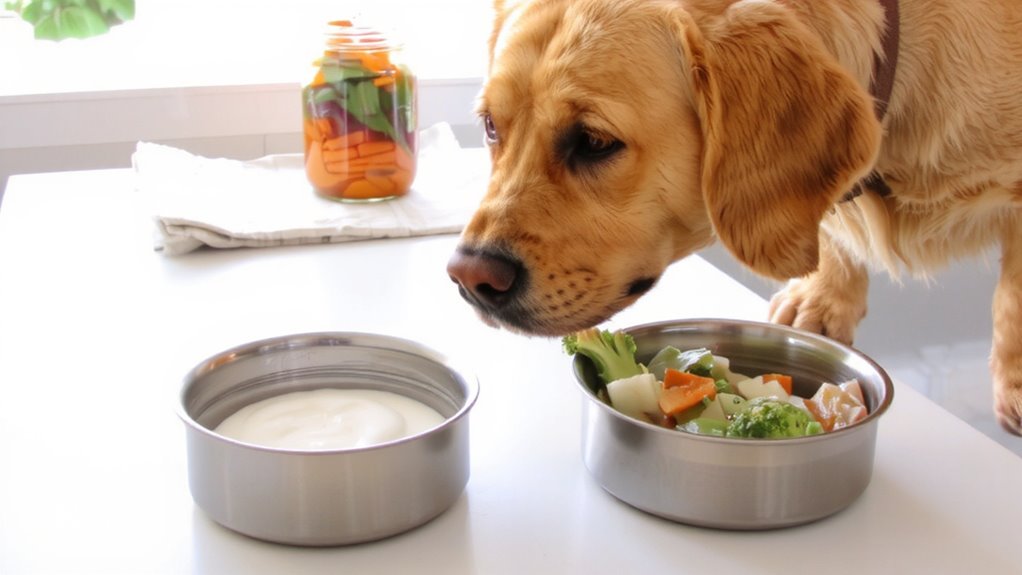
Tiny helpers in fermented foods go to work the moment they hit your dog’s gut. These beneficial bacteria directly support your dog’s gut microbiome, enhancing microbial balance and suppressing harmful pathogens. A stable gut microbiome improves nutrient absorption and reduces digestive discomfort. Fermented foods also boost enzyme activity, breaking down proteins, fats, and carbohydrates more efficiently. Increased enzyme activity means less undigested food reaches the colon, reducing gas and bloating. Probiotics in fermentation-like Lactobacillus and Bifidobacterium strains-colonize the intestinal lining, reinforcing gut barrier function. This colonization lowers intestinal inflammation and supports immune regulation. Short-chain fatty acids (SCFAs), such as acetate and butyrate, are byproducts of fermentation that nourish colonocytes and maintain ideal pH. These changes promote consistent stool quality and digestive resilience. You’ll likely notice improved bowel movements and reduced digestive upsets over time. Always introduce fermented foods gradually to avoid overwhelming the system.
Best Fermented Foods for Dogs

You’ve probably seen your dog eyeing your yogurt or sauerkraut with curiosity-and for good reason, since some fermented foods can support canine health when chosen carefully. Fermented yogurt benefits include live probiotics like Lactobacillus acidophilus, which aid gut flora balance. Follow kefir feeding tips: start with 1 tsp per 10 lbs of body weight daily, using plain, unsweetened varieties. Below are top fermented options:
| Food | Probiotic Strains | Serving Size (per 20 lbs dog) |
|---|---|---|
| Plain yogurt | L. acidophilus, Bifidobacterium | 1–2 tbsp |
| Kefir | L. kefiri, Saccharomyces | 1–2 oz |
| Raw sauerkraut | Leuconostoc, L. plantarum | 1 tsp |
| Miso (low-sodium) | L. reuteri, L. casei | ½ tsp (sparingly) |
| Fermented fish | L. brevis, L. fermentum | 1 small piece |
Choose organic, additive-free products to maximize microbial viability and digestive support.
Risks of Fermented Foods for Dogs
While fermented foods offer probiotic benefits, they also carry risks that require careful consideration. Some dogs experience allergic reactions to ingredients in fermented products, such as dairy or soy, triggering symptoms like itching, swelling, or gastrointestinal upset. These responses vary by breed and sensitivity level. Fermented foods may also harbor bacterial contamination, especially if improperly prepared or stored. Pathogens like *Listeria monocytogenes* or *E. coli* can proliferate in low-acid fermentations, posing serious health threats. Homemade ferments are at higher risk due to uncontrolled fermentation conditions. Commercial products typically undergo safety testing, including pH monitoring below 4.6 to inhibit pathogen growth. Always check expiration dates and storage instructions. Introducing contaminated or allergenic foods can disrupt gut balance rather than support it. Vigilance minimizes these dangers. For dogs with yeast infections, choosing the right best probiotics for dogs is essential to restore healthy gut flora without exacerbating underlying conditions.
How to Safely Introduce Fermented Foods to Your Dog
Start with a small amount of a single-ingredient fermented product, such as plain, unsweetened kefir or well-tested fermented vegetables, to assess your dog’s tolerance. Portion control is essential-begin with 1 teaspoon for small dogs or 1 tablespoon for large breeds, mixed into regular food. Monitor for 48 hours for gas, diarrhea, or vomiting. Introduce only one new fermented item at a time to guarantee ingredient safety. Avoid products with garlic, onions, xylitol, or excessive sodium. Choose refrigerated, unpasteurized options to preserve live cultures. Gradually increase frequency to once daily if well-tolerated. Probiotic colony-forming units (CFUs) should range between 100 million and 1 billion per serving. Never replace balanced meals with fermented foods. Use them as supplements only. Consistency and caution support digestive adaptation without overwhelming the gastrointestinal system.
On a final note
You should introduce fermented foods carefully to support your dog’s digestion. These foods contain live probiotics, such as Lactobacillus and Bifidobacterium species, which can balance gut microbiota. Typical doses range from 10⁶ to 10⁹ CFUs per meal. However, excessive amounts may cause gas or diarrhea. Always choose plain, additive-free products. Start with 1/4 teaspoon daily for small dogs, monitor tolerance, and consult your veterinarian to align with your dog’s dietary needs.