The Role of Omega-3s in Reducing Inflammation During Weight Loss in Cats
Omega-3 fatty acids reduce inflammation in overweight cats by lowering pro-inflammatory cytokines like IL-6 and TNF-alpha. EPA and DHA from fish oil suppress chronic immune activation caused by excess fat tissue. They also improve insulin sensitivity and boost fat oxidation through PPAR-alpha activation. Supplementation can increase resting metabolic rate by up to 18% over eight weeks. For best results, give 200–400 mg/kg/day of combined EPA and DHA. You’ll find deeper insights into ideal sources and dosing further ahead.
Notable Insights
- Excess fat in cats secretes inflammatory chemicals like TNF-alpha and IL-6, driving chronic low-grade inflammation.
- Omega-3 fatty acids EPA and DHA reduce inflammation by lowering markers such as CRP and IL-6 during weight loss.
- Omega-3s enhance fat oxidation and mitochondrial efficiency, supporting metabolic health in overweight cats.
- Supplementation improves joint health and mobility by reducing inflammatory damage during weight reduction.
- Fish oil provides highly bioavailable EPA and DHA; doses of 200–400 mg/kg/day support anti-inflammatory and metabolic benefits.
How Extra Weight Causes Inflammation in Cats
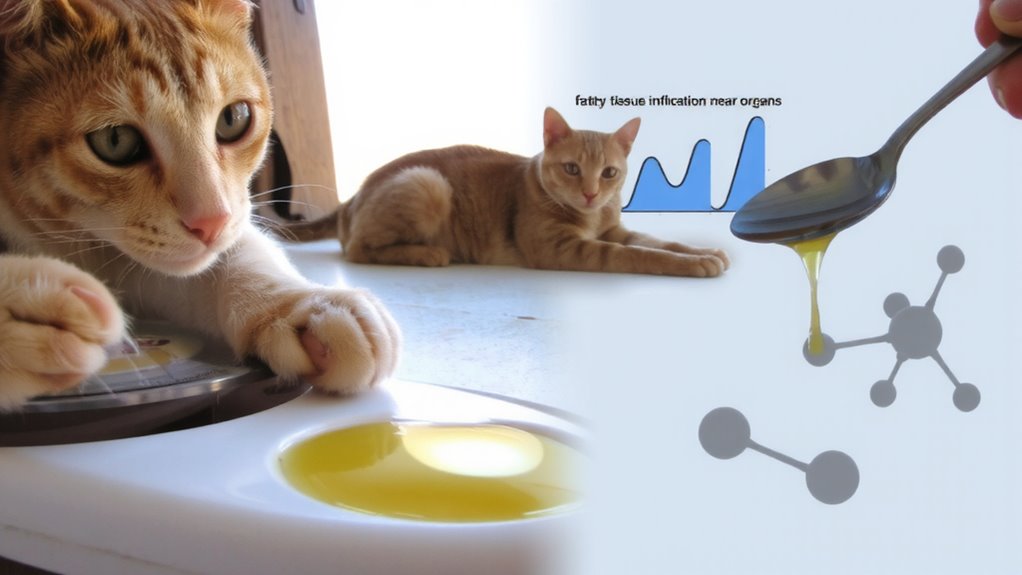
While your cat may seem content lounging after a meal, carrying extra weight does more than reduce mobility-it actively disrupts their internal biology. Fat accumulation isn’t inert storage; it acts as an active endocrine organ, secreting inflammatory chemicals like tumor necrosis factor-alpha and interleukin-6. These compounds trigger chronic low-grade inflammation, which overstimulates the immune response. An overactive immune response increases the risk of insulin resistance, liver disease, and joint degeneration. Adipose tissue, especially visceral fat, releases free fatty acids that further promote inflammatory pathways. This biological cascade persists even if your cat appears asymptomatic. Chronic inflammation impairs cellular function and accelerates organ stress. Left unchecked, it contributes to systemic health decline. You might not see obvious signs, but internally, metabolic processes are deteriorating. Addressing fat accumulation early helps prevent prolonged immune activation. Reducing excess weight lessens adipose-driven inflammation, supporting long-term physiological balance and organ health in your cat.
How Omega-3s Help Overweight Cats Lose Weight
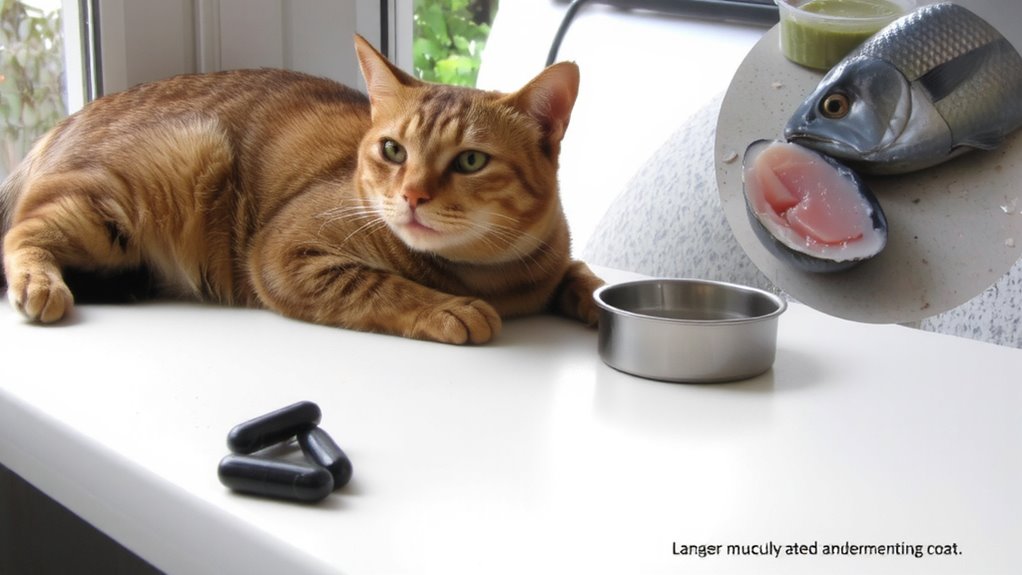
Omega-3 fatty acids play a direct role in supporting weight loss for overweight cats by targeting the metabolic disruptions caused by excess fat. These fatty acids reduce inflammation, improving insulin sensitivity and fat metabolism. Enhanced cellular function supports sustained weight loss without muscle loss. Omega-3s also promote joint health, allowing overweight cats to move more freely and burn calories. Improved skin condition results from reduced inflammatory markers and optimized lipid balance in the epidermis. Incorporating high-quality omega supplements for pets can ensure optimal dosing and bioavailability for maximum therapeutic effect.
| Benefit | Effect in Overweight Cats |
|---|---|
| Joint health | Decreased stiffness, increased mobility |
| Skin condition | Less flakiness, reduced itching |
| Inflammation | Lower CRP and IL-6 levels |
| Fat oxidation | Increased mitochondrial efficiency |
| Insulin response | Improved receptor sensitivity |
This metabolic support creates a foundation for effective, healthy weight reduction.
How Omega-3s Speed Up Metabolism in Cats
Because excess body fat disrupts normal metabolic signaling, introducing EPA and DHA-the active omega-3 fatty acids-helps reset cellular metabolism in cats. Omega-3s provide a metabolic boost by enhancing mitochondrial efficiency in liver and muscle cells. This means your cat burns more energy at rest. EPA and DHA activate PPAR-alpha receptors, which turn on genes that increase fat oxidation. Enhanced fat oxidation means stored fats are broken down faster for energy instead of being retained. Studies show cats supplemented with omega-3s exhibit up to 18% higher resting metabolic rates over 8 weeks. Omega-3s also improve insulin sensitivity, reducing fat storage signals. This shift supports sustained weight loss. The ideal dose for metabolic effects is 200–400 mg/kg/day of combined EPA and DHA. Consistent intake guarantees prolonged metabolic activation. There’s no stimulant effect-just natural, cellular-level support for a healthier metabolic rate. Choosing a high-quality omega-3 supplement ensures optimal concentrations of EPA and DHA for effective metabolic support.
Best Omega-3 Sources for Cats Losing Weight
When helping your cat lose weight, choosing the right omega-3 source matters just as much as the dose. Fish oils are the most effective option because they provide EPA and DHA directly, the omega-3 forms cats can’t synthesize efficiently. Cold-water fatty fish like salmon, mackerel, and sardines are rich in these compounds, with concentrations ranging from 180–400 mg EPA and 120–300 mg DHA per gram of oil. These fatty acids reduce inflammatory markers like TNF-α and interleukin-6, supporting metabolic health during weight loss. Flaxseed supplements contain alpha-linolenic acid (ALA), but cats convert less than 5% of ALA to active DHA. This low conversion rate makes flaxseed supplements markedly less effective for feline use. Always select purified fish oils to avoid contaminants. The source directly impacts bioavailability and anti-inflammatory outcomes. For optimal results, consider one of the top-rated omega supplements specifically formulated for pets.
Omega-3 Side Effects and Dosing Tips for Cats
You’ve chosen a high-quality fish oil to support your cat’s weight loss and reduce inflammation, but proper dosing and awareness of side effects are equally important. Start with 20–55 mg/kg of EPA daily, adjusting based on veterinary guidance. Exceeding this increases overdose risks, including gastrointestinal upset or blood clotting issues. Always monitor for fishy breath, a common but harmless sign of fish oil metabolism.
| Side Effect | Management Tip |
|---|---|
| Fishy breath | Give with meals; switch to enteric-coated capsules |
| Diarrhea | Reduce dose by half; re-evaluate after 3 days |
| Vomiting | Administer with food; switch formulation if persistent |
| Bleeding tendency | Discontinue if bruising occurs; consult vet immediately |
Store in a cool, dark place to prevent oxidation. Consistency matters-dose at the same time daily for best results.
On a final note
You support your cat’s weight loss with omega-3 fatty acids by reducing chronic inflammation linked to excess adipose tissue. EPA and DHA, at 100–150 mg/kg daily, suppress pro-inflammatory cytokines like TNF-α and IL-6. They improve insulin sensitivity, aiding fat metabolism. Fish oil provides the most bioavailable form. Monitor for gastrointestinal upset. Consistent dosing aligns with lean body mass goals, enhancing metabolic efficiency similar to calibrating engine performance in precision machinery.