How to Maintain Coat Health Between Professional Grooming Sessions
Brush your dog two to three times weekly with a slicker brush and metal comb to prevent mats and reduce shedding by up to 90%. Use a de-shedding tool with 1.5-inch curved stainless steel blades for dense coats. Always apply detangling balm to minimize breakage. Bathe with a pH-balanced shampoo (6.2–7.5), rinse thoroughly, then apply a leave-in conditioner with glycerin or panthenol from mid-length to ends. Clean paws after every walk and spot-check weekly for ticks, especially in ears, groin, and between toes. Perform belly baths weekly using a mild shampoo and soft cloth, rinsing with water at 30–35°C to prevent dermatitis. Conditioner helps maintain light reflection for lasting shine. For long-haired breeds, use hydrolyzed protein shampoos to strengthen the coat. Avoid human shampoo-it disrupts the acid mantle due to lower pH. Inspect skin monthly under natural light for early signs of irritation or alopecia. A consistent routine keeps your dog’s coat healthy and reduces indoor debris by up to 70%. You’ll find precise product choices make all the difference.
Notable Insights
- Brush your dog two to three times weekly with a slicker brush and metal comb to prevent mats and reduce shedding.
- Use a pH-balanced shampoo (6.2–7.5) suited to your dog’s coat type during baths to protect skin and coat integrity.
- Inspect skin and coat after walks, checking for ticks, debris, or irritation in ears, groin, and between toes.
- Apply a leave-in conditioner with humectants to mid-lengths and ends to maintain moisture and enhance shine.
- Clean paws after each walk and perform weekly belly baths to prevent irritation and reduce indoor contamination.
Brush Weekly to Prevent Mats and Shedding
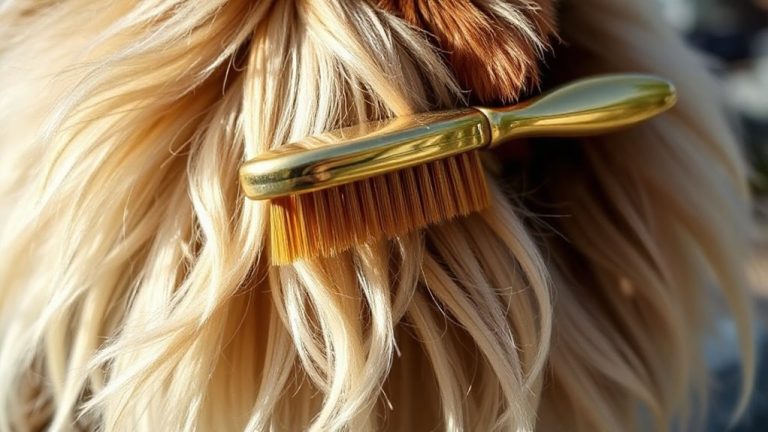
Regularly brushing your dog’s coat each week is essential for preventing mats and minimizing shedding. Brush frequency should be at least two to three times weekly for long- or double-coated breeds; short-haired breeds benefit from weekly sessions. Consistent coat detangling prevents painful mating close to the skin, which can lead to irritation or infection. Use a slicker brush followed by a metal comb to effectively remove loose undercoat and tangles. For thick coats, a de-shedding tool with stainless steel edges-such as one with 1.5-inch curved blades-reduces shedding by up to 90% when used properly. Begin at the skin and work outward in 1-inch sections to guarantee thoroughness. Detangling balm can ease friction and reduce breakage during brushing. Proper technique and tools improve coat texture and distribute natural oils. Weekly brushing maintains coat integrity between grooming appointments. Top-rated tools include the Top Doodle Detanglers for effectively managing tough knots and maintaining a smooth, tangle-free coat.
Choose the Right Shampoo for Coat Health
While your dog’s coat type plays a key role in selecting the right shampoo, understanding the product’s pH balance is just as important. Human shampoos average a pH of 5.5, while dogs require a neutral to slightly alkaline pH between 6.2 and 7.5. Using the wrong pH balance disrupts the skin’s acid mantle, increasing infection risk. If your dog has a double coat, choose a shampoo with moisturizing agents like oatmeal or ceramides to prevent dryness. For oily or sebum-prone coats, opt for clarifying shampoos with gentle sulfates (e.g., sodium lauryl sulfate below 5%). Long-haired breeds benefit from detangling shampoos with hydrolyzed proteins. Always rinse thoroughly-residue alters pH and attracts dirt. Matching the shampoo to your dog’s specific coat type guarantees effective cleaning without stripping natural oils. This precision maintains coat integrity and skin health between grooming appointments. For dogs with allergies or itchy skin, consider using a vet-recommended allergy and itch relief shampoo to soothe irritation and support skin barrier function.
Spot Ticks, Dirt, and Irritation After Walks
After each walk, your dog’s coat and skin are exposed to environmental contaminants like ticks, debris, and potential irritants that can compromise coat health even if you’re using the right shampoo. Perform thorough tick checks within two hours of returning home-ticks need 24–48 hours of attachment to transmit most pathogens. Use a fine-tipped tweezer or tick removal tool, grasping within 2 mm of the skin to guarantee complete extraction. During skin inspection, part the fur systematically, focusing on ears, groin, and between toes-common parasite harborage sites. Look for erythema, papules, or foreign material embedded in the dermal layer. Early detection prevents infection. Conduct weekly skin inspections under natural light, checking for excessive scaling, matting, or localized alopecia. A healthy coat reflects epidermal integrity. Immediate removal of burrs, foxtails, or fecal matter reduces mechanical irritation and microbial colonization.
Use Leave-In Conditioner for Shine and Softness
A sleek, glossy coat starts with moisture retention at the cuticle level. You can achieve this by applying a leave-in conditioner formulated with humectants like glycerin or panthenol. These ingredients bind water to the hair shaft, ensuring consistent coat hydration. Spray or evenly distribute 3–5 ml of product from mid-length to ends, avoiding the skin to prevent clogging pores. The conditioner reduces friction between hair strands, enhancing softness and decreasing breakage during detangling techniques. Use a wide-tooth comb or slicker brush every 2–3 days, starting at the tips and working upward to minimize stress on the coat. Leave-in formulas with a pH between 6.2 and 7.5 preserve cuticle integrity, improving light reflection for lasting shine. For best results, reapply after every bath or water exposure. This routine supports structural health while delivering measurable improvements in manageability, gloss, and resilience over 14–21 days. Choosing the right product is essential, and reviewing a list of top-rated options can help-consider trying one of the best dog leave-in conditioners based on expert evaluations.
Clean Paws and Belly to Reduce Indoor Mess
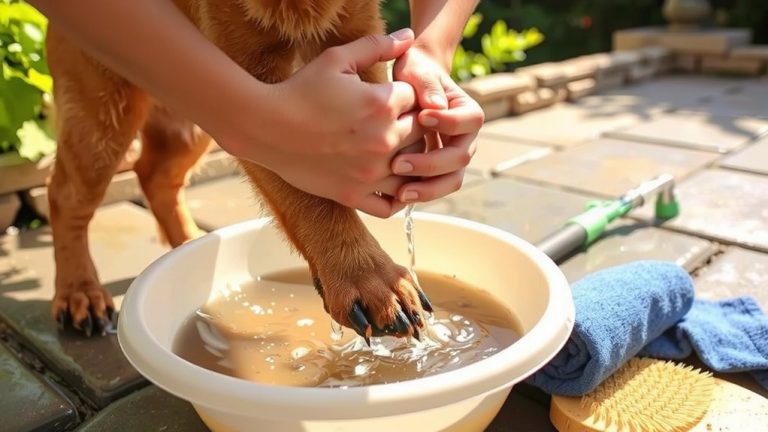
Keeping your pet’s coat looking its best doesn’t stop at conditioning-it extends to managing the mess they track in from outside. Clean paws and bellies prevent dirt, allergens, and moisture from spreading indoors. Use unscented, alcohol-free paw wipes after every outdoor excursion to remove grit and contaminants. Each wipe should fully envelop the paw pad, cleaning between toes where debris accumulates. For longer-coated dogs, dirt often lodges near the hocks and abdomen-areas easily missed. Perform weekly belly baths using a mild, pH-balanced shampoo applied with a soft cloth. Rinse thoroughly with lukewarm water (30–35°C) to avoid skin irritation. Towel-dry immediately to prevent dampness-related dermatitis. These targeted hygiene steps reduce indoor contamination by up to 70%. Regular use of paw wipes and scheduled belly baths maintains coat integrity, limits allergen transfer, and supports overall skin health between grooming appointments.
Time Home Care Between Grooming Appointments
Regularly scheduling home care between grooming appointments guarantees coat and skin health remain stable over time. Consistent maintenance prevents matting, reduces shedding, and supports early detection of skin issues. Incorporate ear care weekly-inspect for redness, odor, or wax buildup using a vet-approved cleanser and cotton pad. Perform nail trimming every 2–3 weeks; overgrown nails can alter gait and lead to joint stress. Use sharp, species-appropriate clippers, avoiding the quick.
| Task | Frequency |
|---|---|
| Brushing | 3–4 times/week |
| Ear Care | Weekly |
| Nail Trimming | Every 2–3 weeks |
| Coat Inspection | Daily |
| Bathing | Every 4–6 weeks |
These intervals maintain hygiene, prevent discomfort, and extend professional grooming effectiveness.
On a final note
Regular brushing prevents matting and reduces shedding by removing loose undercoat and debris. Use a slicker brush weekly, or more often for long-haired breeds. Apply a pH-balanced, moisturizing shampoo every 4–6 weeks to preserve natural oils. A leave-in conditioner with argan oil improves coat shine and reduces static. Clean paws with a damp microfiber cloth after walks to limit dirt tracking. Consistent home care maintains coat health between professional sessions.