How to Assess Depth and Severity of Skin Tears on Large Breed Dogs
Your large breed dog’s skin is typically 2.5–4 mm thick, about 30% thicker than smaller dogs. Use a sterile probe gently to check depth: shallow tears involve only the epidermis and part of the dermis, healing in 7–10 days. Deep wounds extend through the full dermis, may expose fat or muscle, and require professional care. Look for discoloration, bleeding type, and wound size-tears over 3 cm or more than 1/4 inch deep need veterinary evaluation. There’s more you should know before acting.
Notable Insights
- Large breed dogs have thicker skin (2.5–4 mm), affecting wound assessment and healing expectations.
- Use a sterile probe gently to determine if the tear is partial-thickness or extends through the full dermis.
- Classify the tear using the Skin Tear Classification System to guide treatment and monitor severity.
- Check for exposed fat, muscle, or discoloration, which indicate deep injury and possible necrosis.
- Assess size, location, and bleeding: wounds >3 cm or near joints/eyes require immediate veterinary evaluation.
How Deep Is Your Dog’s Skin Tear?
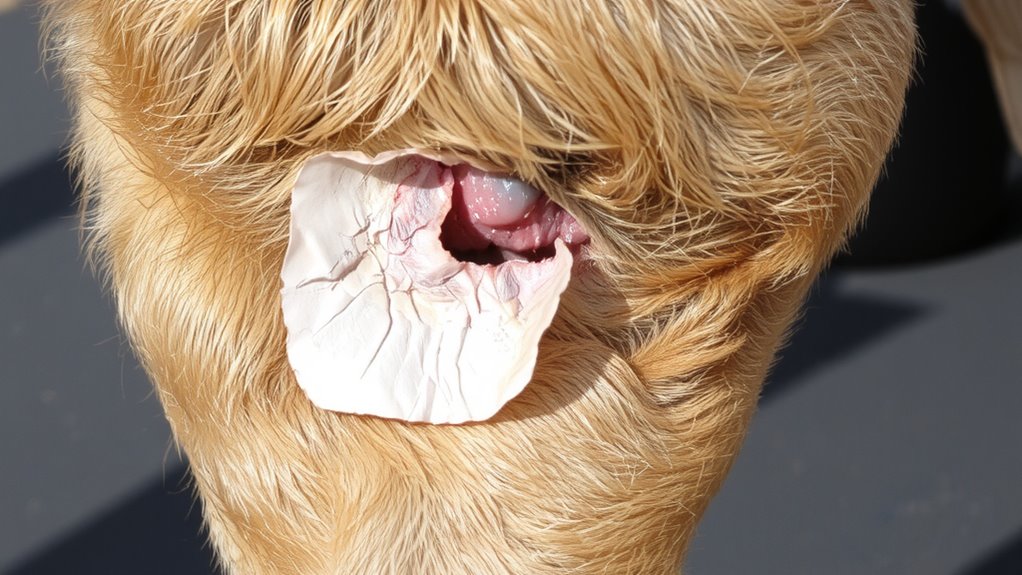
How deep does your dog’s skin tear go? Evaluating wound depth is critical in large breed dogs due to their greater skin thickness, which averages 2.5–4 mm, nearly 30% thicker than smaller breeds. Shallow tears affect only the epidermis and part of the dermis, healing within 7–10 days with minimal intervention. Deeper wounds extending through the full dermis risk delayed healing and require professional care. Use a sterile probe to gently evaluate wound depth without pressure; avoid probing into underlying fat or fascia. Classify tears using the Skin Tear Classification System: Category I involves partial-thickness separation, while Category II and III indicate deeper dermal or subdermal involvement. Accurate depth evaluation guides appropriate treatment-superficial tears may only need cleanser and non-adherent dressing, but deeper injuries demand veterinary evaluation to prevent complications.
Check for Exposed Tissue or Muscle
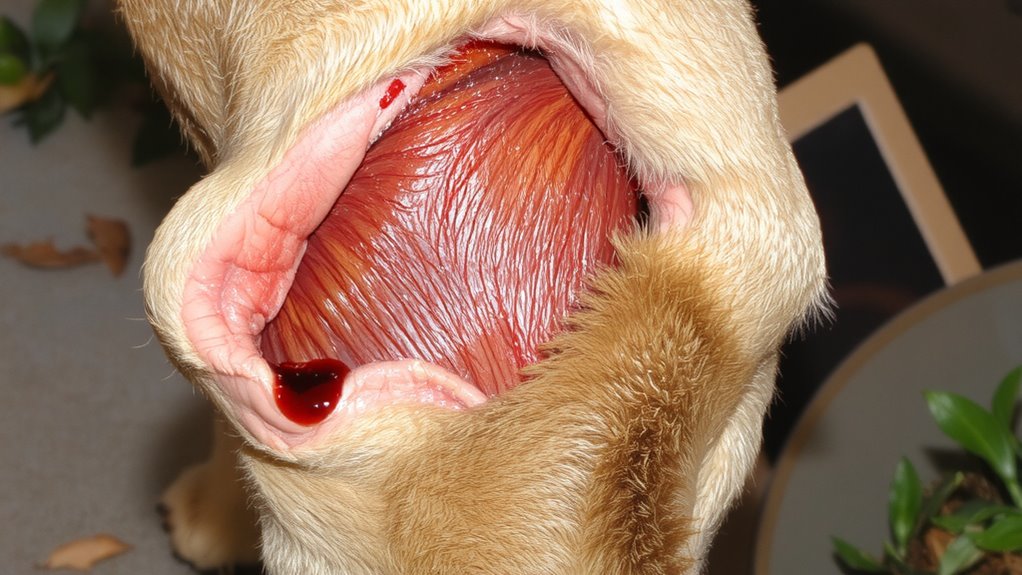
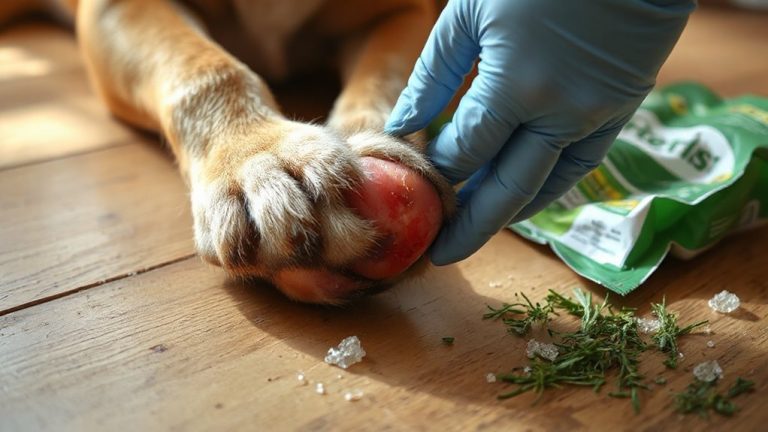
You’ve assessed the depth of your dog’s skin tear using the classification system and determined whether it involves partial or full-thickness damage. Now, inspect for exposed tissue or muscle. Full-thickness tears often reveal subcutaneous fat, connective tissue, or muscle fibers. Look closely for tissue discoloration-blue-gray or darkened areas suggest compromised blood flow or necrosis. Healthy exposed tissue appears pink to red with visible moisture. Muscle rigidity may indicate spasms or damage to underlying musculature, especially in active limbs or high-movement areas. Rigid muscles can limit mobility and signal deeper trauma. Use a sterile light source to examine crevices without touching the wound. Avoid probing, as it may worsen tissue injury. Exposure increases infection risk due to direct environmental contact. Immediate veterinary evaluation is necessary when muscle or deep connective tissue is visible. Prompt intervention improves healing outcomes and reduces complications in large breed dogs with significant soft tissue damage.
Assess Size, Location, and Bleeding Fast
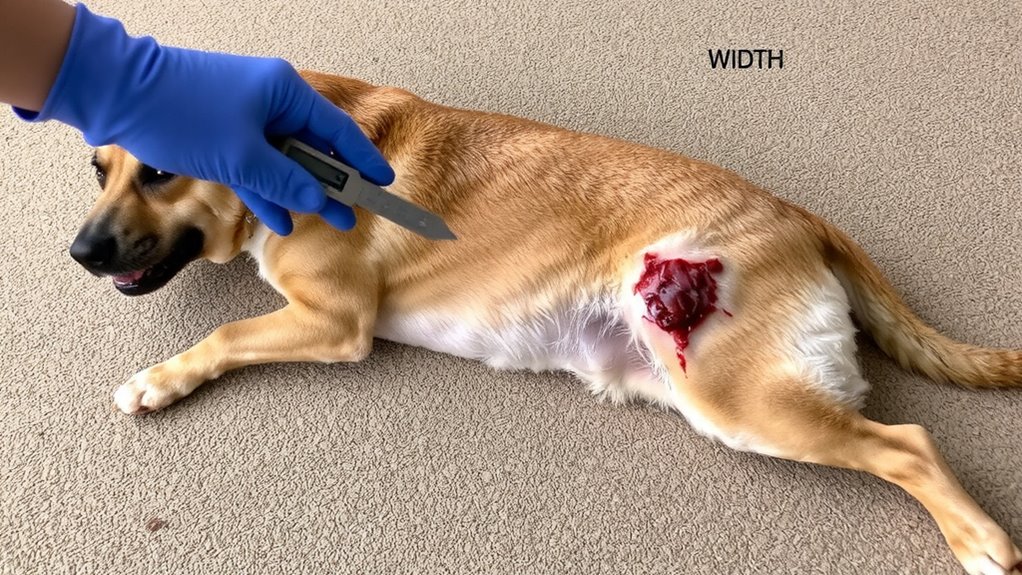
A skin tear’s size, location, and bleeding pattern provide critical insights into its severity and required care. Accurate wound categorization helps determine the need for immediate stabilization. Measure the tear in centimeters and note proximity to joints, eyes, or pressure points-areas with higher complication risks. Rapid, pulsating bleeding suggests arterial involvement; steady flow indicates venous injury.
| Size (cm) | Risk Level |
|---|---|
| <1 | Low |
| 1–3 | Moderate |
| >3 | High |
Tears over 3 cm often require professional intervention due to contamination risk and tissue stress. Location near mobile areas increases dehiscence potential. Heavy bleeding demands direct pressure with sterile gauze for at least five minutes. Quick assessment supports faster response accuracy and minimizes complications. Immediate stabilization includes controlling hemorrhage and preventing contamination.
When to Call the Vet vs. Home Care
When does a skin tear cross the line from manageable at home to needing veterinary intervention? If the wound is deeper than 1/4 inch or involves underlying tissue like fat or muscle, call your vet immediately. Large breed dogs have thick skin, but deep lacerations compromise structural integrity. For minor tears-less than 1 inch long and superficial-you can manage at home with proper wound cleaning using sterile saline and mild antiseptic. Control bleeding with direct pressure for up to 10 minutes. Administer vet-approved pain management only as directed; never use human NSAIDs. Avoid home treatment if the dog resists handling, as inadequate restraint risks incomplete cleaning and increased pain. Jagged or gaping edges require professional closure. Immediate veterinary care guarantees appropriate analgesia, accurate assessment, and prevents complications during initial healing.
Watch for Infection and Healing Issues
Even if you’ve cleaned and dressed the wound properly, infection can still develop without obvious early signs. Preventing contamination is critical-use sterile dressings and change them every 24 to 48 hours. Monitoring inflammation helps detect complications early. Look for increased redness, warmth, or pus.
| Symptom | Normal Healing | Infection Indicator |
|---|---|---|
| Discharge | Clear or pale yellow | Thick, yellow, green |
| Swelling | Mild, decreases daily | Increasing after Day 3 |
| Odor | None | Foul smell present |
Check the wound twice daily. Elevated body temperature or lethargy may indicate systemic involvement. Use a digital thermometer; normal canine range is 100.5°F to 102.5°F. If you observe worsening inflammation or delayed closure beyond 7–10 days, consult your vet immediately. Early intervention improves outcomes markedly.
On a final note
Evaluating skin tears in large breed dogs requires immediate, precise evaluation. Check depth: superficial tears involve epidermis only; deeper lacerations expose dermis, fat, or muscle. Measure size-tears over 2 cm or near joints demand veterinary care. Location matters: high-motion areas delay healing. Control bleeding with direct pressure. Monitor for infection-redness, swelling, discharge. Home care works for minor tears; anything deeper needs professional suturing and antibiotics.