Managing Contact Dermatitis in Dogs After Exposure to Lawn Chemicals
Check your dog for redness, swelling, or small bumps on the paws, belly, and legs after lawn exposure. Rinse immediately with lukewarm water at 90–100°F, focusing on high-contact areas. Use a fragrance-free shampoo and lather thoroughly. For persistent itching or severe inflammation, consult your vet-lesions may need topical antiseptics or oral corticosteroids. Colloidal oatmeal baths at 98–102°F can soothe irritation when used no more than twice weekly. Long-term, switch to pet-safe lawn practices like non-toxic mulch and natural fertilizers with N-P-K ratios such as 6-4-4. You’ll discover safer lawn care strategies and effective home treatments by learning how to modify your outdoor routine.
Notable Insights
- Immediately rinse your dog with lukewarm water after lawn exposure to minimize chemical absorption.
- Use a gentle, fragrance-free shampoo to clean paws, belly, and legs thoroughly.
- Inspect skin under bright light for redness, swelling, or bumps, especially within 30 minutes of exposure.
- Bathe with vet-approved colloidal oatmeal shampoo to soothe inflammation and restore skin barrier.
- Consult a veterinarian promptly if signs include severe redness, sores, or persistent itching.
Look for Itching or Red Skin After Lawn Time
Have you noticed your dog scratching more after spending time on the lawn? It could be contact dermatitis from chemicals in grass. Look for red, inflamed skin, especially on the paws, belly, and legs-areas that touch the lawn directly. Perform regular skin inspection using bright, natural light. Part the fur to expose the skin. Redness, swelling, or small bumps are early signs. Symptom tracking helps identify patterns. Record the date, duration of lawn exposure, and specific symptoms. Use a calendar or app to log this data. Persistent itching within 30 minutes of outdoor time increases suspicion. Common irritants include herbicides like 2,4-D and fertilizers with nitrogen levels over 28%. Early detection through consistent monitoring allows timely intervention. You don’t need a diagnosis to start tracking. The goal is to build a clear timeline connecting lawn contact to skin reactions.
Wash Chemicals Off Your Dog Immediately
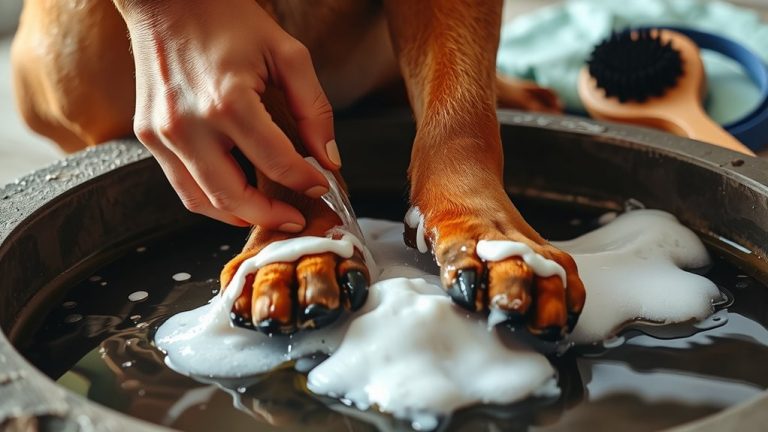
If your dog has been on treated grass, rinsing them right away can prevent chemical absorption through the skin. Immediate rinsing reduces chemical exposure and minimizes irritation risk. Use lukewarm water at 90–100°F (32–38°C) and thoroughly wet the coat to dilute residues. Focus on paws, belly, and legs-areas with the most ground contact. Lather with a gentle, fragrance-free shampoo designed for sensitive skin; avoid harsh detergents that can worsen dermatitis. Rinse for at least five minutes to guarantee complete removal. Studies show immediate rinsing within 30 minutes of exposure reduces allergen penetration by up to 75%. Towel-dry thoroughly and inspect skin for lingering redness. Immediate rinsing is a critical first step in limiting dermal absorption and preventing worsening symptoms.
See the Vet for Severe Lawn Chemical Reactions
What happens when your dog shows intense redness, swelling, or open sores after lawn chemical exposure? These signs demand immediate attention. You’re likely dealing with a severe contact dermatitis reaction requiring emergency treatment. Delaying care can lead to secondary infections or systemic toxicity. Seek veterinary diagnosis without delay. A vet will perform a physical exam, assess lesion depth, and rule out other causes like infections or allergies. They may use dermal scoring systems to classify inflammation severity. Treatment often includes topical antiseptics, oral corticosteroids, or antibiotics. In extreme cases, hospitalization with fluid therapy is necessary. Never attempt home remedies for advanced symptoms. Only a licensed professional can provide targeted interventions based on chemical composition and exposure duration. Prompt veterinary diagnosis improves recovery rates markedly. Early intervention minimizes scarring and reduces healing time. Your dog’s skin barrier needs expert care-don’t wait.
Soothe Skin Irritation With Oatmeal Baths
After addressing severe chemical-induced reactions with veterinary care, managing milder forms of contact dermatitis focuses on restoring the skin’s natural barrier and reducing discomfort. You can effectively soothe your dog’s irritated skin using colloidal oatmeal baths. Colloidal oatmeal benefits include anti-inflammatory properties and lipid support that help repair the epidermal layer. When prepared properly, colloidal oatmeal forms a fine suspension in water, allowing active compounds like avenanthramides to penetrate the skin. Use soothing bath techniques: bathe your dog in lukewarm water (98–102°F) for 10–15 minutes, ensuring full coat saturation. Apply a vet-recommended oatmeal-based shampoo containing at least 1% colloidal oatmeal. Rinse thoroughly to prevent residue buildup. Do not over-bathe-limit treatments to twice weekly to avoid disrupting natural oils. This method supports skin hydration and pH balance, promoting faster recovery from contact irritation. For best results, select one of the top oatmeal shampoos formulated specifically for sensitive canine skin.
Use Pet-Safe Lawn Care All Year Round
Throughout the year, maintaining a lawn that’s safe for your dog means choosing products free of toxic chemicals linked to contact dermatitis. Use organic fertilizers with N-P-K ratios like 6-4-4, derived from composted manure or alfalfa meal, to nourish grass without synthetic residues. These slow-release formulas reduce burn risk and leaching, supporting microbial soil health. Pair them with non toxic mulch such as shredded cedar or cypress, which resist mold, retain moisture, and won’t off-gas harmful volatile compounds. Avoid cocoa bean hulls-they contain theobromine, which is toxic if ingested. Maintain a mowing height of 2.5 to 3 inches to discourage weeds naturally. Irrigate early in the morning to minimize fungal growth. Regular soil testing guarantees balanced pH (6.0–7.0), reducing the need for chemical correction. Consistent use of safe inputs prevents flare-ups and keeps your dog’s paws and coat clear.
Switch to Natural Alternatives Like Corn Gluten
When you’re looking to control weeds without exposing your dog to harsh chemicals, corn gluten meal offers a safe and effective alternative. This pre-emergent herbicide inhibits root formation in germinating seeds, reducing weed populations by up to 60% with consistent application. Corn gluten benefits include slow-release nitrogen (typically 9–12% N) that feeds your lawn while deterring weeds. It’s a proven component of eco friendly fertilizers, breaking down naturally without leaching toxins. Apply at 20 lbs per 1,000 sq ft in early spring and fall for best results. Large cats may also benefit from pet-safe environments, making best litter boxes for large cats an important consideration for overall household pet wellness.
On a final note
Act fast if your dog shows skin irritation after lawn exposure. Immediate washing with a pH-balanced, hypoallergenic dog shampoo reduces chemical absorption by up to 80% within 15 minutes. Oatmeal-based baths with colloidal oatmeal at 1–2% concentration soothe inflamed skin. For severe itching or lesions, consult your vet-topical corticosteroids or antihistamines may be necessary. Prevent future reactions by using pet-safe lawn products, such as corn gluten meal at 20 lbs per 1,000 sq ft, which controls weeds without synthetic toxins.