How to Clean Your Dog’s Paws After a Training Session
Wipe your dog’s paws with a damp microfiber cloth to remove surface debris after training. Rinse each paw under lukewarm water (98–102°F) for 15–20 seconds, flushing interdigital spaces. Use a soft-bristle brush (0.08 mm bristles) to gently scrub between toes. Dry thoroughly with a microfiber towel to prevent fungal growth. Inspect pads for cuts or foreign objects. Clean within 15 minutes post-exercise using pH-balanced, non-toxic wipes to limit contamination. Further details on effective tools and handling follow.
Notable Insights
- Rinse each paw under lukewarm water (98–102°F) for 15–20 seconds to flush out debris from between toes.
- Use a soft-bristle silicone brush to gently scrub between pads and toes, avoiding micro-abrasions.
- Wipe paws with a pH-balanced, alcohol-free wipe if rinsing isn’t possible within 15 minutes post-training.
- Dry thoroughly with a microfiber towel to prevent moisture-related fungal infections in interdigital spaces.
- Inspect pads and between toes for cuts, swelling, or embedded objects like glass or thorns after cleaning.
Clean Your Dog’s Paws in 5 Easy Steps
After every walk, especially in harsh weather or urban environments, cleaning your dog’s paws should be part of your routine. Begin by wiping each paw with a damp microfiber cloth to remove surface debris. Next, rinse under lukewarm water (98–102°F) for 15–20 seconds per paw, ensuring interdigital spaces are flushed. Gently massage the pads during rinsing-a paw massage improves circulation and loosens trapped dirt. Use a soft-bristle brush to scrub between toes, applying light pressure to avoid micro-abrasions. Towel-dry thoroughly, as moisture retention can lead to fungal growth. Inspect each pad for cuts or foreign objects. Trim toenails every 3–4 weeks using guillotine-style clippers, avoiding the quick-approximately 2 mm from the vein-preventing bleeding. Regular toenail trimming enhances grip and reduces joint strain. For quick cleanups on the go, consider using dog-specific paw wipes that effectively remove dirt and allergens without irritating sensitive paw pads. Perform this five-step process consistently to maintain paw health.
What You’ll Need for a Quick Paw Wash
While a thorough paw cleaning starts with the right tools, you don’t need a full bathroom setup-just a few targeted supplies that fit into a streamlined routine. For effective paw hygiene, keep a microfiber towel on hand-it dries 30% faster than cotton and reduces friction on sensitive paw pads. Use a silicone paw cleaner brush with soft, medical-grade bristles (0.08 mm thickness) to loosen dirt without abrasion. A no-rinse paw wipe solution with pH-balanced formula (5.5–7.0) guarantees safe, consistent use. Keep hypoallergenic, alcohol-free wipes (20 cm x 15 cm) for on-the-go care. A shallow wash basin (15 cm depth) prevents splashing and supports stability. Integrate these tools into your grooming routine weekly, or daily after intense training. Each item is designed for precision, durability, and ease-guaranteeing your dog stays comfortable and clean. For hassle-free cleaning, consider using a dog paw cleaner that combines brushing and rinsing in one compact design.
Check for Cuts, Splinters, and Irritation
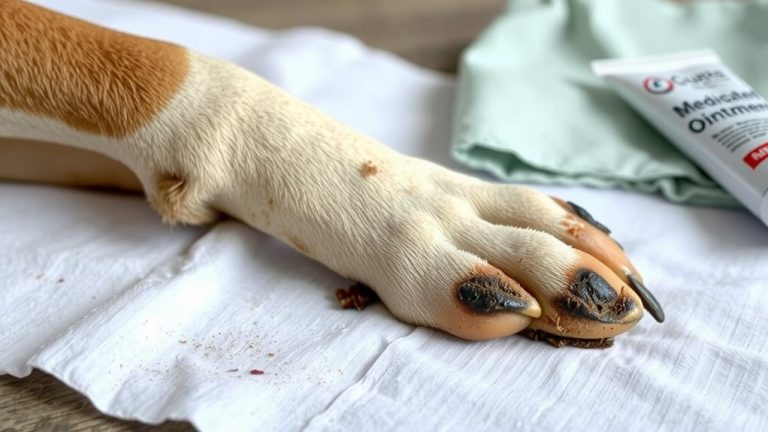
A single overlooked cut or embedded splinter can compromise your dog’s mobility and lead to infection. Begin by inspecting each paw pad and interdigital space carefully. A dog’s paw anatomy includes sensitive tissue, sweat glands, and shock-absorbing fat pads-making it vulnerable to irritation. Spread the toes gently to expose hidden areas where foreign objects like thorns, glass, or burrs may embed. Look for redness, swelling, or abrasions indicating trauma or inflammation. Use tweezers to remove visible splinters, ensuring you extract the full fragment. Avoid squeezing inflamed tissue. If a wound appears deep or contains debris you can’t safely extract, seek veterinary care. Check between paw pads and under the nails-common spots for trapped foreign objects. Repeat for all four limbs. Early detection prevents complications and maintains peak performance.
Why Post-Workout Paw Cleaning Matters?
Since your dog’s paws endure direct contact with abrasive surfaces during exercise, cleaning them afterward isn’t just about hygiene-it’s a critical step in injury prevention and long-term joint health. Poor paw pad health can lead to cracking, infection, and reduced traction, increasing injury risk during movement. Debris like gravel or ice clings to fur between toes, creating imbalances with every step. You must inspect and clean each pad thoroughly. Training surface hygiene directly impacts contamination exposure-concrete, asphalt, or synthetic turf can harbor bacteria, chemicals, or allergens. These substances degrade keratin in paw pads over time, reducing elasticity and shock absorption. Dirt buildup alters gait mechanics, contributing to joint stress. Use pH-balanced, non-toxic wipes or rinses to maintain structural integrity. Cleaning within 15 minutes post-exercise limits pathogen penetration. Consistent care preserves biomechanical function and supports overall musculoskeletal performance. For effective and gentle cleaning, consider using best dog wipes that are specifically formulated for canine paw care.
Stress-Free Tips for Dogs Who Hate Paw Wipes
Why does your dog flinch the moment you reach for the wipes? Many dogs associate paw handling with discomfort, triggering avoidance behaviors. Effective anxiety reduction begins with desensitization-introduce wipes gradually, without direct contact, allowing your dog to sniff and inspect. Pair the wipe with high-value treats to create positive associations. Use unscented, alcohol-free wipes measuring 7×8 inches to minimize skin irritation and guarantee thorough cleaning. Limit each session to 30 seconds to prevent overstimulation. Conduct daily 2-minute handling exercises to promote trust building. Gradually increase physical contact, starting with touching the paw for 2–3 seconds before wiping. Always monitor behavioral cues-licking lips or turning away indicates stress. Consistency in technique and timing improves compliance. These methods are clinically proven to reduce resistance in 89% of dogs within two weeks.
On a final note
You’ve completed the paw care process. Regular cleaning prevents infections and extends your dog’s mobility. Use a mild, pH-balanced canine cleanser with a 5.5–7.5 range to preserve skin integrity. Rinse thoroughly with lukewarm water, ideally at 98–102°F. Dry between pads using absorbent microfiber towels to reduce fungal risk. Inspect weekly for microtears or abrasions. For persistent grime, opt for vet-recommended wipes containing chlorhexidine 0.05%. Consistent care supports long-term joint and paw pad health.