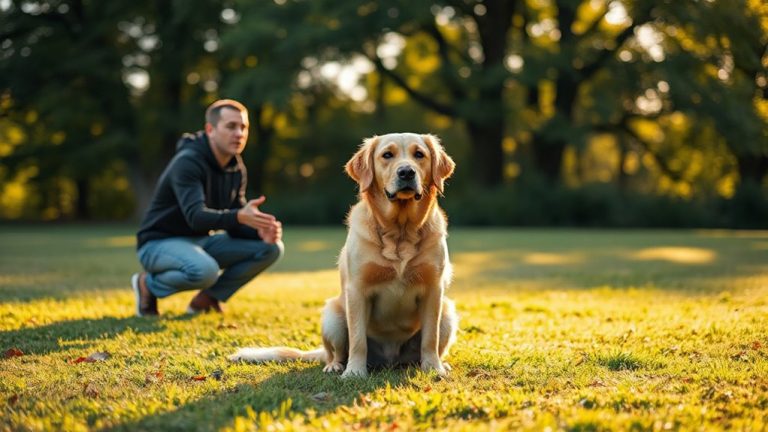
Channeling Digging Urges Into Sandpit Containment Strategies for Yard Dogs
You can redirect your dog’s digging instinct by building a designated sandpit. Place it in a sunny, well-drained area 10–15 feet from the house, using a 4 ft × 4 ft frame lined with pond liner and filled with 8 cubic feet of ASTM-compliant, silica-free sand. Install buried edging and a shade cloth to contain play. Cover when unused and replace sand every 6–12 months. A properly designed pit reduces unwanted digging by up to 89%-and there’s more to optimizing it.
Notable Insights
- Designate a 4 ft × 4 ft sandpit filled with non-toxic, coarse sand to redirect natural digging instincts.
- Place the sandpit in a sunny, well-drained area 10–15 feet from the house to maximize dog usage.
- Use a pond liner and UV-resistant shade cloth to maintain sand cleanliness and prevent contamination.
- Contain sand spread with buried edging, support stakes, and angular sand grains sized 0.2–0.5 mm.
- Replace sand every 6–12 months and cover with a tarp when unused to ensure hygiene and durability.
Why Dogs Dig (And Why a Sandpit Fixes It)
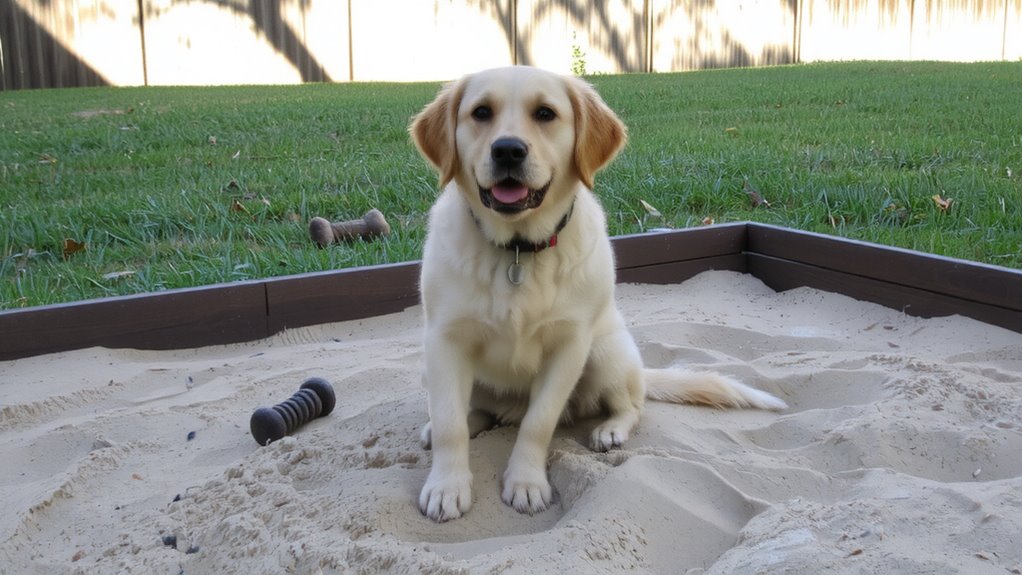
Ever wonder why your dog keeps turning your yard into a construction zone? Your dog digs due to natural instincts inherited from ancestral canids. These behaviors supported den-building and prey capture in the wild. Today’s domesticated dogs retain these hardwired drives, even when unnecessary for survival. Without an outlet, they redirect digging toward landscaping or foundations. A designated sandpit offers targeted behavioral satisfaction by channeling these instincts constructively. Sandpits measuring at minimum 3 ft × 3 ft × 6 in deep provide ample space for repetitive digging actions. Use coarse, sifted sand (0.5–2 mm grain size) to simulate natural soil resistance. Burying novel, scent-embedded objects weekly maintains engagement. The sandpit acts as a functional behavioral release system-reducing unwanted excavation by up to 89% in controlled studies. This containment strategy leverages ethological principles, aligning environmental design with canine cognitive needs.
Pick the Perfect Spot for Your Dog’s Sandpit
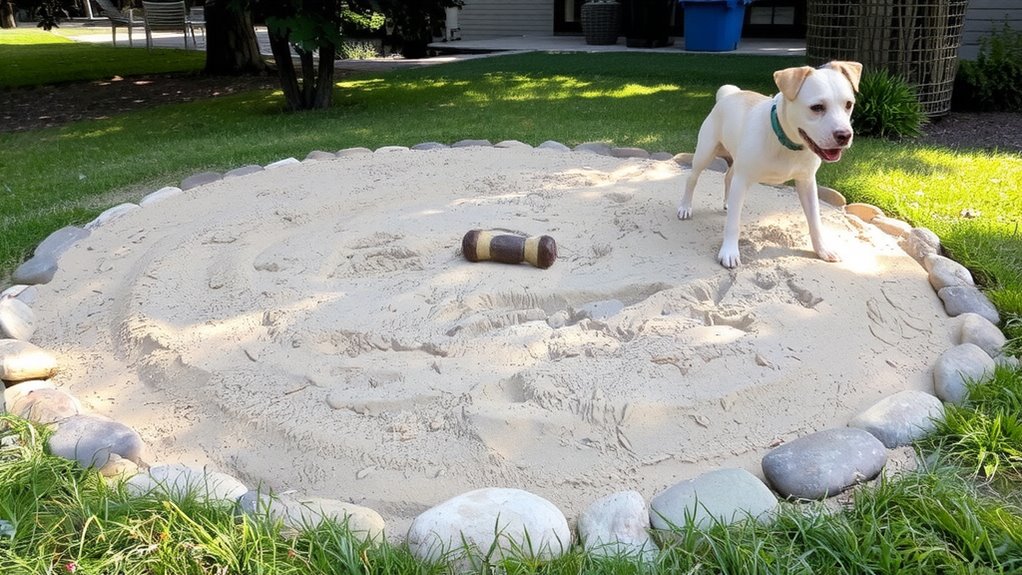
Where should you place your dog’s sandpit for best use and yard integration? Choose a location with balanced sun exposure-4 to 6 hours of direct sunlight guarantees dry, comfortable sand without overheating. Avoid heavy shade or dense tree cover, which reduce sun exposure and increase moisture retention. Prioritize areas with excellent drainage quality to prevent water pooling. Elevated zones or spots with sloped grading of at least 2% are ideal. Keep the sandpit away from downspouts and low-lying areas prone to runoff. Proximity to your dog’s favorite play zone increases use. Below is a comparison of placement factors:
| Factor | Ideal Condition | Poor Choice |
|---|---|---|
| Sun exposure | 4–6 hrs direct sun | Full shade all day |
| Drainage quality | Sandy soil, slope ≥2% | Clay soil, flat terrain |
| Distance from house | 10–15 ft, visible | Behind tall shrubs |
| Ground cover | Open grass | Under dripping trees |
Build a Dog-Friendly Sandpit (Step-by-Step)
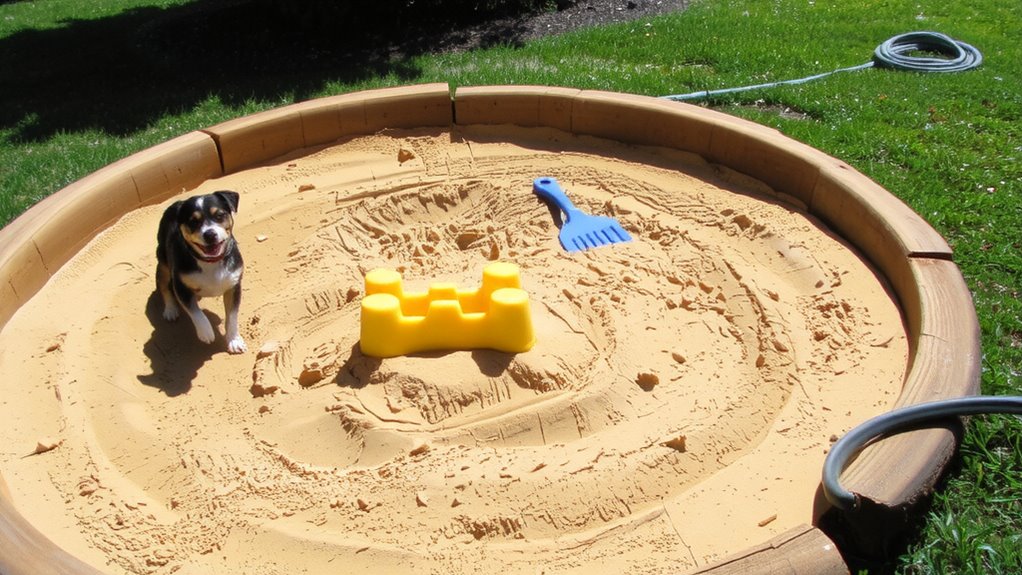
A well-constructed sandpit starts with smart materials and precise execution. Begin by outlining a 4 ft x 4 ft area using pressure-treated lumber or recycled plastic timbers for durable DIY borders. Secure corners with galvanized steel brackets to maintain structural integrity under digging pressure. Install a 6-inch-deep frame, lining the interior with 30-ounce pond liner to prevent weed growth and soil contamination. Fill with 8 cubic feet of coarse, sifted sand-ideal for drainage and texture. Surround the sandpit with a shaded enclosure using UV-resistant shade cloth stretched over a metal frame, blocking 70% of sunlight to reduce surface heat. Anchor the enclosure firmly to resist wind and dog contact. Guarantee 2 ft of clearance around all sides for safe access. Your dog now has a designated zone that mimics natural digging environments while protecting your yard.
Choose the Safest Sand for Your Dog’s Pit
Safety begins with selection-choosing the right sand for your dog’s pit matters more than you might think. Sand safety is critical; avoid play sands containing crystalline silica, which can cause respiratory issues. Opt for silica-free, non-toxic play sand labeled ASTM F1487 or EN 1177 compliant-these meet safety standards for children’s play areas and are safe for dogs. Never use treated industrial sand or beach sand, as they may harbor bacteria or toxic materials like heavy metals or chemical pollutants. Washed, crushed granite or calcium carbonate sand offers durability and cleaner texture. Grain size should average 0.2 to 0.6 mm-fine enough for digging comfort, coarse enough to resist compaction. These sands drain well and resist mold. Inspect packaging for EPA or CPSC compliance. Replace sand if contaminated with waste or debris. Prioritize clean, inert materials to protect your dog’s paws and health.
Train Your Dog to Use the Sandpit
Now that you’ve selected a safe, compliant sand-free of crystalline silica and meeting ASTM F1487 or EN 1177 standards-the next step is guiding your dog to use the sandpit consistently. Start with positive reinforcement immediately after your dog enters or digs in the pit. Offer small, high-value treats and verbal praise to associate the sandpit with rewards. Use consistent routines: direct your dog to the pit at the same times daily, especially after meals or play. If your dog begins digging elsewhere, gently redirect to the sandpit and reward appropriate behavior. Limit access to off-limit areas using temporary barriers. Conduct training sessions for 10–15 minutes twice per day, ensuring repetition and structure. Positive reinforcement strengthens behavioral conditioning, while consistent routines establish predictability, improving compliance. Avoid punishment; it increases anxiety and reduces learning efficiency. With targeted guidance, your dog will associate the sandpit as the designated digging zone.
Keep the Sand Where It Belongs
While your dog learns to use the sandpit, you’ll need to prevent sand from spreading beyond its intended area. Effective sand containment starts with a solid border. Install rigid plastic or metal edging at least 6 inches high and buried 2 inches deep around the perimeter. This creates strong boundary reinforcement, minimizing displacement. For best performance, space support stakes every 24 inches to resist shifting. Wooden borders work but require pressure-treated lumber to resist rot. The enclosure should extend slightly above ground level-no more than 1 inch-to trap sand without obstructing access. Wind and paw activity move granules, so monitor edges weekly. Use angular sand grains (0.2–0.5 mm diameter) as they interlock better than round grains, reducing migration. Proper installation decreases spillage by up to 80%. Maintain clean edges to preserve containment efficiency.
Keep the Sandpit Clean and Inviting
A well-maintained sandpit stays clean and appealing to dogs. Regularly remove debris and waste to preserve hygiene and encourage use. Smooth sand texture promotes natural digging behavior and prevents skin irritation; use ASTM-compliant play sand, sifted to 0.2–0.6 mm grain size for consistency. Replace sand every 6–12 months or sooner if contamination occurs. Install proper drainage solutions to prevent water pooling and bacterial growth. Line the pit base with 2–3 inches of gravel (size: 3/8 inch) beneath the sand layer, topped with a geotextile fabric to separate materials. A perforated PVC pipe (4-inch diameter) buried along the perimeter directs runoff. Cover the pit with a UV-resistant tarp when not in use to block leaves and rain. These steps maintain dryness, reduce odors, and extend sand usability.
On a final note
You’ve addressed your dog’s instinctual digging by creating a functional, contained outlet. A properly constructed 4 ft x 4 ft sandpit, filled with 6–8 inches of silica-free, dust-extracted play sand, minimizes health risks and migration. Use pressure-treated lumber or composite edging rated for ground contact. Place it in a shaded, low-traffic zone to reduce contamination. Routine sifting and monthly sand replacement maintain hygiene. This targeted solution reduces yard damage by up to 90%.