Cleaning Your Cat’s Eyes Before Grooming to Avoid Spreading Debris
Wipe your cat’s eyes before grooming to prevent spreading discharge or debris. Use a soft cotton pad moistened with sterile, preservative-free saline or a vet-approved ocular cleaner with a pH of 6.5–7.5. Gently wipe from the inner to outer eye corner with a single stroke. Replace damp cloth sections frequently to avoid contamination. Look for cleaners in single-dose packaging to maintain sterility. Signs like redness, cloudiness, or yellow-green discharge mean you should seek veterinary care. Choosing the right method improves hygiene and sets the stage for what comes next.
Notable Insights
- Wipe your cat’s eyes before grooming to prevent spreading discharge, dust, or debris during brushing.
- Use a soft cotton pad dampened with sterile saline to gently clean from inner to outer eye corner.
- Choose a vet-approved, preservative-free eye cleaner that’s pH-balanced and free of alcohol or dyes.
- Clean eyes prior to bathing or brushing to avoid pushing debris into sensitive facial areas.
- Watch for redness, cloudiness, or yellow-green discharge, which may indicate infection needing veterinary care.
Wipe Your Cat’s Eyes Before Grooming
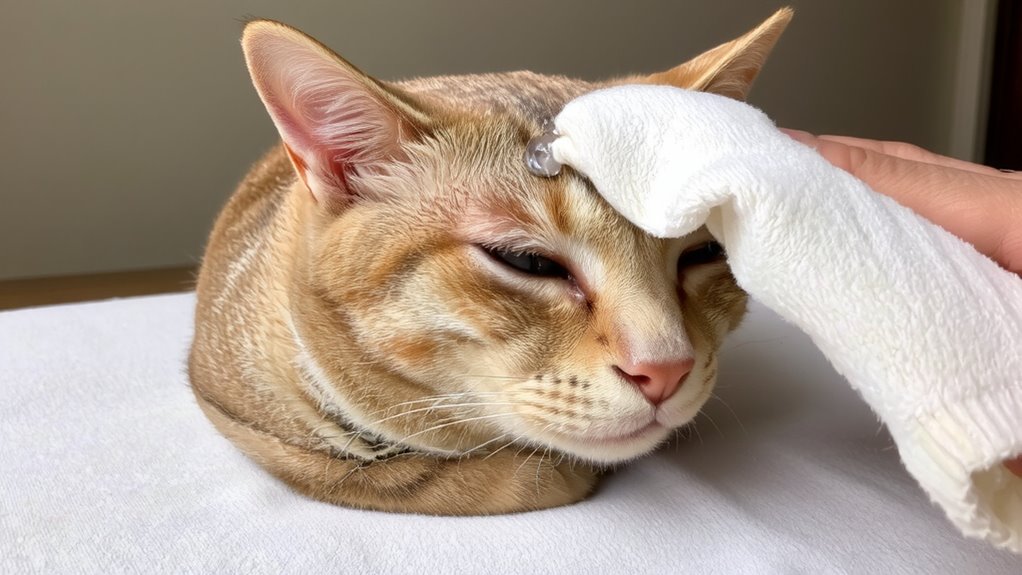
Your cat’s eye area needs careful attention before any grooming session begins. Discharge, dust, or debris can spread during brushing, worsening irritation. Wiping eyes first prevents contamination across facial regions. This step is essential in every grooming routine. Most cats resist handling near their eyes, so understanding cat behavior guarantees safer, less stressful access. Approach slowly, using a soft cotton pad moistened with sterile saline solution. Apply gentle lateral pressure from the inner to outer canthus-do not rub vertically. Use one section per swipe; never reuse a pad. Most cats tolerate this when done early, before fur gets stirred. The average session takes 30–45 seconds. Consistency improves cooperation over time. Integrating eye wiping into your weekly grooming routine, ideally 2–3 times weekly, reduces buildup and supports ocular health. Think of it like dental care-it’s preventive maintenance with measurable benefits.
Choose a Safe Cat Eye Cleaner
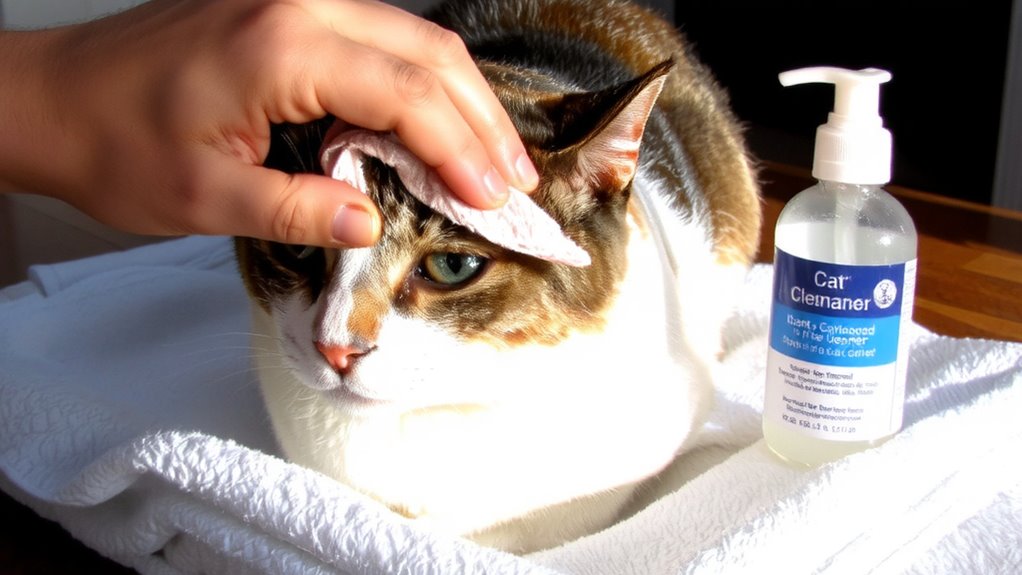
A safe cat eye cleaner must be isotonic, non-irritating, and free of preservatives like benzalkonium chloride, which can damage delicate ocular tissues. You should choose products with natural ingredients such as chamomile, aloe vera, or green tea extract, which soothe while cleaning. These ingredients reduce inflammation and are less likely to trigger allergic reactions. Always confirm vet approval before use-this guarantees the formula meets ophthalmic safety standards for cats. Look for pH-balanced solutions, typically between 6.5 and 7.5, to match your cat’s natural tear film. Avoid alcohol, dyes, and fragrances. Most vet-recommended cleaners use sterile, preservative-free single-dose packaging to prevent bacterial contamination. Use within 72 hours of opening multi-use bottles. Proper selection minimizes corneal abrasion risk during wiping. Effective cleaners dissolve discharge without disrupting the lipid layer of the tear film. You’ll maintain ocular health with consistent, safe chemistry.
Clean Eyes Before Brushing or Bathing
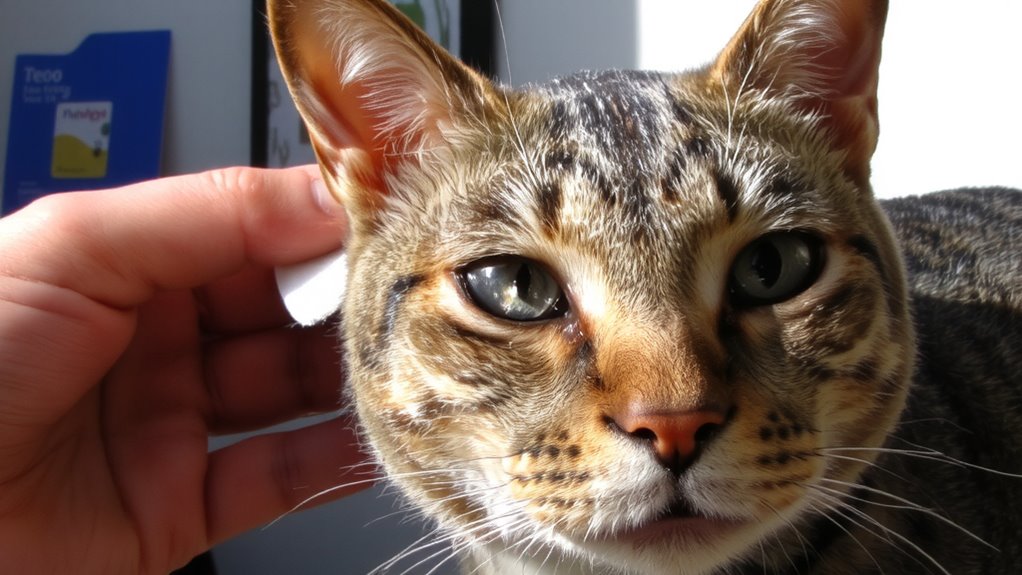
Before starting grooming, clean your cat’s eyes to prevent debris from spreading during brushing or bathing. This step guarantees eye comfort and supports grooming safety. Unclean eyes may harbor discharge that, when disturbed, can smear across facial fur or irritate sensitive tissues. Removing buildup beforehand limits contamination during wet grooming processes like bathing. For best results, use a vet-approved, pH-balanced ocular cleaner designed for felines. These solutions typically have a neutral pH (6.5–7.5), matching natural tear film. Apply with a sterile applicator or lint-free pad, wiping from the inner to outer eye corner. This technique reduces the risk of introducing pathogens. By pre-cleaning, you minimize ocular irritation and maintain hygiene standards throughout the session. Proper eye care improves cooperation during grooming. Proactive cleaning is essential for both health and efficiency. Always complete this step before tools touch your cat’s coat.
Wipe Gunk Gently With a Damp Cloth
With the right technique, removing eye gunk from your cat’s face can be quick and safe. Use a soft, lint-free cloth dampened with lukewarm water to gently wipe away eye discharge. Apply minimal pressure to avoid irritating sensitive tissue. Start at the inner corner of the eye and move outward in a single stroke, following the natural contour of the eye. Moisture softens crusty buildup, making it easier to remove without dragging debris across the face. This helps prevent tear staining caused by accumulated residue. Replace the cloth section frequently or use disposable wipes if available. Never reuse the same area of the cloth to prevent contamination. Damp cloths work best when wrung to 60% dryness-too wet, and water drips into the eye; too dry, and it won’t dissolve discharge effectively. Consistent wiping reduces debris before grooming spreads it.
Spot Signs of Eye Infection Early
How quickly can you catch a problem before it escalates? Immediate redness detection is critical. Look for consistent pink or red sclera, which indicates inflammation. Healthy eyes should appear clear, white, and moist. Any deviation warrants daily monitoring. Discharge observation helps identify infection type. Serous discharge-clear and watery-may signal mild irritation. Mucopurulent or yellow-green discharge suggests bacterial involvement. Note frequency, color, and consistency daily. Chronic tearing leads to fur staining around the medial canthus, especially in brachycephalic breeds. Gently part the eyelids under good lighting to inspect the conjunctiva and cornea. Swelling, cloudiness, or squinting are red flags. Use a magnifying lens if needed. Early intervention prevents corneal ulceration and secondary complications. Document changes with dated photos. Consult your vet if symptoms persist beyond 24–48 hours. Timely action limits discomfort and systemic spread. A durable, absorbent dog blanket for couches can help protect furniture from eye discharge during recovery.
On a final note
You should clean your cat’s eyes before grooming to prevent irritation. Use a vet-approved, saline-based eye cleaner with zero alcohol or dyes. Moisten a soft, lint-free cloth with the solution-never apply directly to the eye. Gently wipe from the inner to outer corner to avoid spreading debris. This removes discharge and reduces infection risk. Check for redness, swelling, or excessive tearing-signs needing veterinary evaluation. Proper hygiene supports eye health and grooming safety.