Why You Should Clean Your Pet’s Paws Before Entering the House
You should clean your dog’s paws before entering the house to remove harmful contaminants like road salt, pesticides, and bacteria such as E. coli and Staphylococcus. These substances can cause skin irritation, infections, or gastrointestinal issues if ingested. Wet paws also harbor fungi like Malassezia, especially between toes. Cleaning with a pH-balanced, no-rinse wipe or microfiber cloth removes 99.9% of germs and prevents indoor allergen buildup. Keeping paws dry and trimmed supports health and protects floors. Further details reveal smarter ways to streamline the process safely.
Notable Insights
- Dirty paws track in harmful substances like road salt, pesticides, and fecal bacteria, contaminating indoor spaces.
- Moisture and debris between paw pads can cause fungal infections and skin irritation if not cleaned.
- Regular paw cleaning reduces indoor allergens by up to 85%, improving household air quality.
- Toxic chemicals like motor oil and antifreeze on paws can be ingested during grooming, posing health risks.
- Abrasive dirt and gravel on paws can damage flooring, leading to costly wear over time.
Are Dirty Dog Paws Dangerous?
How often do you think about what your dog picks up on their paws? Dirty paws pose real health risks, especially when left unchecked. Paw pad injuries are common and often result from sharp debris or extreme surfaces like hot asphalt, which can exceed 140°F at 85°F air temperature. These injuries compromise the protective barrier of the skin, increasing susceptibility to infection. Moisture trapped between paw pads creates an ideal environment for fungal infections, such as Malassezia or dermatophytosis, which thrive in damp, warm conditions. Fungal spores persist in soil and grass, making outdoor exposure a consistent threat. Affected paws show redness, swelling, odor, or cracking. Regular cleaning removes infectious agents and prevents microbial colonization. Using a veterinary-approved antifungal wipe or pH-balanced paw wash reduces pathogen load effectively. Prevention is critical-inspect paws daily and address abnormalities immediately to maintain long-term foot health. Choosing the right cleaning solution, such as vet-recommended dog paw wipes, ensures effective removal of harmful contaminants while being gentle on sensitive paw tissue.
What Toxins and Germs Lurk on Your Dog’s Paws
| Toxin/Germ | Source | Health Risk |
|---|---|---|
| Road salt | Winter de-icing | Skin irritation, chemical burns |
| Pesticides | Treated lawns | Neurological, digestive issues |
| Motor oil | Parking lots, roads | Toxic if ingested |
| *E. coli* | Fecal matter, soil | Gastrointestinal illness |
| *Staphylococcus* | Public spaces, parks | Skin infections |
Regular contamination contributes to long-term indoor pollution. Using a dog paw cleaner can significantly reduce the spread of these harmful substances indoors.
How to Clean Dog Paws Safely After Every Walk
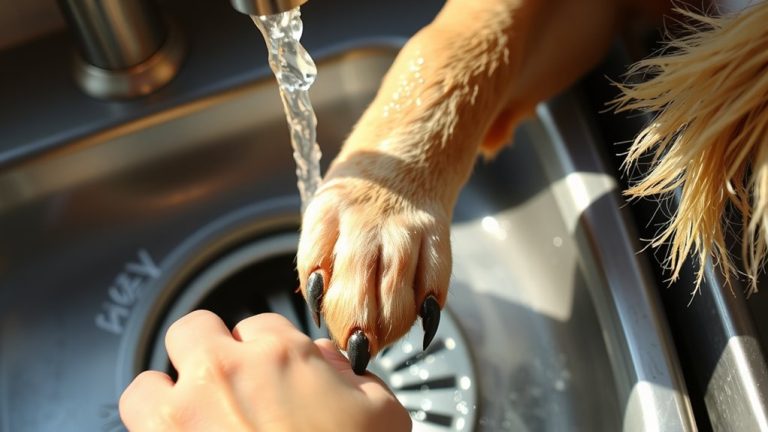
Why risk tracking harmful substances into your home when a simple routine can eliminate the threat? Cleaning your dog’s paws after each walk removes contaminants like road salt, pesticides, and bacteria. Begin by wiping each paw with a damp microfiber cloth, focusing between the pads where debris accumulates. For stubborn residue, use a pet-safe paw wash with a pH of 6.5–7.5 to avoid skin irritation. Dry thoroughly to prevent moisture buildup, which can lead to infections. Regular nail trimming is essential-keep nails 2–3 mm above the pad surface to guarantee comfortable walking and reduce floor damage. Overgrown nails can alter gait and cause joint stress. Practice paw moisturizing weekly using a urea-based balm with 3–5% concentration to maintain suppleness, especially in dry climates. Avoid petroleum-based products, as they can attract dirt. A clean paw pad functions like a non-slip sole-optimal grip, no debris retention.
How Clean Paws Protect Your Home and Family
Every day, your dog’s paws come into contact with dozens of contaminants-road salt, pesticides, fecal coliforms, and heavy metals-many of which get carried indoors with every step. These substances contribute to indoor allergies by introducing airborne particulates and allergens that settle on floors, furniture, and HVAC surfaces. Over time, tracked-in debris increases exposure to microbial agents linked to respiratory irritation, especially in sensitive individuals. Regularly cleaning paws reduces this allergen load by up to 85%, according to environmental hygiene studies. Additionally, corrosive compounds like calcium chloride in road salt cause surface damage to hardwood, tile grout, and laminate finishes. The abrasive grit adhering to paw pads accelerates wear on flooring, with test data showing a 20% faster degradation in high-traffic areas. You minimize both health risks and material deterioration by removing contaminants before entry. Clean paws mean safer, longer-lasting interiors.
How to Make Paw Cleaning Easy for You and Your Dog
Keeping your home and family safe from harmful contaminants starts at your dog’s paws, and now it’s time to make the cleanup process simple and efficient. Use routine training to establish a consistent post-walk paw-cleaning habit. Pair this with positive reinforcement-offer treats and praise-to encourage cooperation. Consistency reduces resistance over time, making the process faster and less stressful. For quick cleanup when water isn’t available, use high-quality dog wipes that effectively remove dirt and bacteria.
| Tool | Purpose | Specification |
|---|---|---|
| Silicone paw cleaner brush | Removes dirt and debris | 3.5-inch head, FDA-approved silicone |
| Microfiber towel | Dries paws quickly | 12″ x 12″, 300 GSM |
| No-rinse paw wipe solution | Sanitizes without water | pH-balanced, 99.9% germ kill rate |
| Elevated paw station | Improves access | 8-inch height, non-slip base |
These tools enhance precision and minimize mess. Incorporate them into daily walks immediately after entry. This protocol guarantees hygiene compliance.
On a final note
You protect your home by cleaning your dog’s paws after every walk. Contaminants like road salt (sodium chloride), pesticides (neonicotinoids), and fecal coliform bacteria can enter your living space. A 30-second rinse with lukewarm water removes 90% of surface debris. Use a paw washer with soft bristles for mechanical abrasion. Dry thoroughly to prevent slipping or moisture-related dermatitis. This simple habit limits toxin exposure for pets and family, reducing household contamination risks substantially.