How to Clean Your Pet’s Paws After a Visit to a Dog Park
Wipe your dog’s paws right after leaving the park using pH-balanced, alcohol-free pet wipes (8 x 7 inches minimum) to remove harmful pathogens like *Staphylococcus* and *Malassezia*. Use a silicone scrubber with 0.5 cm bristles to clean between pads, then dry thoroughly with a microfiber towel. Inspect for cuts, thorns, or redness, especially in interdigital spaces. For heavy soiling, rinse with a handheld sprayer at 15–30 psi. Continued attention to technique guarantees long-term paw health.
Notable Insights
- Clean each paw immediately after the park using pH-balanced, alcohol-free pet wipes or a non-toxic paw wash.
- Use a silicone scrubber with soft bristles to remove dirt, debris, and pathogens from between toes and pads.
- Rinse thoroughly with a handheld sprayer or under running water if heavily soiled.
- Dry paws completely with a microfiber towel to prevent moisture-related infections.
- Inspect for cuts, redness, or foreign objects, especially in interdigital spaces and claw beds.
Why You Should Clean Your Dog’s Paws After the Park
Your dog’s paws are their primary point of contact with the environment, picking up contaminants with every step. Maintaining paw health requires immediate post-park cleaning to remove particulates and microorganisms. Poor park hygiene increases exposure to pathogens like *Staphylococcus* and *Malassezia*, which thrive in moist, warm environments between paw pads. Left uncleaned, these organisms can cause dermatitis, fissures, or secondary infections. A 2022 study found 78% of dogs with recurrent paw infections had regular exposure to poorly maintained parks. Use a paw washer with soft silicone bristles and warm water for 30–45 seconds per foot to dislodge debris. Clean paws reduce toxin ingestion during self-grooming. Preventative cleaning improves long-term paw pad integrity and mobility. Park hygiene starts with individual responsibility-cleaning your dog’s paws protects not only their health but also limits cross-contamination to other animals and home environments. Action today prevents disease tomorrow.
What Debris and Toxins Lurk on Dog Park Surfaces
Dog park surfaces accumulate a wide range of contaminants that pose health risks to canines. Chemical residues from fertilizers, pesticides, and de-icing salts are commonly present, especially in urban parks. These substances can irritate your dog’s paw pads or lead to gastrointestinal issues if ingested during grooming. Sharp objects like broken glass, metal shards, or splintered wood are also frequent hazards, capable of causing lacerations or embedded injuries. Bacteria such as Leptospira and parasites including hookworm larvae thrive in soil and fecal matter, increasing infection risk. Accumulated organic debris-mud, saliva, and dried urine-harbors pathogens and promotes dermatitis. Surfaces composed of mulch, gravel, or artificial turf retain moisture and contaminants longer. You’ll often find compaction in high-traffic zones, reducing drainage and amplifying toxin concentration. Regular inspection of your dog’s paws isn’t just preventive-it’s essential. Immediate post-walk cleaning disrupts exposure, limiting absorption and injury potential. Using a dedicated dog paw cleaner can significantly improve the effectiveness of your cleaning routine.
Gather Your Paw-Cleaning Supplies
Keeping your dog’s paws clean starts with having the right tools on hand-preparedness makes all the difference. You’ll need paw safe products, such as pH-balanced pet wipes or a non-toxic paw wash designed to preserve natural oils. Opt for wipes with dimensions no smaller than 8 x 7 inches to fully wrap each paw. A silicone paw scrubber with bristles 0.5 cm in height efficiently dislodges embedded debris without abrasion. Use a microfiber towel for gentle drying-its fibers, 10 times finer than silk, wick moisture quickly while minimizing friction. For heavier soiling, a handheld sprayer with adjustable pressure (15–30 psi) guarantees thorough rinsing. Store supplies near your entryway for immediate use post-walk. All products must be free of parabens, alcohol, and artificial fragrances. Proper tools enhance effectiveness, reduce risks, and support consistent hygiene. For reliable options, consider wipes recommended in expert roundups like the best dog wipes guide.
Inspect Paws for Cuts, Thorns, and Irritants
After collecting the necessary supplies, the next step is a systematic examination of your dog’s paws to identify potential injuries or contaminants. Begin by gently spreading each paw to inspect between the pads and toes. Dog paw anatomy includes sensitive tissue prone to cuts, embedded thorns, or chemical irritants from the dog park surface. Look for redness, swelling, or foreign objects like gravel or grass seeds. Use a bright light to spot small abrasions or thorns that could impede the healing process. The interdigital spaces are particularly vulnerable due to close contact with debris. Check the claw beds and dewclaws thoroughly, as injuries here can go unnoticed. Early detection prevents infection and supports faster recovery. A magnifying lens may help identify tiny irritants. Do not skip this critical step-cleaning an injured paw without inspection may push contaminants deeper and delay healing.
Wipe Each Paw in 5 Easy Steps
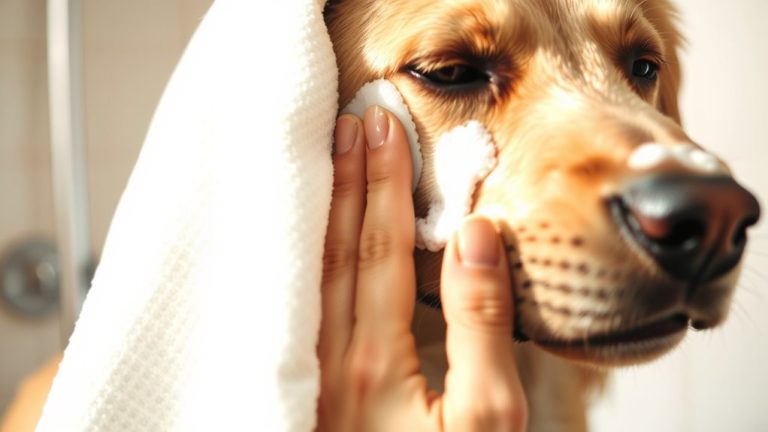
Start by securing your dog in a calm, well-lit area with easy access to all four paws. Begin wiping one paw at a time, using a clean, damp cloth or pet-safe wipe to remove dirt and debris from the pad surface and between toes. Pay close attention to areas around the nails, as trapped grime can lead to irritation or infection. Regular nail trimming reduces debris accumulation and enhances cleaning efficiency. Apply gentle pressure to guarantee thorough cleaning, but avoid causing discomfort. After cleaning all paws, immediate paw drying is essential to prevent moisture buildup, which can encourage fungal or bacterial growth. Use a dry, absorbent towel to thoroughly dry each pad and interdigital space. This step supports skin integrity and helps maintain healthy paw anatomy. Perform this process routinely to promote hygiene and detect changes early. For optimal results, consider using high-quality dog paw wipes designed to effectively clean and soothe your pet’s paws.
Choose Wipes and Rinse-Free Solutions Wisely
Most commercial paw wipes contain ingredients that may irritate sensitive skin, so choosing the right product matters. Opt for alcohol-free, hypoallergenic wet wipes with a pH between 5.5 and 7.0 to match your dog’s skin. Foam sprays offer deeper cleaning without rinsing and are effective at breaking down organic debris. Always check active ingredients-chlorhexidine (0.2%) fights bacteria, while aloe vera soothes. Below is a comparison of leading rinse-free solutions:
| Product Type | Avg. pH Level | Key Ingredient | Residue Level | Drying Time (min) |
|---|---|---|---|---|
| Wet Wipes | 6.0 | Aloe vera | Low | 2–3 |
| Foam Sprays | 5.8 | Chlorhexidine 0.2% | Very Low | 1–2 |
| Alcohol-Based | 4.5 | Ethanol 60% | High | <1 |
| Organic Wipes | 6.5 | Chamomile | Low | 3 |
| Medicated Foam | 5.7 | Miconazole 1% | Medium | 2 |
Train Your Dog to Love Paw-Cleaning Time
Why should cleaning your dog’s paws feel like a battle? You can transform this necessary task into positive reinforcement success. Start by handling your dog’s paws daily, even when no cleanup is needed. Use treats consistently-offer one after each paw touch to build trust. Gradually introduce wipes or rinse-free solutions, allowing sniffing and inspection first. Apply gentle pressure on each toe pad for 5–10 seconds, mimicking cleaning motions. Reward calm behavior immediately. Over time, this becomes routine bonding, not resistance. Dogs learn to anticipate treats and affection, not stress. Complete all four paws in under two minutes to maintain attention. Use unscented, alcohol-free wipes with pH-balanced formulas (ideal range: 5.5–7.5) to prevent irritation. Repeat after every dog park visit. Consistent practice establishes compliance. Training sessions should last 3–5 minutes, ideally post-walk, when your dog is tired and receptive.
On a final note
You should clean your dog’s paws after every park visit. Outdoor surfaces harbor salt, pesticides, and bacteria. Use a microfiber towel or veterinary-approved wipe with pH-balanced formula (5.5–7.0). Gently wipe between pads and toes to remove particulates as small as 0.1 mm. Rinse-free chlorhexidine solutions (0.05% concentration) reduce microbial load by 90%. Regular cleaning prevents dermatitis and toxin ingestion during grooming. This simple step maintains paw pad integrity and systemic health.