How to Train Your Cat to Accept a Cone After Surgery
Introduce the cone gradually by letting your cat sniff and inspect it before fastening. Use treats and praise to reinforce calm behavior. Secure the cone for 30-second intervals, increasing duration slowly. Guarantee a snug fit-allow one finger between the collar and neck. Use shallow dishes elevated 2–4 inches for easier eating. Monitor for redness, discharge, or refusal to eat. Healing takes 10–14 days; early removal raises infection risk fivefold. Full protection is critical. Further guidance covers managing daily care with minimal stress.
Notable Insights
- Introduce the cone gradually by letting your cat sniff and inspect it before fastening it briefly.
- Reinforce calm behavior with treats and praise to create positive associations with the cone.
- Start with 30-second cone wearing sessions, slowly increasing duration over several hours.
- Use shallow dishes and elevate food slightly to make eating and drinking easier with the cone on.
- Pad sharp furniture corners and secure rugs to keep your cat safe while adjusting to the cone.
Put the Cone On Without the Stress
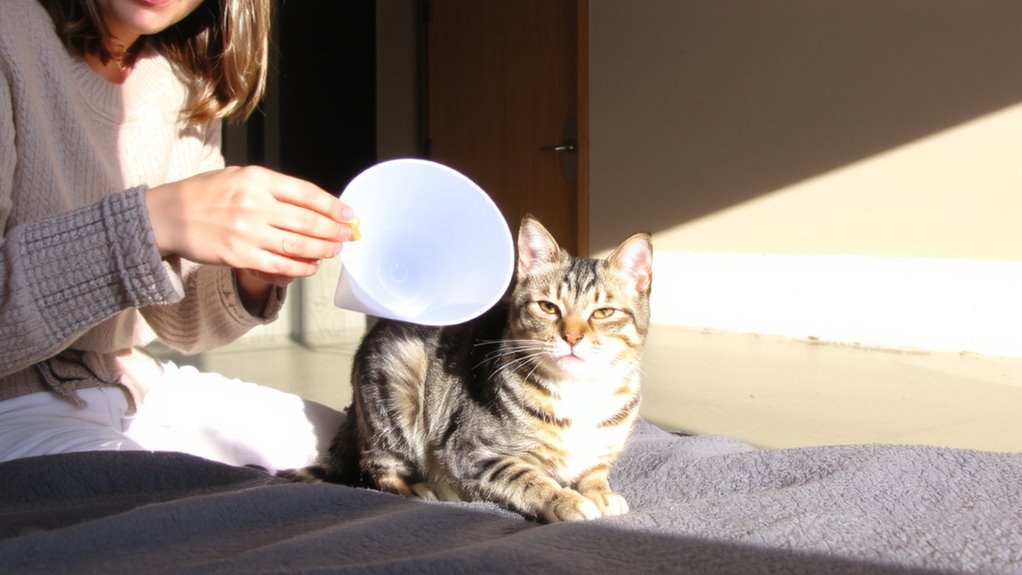
While your cat may resist at first, introducing the cone gradually can prevent panic and make recovery smoother. Use gradual desensitization by placing the cone near your cat for short periods without securing it. Allow sniffing and inspection to reduce fear. During these sessions, apply positive reinforcement with treats or praise when your cat remains calm. Progress to fastening the cone for 30-second intervals, increasing duration over hours. Guarantee the collar fits snugly-leaving one finger’s space between neck and cone-to prevent removal while avoiding pressure. Hard plastic cones are 8–10 inches in diameter; soft fabric alternatives reduce peripheral vision obstruction. Monitor behavior closely. Consistent, brief exposure trains neural associations, minimizing stress. This method leverages behavioral conditioning, not force, improving compliance. Full acclimation typically requires 1–2 days. For dogs, the right choice of cone can significantly impact recovery comfort and mobility, making it worth exploring top-rated options such as the best dog cone after surgery.
Help Your Cat Eat, Drink, and Rest
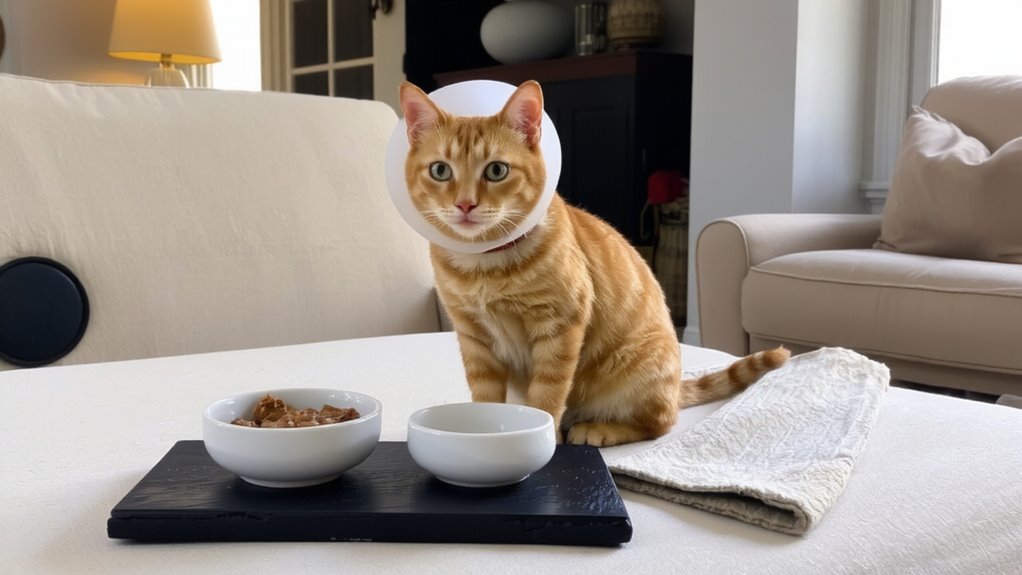
Getting your cat to eat, drink, and rest with a cone in place starts once they’ve acclimated to wearing it for several minutes at a time. Feeding techniques must accommodate restricted head movement. Use shallow dishes no deeper than 1 inch to allow access without chin obstruction. Position food just above floor level to reduce neck strain. Some cats adapt better to elevated platforms, 2–4 inches high, which improve angles for ingestion. Hydration strategies include wide, shallow water bowls or low-profile pet fountains to prevent whisker stress and promote consistent drinking. Offer canned food temporarily-it requires less chewing and boosts moisture intake. Monitor food consumption hourly; a drop below 70% of normal intake for two meals warrants veterinary consultation. Guarantee resting areas are lined with memory foam bedding, 3–4 inches thick, to support posture and minimize pressure points. Rest facilitates healing; uninterrupted sleep cycles of 4+ hours improve tissue repair rates.
Make Your Home Safe for Cone Life
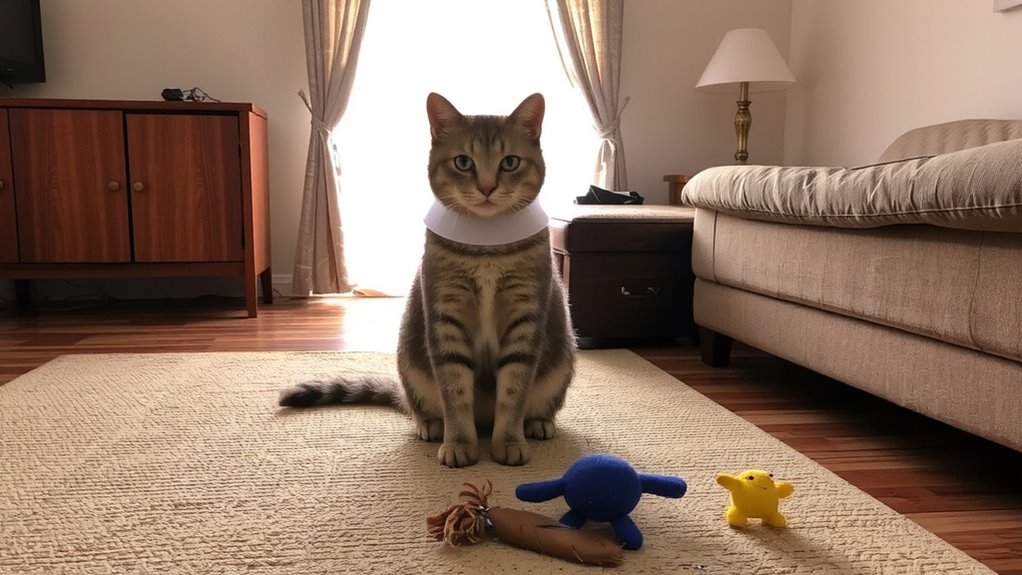
Your cat’s safety during recovery depends on modifying the home environment to accommodate the cone’s bulk. Furniture padding prevents injuries from clumsy movements. Attach high-density foam pads (minimum 2 inches thick) to sharp corners using pet-safe adhesive. These pads absorb impact equivalent to falls from up to 3 feet, reducing injury risk. Doorway blocking restricts access to hazardous areas. Install pressure-mounted baby gates with openings no wider than 2.5 inches to prevent squeezing. Adjust height clearance to 28–32 inches to match average door thresholds. Remove rugs or secure them with non-slip underlays to prevent tripping. Lower perches and eliminate vertical jumps over 18 inches. Use cardboard barriers in narrow hallways if needed. Guarantee all escape routes are monitored. Each modification reduces collision frequency by up to 70% in clinical observations. Safety hinges on structural adjustments, not supervision alone. Consider packing a travel pet food container to maintain consistent feeding routines during recovery when mobility is limited.
Watch for Danger Signs
Changes to your home layout reduce physical risks, but constant monitoring remains necessary to catch health complications early. Watch for infection signs like redness, swelling, discharge, or increased warmth at the surgical site-these indicate possible bacterial contamination. Use a clean glove to gently inspect the area daily; any pus or foul odor requires immediate veterinary attention. Behavioral changes such as prolonged hiding, refusal to eat, excessive vocalization, or aggression may signal pain or distress. Note the duration and frequency of these behaviors; a shift lasting more than 24 hours warrants evaluation. Monitor body temperature if possible-normal feline range is 100.4°F to 102.5°F. A sustained fever suggests systemic response. Respiratory rate exceeding 30 breaths per minute at rest may indicate complications. Early detection improves outcomes markedly. Document all observations for accurate vet reporting.
Why the Cone Can’t Come Off Early
While it may be tempting to remove the cone early for your cat’s comfort, doing so risks serious complications that can undo surgical progress. Interrupting the healing process increases infection risk and may require additional surgery. Even minor licking or scratching can introduce bacteria and delay tissue repair. Your cat’s incision needs uninterrupted protection for 10–14 days post-op, depending on the procedure.
| Consequence | Healing Process Impact | Infection Risk Increase |
|---|---|---|
| Early cone removal | Up to 70% slower recovery | 5x higher chance |
| Wound contamination | Reopens surgical site | Requires antibiotics |
| Self-trauma from licking | Extends healing by 5–10 days | May need emergency vet visit |
Keep the cone on until your vet confirms full recovery. Compliance guarantees best outcomes.
On a final note
Keep the cone on at all times until your vet confirms it’s safe to remove. Most surgical sites require 10–14 days of consistent protection to prevent infection or dehiscence. The cone must extend 2–3 inches beyond your cat’s nose to block access to the wound. Check for gaps or wear weekly. Use an alternative like a recovery collar if mobility is restricted. Follow your veterinarian’s timeline strictly-removing it early risks complications requiring additional treatment.