How to Transition a Cat From Free-Feeding to Scheduled Meals for Weight Loss
You should shift your cat from free-feeding to scheduled meals by first calculating their daily caloric need-typically 120–180 kcal for weight loss in a 10-pound cat. Use the RER formula: 70 × (body weight in kg)^0.75, then apply a multiplier of 1.0–1.2. Replace dry food with measured portions of high-protein, low-carb wet food, such as 3-ounce cans providing 70–90 kcal. Switch over 7–10 days, offering two to three meals daily at set times. Weigh your cat every two weeks and adjust portions if needed. Consistency maintains metabolic stability and effective weight management. Further details on meal timing and portion control follow.
Notable Insights
- Gradually shift from free-feeding to set meal times over 7–10 days to prevent stress and refusal to eat.
- Measure daily calories based on 60–80% of maintenance needs, typically 120–180 kcal for a 10-pound cat.
- Divide the daily food allowance into two or three portions, fed at consistent times each day.
- Use wet food with high moisture and protein to enhance satiety and support healthy weight loss.
- Monitor weight every two weeks and adjust portions by 10% if weight loss stalls or progresses too quickly.
Calculate Your Cat’s Daily Calorie Needs
To properly switch your cat to scheduled meals, you’ll first need to determine how many calories your cat requires each day. Calorie counting is essential for accurate portion control and effective weight management. An average 10-pound adult cat needs approximately 200–220 kcal daily to maintain weight, but a target for weight loss is typically 60–80% of that, around 120–180 kcal. Use your cat’s lean body weight, not current weight if overweight, to avoid overestimating needs. Consult a veterinarian to calculate resting energy requirements (RER) using the formula: RER = 70 × (body weight in kg)^0.75. Multiply RER by a factor (usually 1.0–1.2 for weight loss) to get the daily allowance. This precise intake supports safe fat loss while preserving muscle. Strict portion control guarantees your cat receives only the measured amount, preventing excess consumption. Accurate scales or measuring tools improve consistency.
Choose a Weight-Loss Cat Food That Works
You’ve calculated your cat’s daily calorie target-now it’s time to choose a food that aligns with those needs while supporting healthy weight loss. Opt for a high-protein, low-carbohydrate diet to mimic natural feline nutrition. Wet food typically contains 70–80% moisture, helping with hydration and promoting satiety on fewer calories. A 3-ounce can of veterinary-recommended weight-loss wet food averages 70–90 kcal, making portion control precise. Dry food is energy-dense, often 300–400 kcal per cup, increasing overfeeding risk. If using dry food, select a formula with protein as the first ingredient and less than 10% carbohydrate on a dry matter basis. Pairing wet and dry food gives flexibility but requires calorie tracking. Choose brands with AAFCO certification and clinical studies supporting efficacy. Prioritize nutrient density and feeding guidelines backed by research. For trusted formulas, consider one of the Best Purina Cat Food Picks that meet these nutritional criteria.
Switch From Free-Feeding to Scheduled Meals
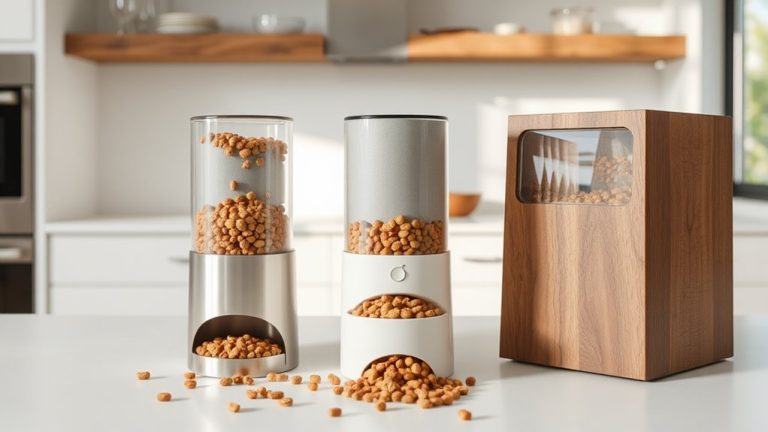
While your cat may be accustomed to grazing throughout the day, shifting to scheduled meals is essential for managing portion intake and supporting weight loss. Free-feeding promotes overeating, especially in inactive or indoor cats. Implementing portion control allows you to measure exact caloric intake, aligning with your cat’s target weight and metabolic needs. Use calibrated measuring cups or a digital kitchen scale to dispense precise food amounts. Replace continuous access with designated feeding stations-specific, consistent locations free from high-traffic areas. These stations condition your cat to associate mealtime with a fixed place and time. Automated feeders with timed compartments can support accuracy, dispensing 20–30 grams per meal based on veterinary guidelines. For reliable performance and portion consistency, consider models highlighted in reviews of the best cat auto feeders. Abrupt removal of food bowls disrupts routine; instead, gradually reduce availability over 7–10 days. This structured approach enhances compliance with weight-loss protocols and improves metabolic regulation.
Set Two to Three Daily Meal Times
Most adult cats thrive on two to three scheduled meals per day, a routine that aligns with their natural feeding behavior and metabolic rhythm. Meal timing should occur at consistent intervals-such as 8 a.m., 1 p.m., and 6 p.m.-to support stable blood sugar and digestion. Feeding consistency is critical for weight management and helps regulate your cat’s internal clock. Each meal should contain a measured portion based on your cat’s ideal body weight, typically ⅓ to ½ cup of dry food or 3–4 ounces of wet food per meal, split evenly. Use digital timers or automatic feeders to maintain precision. Avoid random snacking, which disrupts caloric control. Scheduled feeding windows mimic natural hunting patterns and improve gastrointestinal motility. Maintaining predictable meal timing increases satiety and reduces overeating. Consistent daily structure supports long-term adherence to a weight-loss plan, ensuring measurable progress over weeks.
Handle Food Begging the Right Way
Why does your cat pace, meow, or paw at you between meals? These behaviors stem from high food motivation, intensified by abrupt changes in feeding routines. Behavioral changes like persistent begging are common during the shift from free-feeding to scheduled meals. Do not reward begging with food, as this reinforces the behavior. Instead, adhere strictly to the scheduled feeding times-8 a.m., 12 p.m., and 6 p.m., for example. Divert attention with structured play lasting 10–15 minutes, mimicking hunting sequences to reduce stress. Consistency over 2–3 weeks typically diminishes unwanted actions. Use timed feeders with portion controls if needed-one model dispenses 1/8 to 1/2 cup per cycle, suitable for measured meal plans. Environmental enrichment, such as puzzle feeders, redirects food motivation into problem-solving. These interventions support long-term compliance without compromising nutritional goals. A reliable timed cat feeder can automate portioned meals and maintain consistency during the transition.
Track Weight Loss and Adjust Portions
Consistent feeding schedules set the foundation for managing your cat’s intake, and now you can focus on measuring progress through weight and portion control. Weight monitoring is essential-weigh your cat every two weeks using a digital scale, ideally at the same time of day. A healthy weight loss rate is 0.5% to 1% of total body weight per week. If progress stalls, evaluate current caloric intake. Most adult cats need 20–30 kcal per pound of body weight daily, depending on activity and metabolism. Adjust portions based on measured weight loss and metabolic rate. Use an 8-ounce measuring cup or digital food scale for precise portion adjustment. Reduce daily intake by 10% if weight loss plateaus, then reassess after two weeks. Accurate tracking guarantees effective, sustainable results without underfeeding or overfeeding.
Know When to Call the Vet
How can you tell when a change in appetite signals something serious? Sudden changes in eating behavior often indicate underlying health issues. If your cat stops eating for more than 24 hours, seek veterinary care immediately-prolonged anorexia can lead to hepatic lipidosis, a life-threatening liver condition. Watch for weight loss exceeding 3% of body mass per week without medical supervision, as this exceeds safe thresholds. Additional red flags include vomiting, diarrhea, lethargy, or shifts in water intake. These symptoms may point to diabetes, hyperthyroidism, or renal disease. Monitor closely during the shift to scheduled meals. Any abrupt refusal of food or dramatic behavior change warrants prompt evaluation. Trust your observations, but rely on diagnostic testing-such as blood panels, urinalysis, and physical exams-for definitive answers. Early intervention improves outcomes markedly.
On a final note
You now control your cat’s calorie intake with precision. Scheduled meals prevent overeating and support metabolic health. Feed measured portions of a high-protein, low-carbohydrate weight-loss diet-typically 60–80 kcal per kg of ideal body weight daily. Monitor weekly weight changes, adjusting food by 5–10% if needed. A healthy loss rate is 1–2% of body weight per week. Consult your vet if progress stalls or health concerns arise.