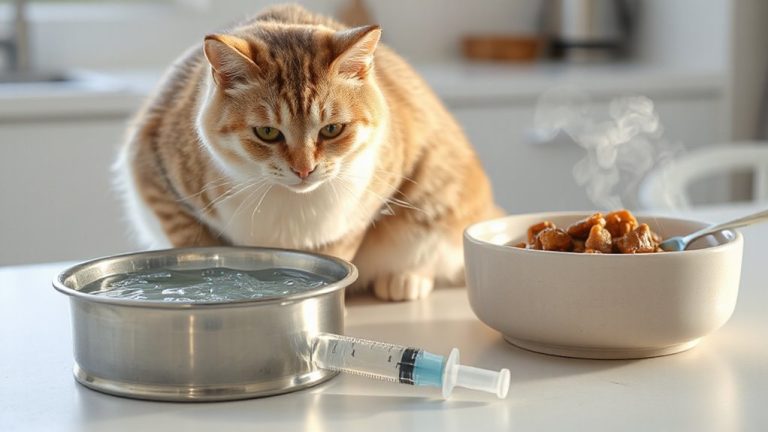
The Role of Digestive Enzymes in Pets With Exocrine Pancreatic Insufficiency
You must give your pet digestive enzyme supplements if they have exocrine pancreatic insufficiency (EPI). These replace missing amylase, lipase, and protease needed to break down food. Without them, up to 90% of dietary fat passes undigested. Use powdered bovine or porcine enzymes at ¾ to 1 teaspoon per 10 kg, 15–30 minutes before meals. Choose products with at least 400,000 FCC lipase units per teaspoon and high FIP units, like 230 for superior fat digestion. Mix with moistened food and let sit 15–20 minutes. Consistent dosing guarantees proper nutrient absorption. Monitoring TLI, B12, and stool quality helps fine-tune treatment. Adjust based on your pet’s response and lab results. The right product and timing make a measurable difference in your pet’s health. Further details reveal even greater precision in managing this condition.
Notable Insights
- Digestive enzymes replace deficient pancreatic secretions in pets with exocrine pancreatic insufficiency (EPI), enabling proper food breakdown.
- Enzyme supplements must contain lipase, protease, and amylase to digest fats, proteins, and carbohydrates effectively.
- Administering enzymes 15–30 minutes before meals optimizes digestion and nutrient absorption in affected pets.
- Powdered enzyme supplements are mixed with moistened food and pre-incubated to enhance efficacy before feeding.
- Consistent enzyme use improves stool quality, weight gain, and overall nutrition in dogs and cats with EPI.
What Is EPI in Dogs and Cats?
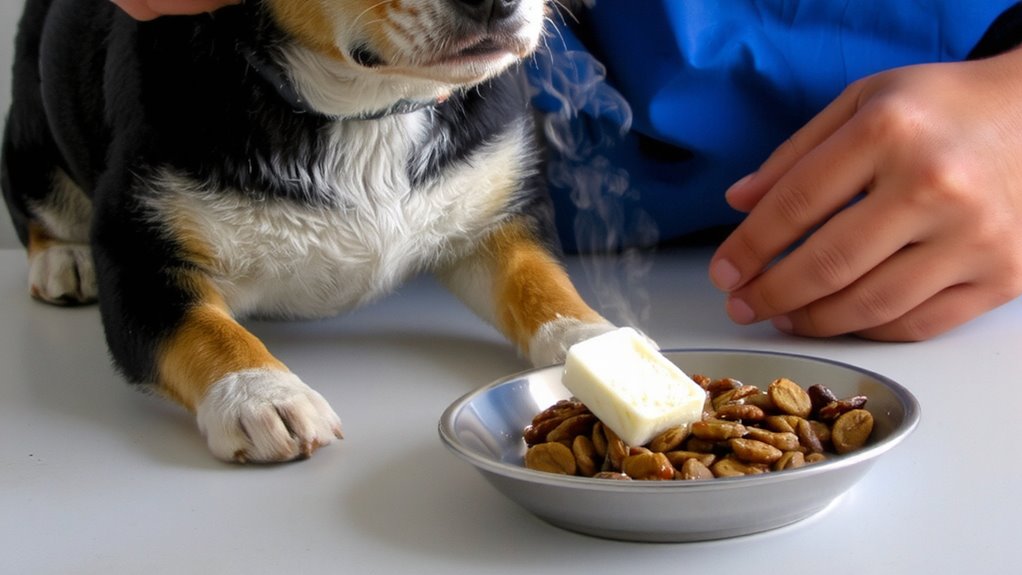
While exocrine pancreatic insufficiency (EPI) can affect both dogs and cats, it’s far more common in dogs-particularly German Shepherds and Rough Collies. EPI occurs when pancreatic function declines, impairing the organ’s ability to produce digestive enzymes. Without these enzymes, your pet can’t break down fats, proteins, and carbohydrates in the gut. This leads to poor nutrient absorption, causing weight loss despite a normal or increased appetite. Fecal output often increases in volume, becoming greasy and foul-smelling due to undigested fat. The condition most frequently results from pancreatic acinar atrophy or chronic pancreatitis. Left untreated, EPI leads to malnutrition and muscle wasting. Diagnosis relies on clinical signs and a blood test measuring trypsin-like immunoreactivity (TLI), which confirms reduced pancreatic function. Early detection helps manage the disease and supports long-term nutrient absorption. Supplementing with high-quality digestive enzymes for pets can significantly improve digestion and overall health in affected animals.
Use Digestive Enzyme Supplements to Treat EPI
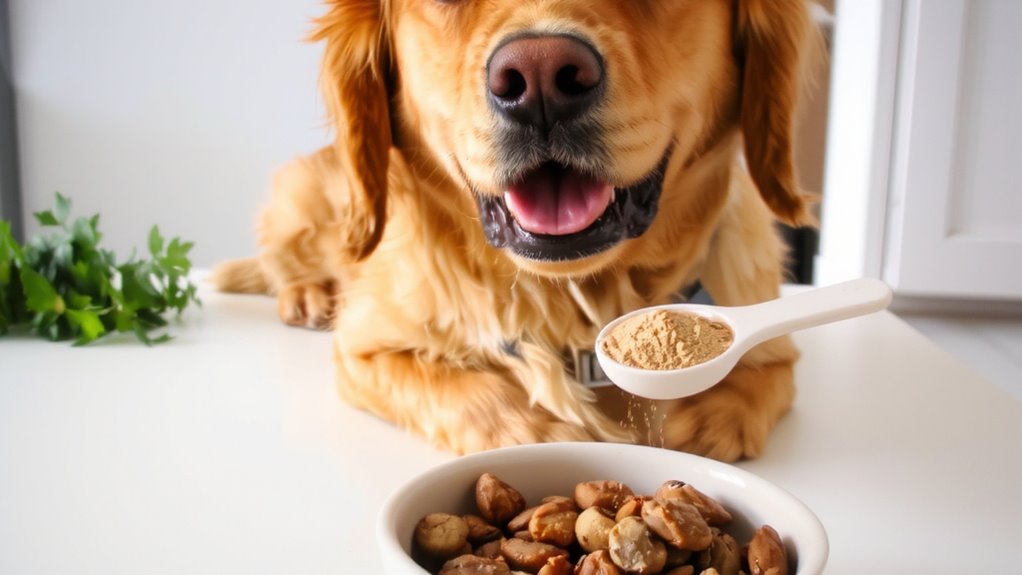
Because your pet can’t produce enough digestive enzymes due to exocrine pancreatic insufficiency (EPI), enzyme supplementation is essential for proper digestion. You must use powdered supplements derived from bovine or porcine enzyme sources, as these contain adequate amylase, lipase, and protease. Mix the supplement directly into your pet’s food; moisture activates enzyme release. For precise efficacy, dosage timing is critical-administer 15 to 30 minutes before feeding to prime digestive function. Typical dosing starts at ¾ to 1 teaspoon per 10 kg body weight, adjusted based on stool quality and weight gain. Consistency in dosage timing improves nutrient breakdown and reduces steatorrhea. Enzyme potency is measured in FCC units: aim for at least 400,000 lipase units per teaspoon. Over-the-counter products vary widely in enzyme sources and potency, requiring careful label review. Improper dosage timing or weak enzyme sources undermines treatment, prolonging malabsorption. For optimal results, choose products specifically formulated for pets, such as those highlighted in reviews of the best digestive enzymes for dogs.
Choose the Best Enzyme Product for Your Pet
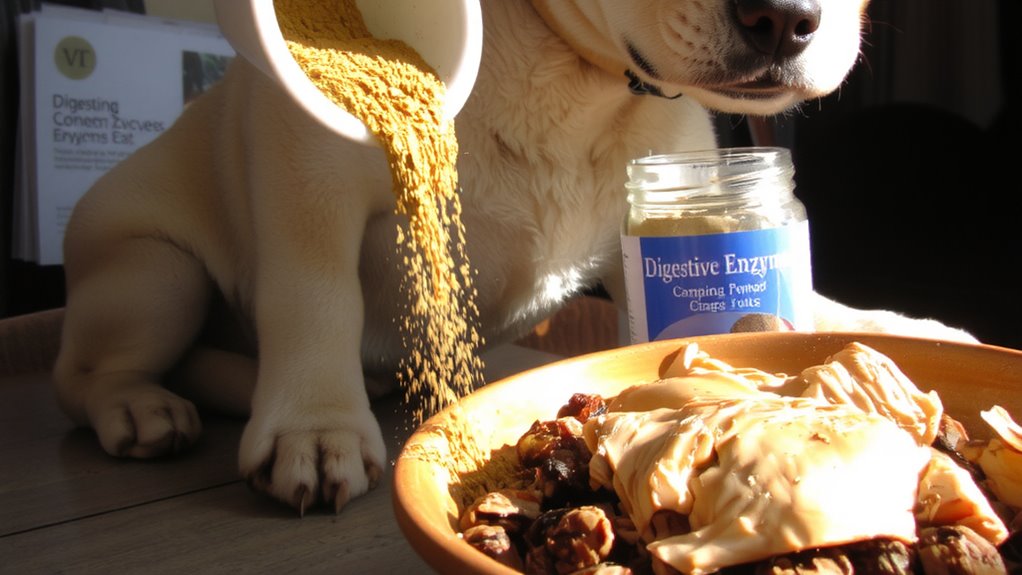
How do you know which enzyme product will truly meet your pet’s needs? Enzyme selection is critical for managing exocrine pancreatic insufficiency effectively. Not all supplements deliver the same potency or stability. Perform a careful product comparison using measured enzyme activity levels.
| Product | Lipase (FIP Units/g) |
|---|---|
| A | 180 |
| B | 210 |
| C | 160 |
| D | 230 |
| E | 195 |
Lipase breaks down fats-higher FIP units mean better digestibility. Products labeled “pancreatin” must meet pharmaceutical standards. Look for granular forms; they mix evenly with food. Acid-resistant coatings protect enzymes in the stomach. Avoid expired products-enzyme activity degrades over time. Consistency in dosing matters. Your pet’s response guides final selection, but start with proven, high-activity formulas. Effective enzyme selection isn’t guesswork-it’s science.
Give Enzymes Correctly With Every Meal
Always give digestive enzymes with every meal to guarantee consistent nutrient breakdown. Enzyme timing is critical-administer powder or tablets just before or mixed into the food to guarantee immediate contact with ingesta. Delayed dosing reduces efficacy by up to 40%. Mix enzyme powder thoroughly with moistened food; let the mixture sit for 15–20 minutes at room temperature to activate lipase, protease, and amylase. This pre-incubation mimics natural secretion and improves digestion efficiency. Maintain strict meal consistency: feed your pet the same diet, enzyme dose, and timing daily. Fluctuations disrupt enzymatic activity and compromise absorption. Standard dosing is 1–2 teaspoons per cup of food, but adjust per product label and veterinary guidance. Skipping meals or varying enzyme administration leads to maldigestion and clinical relapse. Consistency guarantees maximum pancreatic support and long-term nutrient uptake.
Monitor Progress and Adjust Treatment
You’ve established a consistent enzyme regimen, but treatment doesn’t end there-ongoing monitoring guarantees your pet continues to benefit. Assess enzyme efficacy by tracking stool consistency, appetite, and body condition weekly. Normal feces should form within 7–14 days; persistent soft stools indicate inadequate dosing. Adjust enzyme amounts in 1/4-teaspoon increments for powders or by capsule strength, reevaluating every 3–5 days. Monitor weight every two weeks-ideal gain is 0.5–1% of body weight daily in underweight pets. Poor response often requires dietary adjustments, such as switching to a low-fiber, highly digestible commercial formula. Fiber impedes enzyme-substrate contact. Recheck trypsin-like immunoreactivity (TLI) every 3–6 months to confirm diagnosis stability. Bloodwork, including B12 and folate, guides adjunct therapy. Record all changes to identify trends. Consistent logs clarify what impacts outcomes. Adjustments are normal-not failure, but refinement.
On a final note
You must manage EPI in pets with consistent enzyme replacement. Pancreatic enzyme supplements-derived from porcine pancreata-contain lipase, protease, and amylase to break down fats, proteins, and carbs. Use 1 to 2 teaspoons of powder per cup of food, mixed 15–20 minutes before feeding to allow enzyme activation. Monitor stool quality and weight; normalize dosing when feces improve. Regular TLI testing confirms treatment efficacy.