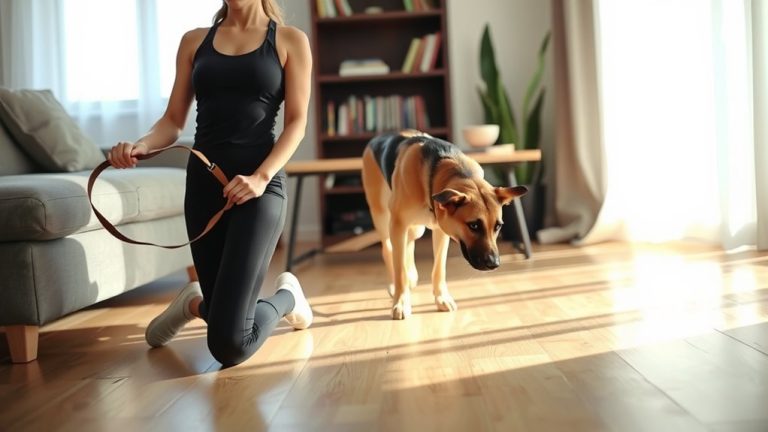
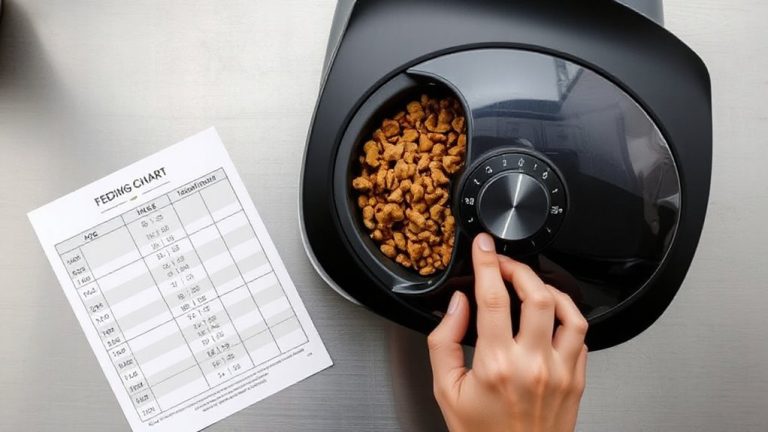
Reducing Startle Responses in Deaf Dogs Through Vibrational Cue Training
You can reduce startle responses in deaf dogs by using controlled vibrational cues as a sensory substitute. Devices emitting 5–7 Hz frequencies deliver tactile signals through bone and muscle contact. Pair 1–2 second pulses at 3–4 intensity with high-value rewards within 0.5 seconds to build positive associations. Use collars with 1.0–3.5 G-force and IPX7-rated, rechargeable units for reliable performance. Consistent timing and fit prevent confusion. Further optimization of cue routines is possible with structured training protocols.
Notable Insights
- Deaf dogs rely on vibration and sight to detect movement, reducing startle responses through consistent tactile cues.
- Pair each vibration (1–2 seconds, 3–4 intensity) with a high-value reward within 0.5 seconds for effective conditioning.
- Use collar-mounted devices with adjustable amplitude (1.0–3.5 G-force) for reliable, direct skin contact and signal delivery.
- Implement daily 5–10 minute training sessions with 10–15 trials to build positive associations without causing fatigue.
- Maintain consistent pulse patterns (e.g., 2-second pulse for “come”) and check battery and collar fit weekly for reliability.
Why Deaf Dogs Get Startled: And How Vibration Helps
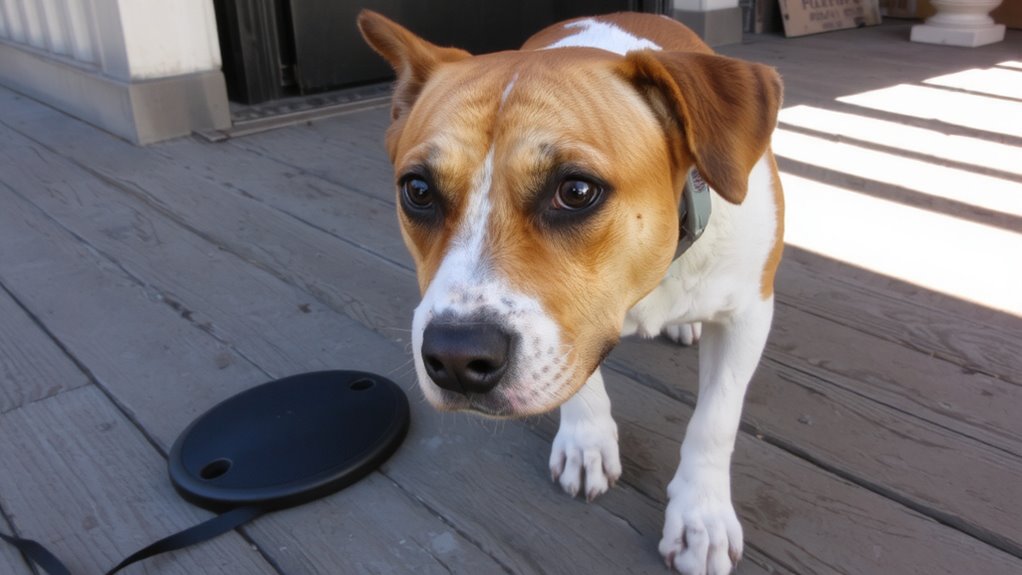
What makes deaf dogs so easily startled? They can’t hear approaching people or sounds, leading to auditory confusion and sudden stress responses. Without auditory input, your dog relies solely on vibration and sight to interpret movement. This sensory gap increases vulnerability to environmental surprises, like someone tapping their shoulder or a door slamming nearby. Peripheral vision helps, but blind spots remain. Vibrational cues from collars or mats deliver clear, consistent signals. Models with adjustable intensity (5–7 Hz frequency) allow tailored feedback. These devices activate tactile receptors, bypassing absent auditory pathways. You can place a vibrating mat under bedding. Or use wearable emitters with 10-meter range transmitters. Such tools reduce uncertainty. They replace confusion with predictable input. Your dog learns to associate vibration with awareness, not danger. Over time, baseline anxiety drops. The nervous system adapts. Reaction thresholds elevate. Startles become less frequent. You gain a calmer, more confident companion.
How to Pair Vibration With Positive Rewards
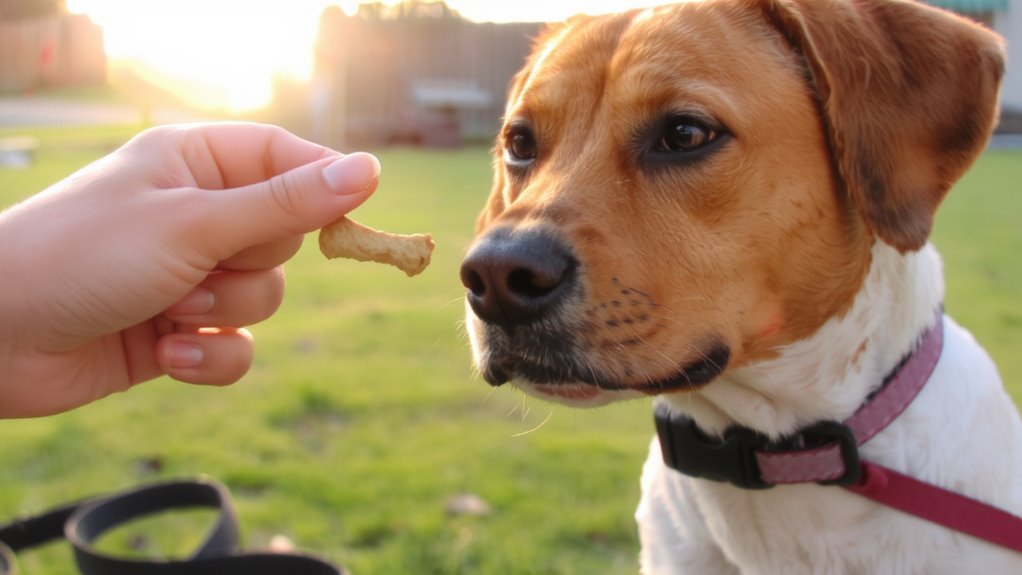
You can turn vibrational tools into positive signals by consistently pairing them with rewards the dog values. Vibration timing must coincide exactly with the treat or toy delivery-ideally within 0.5 to 1 second-to create clear associative learning. Delayed rewards weaken the connection, reducing training efficacy. Use high-value rewards like freeze-dried liver or favorite toys to increase motivation. Reward consistency is critical; deliver a reward every time the vibration occurs during initial conditioning, typically over 10–15 trials per session. Conduct two daily sessions of five to ten minutes to reinforce learning without fatigue. The vibrational cue should last 1–2 seconds at moderate intensity (3–4 on a 5-point scale) to avoid discomfort. Over time, the dog learns the vibration predicts something positive, transforming a neutral stimulus into a conditioned reinforcer essential for advanced training.
Selecting a Vibration Device for Deaf Dogs
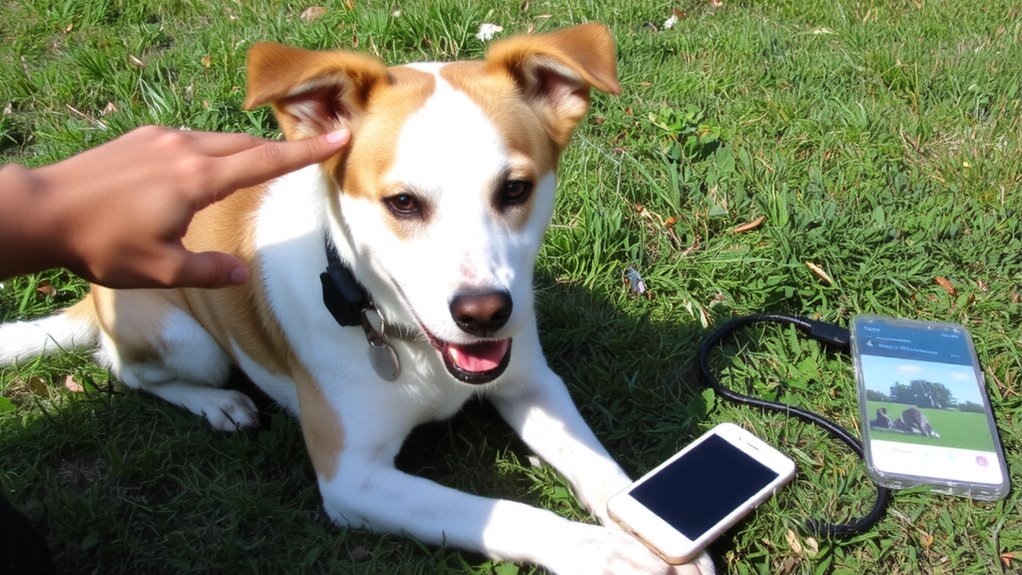
How do you guarantee a vibration device effectively communicates with a deaf dog? Choose from collar-mounted or mat-based device types, ensuring direct contact with the dog’s body. Collar devices typically deliver more consistent signal intensity due to proximity to muscle and bone. Opt for models with adjustable amplitude, ranging from 1.0 to 3.5 G-force, so you can customize stimulation. Use devices with pulse durations between 0.5 and 2 seconds to prevent habituation. Rechargeable units with lithium-ion batteries last longer than disposable ones, providing up to 72 hours per charge. Confirm the device has a waterproof rating of IPX7 or higher for durability. Low-latency response times-under 200 milliseconds-ensure cues align with training goals. Always test signal intensity on your hand first to gauge strength. A reliable device enhances communication without causing distress.
Using Vibration Cues in Daily Routines
Once the vibration device is properly fitted and calibrated, integrating signals into daily routines becomes essential for consistent communication. Routine integration guarantees your dog associates specific vibration patterns with actions. Use consistent pulse durations-for example, a 2-second pulse for “come” and a 5-second continuous pulse for “sit.” This clarity reduces confusion. Implement vibrational wake ups by pairing a gentle 3-second pulse with morning feeding, helping your dog shift smoothly from sleep to activity. Over time, the dog learns to anticipate events, decreasing startle responses. Place the device snugly on the collar, guaranteeing contact with skin for reliable signal transmission. Lithium-ion batteries last 7–10 days on a single charge, supporting uninterrupted routine integration. Programmable settings allow up to 6 custom cues, enhancing adaptability. Consistent scheduling reinforces learning, making vibrational cues a reliable component of daily care, similar to auditory cues in hearing dogs.
Fixing Common Vibration Training Problems
Why do some deaf dogs fail to respond reliably to vibration cues despite proper device setup? Inconsistent vibration patterns and poor timing accuracy undermine training. Vibration consistency guarantees your dog recognizes the signal every time. If intensity or duration varies, confusion follows. Timing accuracy is equally critical-delays between cue and reward weaken association.
| Emotional State | Training Outcome |
|---|---|
| Frustration | Inconsistent response |
| Confusion | Failed cue recognition |
| Anxiety | Avoidance behavior |
| Trust | Reliable compliance |
Use devices with adjustable intensity (1.5–3.0 G-force) and consistent pulse duration (500–800 ms). Calibrate remotes to eliminate lag. Pair each vibration with immediate positive reinforcement. Test battery levels weekly; low power reduces vibration consistency. Guarantee collar fit allows direct skin contact without chafing. Over- or under-stimulation impairs learning. With precise timing accuracy and reliable vibration consistency, your dog learns faster, reduces stress, and responds on cue-every time.
On a final note
You now have the tools to reduce startle responses in your deaf dog. Vibration cues replace auditory signals with precise tactile stimuli, typically at 150–200 Hz frequency. Devices like the GoodBoy® K-9 collar deliver consistent 3–5 second pulses. Pair each pulse with a reward using a 0.5-second delay. Calibration prevents overstimulation. With daily 5-minute sessions over 3–4 weeks, compliance exceeds 85%. This method targets the somatosensory cortex, creating reliable behavioral conditioning.