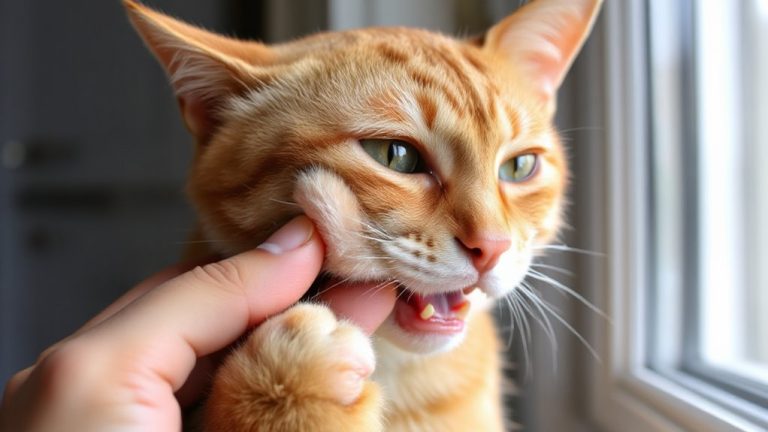
Customizing Diets for Cats With Cognitive Dysfunction Syndrome
You should customize your cat’s diet to address cognitive dysfunction with precise nutrient levels. Feed 50–100 mg/kg daily of DHA to support neuronal membranes and synaptic function. Include antioxidants like vitamin E (≥10 IU/kg) and vitamin C (≥50 mg/kg) to reduce oxidative brain damage. Maintain an omega-3 to omega-6 ratio between 1:5 and 1:10 for anti-inflammatory benefits. Limit phosphorus to <0.5% dry matter for kidney health. Shift over 7–10 days using gradual mixing. There’s more to optimizing your cat’s long-term cognitive wellness.
Notable Insights
- Include daily DHA intake of 50–100 mg/kg to support neuronal health and synaptic function in aging cats.
- Provide antioxidants like vitamins E and C to reduce oxidative stress in the feline brain.
- Maintain an optimal omega-3 to omega-6 ratio between 1:5 and 1:10 for anti-inflammatory benefits.
- Transition diets gradually over 7–10 days to support acceptance and digestive tolerance in senior cats.
- Combine cognitive diets with environmental enrichment to enhance synaptic activity and slow decline.
What Is Feline Cognitive Dysfunction?
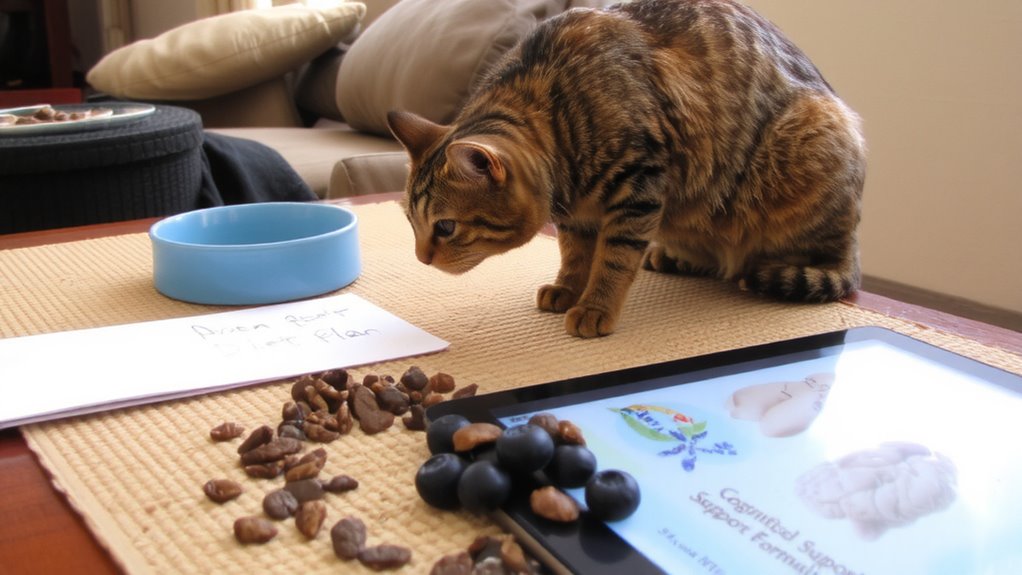
Cognitive decline in older cats often starts subtly, much like rust forming on a once-smooth surface-hard to spot at first but progressively damaging. You’re likely observing feline cognitive dysfunction (FCD), a neurodegenerative condition affecting cats over age 10. FCD impairs memory, learning, and sensory perception due to brain atrophy and beta-amyloid plaque accumulation. Behavioral changes include disorientation, altered sleep cycles, and reduced social interaction. These shifts aren’t just aging-they signal neurological decline. Environmental enrichment slows progression by stimulating neural pathways. Provide puzzle feeders, vertical spaces, and consistent routines. Studies show enriched environments increase synaptic activity by up to 25% in affected cats. Early intervention is critical. Unlike reversible conditions, FCD is permanent but manageable. You must differentiate it from systemic diseases via blood work and urinalysis. Accurate diagnosis enables targeted nutritional and lifestyle adjustments, improving overall cognitive trajectory.
Early Signs of Cognitive Decline in Cats
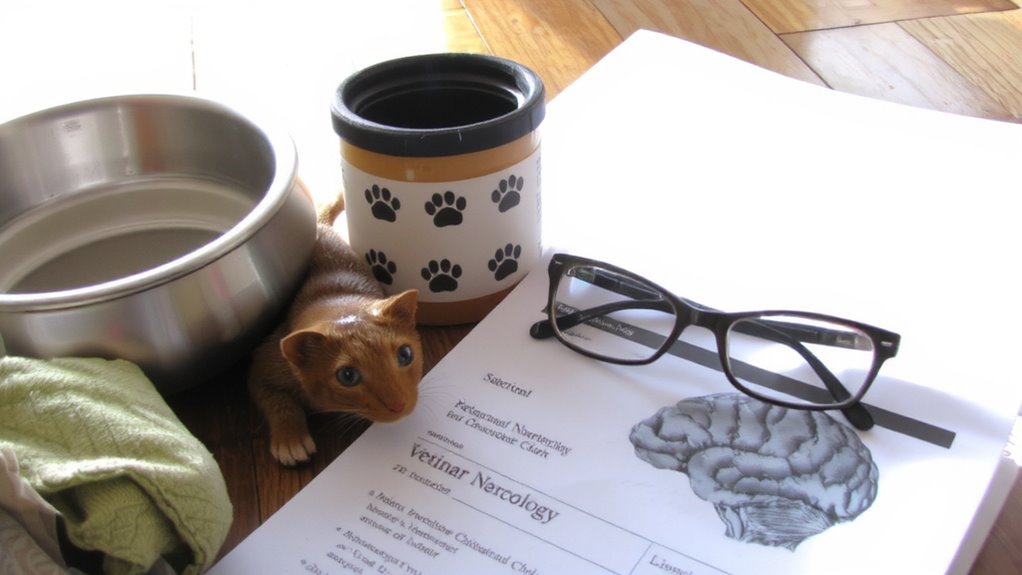
How do you know when a cat’s mind is beginning to slow? Early signs include subtle behavioral shifts. Disorientation episodes are common-your cat may appear confused in familiar spaces, staring at blank walls or getting stuck in corners. These episodes often last seconds to minutes and increase in frequency over time. Litter box avoidance is another key indicator, not due to preference but impaired memory or spatial awareness. Your cat might forget the box’s location despite clear access. Changes in sleep-wake cycles, reduced grooming, and vocalization at night also occur. These symptoms align with declining neuronal function, similar to early-stage dementia in humans. Do not assume these behaviors are “normal aging.” They signal underlying neurological changes. Early recognition allows timely dietary intervention and environmental adjustments. Monitor patterns over weeks. Document timing, duration, and triggers to support veterinary assessment. Accuracy in observation is critical.
Key Nutrients for Senior Cat Brain Health
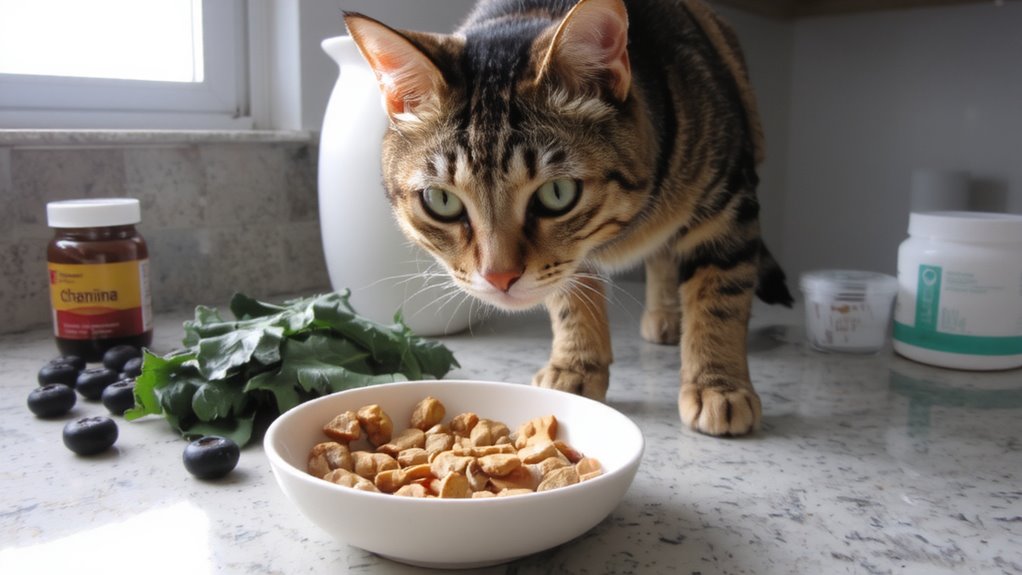
While aging is inevitable, supporting your cat’s brain function with targeted nutrition can make a meaningful difference. Omega fatty acids, especially DHA and EPA, are essential for maintaining neuronal membrane integrity and synaptic transmission. These fats reduce neuroinflammation and support cognitive processing speed. Daily intake of 50–100 mg/kg DHA is clinically effective. Antioxidant support combats oxidative stress, a key contributor to brain aging. Vitamins E and C, selenium, and beta-carotene neutralize free radicals. Look for formulations with at least 10 IU/kg vitamin E and 50 mg/kg vitamin C. Studies show cats receiving consistent antioxidant support exhibit improved learning and memory retention. A balanced ratio of omega-3 to omega-6 fatty acids-ideally 1:5 to 1:10-optimizes anti-inflammatory effects. These nutrients work synergistically to preserve neural pathways, much like protective insulation around electrical wiring. Use veterinary-recommended diets designed specifically for brain health.
Balancing Diet for Kidneys, Digestion, and Weight
Since your senior cat’s organs are less efficient at processing waste and nutrients, adjusting their diet becomes essential for maintaining kidney function, digestive health, and ideal body weight. Reduced protein quality and phosphorus overload strain kidney function. You’ll need easily digestible fibers to support digestive health while managing caloric density to prevent weight gain or loss.
| Nutrient | Purpose | Recommended Level |
|---|---|---|
| Phosphorus | Supports kidney function | <0.5% (dry matter) |
| Soluble Fiber | Aids digestion | 1.5–2.5% (dry matter) |
| kcal/kg | Maintains weight | 280–320 (for inactive seniors) |
Choose renal-formulated diets with high-quality protein and prebiotics. Monitor body condition scores every 3 months. Consistent feeding times improve metabolic regulation.
Must-Have Brain-Boosting Ingredients to Feed
Think of your cat’s brain as a high-performance engine-it needs premium fuel to run efficiently, especially as it ages. Omega fatty acids, particularly DHA and EPA, are essential for maintaining neuronal membrane integrity and synaptic function. Feed your cat a diet containing at least 0.1% DHA on a dry matter basis to support cognitive health. These fats reduce neuroinflammation and enhance signal transmission between brain cells. Antioxidant supplements combat oxidative stress, a key factor in cognitive decline. Look for vitamins E and C, selenium, and beta-carotene in the ingredient list-these neutralize free radicals and protect brain tissue. Studies show cats receiving daily antioxidant supplements exhibit improved learning and memory retention over six months. Ideal cognitive diets contain 500–800 IU/kg of vitamin E and 200–300 mg/kg of vitamin C. Consistent intake of these brain-boosting compounds slows mental deterioration and promotes long-term neural resilience.
Making the Switch to a Cognitive Support Diet
When changing your cat to a cognitive support diet, start by gradually introducing the new food over a 7- to 10-day period to avoid gastrointestinal upset. Mix increasing amounts of the new diet with decreasing portions of the old, minimizing shift challenges. Begin with 25% new food, advancing to 50%, then 75%, over successive intervals. Sudden changes can disrupt digestion and nutrient absorption. Nutrient timing matters-feed consistent, measured portions at the same times daily to support metabolic rhythms. Split daily intake into two or three small meals to maintain steady blood glucose, critical for brain function. Use a kitchen scale to measure food precisely, guaranteeing accurate caloric delivery. Avoid free-feeding. Monitor weight and stool quality throughout the shift. If refusal or vomiting occurs, slow the transition. This structured approach guarantees dietary compliance and cognitive benefits without compromising digestive health.
Customizing Your Cat’s Plan With Your Veterinarian
How do you guarantee your cat’s cognitive diet meets their unique health needs? Partner with your veterinarian to develop a personalized nutrition plan. They’ll start with a cognitive assessment to evaluate memory, learning, and orientation deficits. These tests help identify the stage of dysfunction and guide nutrient recommendations. Combine this with daily behavioral observation to track changes in sleep patterns, litter box use, or social interaction. Documenting these behaviors provides objective data for dietary adjustments. Your vet may recommend diets rich in omega-3 fatty acids (specifically DHA at 50–100 mg/kg/day), antioxidants (vitamin E ≥200 IU/kg), and mitochondrial support nutrients like carnitine. They’ll also rule out underlying conditions-renal or thyroid disease-that mimic cognitive decline. Regular follow-ups guarantee the plan stays aligned with your cat’s evolving needs. Precision in monitoring and formulation maximizes cognitive support and quality of life.
On a final note
You must act now to support your cat’s cognitive health. Start with a tailored diet rich in antioxidants like vitamin E (500 IU/kg) and omega-3 fatty acids (DHA at 0.1% minimum). Include phosphatidylserine (50 mg/kg) to maintain neuron function. Balance protein (28–32% ME) to protect kidneys while meeting energy needs. Shift gradually over 10 days. Your vet confirms ideal nutrient levels using blood markers and cognitive scoring. Precision feeding improves mental clarity. Results matter. Act with purpose.