Training Your Dog to Follow a Scent Trail Through Tall Grass
Start indoors by playing scent-finding games using high-odor treats like dried liver or anise oil, which release detectable volatile compounds up to 30 feet. Use consistent scent pairing and short 5-minute sessions on solid floors. Shift to 10–15 ft trails in 6–12 inch tall grass, releasing your dog upwind. Increase trail length only after 90% accuracy. Handle distractions with a 6-ft leash and reward focus returns within 2 seconds. When trails are lost, reposition 5–10 ft back upwind and restart. Correct false alerts by withholding rewards and silently re-engaging. Enhance success with treats retaining 85%+ scent in humidity. Best performance begins with structured progression and precise reinforcement-further refinement depends on mastering these foundational steps.
Notable Insights
- Start indoors with short scent trails using consistent odorants like anise or birch paired with high-value treats.
- Use treats with strong, lasting scents such as dried liver or salmon meal to enhance odor detection in grass.
- Begin outdoor training with 10–15 ft straight trails in 6–12 inch tall grass to aid scent discrimination.
- Release your dog upwind to naturally catch the scent trail and encourage independent tracking.
- Correct trail loss by repositioning 5–10 ft behind the last confirmed point and re-engaging with a cue like “find it.”
Play Scent-Finding Games Indoors First
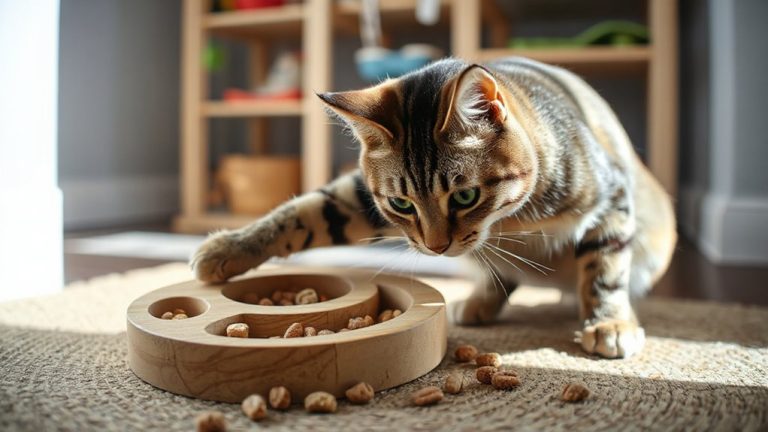
Start indoors with simple scent-finding games to build your dog’s tracking skills in a controlled environment. Indoor hiding allows you to limit variables like wind and terrain. Begin by concealing a treat under a cup or behind furniture while your dog watches. Use consistent scent pairing-always associate a unique essential oil, like anise or birch, with the reward. This creates a reliable olfactory target. Start with short trails (2–3 feet) and gradually increase distance to 10 feet as accuracy improves. Conduct sessions in 5-minute intervals, 3–4 times weekly, for ideal neural imprinting. Use solid floors (hardwood, tile) to prevent scent pooling. Avoid carpets initially, as they trap and distort odors. Track performance with a log: record success rate, latency (time to find), and distractions. Consistency strengthens associative learning. Each game should end with the find, reinforcing motivation. Indoor practice builds focus before advancing to complex outdoor trails. Incorporating training aids like scent kits can enhance precision and engagement during these foundational exercises.
Use Smell-Boosting Treats for Tracking
You’ve already built a foundation by training your dog to follow simple indoor scent trails using consistent odor-reward pairings. Now, enhance scent association and treat motivation with smell-boosting treats designed for tracking. These treats contain concentrated odorants like dried liver, anise, or fish oil, increasing volatility and dispersion in airflow. Their strong aroma helps dogs detect trails faster and stay focused.
| Treat Type | Active Scent Compound | Detection Range (ft) |
|---|---|---|
| Dried Liver | Iron-rich hemoglobin | 15–20 |
| Anise Oil | Trans-anethole | 25–30 |
| Salmon Meal | Omega-3 fatty acids | 20–25 |
Use treats with at least 85% scent retention after 30 minutes in humid conditions. Consistent use strengthens scent association, guiding your dog to link specific aromas with rewards. Select treats weighing 0.15–0.25 oz for easy carrying and minimal trail contamination.
Start Short Trails in Tall Grass
A short, controlled trail in tall grass offers the ideal environment to shift your dog from indoor tracking to outdoor terrain. Begin with a trail length of just 10 to 15 feet to guarantee success. Keep the grass height between 6 and 12 inches-tall enough to hold scent, short enough to prevent overwhelming your dog. Use consistent, straight-line paths initially; this simplifies scent discrimination. Release your dog upwind, allowing natural airflow to carry the scent toward them. Reinforce correct tracking behavior immediately. Gradually increase trail length by 5-foot increments only after your dog completes each stage with 90% accuracy. Maintain the same grass height during early sessions to minimize variables. This controlled progression builds scent-processing skills without confusion. Short trails in moderate grass height form the foundation for advanced field tracking. Precision in setup guarantees reliable learning.
Train Focus When Distractions Hit
Once your dog consistently follows short scent trails in tall grass, it’s time to test their focus amid real-world disruptions. Distraction management begins with controlled exposure to stimuli-birds flushing, nearby dogs, or sudden noises. Start at 10 feet from the distraction, using a 6-foot leash to limit movement. Reward correct focus within 2 seconds of attention returning to the trail. Gradually decrease proximity as performance improves. Use focus reinforcement techniques like marker words (“yes”) paired with high-value treats. Conduct three 5-minute sessions daily, increasing duration by 1 minute weekly. Maintain a 90% success rate to prevent frustration. Introduce motion distractions last-passing people or bikes-beginning at 20 feet. Track progress in a log: note distractions, distance, and response time. Effective focus training guarantees reliable trailing under realistic field conditions.
Fix Lost Trails and False Alerts
Why does your dog suddenly stop on the trail or veer off toward irrelevant scents? Distractions or fading scent pools often break continuity. Immediate trail recovery begins with halting forward motion and reassessing wind direction. Reposition your dog upwind, five to ten feet behind the last confirmed tracking point. Use a consistent verbal cue like “find it” to re-engage focus. False alerts occur when dogs misidentify scent sources, often due to overexcitement or poor conditioning. Implement false alert correction by withholding reward and silently restarting the trail. Reinforce accuracy with treats only after correct identification. Train retrieval consistency using 30-foot marked trails with 15-minute scent age. Gradually increase grass height to 30 inches and trail length to 150 feet. Practice weekly under varying humidity and temperature to condition precision.
On a final note
You’ve built a solid foundation in scent training. Dogs rely on up to 300 million olfactory receptors to detect targets. Start indoors, then shift to tall grass using high-value, anise-based treats. Keep trails short-10 to 15 feet initially-with minimal wind interference. Use consistent verbal cues like “find it” to reinforce focus. Expect a 70–80% success rate in early outdoor sessions. Distractions reduce accuracy; practice increases precision.