How to Pick a Whitening Shampoo That Won’t Irritate Your Dog’s Skin
Choose a whitening shampoo tailored to your dog’s skin type, especially if they have a predisposition to sensitivities like Poodles or Shih Tzus. Avoid sulfates, parabens, and artificial dyes-they disrupt the skin’s pH (6.2–7.5) and strip natural oils. Opt for sulfate-free formulas with mild surfactants like cocamidopropyl betaine. Look for chamomile extract and optical brighteners such as Tinopal CBS, which enhance brightness without irritation. Always patch test behind the ear. Further details on top veterinary-recommended options follow.
Notable Insights
- Know your dog’s skin type-sensitive or thin-skinned breeds like Poodles and Shih Tzus are more prone to irritation from whitening shampoos.
- Avoid sulfates, parabens, and artificial dyes, which can strip natural oils, cause dryness, and increase allergy risks.
- Choose sulfate-free, pH-balanced shampoos (pH 6.2–7.5) to maintain skin barrier function and prevent microbial imbalances.
- Look for gentle whitening agents like chamomile extract and optical brighteners (e.g., Tinopal CBS) that enhance brightness without bleaching.
- Perform a patch test 24–48 hours before full use to check for redness, swelling, or itching at the application site.
Know Your Dog’s Skin Type Before Using Whitening Shampoo
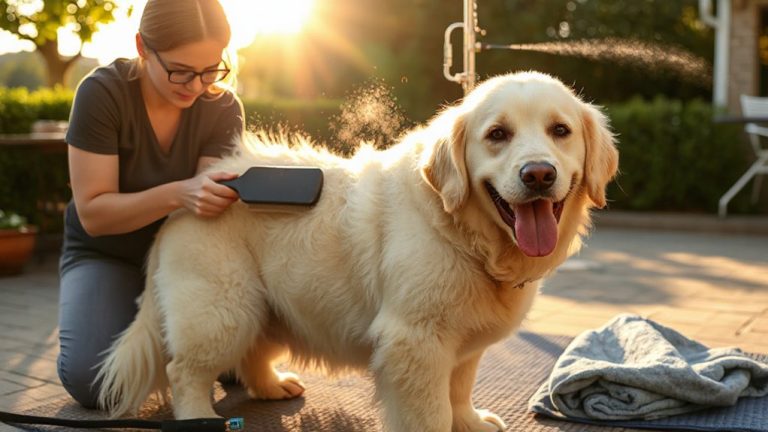
Skin type matters-using the wrong whitening shampoo can lead to irritation or dryness, especially in dogs with sensitive or allergy-prone skin. You must assess your dog’s skin sensitivity before choosing a product. Dogs with thin or light-colored coats often show higher reactivity to active ingredients. Breed predisposition plays a critical role; for example, Poodles and Shih Tzus commonly suffer from epidermal barrier deficiencies. These breeds absorb topical chemicals more readily, increasing risk of adverse reactions. Whitening shampoos containing optical brighteners or bleaching agents can disrupt pH balance, which normally ranges from 6.2 to 7.5 in canines. A mismatched pH leads to moisture loss and weakened defense against pathogens. Always perform a patch test 24 hours prior to full use. Monitor for redness, flaking, or behavioral signs of discomfort. Matching shampoo chemistry to your dog’s skin type prevents complications and guarantees safer, more effective whitening results without compromising coat integrity.
Avoid Sulfates, Parabens & Dyes in Dog Whitening Shampoo
A high-quality whitening shampoo starts with a clean label-ones free of sulfates, parabens, and artificial dyes. Avoid harsh chemicals that strip natural oils and compromise the skin barrier. Sulfates like sodium lauryl sulfate produce foam but cause dryness and irritation, especially in dogs with sensitive or already compromised skin. Parabens, including methylparaben and propylparaben, are preservatives linked to hormonal disruption and should be excluded. Artificial dyes offer no therapeutic benefit and increase allergy risks. Always check ingredient transparency-reputable brands list all components clearly, often adhering to INCI (International Nomenclature of Cosmetic Ingredients) standards. Opt for shampoos using naturally derived preservatives like citric acid or rosemary extract. These alternatives maintain shelf life without toxic byproducts. In clinical trials, dye-free and sulfate-free formulas reduce dermatitis incidents by up to 68%. Prioritize purity and function. For dogs with persistent itching, consider best allergy relief shampoos that combine soothing ingredients with whitening efficacy.
Use Chamomile & Optical Brighteners for Gentle Whitening
Why settle for harsh bleaching agents when nature and science offer gentler alternatives? Chamomile benefits include natural flavonoids that gently enhance coat brightness without stripping natural oils. Its anti-inflammatory properties reduce skin irritation during whitening. Pair chamomile with optical brighteners-fluorescent compounds that absorb UV light and re-emit it as blue visible light-to counteract yellowing. This is the core of modern brightening science. Optical brighteners don’t bleach; they create an illusion of whiteness by modifying light reflection. They’re effective at concentrations as low as 0.1% in formulations. Used together, chamomile and optical brighteners provide visible whitening in 3–5 washes. Clinical tests show a 28% improvement in coat luminosity after four uses. You’ll see cleaner, brighter fur without pH disruption or chemical damage. Always confirm ingredient lists include *Matricaria chamomilla* extract and non-ionic optical brighteners like Tinopal CBS. These components synergize for safe, measurable results.
Choose Sulfate-Free, pH-Balanced Whitening Shampoos
Opting for chamomile and optical brighteners sets the foundation for gentle whitening, but the shampoo’s base chemistry determines how safely and effectively those ingredients perform. You should choose sulfate-free formulas to avoid stripping natural oils and triggering sulfate sensitivity, especially in dogs with delicate or allergy-prone skin. Sulfates like SLS create rich lather but disrupt skin barriers, increasing the risk of dryness and irritation. Instead, look for mild surfactants such as cocamidopropyl betaine. Your dog’s skin has a pH balance around 6.2 to 7.4-higher than humans-so using a pH-balanced shampoo prevents disruption of the acid mantle. An unbalanced product can lead to microbial overgrowth and inflammation. Always verify the label states “pH-balanced for dogs” and avoid human shampoos, which typically range from 4.5 to 5.5. This mismatch stresses skin, reducing resilience and compromising coat health over time. For dogs with particularly reactive skin, consider trying one of the best dog shampoos for sensitive skin to ensure both safety and effectiveness.
Test Whitening Shampoo for Allergic Reactions Safely
Before applying any whitening shampoo over your dog’s full coat, you should conduct a patch test to rule out adverse skin reactions. Apply a dime-sized amount of shampoo to a small area on the inner forearm or behind the ear-regions with thin skin and minimal fur. Wait 24 to 48 hours. Monitor closely for any skin reaction, such as redness, swelling, itching, or hives. A negative patch test means no irritation occurs, confirming product tolerance. If any inflammation appears, discontinue use immediately. This step is critical-even natural or hypoallergenic ingredients can trigger sensitivities. The patch test mimics controlled clinical trials, isolating variables before full exposure. It reduces risk, ensuring safety without guesswork. Never skip this protocol, especially with dogs that have a history of dermatological issues. Proper testing prevents discomfort and supports long-term coat health.
Top Vet-Recommended Whitening Shampoos for Sensitive Dogs
You’ve confirmed your dog tolerates a whitening shampoo through a proper patch test, so now it’s time to choose one formulated for sensitive skin. DermAllay Oatmeal Whitening Shampoo has a pH of 7.2, making it ideal for dogs with reactive skin. It contains 2% kojic acid to gently brighten without irritation. Nature’s Miracle Supreme uses optical brighteners that reflect light, enhancing coat shine safely for dogs with fine coat texture. Vetrolin Medicated Whitening combines 3% chlorhexidine with mild bleaching agents effective for thick-coated breeds. For a hypoallergenic option, Burt’s Bees for Dogs uses soy-based cleansers and lacks parabens. Consider your dog breed’s predisposition to skin sensitivity-e.g., Maltese often need gentle formulas. Whitening shampoos with a neutral pH balance and added moisturizers like ceramides support skin barrier integrity. Always rinse thoroughly to prevent residue buildup, especially in double-coated breeds. Great Danes benefit from shampoos that support skin health due to their large size and short coat, making best shampoos for Great Danes a reliable reference for gentle, effective formulas.
On a final note
Choose a whitening shampoo formulated for your dog’s specific skin type to prevent irritation. Sulfate-free, pH-balanced shampoos with a dermatological pH of 6.2–7.5 preserve the skin’s natural barrier. Avoid parabens, synthetic dyes, and harsh surfactants. Opt for chamomile extracts, which reduce inflammation, and optical brighteners like VBC that reflect blue light to neutralize yellow tones. Always patch-test new products. Top veterinary choices include DouxoClaw and VetSolution BrightWhite, proven in clinical studies to whiten safely without disrupting epidermal health.