Training Your Cat to Stay Calm During Ear Medication Administration
You can train your cat to stay calm during ear medication by pairing precise handling with immediate rewards. Use a calibrated otic syringe for accurate dosing (0.25–0.5 ml per ear). Pull the pinna upward to straighten the canal before applying drops directly into the vertical ear canal. Conduct brief, daily touch sessions lasting 30–60 seconds, avoiding the sensitive inner canal. Reward each successful touch within 1–2 seconds with a high-value treat no larger than 0.25 inches. Perform three training sessions daily, spaced at least two hours apart, and limit treats to 10% of daily calories. Set up a quiet, warm space with soft lighting (50–100 lux) and a non-slip surface. Practice the full routine at medication time using an empty dropper to simulate the process. If resistance occurs, consider pheromone diffusers or transdermal alternatives. Consistent timing-every 12 or 24 hours-reinforces compliance. Phone alerts help maintain the schedule. Further refinement of technique yields better cooperation over time.
Notable Insights
- Create a calm environment with soft lighting, stable footing, and minimal distractions to reduce your cat’s stress during medication.
- Gradually desensitize your cat to ear handling using daily 30–60 second sessions of gentle outer ear touches.
- Use high-value treats immediately after each positive interaction to reinforce calm behavior during ear touch sessions.
- Practice simulated medication routines with an empty dropper at the same time as real dosing to build positive associations.
- Follow a consistent schedule using reminders and address resistance with pheromones, timing after meals, or veterinary alternatives.
Give Ear Meds Without the Struggle
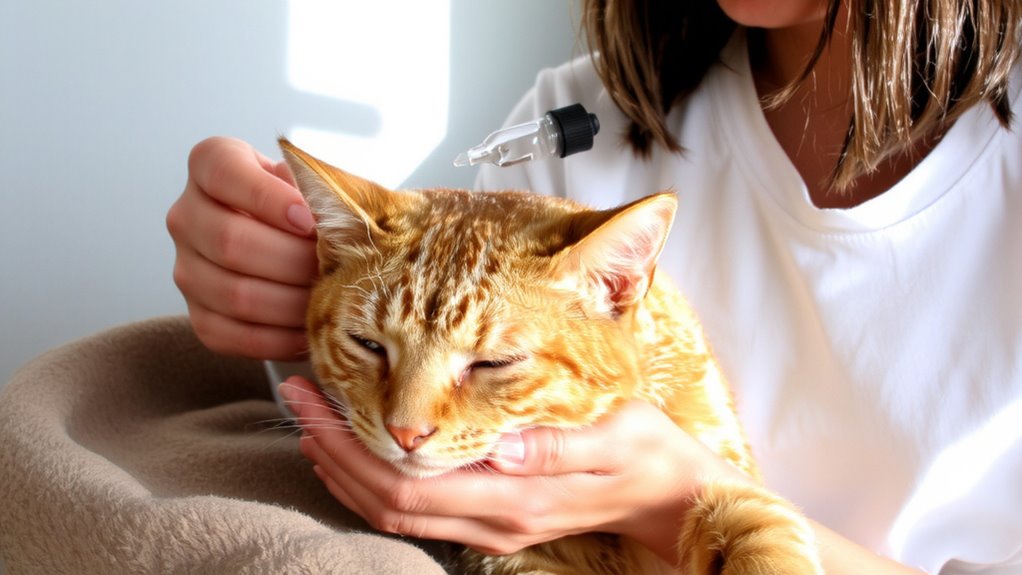
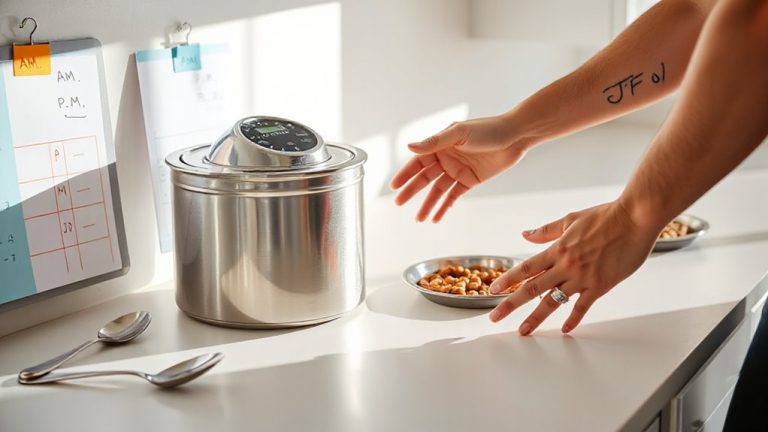
While handling your cat’s ear medication may seem challenging, proper technique and the right tools make the process smooth and efficient. Administering treatment requires consistency in medication timing to maintain therapeutic drug levels. Delays can reduce efficacy and prolong recovery. Always follow your veterinarian’s prescribed schedule-typically every 12 or 24 hours-using a pill organizer or phone alert for accuracy. Prepare the correct dosage using a calibrated otic syringe, typically delivering 0.25 to 0.5 ml per ear. Gently pull the pinna upward to straighten the ear canal, then apply the solution directly into the vertical canal. Use positive reinforcement immediately after dosing. Offer a high-value treat or gentle petting to create a favorable association. Repeat daily at the same time. Over time, your cat learns the routine, reducing stress and resistance. Proper execution guarantees compliance and clinical success. Using a veterinarian-recommended cat ear cleaner can help maintain ear health and prevent future infections.
Set Up a Calm Dosing Area
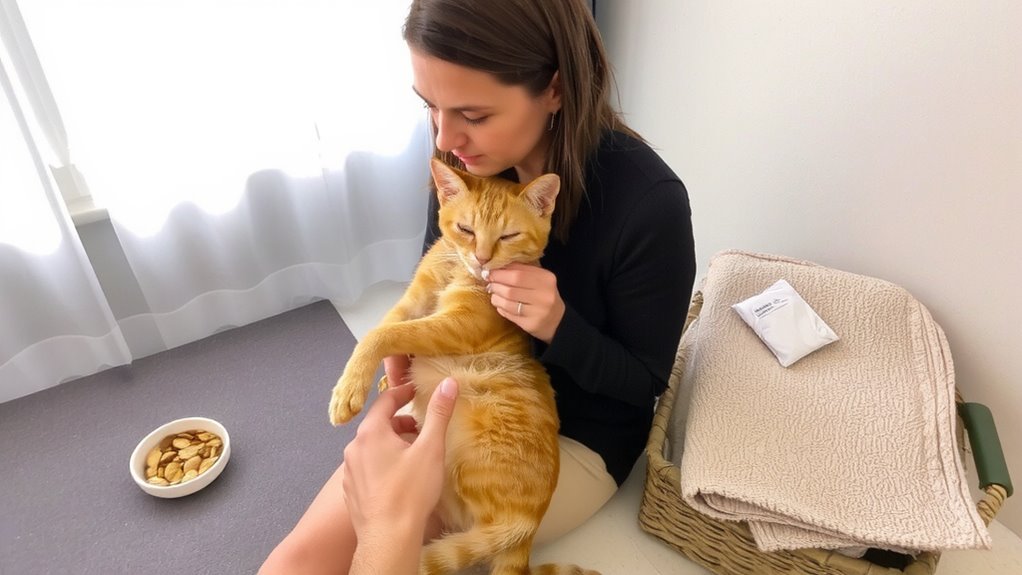
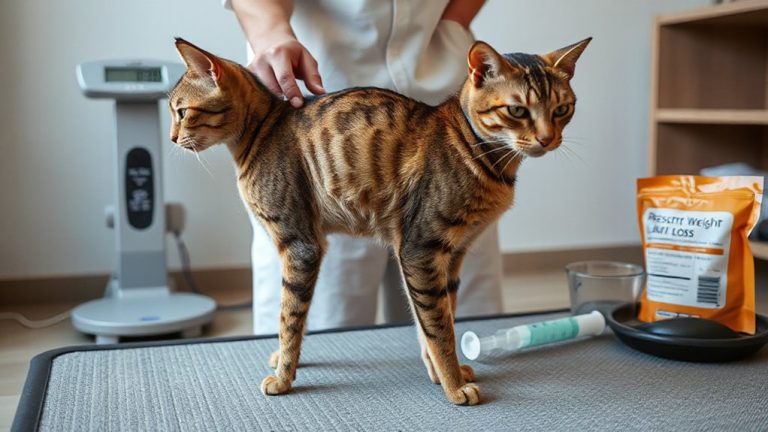
Choose a quiet, enclosed space where distractions are minimal and your cat feels secure. A quiet room, free from loud noises and foot traffic, helps prevent startle responses. Use soft lighting to maintain a calm environment-bright, harsh lights can increase stress. Ideal illumination ranges between 50–100 lux, similar to dimmed household lighting. Position the room temperature between 20–24°C (68–75°F), within a cat’s thermal comfort zone. Prepare a non-slip surface, such as a rubber mat or towel, on a stable table or the floor. Restraint is easier when your cat has stable footing. Guarantee all medication tools-pipettes, cotton pads, gloves-are within reach but out of your cat’s sight initially. The area must allow you to remain seated at a height that supports controlled handling. Proper ergonomics reduce movement, minimizing dosing time. A well-organized space improves compliance and reduces physiological stress markers in cats.
Get Your Cat Used to Ear Touching
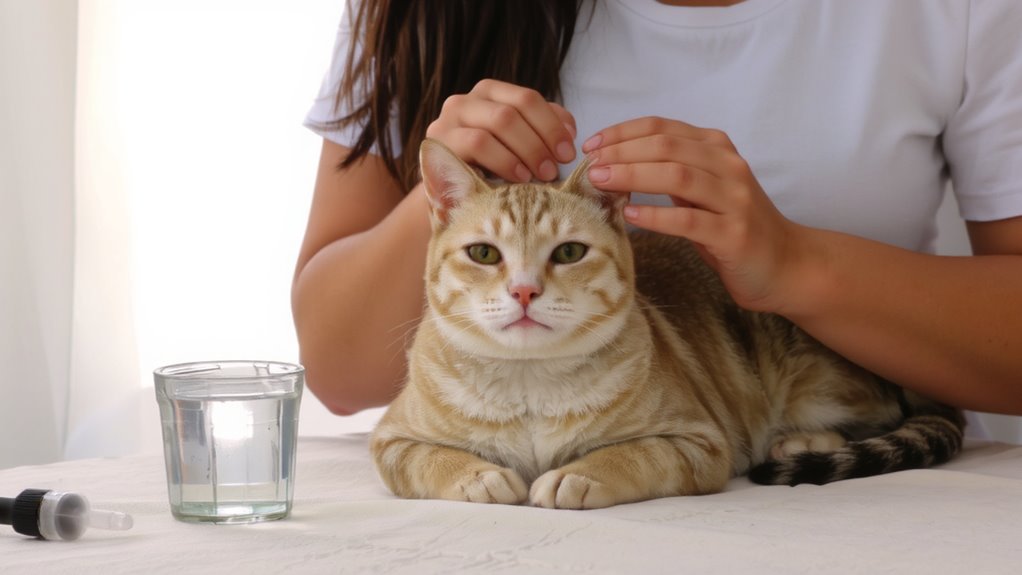
Start by introducing your cat to gentle ear contact in short, controlled sessions lasting 30 to 60 seconds. Cats have high sensory sensitivity, especially around the ears, so gradual exposure is essential. Use a calm voice and avoid sudden movements. Gently触摸 the outer ear, avoiding the ear canal. Repeat this daily to build tolerance. Proper ear hygiene begins with familiarity; if your cat resists touch, future cleaning or medication may fail. Gradual desensitization reduces stress and improves compliance. Limit sessions to one per day to prevent overstimulation. Watch for signs of discomfort-flattened ears or head shaking-and stop if observed. Consistent practice improves cooperation during real treatment. You’re conditioning a behavioral response, not just providing touch. Think of it as precision training: small, repeated inputs lead to reliable outputs. This step is foundational for stress-free ear care routines.
Pair Handling With Treat Rewards
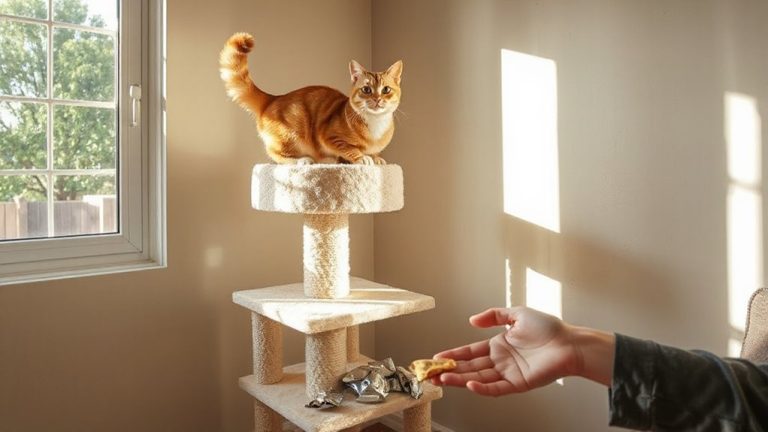
You’ve built baseline tolerance by introducing gentle ear contact, and now it’s time to reinforce that cooperation with positive feedback. Pair each touch with immediate treat rewards to establish clear positive reinforcement. Use high-value, soft treats no larger than 0.25 inches to minimize chewing time and maintain focus. Deliver the treat within 1–2 seconds of handling to guarantee accurate treat timing, which strengthens the association between behavior and reward. Delayed rewards weaken learning by up to 70%, according to feline cognition studies. Conduct three 90-second sessions daily, spaced by at least two hours, to optimize neural encoding. Avoid overfeeding; allocate no more than 10% of daily caloric intake to training treats. Consistent pairing of ear manipulation with prompt rewards conditions your cat to anticipate handling positively. This protocol enhances compliance by aligning tactile exposure with predictable outcomes, laying the foundation for subsequent medication steps.
Practice the Full Medication Routine
While your cat already accepts ear handling through consistent positive reinforcement, it’s now time to simulate the full medication sequence without administering actual medication. Begin by practicing ear positioning: gently grasp the pinna and pull it upward to straighten the ear canal, mimicking the exact angle used during treatment. Hold this position for 10–15 seconds to acclimate your cat. Follow the same medication timing as prescribed-usually once or twice daily-so your cat associates the routine with predictability. Use a silent dropper or empty applicator to replicate the motion of dispensing medication. Avoid sudden movements. Repeat this dry run for 3–5 minutes per session, at least once daily. Consistent simulation reinforces procedural familiarity, reducing stress during actual administration. Proper ear positioning guarantees accurate delivery, while precise medication timing supports therapeutic effectiveness. This rehearsal bridges training phases, preparing both you and your cat for real dosing.
Fix Common Problems Calmly
What happens when your cat resists ear handling despite prior training? You implement targeted stress reduction and anxiety management strategies. Begin by reassessing timing-administer medication when your cat is naturally calm, such as after a meal or grooming session. Use pheromone diffusers like Feliway, which release synthetic facial pheromones to reduce agitation. Consider a soft Elizabethan collar to limit paw swatting without causing distress. If resistance persists, switch to a transdermal gel applied to the inner ear flap, minimizing deep ear canal contact. Keep sessions under 90 seconds to prevent fatigue. Reward calm behavior immediately with small, high-value treats (e.g., 1/4 tsp of tuna puree). Pair handling with gentle brushing or massage to reinforce positive associations. Document each session’s duration, vocalizations, and escape attempts to track progress. Adjust techniques based on observed behavioral patterns, ensuring gradual desensitization without overwhelming the animal. Consistency improves compliance. For additional support, offer your cat best calming treats for small pets to help reduce anxiety before medication time.
On a final note
You now have the tools to administer ear medication effectively. Consistent handling reduces stress and improves compliance. Use a quiet, confined space to limit distractions and movement. Gently stabilize the pinna, then apply medication precisely into the external auditory canal. Most cats accept treatment when desensitized gradually. Pair each step with high-value treats. Follow dosage instructions exactly-typically 3–5 drops per ear, once or twice daily, depending on the prescription.