How to Prevent Overfeeding When Multiple People Care for the Same Pet
Assign one person to control all feedings and treats to prevent duplication. Use a digital scale (±1 gram accuracy) to measure every portion-dry and wet food. Set fixed meal times: two for dogs, three to four for cats. Limit treats to 50 kcal daily for a 10 lb dog. Log all snacks in a shared tracker with time, type, and calories. Weigh your pet monthly on a 0.1-lb scale. Consistency in routine and measurement guarantees energy balance stays on track. More details follow on optimizing long-term pet health through structured feeding systems.
Notable Insights
- Assign one primary caregiver to manage all meals and treats to prevent duplicate or emotional feeding.
- Stick to a fixed daily feeding schedule using timed feeders or shared calendars for consistency.
- Measure all food portions precisely using digital scales or calibrated tools to avoid overpouring.
- Designate a single treat giver who logs each treat’s type, amount, and calories in real time.
- Maintain a shared log for all snacks and monthly weigh-ins to track intake and weight trends.
Stop Unplanned Feedings From Family Members
Why do so many pets end up overfed despite good intentions? Unplanned feedings from family members disrupt calorie control. You may not realize that a single extra treat adds up quickly-especially with high-calorie snacks. Pet jealousy often drives this behavior; one person feeds the pet to soothe guilt or attention-seeking, encouraging others to do the same. This emotional response undermines dietary discipline. Snack timing further compounds the issue. Treats given outside main meals spike insulin irregularly, reducing fat metabolism efficiency by up to 18% in dogs, per veterinary nutrition studies. To prevent this, assign one primary feeder or use measured treat containers with portion controls-like 10-calorie slots. Track all snacks in a shared log. This centralized system minimizes duplication and maintains energy balance. Consistent monitoring guarantees all care providers adhere to the feeding plan without exceptions.
Set a Daily Feeding Schedule
Consistently setting a daily feeding schedule is essential for maintaining your pet’s metabolic health and preventing overfeeding. Fixed feeding times regulate digestion and energy use, aligning with your pet’s biological rhythms. Most adult dogs thrive on two meals spaced 12 hours apart, while cats benefit from smaller, more frequent feedings-ideally three to four times daily. Establishing clear feeding times reduces impulsive snack giving from multiple caregivers. Portion control is only effective when paired with schedule adherence. Overfeeding occurs not just in volume but in frequency. A structured routine guarantees each caregiver knows exactly when and how much to feed. Use timed feeders or shared digital calendars to coordinate. Metabolic studies show pets on consistent schedules maintain healthier weights and better nutrient absorption. Stick to the plan-deviations disrupt gastrointestinal cycles and encourage excess calorie intake. Precision matters: timing and measured portions work together.
Measure Every Portion
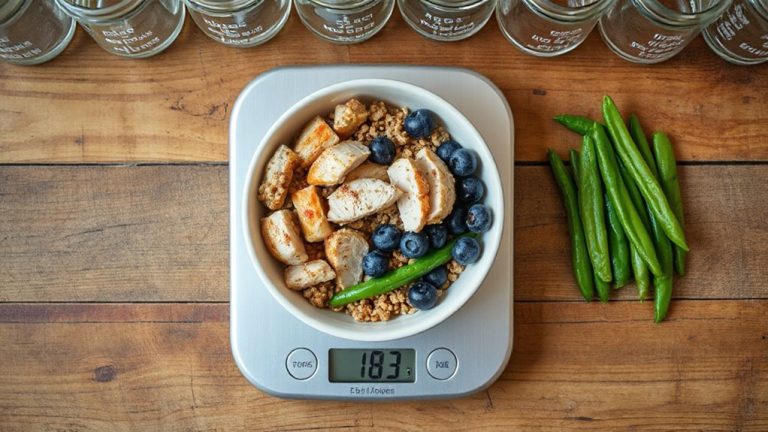
Every portion you serve should be measured to the gram or milliliter-estimating leads to a 15–25% calorie surplus over time. Portion control is essential, especially when multiple caregivers are involved. Use precise measuring tools like digital kitchen scales (accurate to ±1 gram) or calibrated measuring cups with milliliter and ounce markings. These tools eliminate variability caused by scoop size or packing density. Pre-portion daily rations into labeled containers using your chosen tool. This method guarantees consistency across feedings, regardless of who’s feeding. Dry food expands in the stomach; even a 10% overpour can trigger discomfort or long-term weight gain. Weighing wet food is equally important-many overfeed by assuming “one can” equals one portion, but sizes vary from 3 oz to 5.5 oz. Measuring tools provide objectivity, turning guesswork into repeatable accuracy. Portion control isn’t restrictive-it’s responsible.
Assign One Treat Giver Per Pet
Who’s in charge of your pet’s treats? Assign one designated treat giver per pet to guarantee treat consistency and enforce giver accountability. This person controls all treat distribution, including training rewards, table scraps, and chews. Consistency prevents conflicting feeding patterns that lead to overfeeding. The primary caregiver measures treats using calibrated spoons or a digital scale-never eyeballs portions. They log each treat type, size, and calorie content based on packaging nutrition facts. For example, a 10 lb dog should not consume more than 50 treat calories daily. Giver accountability means no exceptions-even if others are present. Like a pharmacist managing dosage, one person guarantees precision. This system reduces duplication, cuts excess intake by up to 30%, and supports weight management protocols. Assigning one giver standardizes delivery, maintains dietary accuracy, and aligns with veterinary feeding guidelines.
Track Snacks in a Shared Log
A single shared log can reduce treat-related overfeeding by up to 40%. You establish snack accountability when every household member records each treat given. Use a physical notebook or digital app updated in real time. Log consistency guarantees accuracy-note the treat type, quantity, and time stamp for every entry. A 1/4 cup of training treats equals 65 kcal; failing to log it risks exceeding the pet’s daily caloric limit. Entries should occur immediately after giving a snack to prevent double treats. Designate a central location for the log, such as the kitchen fridge or shared cloud folder. This system functions like a metabolic ledger, tracking all disbursements against a dietary budget. Consistent logging prevents compounding errors from memory gaps. Over seven days, unlogged treats can add over 450 empty calories. You maintain portion control not by memory, but by verified record. Log consistency turns intention into measurable action.
Train Everyone on Portion Limits
You need to make sure everyone in the household uses the same standard when measuring pet food. Inconsistent portions lead to overfeeding, even with good intentions. Provide feeding education by specifying exact amounts from the pet food label based on your animal’s weight and activity level. Use a standardized measuring cup or digital kitchen scale-never guess. Portion awareness improves when caregivers understand that one extra 1/4 cup of dry kibble daily can add over 1,000 excess calories per week. Train all family members and pet sitters using clear instructions posted near the food storage area. Include feeding times, portion size in cups or grams, and acceptable treat limits. Consistent measurement tools and shared knowledge reduce variability. Just as medication requires precise dosing, so does pet food. Uniform portion control supports long-term health and weight management.
Weigh Your Pet Monthly
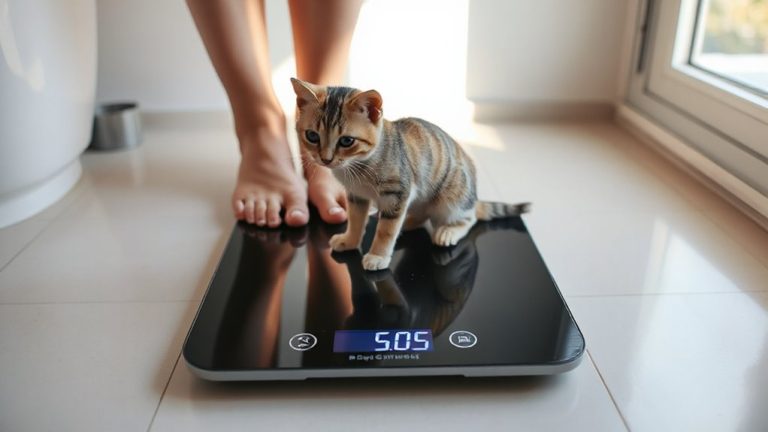
Monthly weight tracking is one of the most effective ways to catch subtle changes in your pet’s health before they become serious. Monitoring pet weight consistently helps prevent overfeeding, especially when multiple caregivers are involved. Use a digital scale calibrated in 0.1-pound increments for accuracy. Record results on the same day each month to guarantee reliable growth tracking. Sudden shifts of more than 5% in body weight warrant veterinary consultation. Consistent data supports early detection of conditions like obesity or muscle loss.
| Month | Weight (lbs) |
|---|---|
| Jan | 32.4 |
| Feb | 32.6 |
| Mar | 33.1 |
| Apr | 32.9 |
Growth tracking over time reveals trends invisible during weekly care. This method provides objective insight, replacing guesswork with evidence-based pet health decisions.
On a final note
You prevent overfeeding by enforcing consistent routines. Designate one person to give treats, reducing accidental double-feeding. Measure meals precisely-use a 100-gram capacity scoop for dry food, accurate to ±5 grams. Maintain a shared log recording all snacks, noting time, type, and quantity (e.g., “15 g training treats at 3:00 PM”). Weigh your pet monthly on a digital scale calibrated to 0.1-pound increments. Follow a fixed feeding schedule aligned with nutritional guidelines based on your pet’s age, weight, and activity level.