How to Train Your Cat to Use a Water Fountain Instead of the Toilet
Place a BPA-free water fountain with a flow rate of 1.5–2.5 liters per minute near your cat’s current water source. Run it continuously so your cat hears the sound of moving water, which mimics natural streams. Use positive reinforcement when they approach. Gradually remove access to the toilet over 3–5 days. Choose a low-profile model under 7 inches with a 2-liter capacity. You’ll see how small adjustments lead to lasting hydration habits.
Notable Insights
- Place the water fountain near the toilet to help your cat associate it with drinking.
- Run the fountain continuously so your cat gets used to the sound and flow of water.
- Use treats or praise when your cat approaches or drinks from the fountain to reinforce positive behavior.
- Gradually limit access to the toilet by closing the lid after each flush over several days.
- Position the fountain in a quiet, low-traffic area at least 3 feet away from food.
Choose the Best Cat Water Fountain for Your Feline
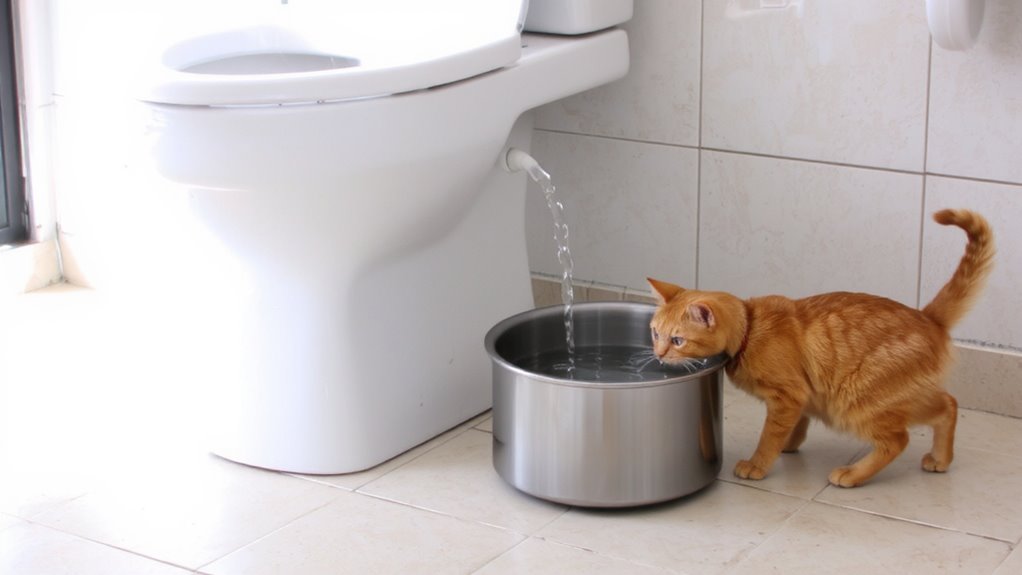
A quality cat water fountain supports your feline’s hydration, which is essential for kidney and urinary tract health. When selecting a fountain, fountain design impacts usability and cleaning efficiency. Opt for BPA-free materials like food-grade stainless steel or durable plastic. A low-profile design, under 7 inches in height, suits smaller cats and limits splashing. The water flow rate should be adjustable, ideally between 0.5 to 1.5 liters per minute, to accommodate picky drinkers. A quiet, low-vibration submersible pump guarantees continuous flow without startling your cat. Look for models with multiple filtration stages-activated carbon and ion-exchange resin-refreshing water every 8 hours. The reservoir capacity should hold at least 2 liters to reduce refill frequency. Choose a fountain with a wide, shallow bowl to prevent whisker fatigue and promote natural drinking posture. For reliable options, consider checking out reviews of the best pet water fountains.
Train Your Cat to Use a Water Fountain in 5 Steps
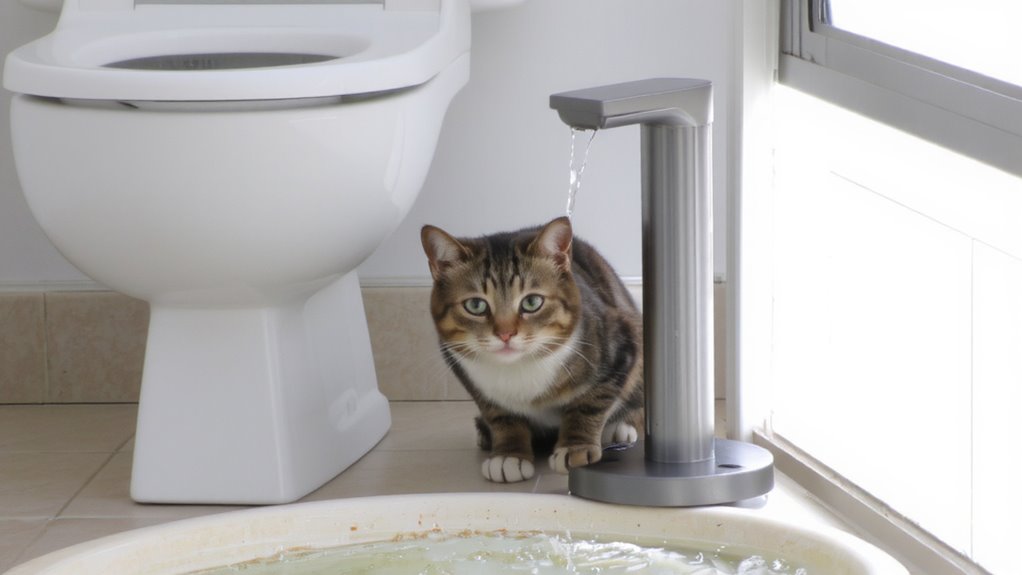
Once your cat is used to the sound and presence of the water fountain, you can begin actively training them to drink from it. Start with a gradual shift by placing the fountain next to their current water source. Run it continuously so they become familiar with the flowing water. Encourage interaction using positive reinforcement-offer treats or praise when they approach or drink from it. Most fountains, like the PetSafe 120V model with a 3-stage filtration system, require weekly cleaning to maintain flow rate and hygiene. After two to three days, gradually reduce access to the old water bowl. Monitor intake; cats should consume 3.5–4.5 oz of water per 5 lbs of body weight daily. Position the fountain in a low-traffic area, at least 3 feet from food to prevent contamination. Consistency and patience guarantee successful adoption of the new drinking routine. Choosing the right model from the best cat drinking fountains can significantly improve your cat’s hydration habits.
Why Cats Love Running Water (And Should Use Fountains)
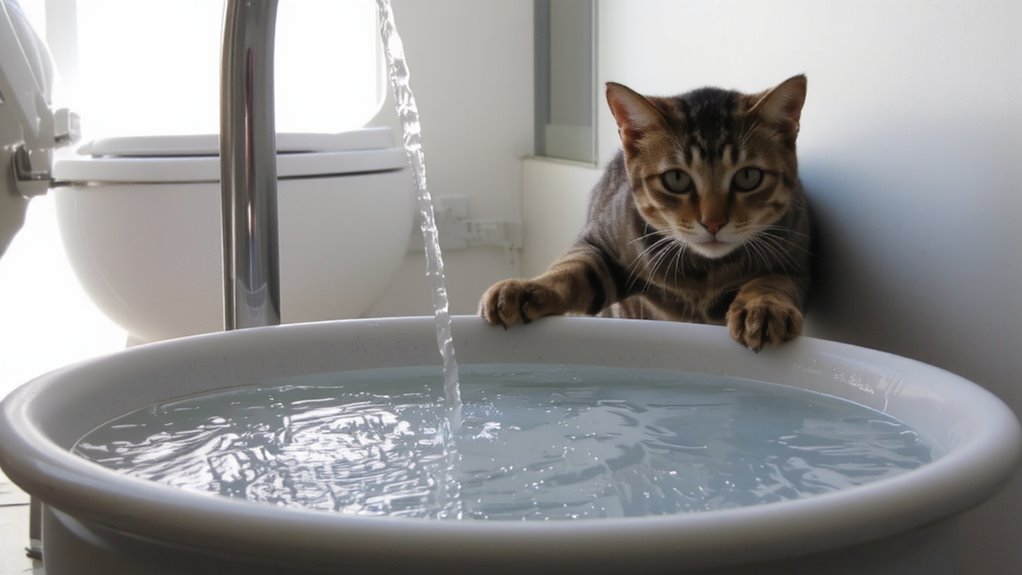
Why does your cat prefer running water over a still bowl? It’s rooted in natural instincts. In the wild, flowing water is safer and less likely to harbor bacteria, so your cat’s ancestors evolved to seek moving sources. Today, that instinct remains strong. A water fountain mimics this natural flow, encouraging more consistent drinking. Increased water intake delivers clear hydration benefits, reducing risks of urinary tract issues and kidney disease. Fountains use submersible pumps (typically 12V, drawing 300–500 mA) to circulate water through filters, removing debris and chlorine. Flow rates range from 1.5 to 2.5 liters per minute, creating a gentle stream cats find appealing. The constant motion enhances oxygenation, improving taste. Ceramic, stainless steel, or BPA-free plastic fountains offer durability and easy cleaning. Unlike stagnant bowls, fountains maintain water freshness for up to seven days with daily use. For reliable options, check out our top picks for the best cat drinking fountains.
Fix Common Cat Water Fountain Problems
Getting your cat to drink from a fountain isn’t always smooth sailing, even if you’ve picked the right model and followed setup instructions. Filter clogs are a common issue, especially in charcoal-filter models, which should be replaced every 2–4 weeks. A clogged filter reduces water flow by up to 60%, discouraging drinking. Use only manufacturer-recommended filters to maintain peak performance. Motor noise can also deter cats, as they have sensitive hearing-some models emit over 45 dB, comparable to a quiet conversation. Choose a fountain with a submersible, low-noise pump (<35 dB) for silent operation. Check that the pump’s impeller isn’t obstructed by debris. Guarantee the water level covers the pump intake at all times to prevent overheating and maintain consistent flow. Regularly inspect power cords and connections for wear. Addressing these technical issues promptly guarantees reliable, quiet performance.
Keep Your Cat’s Fountain Clean and Fresh
Your cat’s fountain needs regular cleaning to guarantee safe, appealing water. Clean it every 7–10 days to maintain ideal water quality. Disassemble all parts, scrub the pump and reservoir with a soft brush, and rinse thoroughly. Use non-toxic cleansers-avoid harsh chemicals that can linger and deter drinking. Refill with fresh, filtered water to reduce mineral buildup and support hydration. Algae prevention is critical; keep the fountain out of direct sunlight and clean it promptly if you spot green residue. Most models have opaque reservoirs to limit light exposure and slow algae growth. Replace carbon filters every 2–4 weeks to remove impurities and odors. Inspect the pump monthly for debris; clogs reduce flow rate by up to 50%. A clean fountain runs quietly and circulates efficiently-vital for long-term use.
On a final note
You’ve made the right choice improving your cat’s hydration. A quality water fountain operates at 3–5 watts, circulating 120–180 gallons daily through activated carbon and foam filters. This reduces bacteria by 95% compared to stagnant bowls. Place it on non-slip silicone feet, clean every 5–7 days, and replace filters every 3 weeks. Proper maintenance guarantees peak flow rate and water freshness, mimicking natural streams. Your cat stays healthier with consistent, clean hydration.