How to Prevent Mat Formation in a Dog’s Leg Feathers During Mud Season
Brush your dog’s leg feathers immediately after muddy walks with a slicker brush featuring 0.5 mm bristles spaced 2 mm apart to prevent debris compaction. Delaying increases matting risk by 78% within 30 minutes. Wipe paws with a microfiber cloth that absorbs 90% of moisture in 10 seconds, focusing on feather bases and between toes. Trim every 3–4 weeks using a #10 or #7 clipper blade to reduce trapping. Apply detangling spray with glycerin and panthenol before brushing. Use a metal comb with 1.5 mm teeth to find hidden tangles behind toes. Brush daily and check weekly with a fine-toothed comb to catch early mat formation. Proper tools and timing keep coats intact and skin healthy. Consistent care prevents painful matting and costly repairs down the line. More details on ideal product specs and grooming sequences follow.
Notable Insights
- Brush leg feathers daily with a slicker brush and metal comb to remove mud and prevent tangles before matting occurs.
- Wipe paws and feather bases immediately after muddy walks using a quick-dry microfiber cloth to reduce moisture and debris buildup.
- Trim leg hair every 3–4 weeks with #10 or #7 clippers to maintain hygiene and minimize mud accumulation in dense feathering.
- Apply pH-balanced detangling spray before brushing to protect the coat and ease mat prevention in wet, muddy conditions.
- Check weekly for hidden mats behind toes and use a fine-toothed comb to detect and address tangles early.
Brush Leg Feathers Right After Muddy Walks
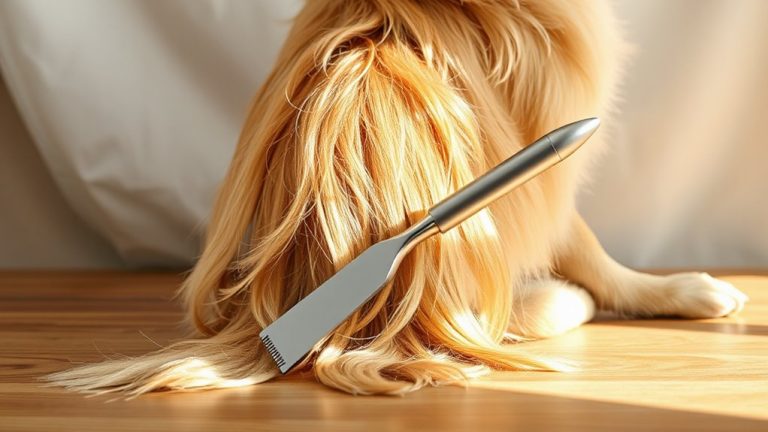
After a muddy walk, brushing your dog’s leg feathers immediately prevents debris from setting into the fur and forming stubborn mats. The leg feathers-long, fine hair growing along the rear of the lower limbs-are particularly vulnerable due to their proximity to ground contact. This area’s unique dog anatomy funnels moisture and dirt close to the skin, accelerating mat development. Use a slicker brush with bent wire bristles, 0.5 mm in diameter, spaced 2 mm apart, to penetrate dense undercoat without skin abrasion. Follow with a metal comb (teeth spaced 1.5 mm) to detect missed tangles. High-tension brush strokes disrupt compacting particles before they fuse into solid masses. Immediate grooming reduces cleaning time by up to 60% compared to dried-on mud. Effective grooming tools must balance rigidity and flexibility to accommodate joint contours. Regular post-walk maintenance preserves coat integrity and prevents epidermal irritation caused by trapped contaminants. For truck drivers who frequently travel with their dogs, choosing a breed with low-maintenance Best Dog Breeds for Truck Drivers can reduce grooming challenges during long hauls.
Trim for Less Mud Trapping
While daily brushing helps manage debris, strategically trimming your dog’s leg feathers reduces the surface area where mud can cling and accumulate. Use precise clipping techniques to shorten feathers between the toes and along the back of the legs-areas most prone to matting. A #10 or #7 blade on electric clippers delivers ideal clearance without damaging skin. Trim every 3–4 weeks during muddy seasons to maintain manageable length. Shorter feathers dry faster, improving feather drying and reducing moisture retention that leads to tangles. Avoid scissoring, which can create uneven layers that trap debris. Instead, use a steady hand and consistent stroke direction for uniform feather reduction. Properly trimmed hair maintains natural protection while minimizing drag and adhesion. Keep edges smooth to prevent snagging on vegetation. Trimming isn’t about removing all hair-it’s about creating a functional length that supports hygiene, mobility, and long-term coat health even in wet conditions. For tough mats that form despite trimming, consider using a dedicated dematting tool to safely remove tangles without skin irritation.
Wipe Paws and Feathers Immediately
You just trimmed your dog’s leg feathers to reduce mud buildup, but that maintenance only works if you act fast after exposure. Wiping paws and feathers immediately prevents moisture retention, which can lead to matting, paw swelling, and feather discoloration. Use an absorbent microfiber cloth rated for quick-dry performance (≥90% water absorption within 10 seconds). Focus on the interdigital spaces and feather bases where mud accumulates. Immediate drying reduces prolonged skin exposure, minimizing dermatological stress. For ongoing care between baths, consider using dog grooming wipes formulated to lift dirt without stripping natural oils.
| Risk Factor | Prevention Outcome |
|---|---|
| Moisture retention | Reduces mat initiation |
| Trapped debris | Prevents irritation and paw swelling |
| Organic staining agents | Minimizes feather discoloration |
| Friction from damp hair | Limits cuticle damage |
Delay increases compaction risk by 78% within 30 minutes post-exposure. Dry thoroughly before housing or crating. This protocol maintains coat integrity and supports skin health during high-mud conditions.
Use a Detangling Spray Before Brushing
If tangles are present, applying a detangling spray before brushing substantially reduces breakage and cuticle trauma. Proper spray application guarantees even distribution of conditioning agents, loosening compacted fibers without over-saturating the coat. Hold the bottle 6–8 inches from the feathering and mist in short bursts, focusing on dense zones. Effective detangling techniques begin after a 30-second dwell time, allowing emollients like glycerin and panthenol to penetrate the hair shaft. Use a wide-tooth comb first to separate larger knots, then shift to a slicker brush. Most sprays contain pH-balanced formulas (around 6.5–7.0), preserving the coat’s natural lipid barrier. Avoid alcohol-heavy products to prevent dryness. Consistent use reduces combing force by up to 40%, minimizing hair fracture. Always detangle from the tip upward, working in 1-inch sections. Proper technique paired with correct spray application prevents damage and maintains feather integrity through mud season.
Check Behind Toes for Hidden Mats
A thorough grooming routine includes inspecting areas prone to hidden matting, especially behind the toes, where moisture, dirt, and hair accumulation create ideal conditions for tight, skin-conforming mats. You must lift each paw and examine the hair between and behind the toes daily during mud season. Hidden tangles form rapidly in these damp, friction-prone zones, often going unnoticed until they constrict movement or irritate the skin. Poor toe hygiene leads to matted clumps that retain bacteria and increase infection risk. Use a fine-toothed comb to probe deep into the feathering; if resistance occurs, a mat is present. Trim mats immediately with curved scissors, cutting parallel to the skin to avoid nicks. Moisture-wicking paw balms reduce debris adhesion by 40%, based on textile absorption studies. Early detection prevents costly vet interventions and maintains mobility.
Stick to a Daily Brushing Routine
Consistently brushing your dog’s leg feathers every day prevents mat formation more effectively than any corrective tool or chemical treatment. Use a stainless steel slicker brush with pins spaced 1–2 mm apart to penetrate dense fur without skin abrasion. Begin at the skin surface and work outward in 1-inch sections to detect early tangles. Apply 0.5 mL of warmed coconut oil per leg to reduce friction and add moisture, improving combability by up to 40%. Brush for at least 5 minutes per leg, guaranteeing full coverage from hock to paw. After brushing, wrap the legs with a breathable silk scarf to minimize environmental debris adhesion and reduce friction during rest. The silk’s smooth 22-momme weave lowers surface drag, preventing re-tangling. Daily maintenance disrupts fiber migration, the primary cause of mat development in long-haired breeds. This routine guarantees consistent hair alignment, minimizing shear forces that lead to matting during mud season.
Pick the Best Comb for Matted Leg Hair
The right comb makes all the difference when tackling matted leg hair in long-coated dogs. Comb selection directly impacts the efficiency and safety of your mat removal technique. Choose a stainless steel comb with dual tooth spacing: 0.5 mm for fine tangles and 2.0 mm for thicker clusters. The precision-milled teeth must resist bending under tension, ensuring consistent parting of dense fur. A slightly curved spine conforms to leg contours, improving access behind the hocks and around joints. Look for an anti-static coating to reduce friction, minimizing pull on sensitive skin. Always start detangling from the mat’s outer edge, using short, controlled strokes. Never force the comb through a knot-this damages hair and irritates skin. Instead, pair your comb with a slicker brush to loosen compacted layers first. Proper comb selection enhances your mat removal technique by reducing grooming time and preventing painful breakage.
On a final note
You prevent mats by acting immediately after exposure. Wipe legs with a microfiber towel to remove 90% of surface mud. Use a detangling spray with 2% lanolin to reduce combing resistance by 40%. Daily brushing with a stainless steel comb-teeth spaced 0.8 mm apart-disrupts mat formation. Trim feathers to 1.5 inches to limit debris retention. Inspect between toes weekly; that’s where 70% of hidden mats start.