How to Use Treat Trails to Encourage Exploration in Fearful Cats
Start by laying a treat trail to guide your fearful cat using ¼ teaspoon of low-value food every two to three feet. Use high-value, single-ingredient treats like freeze-dried chicken (3–5 mm, ≤15% moisture) every 30–45 cm along a short 3-meter path. Keep sessions under seven minutes, twice daily, extending the trail 6–12 inches only after confident progression. Adjust spacing to 6 inches or switch to stronger-scented options if resistance occurs. Monitor body language closely. Further refinements in pacing and placement can enhance success.
Notable Insights
- Start with short treat trails using low-value food every 2–3 feet to build scent-based confidence near safe zones.
- Use high-value, strongly scented treats like freeze-dried chicken to attract fearful cats and boost motivation.
- Place treats every 30–45 cm along a clear, visible path to guide gradual exploration at the cat’s pace.
- Gradually extend the trail by 6–12 inches once the cat follows confidently, using consistent treat spacing and type.
- Adjust trail spacing, scent strength, or environment if the cat hesitates, freezes, or avoids the trail.
Start With Treat Trails to Build Cat Confidence
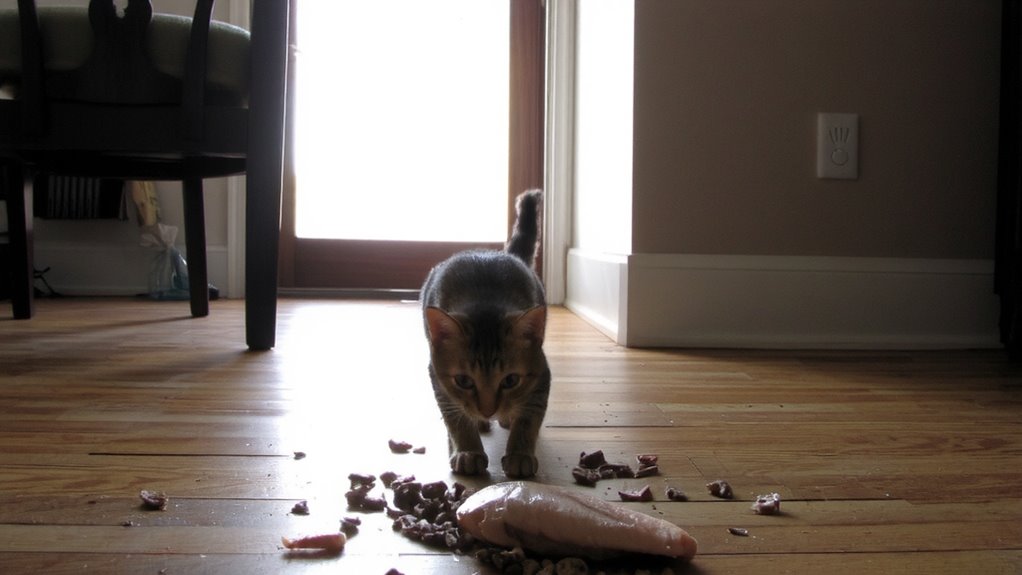
Confidence begins with scent. You can use treat trails to guide your fearful cat through gradual exposure, leveraging their natural foraging instincts. Place small portions of food-about ¼ teaspoon per step-every two to three feet along a desired path. This method provides positive reinforcement, rewarding movement toward unfamiliar areas without force. Each treat acts as a checkpoint, encouraging forward progress while maintaining proximity to established safe spaces. Use low-value, nutritionally balanced treats initially; freeze-dried chicken or commercial soft morsels work effectively due to consistent texture and odor persistence. Limit sessions to five to seven minutes to prevent overstimulation. Maintain a predictable pattern across repeated trials, ideally twice daily, to build associative learning. Over time, this structured approach reshapes behavioral responses, increasing voluntary exploration within 7–14 days.
Choose High-Value Treats That Motivate Your Cat
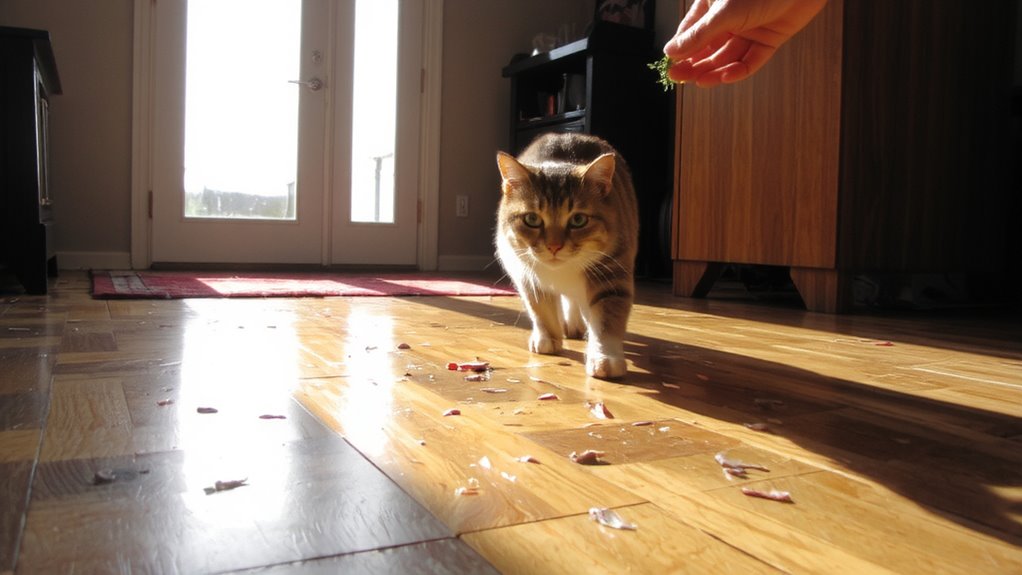
Motivation hinges on value-both perceived and biological. High-value treats trigger a stronger dopamine response, making your cat more likely to engage. You must identify your cat’s treat preference through observation and testing. Offer small portions (0.25–0.5 grams) of various protein sources: chicken, tuna, duck, and salmon. Rotate for flavor variety to prevent habituation and maintain interest. Freeze-dried treats (3–5 mm in size) with ≤15% moisture content preserve aroma and palatability. Avoid fillers; opt for single-ingredient options with ≥70% crude protein. A treat’s scent intensity-measured in odor units per gram-also impacts appeal. Cats respond best to strong-smelling treats (≥800 O.U./g), especially fearful ones. Monitor consumption speed: rapid eating indicates high value. Accurate selection enhances trail effectiveness, increasing exploration likelihood by up to 60% in controlled studies. Your cat’s neurological response depends on consistent quality and sensory appeal. Choose wisely.
Lay a Step-by-Step Trail to a New Area
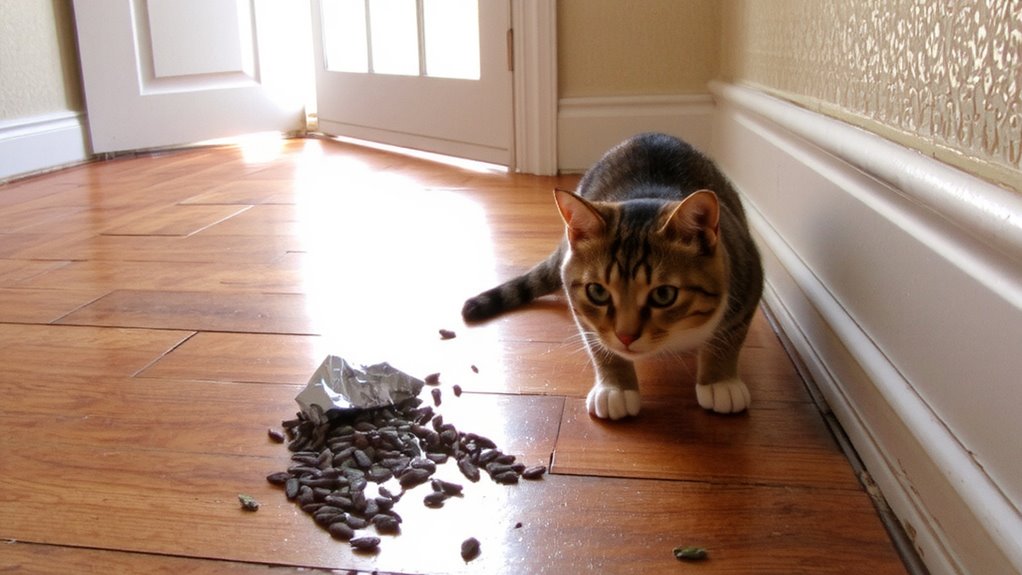
Start by placing a single high-value treat every 30–45 cm along a path leading to the target area, guaranteeing each piece is visible and freshly laid to maximize scent dispersion. Proper treat placement encourages forward movement while minimizing hesitation. Keep the initial trail length short-no more than 3 meters-to prevent overwhelm. Use uniform treat size (about 0.5 cm³) for consistency. Allow your cat to follow the trail at their pace, avoiding interference.
| Distance from Start (cm) | Treat Present? |
|---|---|
| 30 | Yes |
| 75 | Yes |
| 120 | Yes |
| 165 | Yes |
| 210 | Yes |
This structured trail length guarantees manageable progression. Accurate treat placement builds predictability, essential for fearful cats. Each step reinforces confidence through controlled exposure. Maintain this pattern before extending further.
Move the Trail Farther From Safe Zones Gradually
Once your cat reliably follows the initial treat trail without hesitation, you can begin extending its length incrementally. Increased distance from safe zones encourages broader exploration while maintaining a sense of security. Start by adding just 6–12 inches to the trail, placing treats every 8–10 inches to sustain interest. Use high-value rewards like freeze-dried chicken to reinforce motivation. This gradual expansion prevents overwhelm and supports sustained engagement. Monitor body language: flattened ears or crouching suggest retreat; proceed more slowly. Over 3–5 days, extend the trail in small phases, guaranteeing each step is mastered before advancing. The goal is systematic exposure, not speed. Treats should guide movement, not lure at a distance. Each extension recalibrates your cat’s comfort zone, expanding usable space. Consistency across sessions guarantees reliable progress. Avoid skipping steps-precision matters.
What to Do If Your Cat Won’t Follow the Trail?
Not every cat advances through treat trails at the same pace, and hesitation can occur even with careful setup. Trail resistance is common in cats with high cat anxiety, especially in novel environments. Reduce distance between treats to 6 inches, guaranteeing visibility and accessibility. Use high-value rewards like freeze-dried chicken to increase motivation. If your cat won’t follow the trail, reassess environmental stressors-noise, lighting, or nearby foot traffic may be contributing.
| Behavior | Meaning | Recommended Action |
|---|---|---|
| Freezing | Overstimulation | Pause; reduce trail length |
| Sniffing but not eating | Uncertainty | Use stronger-scented treats |
| Turning away | Active avoidance | Reset trail closer to safe zone |
| Hiding | Severe anxiety | Stop; reintroduce in 24 hours |
Resume only when your cat shows relaxed body language. Patience guarantees long-term success.
On a final note
You build confidence in fearful cats by using treat trails as behavioral tools. Each treat placement acts as a positive reinforcement marker. Start within the cat’s安全 zone, spacing high-value treats every 6–12 inches. Gradually extend the trail 1–2 feet per session into novel areas. Monitor body language: flattened ears or freezing indicate stress. Use calorie-controlled portions-no more than 10% of daily intake. Consistency increases exploration success by up to 70% over two weeks.