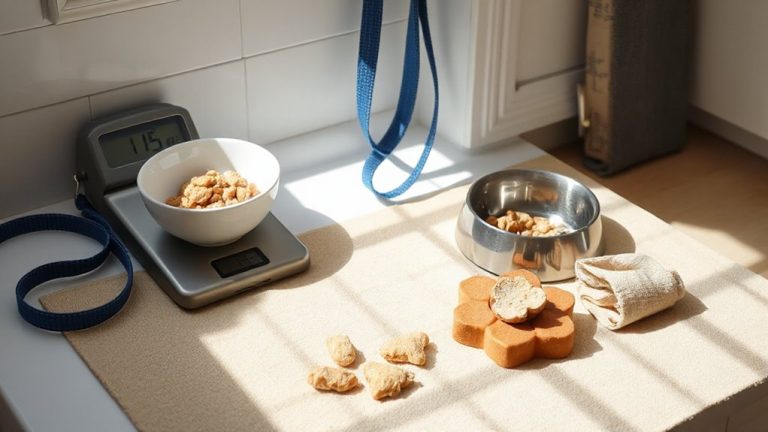
Scheduling Positive Reinforcement for Calm Behavior During Vet Visits
You can condition calm behavior during vet visits by reinforcing it immediately with treats. Deliver 1–2 gram soft treats within 1–2 seconds of relaxed posture, even breathing, or neutral ear position. Use ½-inch dehydrated meat treats for quick, low-odor consumption. Start at home with 10–15 minute sessions, rewarding calmness every 10–15 seconds, then extend intervals to 30 seconds. This precise timing strengthens associations between calmness and rewards-consistent scheduling builds reliable responses in clinical settings.
Notable Insights
- Schedule 5–10 minute desensitization sessions 2–3 times weekly at the clinic for gradual positive exposure.
- Conduct 10–15 minute home sessions 3–5 times weekly to reinforce calm behavior with treats.
- Deliver treats within 1–2 seconds of calm behavior to strengthen positive associations effectively.
- Use high-value, low-odor, soft treats sized ½ inch for quick, safe consumption during training.
- Begin leash walks at home with rewards every 10–15 seconds, increasing to 30 seconds as focus improves.
How Dogs Learn Calmness at the Vet
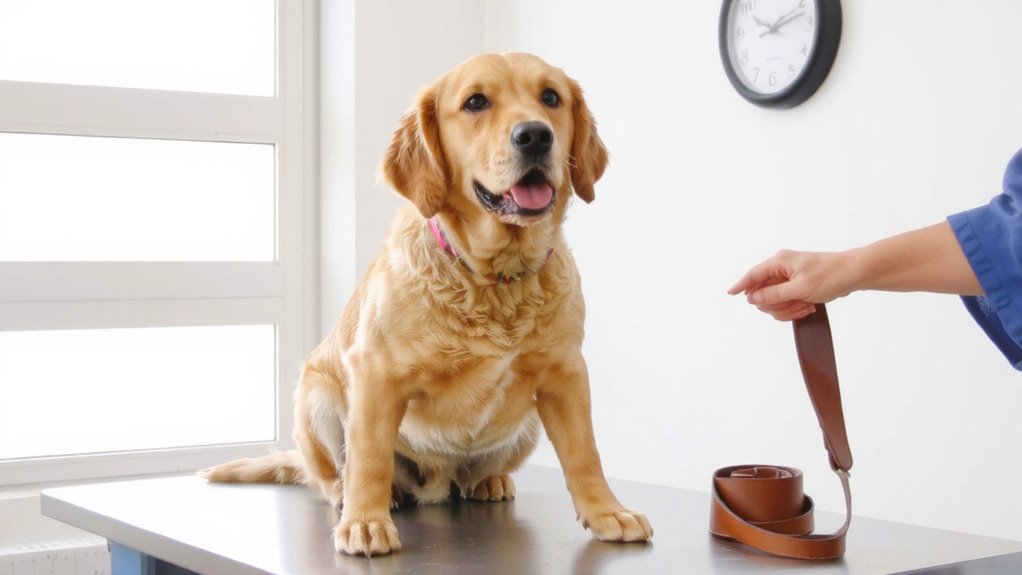
Calmness isn’t instinctive in most dogs during vet visits-it’s learned through consistent positive reinforcement. You shape this behavior using classical conditioning, pairing the veterinary environment with positive stimuli like treats or praise. Over time, your dog associates the clinic with rewards, not stress. Environmental desensitization supports this by gradually exposing your dog to vet-related sights, sounds, and smells in controlled doses. Start at a distance, then progressively decrease it as your dog remains relaxed. Each session should last 5–10 minutes, occurring 2–3 times weekly. Use high-value treats measured at 1–2 grams per reward to maintain attention without overfeeding. Success depends on timing: deliver rewards within 1–2 seconds of calm behavior. This method rewires automatic stress responses, replacing them with neutral or positive reactions. Controlled exposure frequency and precise reward timing are critical for conditioning efficacy.
Spot Your Dog’s Calm Body Language
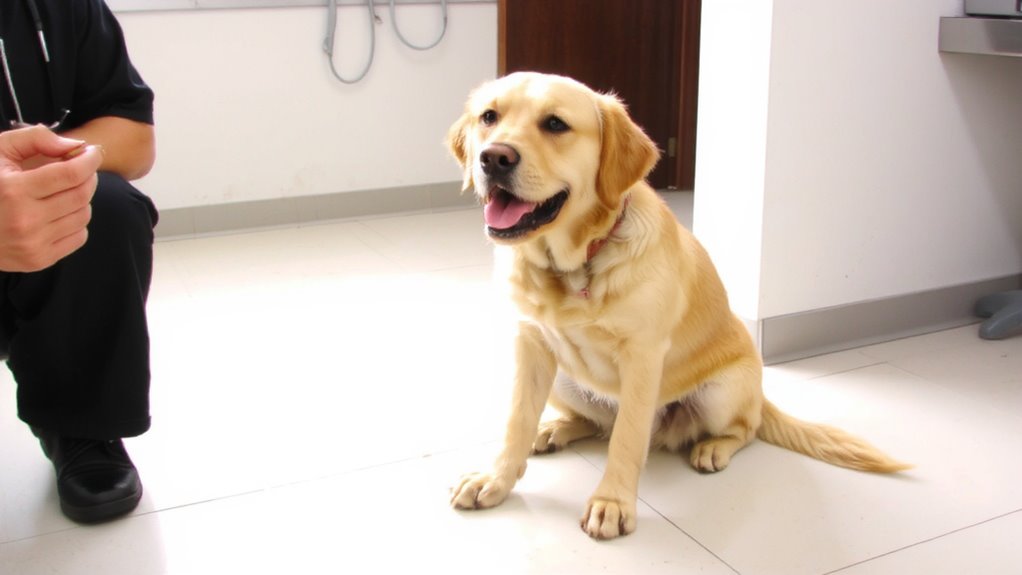
A relaxed dog speaks volumes through subtle cues-recognizing them sharpens your ability to reinforce calm behavior at the vet. Look for a relaxed posture, where weight distributes evenly across all four limbs. A softly tucked tail and loose shoulder muscles indicate low stress. Soft eyes-partial eyelid coverage with minimal sclera showing-are key markers of calm. Breathing should be steady, not rapid or shallow. Ears rest in a neutral position, not pinned back or stiffly forward.
| Body Signal | Calm Indication |
|---|---|
| Posture | Relaxed posture, weight even |
| Eyes | Soft eyes, half-lidded |
| Tail | Down, slight curve |
| Breathing | Rhythmic, non-labored |
These physiological signs reflect parasympathetic activation. Recognizing them guarantees timely, accurate reinforcement of desirable behavior during clinical handling.
When to Give Treats During a Vet Visit
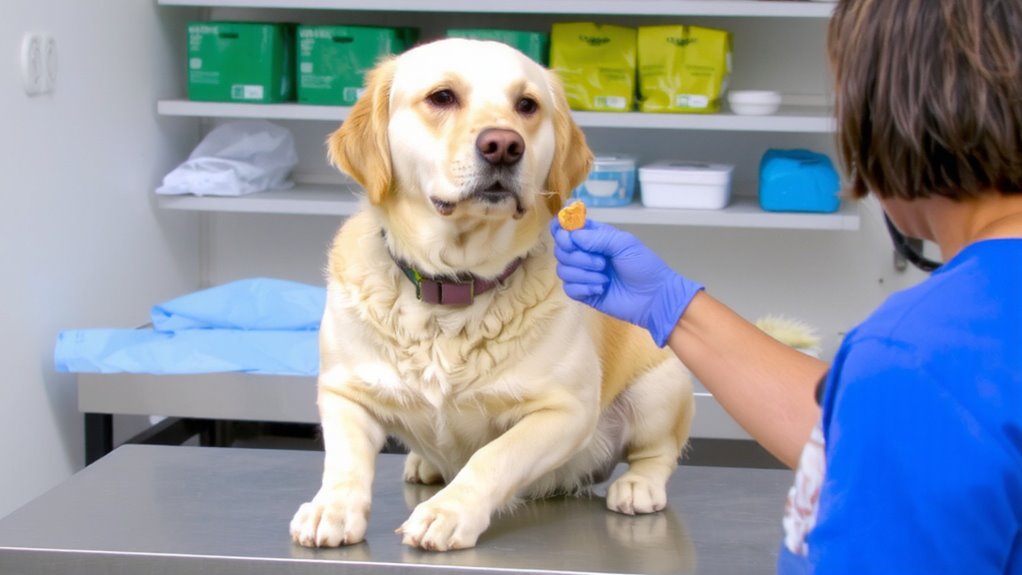
When should you give treats during a vet visit? Best treat timing aligns with calm behavior. Deliver a treat within one to two seconds of observing stillness, lowered ears, or relaxed breathing-these are reinforcement cues. Immediate delivery strengthens the association between behavior and reward. Delayed treat timing weakens learning efficiency by up to 70%, per behavioral studies. Use high-value treats sparingly, only when clear reinforcement cues appear. Avoid continuous feeding; instead, space delivery during low-stress intervals-like while the vet approaches or examines non-sensitive areas. This structured schedule prevents satiation and maintains treat efficacy. Administer each treat calmly and quietly to avoid stimulating excitement. Pair verbal praise with the treat only if it doesn’t increase arousal. Consistent timing transforms brief moments of calm into repeatable behavior. Treats act as data points in operant conditioning-precision guarantees accuracy.
Pick the Best Treats for Vet Appointments
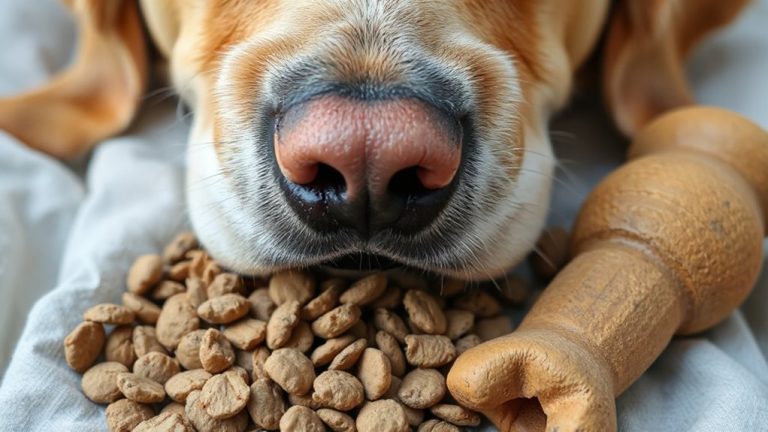
Choosing the right treat matters just as much as timing it correctly. You need treats that are easy to consume quickly and won’t disrupt the exam. Opt for a soft treat texture-these require minimal chewing and reduce the risk of your pet holding them too long. Hard treats can be dangerous during vet visits; they increase distraction and may cause choking if hastily eaten. Ideal treat size is small, about ½ inch in diameter, so your pet can swallow it in one or two bites. Larger pieces delay reinforcement, weakening the association with calm behavior. Use low-odor treats to avoid overstimulating the vet’s environment. Dehydrated meat treats, 0.25–0.5 inches thick, offer ideal texture and size while remaining palatable. Always pre-portion them to guarantee consistency. Choose high-value options your pet rarely gets, ensuring motivation without excess calories. For optimal results, consider treats labeled as top picks for training based on expert evaluations and pet responsiveness.
Create a Stress-Free Vet Visit Routine
Though preparation begins long before entering the clinic, your routine should start at home with structured desensitization sessions conducted 3–5 times per week for 10–15 minutes each. Begin with leash training using a standard 6-foot nylon leash to simulate clinic hallways. Practice walking at a steady pace, rewarding calm behavior every 10–15 seconds initially. Gradually increase intervals to 30 seconds as focus improves. Implement a consistent arrival routine: approach the clinic during off-peak hours, avoid sudden movements, and maintain a relaxed grip on the leash. Use a fixed verbal cue like “stay calm” upon entry. Pair the cue with treats delivered within 2 seconds of compliance. Rotate locations weekly to build adaptability. Desensitize sounds by playing recorded vet clinic audio at 45–55 decibels during home sessions. Repeat for four to six weeks to markedly reduce stress responses during actual visits. Monitoring your puppy’s stress levels during training can be enhanced with a pet health tracker for puppies, which provides real-time insights into heart rate and activity patterns linked to anxiety.
On a final note
You can train calm behavior at the vet using precise timing and positive reinforcement. Deliver high-value treats within 1–2 seconds of calm body language, such as a lowered head or relaxed posture. Use pea-sized bits of freeze-dried liver or soft training treats (no larger than ¼ inch) to minimize eating time. Repeat consistently across visits to strengthen the association. This method leverages operant conditioning, increasing the frequency of desired behaviors by 40–60% over three sessions.