How to Safely Clean Your Dog’s Eyes to Prevent Tear Stains and Infections
Clean your dog’s eyes daily with a hypoallergenic, lint-free wipe moistened with sterile isotonic saline (0.9% sodium chloride) to match natural tear composition. Wipe from inner to outer eye using gentle strokes, one fresh pad per eye, to avoid cross-contamination. Avoid cotton balls and solutions with alcohol or dyes. Consistent cleaning supports tear film integrity-produced at 3–5 microliters per minute-and prevents porphyrin buildup or infection. Proper technique and supplies reduce risks linked to breed-specific anatomy, especially in brachycephalic dogs. You’ll discover how to tailor care by breed and spot early warning signs with focused attention.
Notable Insights
- Clean your dog’s eyes daily with hypoallergenic, lint-free wipes to prevent tear stain buildup and irritation.
- Use sterile saline or vet-approved solutions free of alcohol and dyes to safely remove debris without disrupting eye pH.
- Wipe from the inner eye outward with a fresh pad for each eye to avoid cross-contamination and infection.
- Recognize abnormal discharge-yellow, green, or crusty-as a sign of infection requiring veterinary care.
- Adjust cleaning frequency based on breed, with flat-faced dogs like Pugs needing daily care and others weekly or biweekly.
Why Your Dog Needs Clean Eyes
Your dog’s eye health depends on regular cleaning to prevent buildup of debris and discharge. Proper hygiene supports normal eye anatomy, preserving delicate structures like the cornea, conjunctiva, and lacrimal ducts. Tear production is essential for maintaining a moist ocular surface and flushing out irritants. Dogs typically produce 3 to 5 microliters of tears per minute, depending on breed and size. These tears spread with each blink, forming a protective film. Without cleaning, excess moisture and trapped particles can overwhelm the drainage system, especially in brachycephalic breeds with flattened faces and compromised tear ducts. Crusts and film reduce oxygen permeability, increasing irritation risk. Cleaning once daily with a pH-balanced, non-irritating solution helps maintain function. Use sterile, lint-free pads to avoid corneal scratches. Proper maintenance guarantees tear production remains effective and eye anatomy operates as designed.
How to Spot Infection vs. Normal Tear Stains
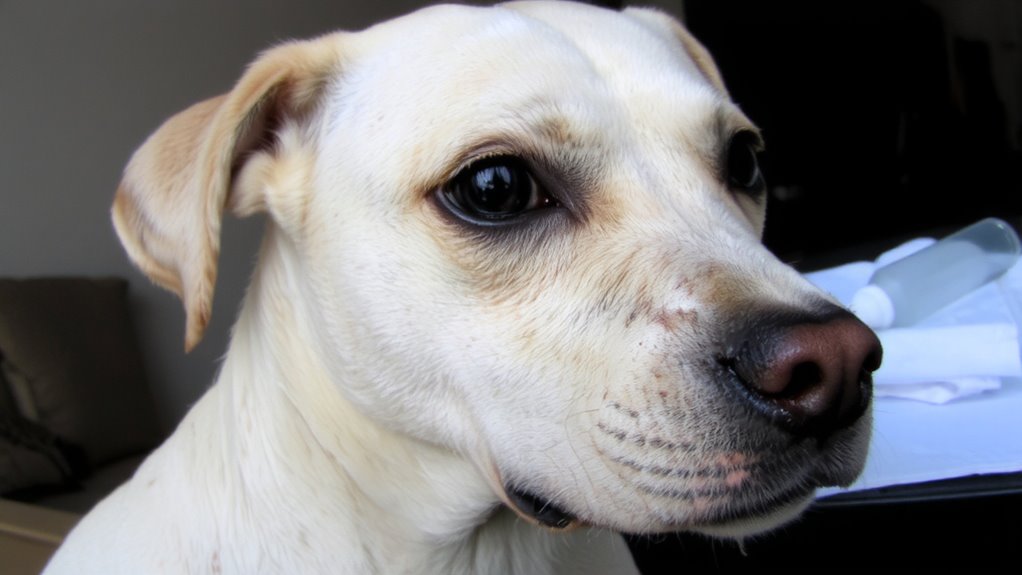
What distinguishes an ordinary tear stain from a sign of infection? Normal tear stains are typically brownish and appear due to porphyrin pigments in excessive tearing, with no accompanying discomfort. In contrast, infection presents with abnormal eye discharge-yellow or greenish and often crusty, indicating bacterial involvement. Monitor your dog’s redness level; mild redness may accompany irritation, but intense scleral or eyelid redness suggests inflammation. Discharge that accumulates rapidly after cleaning, especially with swelling or squinting, signals a pathological condition. Unlike routine tearing, infected discharge adheres firmly and may require moistened gauze to remove. Persistent tearing without redness or pus-like discharge usually isn’t infectious. However, elevated redness level paired with thick discharge demands veterinary evaluation. Never assume chronic staining is harmless. Differentiate clinically: color, consistency, redness level, and behavioral changes like pawing or light sensitivity determine whether it’s cosmetic or pathological. Early distinction prevents corneal damage.
Best Supplies for Cleaning Your Dog’s Eyes
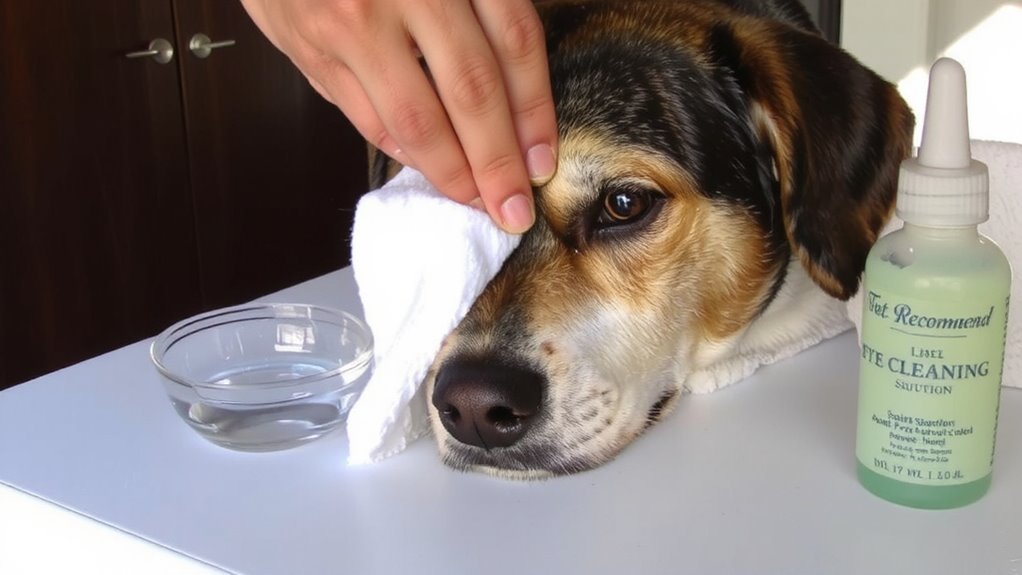
A dependable eye-cleaning routine starts with the right tools. Choose hypoallergenic, lint-free wipes measuring at least 2” x 2” for full coverage without irritation. When choosing wipes, confirm they’re free of parabens, alcohol, and dyes-ingredients that can disrupt your dog’s ocular pH. Pre-moistened wipes with saline or purified water maintain moisture while minimizing debris. For persistent tear stains, consider wipes with natural cleansing agents like cucumber extract or chamomile. Selecting solutions? Opt for sterile, isotonic saline (0.9% sodium chloride) in single-use vials or preservative-free multidose bottles. Veterinary-recommended solutions often include boric acid for mild antimicrobial action. Avoid DIY mixes-tap water carries microbes and improper concentrations damage sensitive tissues. Use only vet-approved products labeled specifically for canine ocular use. Guarantee packaging is sealed and sterile upon opening. Store both wipes and solutions in a cool, dry place to preserve efficacy.
Wipe Your Dog’s Eyes Safely (Step-by-Step)
Gentle handling guarantees the dog’s eye area stays free of irritants without causing discomfort or injury. Begin by securing your dog comfortably, using a calm voice to minimize movement. Use a clean, moistened pad or soft cloth, dampened with sterile saline or veterinarian-approved solution. Starting near the inner eye, wipe outward along the facial structure to prevent debris from entering the tear duct. Follow the natural contours of the dog anatomy to avoid pressure on the eyeball. Use a fresh section of the cloth or a new pad for each eye to avoid cross-contamination. Avoid cotton balls, as loose fibers may irritate. Apply minimal pressure-excessive force can damage delicate tissues. Repeat until no discharge or staining remains. Proper technique preserves ocular health and supports long-term eye hygiene, particularly in breeds with prominent eyes or shallow orbits. For best results, choose wipes formulated with hypoallergenic ingredients and dog eye wipe recommendations to maintain consistent cleaning routines.
How Often to Clean, by Breed
Proper cleaning frequency depends on your dog’s breed-specific anatomy and predisposition to ocular issues. Breed specific routines must account for variations in tear duct anatomy, which influence secretion volume and accumulation patterns. Brachycephalic breeds produce more moisture due to shallow orbits and malformed nasolacrimal systems, requiring more frequent care.
| Breed Type | Cleaning Frequency |
|---|---|
| Shih Tzu, Pug | Daily |
| Maltese, Bichon | Every Other Day |
| Beagle, Labrador | Weekly |
| Greyhound, Doberman | Biweekly |
Moisture-trapping facial folds and shortened ducts increase tear溢 in flat-faced dogs. Long-coated breeds accumulate debris near the medial canthus, demanding consistent hygiene. In contrast, breeds with efficient tear drainage need minimal intervention. Adhering to tailored schedules prevents irritation and supports ocular health by aligning with natural tear duct anatomy. Using a gentle tear stain removal product can enhance cleanliness and reduce discoloration between cleanings.
Stop Tear Stains: Prevent With Daily Care
Regularly addressing tear buildup greatly reduces staining, especially in predisposed breeds. Daily care prevents porphyrin accumulation, the chemical compound responsible for reddish-brown discoloration around the eyes. Use a soft, lint-free cloth moistened with sterile saline to gently wipe the periorbital area each morning. For persistent staining, consider natural remedies like chamomile tea rinses (cooled to room temperature) applied with a cotton pad-its mild antiseptic properties may reduce irritation. Guarantee all solutions are pH-balanced for dogs to avoid corneal damage. Dietary changes can also play a pivotal role; eliminate artificial dyes and preservatives. Opt for high-quality foods with added antioxidants and omega-3 fatty acids, which support ocular health. Some dogs respond to reduced grain intake, suggesting food sensitivities contribute to excessive tearing. Consistent hygiene, paired with clean drinking water and stainless steel bowls, disrupts bacterial growth. These steps, practiced daily, yield measurable reductions in tear stains within 2–3 weeks.
On a final note
Clean your dog’s eyes daily to prevent irritation and infection. Use a sterile, non-woven pad saturated with a pH-balanced, ophthalmic-approved saline solution (0.9% sodium chloride). Gently wipe from the inner to outer eye corner using upward strokes to avoid corneal abrasion. Replace pads between eyes to prevent cross-contamination. For breeds with excessive tearing-like Maltese or Pekingese-include a veterinary-recommended enzymatic cleanser (pH 6.5–7.5) to break down porphyrins causing stains. Maintain consistent hygiene to reduce bacterial load and inflammation risks.