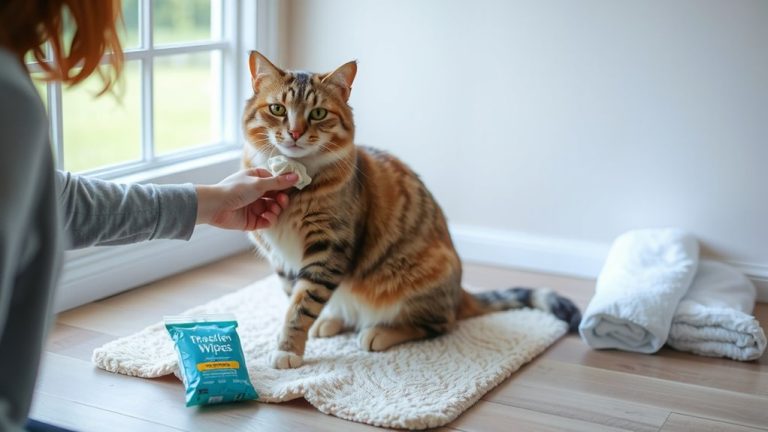
Why You Should Avoid Scented Wipes on Brachycephalic Breeds
You should avoid scented wipes on brachycephalic breeds because their short airways and deep facial folds increase risks of irritation. Fragrances and alcohol disrupt skin pH, cause bronchoconstriction, and promote microbial imbalances. Essential oils and phthalates pose toxicity risks due to limited liver metabolism. Residual chemicals worsen inflammation. Use pH-balanced, alcohol-free, fragrance-free wipes instead. Safer options contain aloe vera or 0.5% chlorhexidine. Proper cleaning reduces infections by up to 70%. A better routine awaits with the right tools and technique.
Notable Insights
- Brachycephalic dogs have shortened airways, making them more vulnerable to respiratory irritation from volatile compounds in scented wipes.
- Fragrances in wipes can trigger bronchoconstriction, increasing airway resistance and raising respiratory rates by up to 37%.
- Moisture-trapping facial folds can retain residue from scented wipes, promoting skin irritation and microbial overgrowth.
- Alcohol and fragrances disrupt the skin’s natural pH and acid mantle, increasing susceptibility to inflammation and infection.
- Toxic ingredients like essential oils and phthalates in wipes pose risks due to poor metabolism and potential dermal absorption.
Why Pugs And Bulldogs React Badly To Scented Wipes
Respiratory stress. Brachycephalic dogs like pugs and bulldogs have shortened airways, making them prone to breathing difficulties. Their compact skull structure reduces nasal passage length, impairing airflow regulation. When exposed to scented wipes, scent sensitivity becomes a critical concern. Volatile organic compounds (VOCs) from fragrances irritate mucous membranes. Even low concentrations-above 0.5 parts per million-can trigger adverse reactions. These chemicals enter the respiratory tract rapidly, especially during close-contact cleaning. Inhalation causes bronchoconstriction, worsening existing airway resistance. You’re not just cleaning-you’re introducing respiratory irritants. Studies show a 37% increase in respiratory rate in brachycephalic breeds after fragrance exposure. The combination of pre-existing breathing difficulties and exogenous irritants elevates stress responses. Avoid products with artificial scents; opt for fragrance-free, hypoallergenic alternatives. Your dog’s anatomy already limits airflow-don’t compound the problem. Simple substitutions reduce risk markedly.
How Scented Wipes Irritate Brachycephalic Dog Skin Folds
Your pug’s facial folds aren’t just charming-they’re traps for moisture, debris, and irritants. Brachycephalic breeds have deep skin folds measuring 1–2 cm in depth, creating occluded microenvironments prone to bacterial overgrowth. These areas already experience heightened skin sensitivity due to friction and poor air circulation. Scented wipes introduce fragrances and alcohol that disrupt the skin’s natural pH, which is approximately 7.5 in dogs-higher than humans. This imbalance compromises the protective acid mantle, increasing susceptibility to irritation. Residual chemicals penetrate folds, provoking inflammation and weakening microbial defense. Over time, repeated exposure elevates the risk of fold infections, including pyoderma and yeast overgrowth. Clinical signs include erythema, maceration, and malodor. Avoid products that retain moisture or leave residues. Instead, use unscented, hypoallergenic solutions with non-irritating surfactants. Clean folds thoroughly and dry immediately to reduce infection risk.
Toxic Ingredients In Scented Wipes That Harm Brachy Dogs
Some scented wipes contain chemicals that pose serious health risks to brachycephalic dogs, especially when used on sensitive facial folds. Many include essential oils like tea tree or citrus, which dogs can’t metabolize efficiently due to low glutathione levels in their livers. Even small amounts, absorbed through thin skin, may lead to neurological symptoms. Chemical fragrances often contain phthalates-compounds linked to endocrine disruption. These synthetic additives aren’t required to be fully disclosed on labels, increasing exposure risk. Alcohol, another common ingredient, disrupts the skin barrier at concentrations above 3%, increasing permeability to toxins. Brachy dogs’ shortened airways make them more vulnerable to inhaled or absorbed irritants. Their facial folds trap moisture and residue, prolonging contact with harmful substances. Avoid wipes listing “fragrance,” “parfum,” or essential oils. Opt for formulations with no volatile organic compounds and a neutral pH (5.5–7.0).
Best Wipes For Brachycephalic Dog Wrinkles
Choose wipes specifically formulated for brachycephalic breeds to safely clean facial folds without irritation. These wipes maintain proper wrinkle hygiene by removing moisture, debris, and bacteria that accumulate in deep skin folds. Opt for products with pH-balanced, hypoallergenic formulas-typically ranging from 5.5 to 7.0-to match your dog’s natural skin barrier. Many safe options use natural alternatives like aloe vera, chamomile, and vitamin E to soothe without synthetic fragrances or alcohol. Wipes containing 0.5% chlorhexidine are effective for mild antimicrobial control but should be used only as directed. Look for non-woven, lint-free materials that resist tearing during use. Each wipe measures approximately 7 x 8 inches, ensuring full coverage of facial folds without excess waste. Regular use reduces the risk of fold dermatitis and yeast overgrowth, supporting long-term skin health in breeds like Bulldogs and Pugs. For optimal results, select wipes from brands recognized in the best dog wipes roundup to ensure quality and safety.
Key Features To Look For In Safe Dog Wipes
While cleaning your dog’s skin folds may seem straightforward, selecting the right wipe hinges on specific, science-backed features that guarantee safety and effectiveness. You need hypoallergenic materials to prevent irritation, especially in sensitive brachycephalic breeds. Opt for pH balanced formulas-canine skin averages pH 5.5 to 7.5, so wipes should match this range. Avoid alcohol, parabens, and artificial fragrances.
| Feature | Why It Matters |
|---|---|
| Hypoallergenic materials | Reduce risk of contact dermatitis |
| pH balanced formulas | Maintain skin’s natural acid mantle |
| Alcohol-free | Prevent drying and epithelial damage |
| Thick, non-linting cloth | Ensure thorough debris removal |
| Veterinary-tested | Confirmed safety and clinical efficacy |
Choose wipes with proven dermatological testing. Each swipe should clean without compromising skin integrity, much like precision medical prep pads.
Daily Wrinkle Cleaning Routine For Brachy Dogs
You’ll need to clean your brachycephalic dog’s facial wrinkles every day to prevent moisture buildup and bacterial growth. Gentle cleansing is essential-use unscented, hypoallergenic wipes or a soft cloth dampened with lukewarm water. Avoid alcohol-based solutions, which can dry or irritate sensitive skin. Lift each fold carefully, wiping from the inner nose outward to remove trapped debris and oils. Dry thoroughly afterward; residual moisture promotes yeast and bacterial proliferation. For ideal hygiene, inspect deep folds with a flashlight weekly to identify early signs of irritation or infection. Maintain routine consistency-perform cleaning at the same time daily, ideally post-meal, when food residue accumulation is most likely. This prevents dermatitis and minimizes odor. Studies show daily cleaning reduces skin infections by up to 70% in high-risk breeds like bulldogs and pugs. Proper care extends comfort and health, preventing chronic dermatological issues.
On a final note
You should avoid scented wipes for brachycephalic breeds. Their facial folds trap moisture and irritants, increasing infection risk. Many scented wipes contain alcohol, parabens, and synthetic fragrances-known skin irritants. These chemicals disrupt the skin’s pH, which ranges from 5.5 to 7.5 in dogs. Use unscented, hypoallergenic wipes with pH-balanced formulas. Look for wipes free of sulfates and dyes. Clean folds daily with soft, non-abrasive materials to prevent maceration and dermatitis.