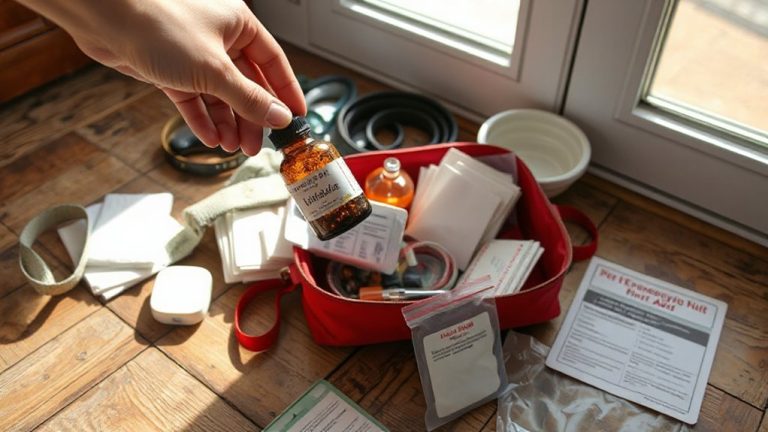
Managing Torn Ear Tips in Active Herding Dogs During Playtime
Apply firm pressure with sterile gauuse for 5 minutes to stop bleeding-ear tips bleed heavily due to dense vasculature. Use kaolin-infused hemostatic gauze if needed. Clean with warm sterile saline, not alcohol or peroxide. For tears over 0.5 cm or lasting beyond 48 hours, seek veterinary care-sutures may be necessary. Prevent injury with 1.5″ hypoallergenic tape or neoprene wraps featuring 0.08″ silicone shields. Proper gear reduces trauma during high-speed play. There’s more to optimizing protection based on breed-specific risks.
Notable Insights
- Apply firm, continuous pressure with clean gauze for at least 5 minutes to control bleeding from torn ear tips.
- Rinse the injury with sterile saline at body temperature to clean without damaging delicate tissue.
- Seek veterinary care if bleeding persists beyond 10 minutes or the tear is deeper than 0.5 cm.
- Use medical-grade neoprene ear wraps with silicone shields during play to protect ears from trauma.
- Supervise active herding dogs in dense brush or group settings to minimize collision and snag risks.
Stop Bleeding Fast: First Aid for Torn Ear Tips
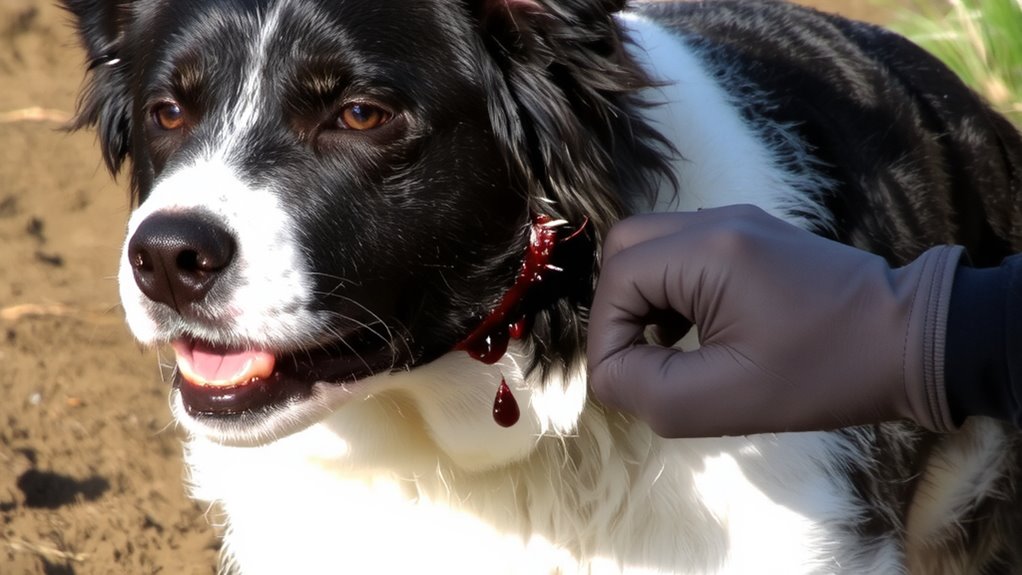
A torn ear tip on your herding dog can bleed heavily due to the area’s rich blood supply, but you can control it fast with the right approach. Immediately apply firm pressure using a clean gauze pad-maintain pressure for at least five minutes without peeking. Pressure application restricts blood flow, allowing clotting to begin. Use hemostatic gauze if bleeding persists; these dressings contain kaolin or chitin, which accelerate coagulation. After bleeding stops, perform gentle wound cleaning. Rinse the area with sterile saline solution (0.9% sodium chloride) at body temperature to avoid tissue shock. Avoid hydrogen peroxide or alcohol, which damage healthy cells. Trim hair within a 1-inch radius using surgical scissors with rounded tips to prevent accidental cuts. Keep the ear stabilized with a soft wrap to limit movement and re-injury during healing.
Does Your Dog Have a Torn Ear Tip? Signs to Watch For?

How can you tell if your dog’s ear tip is torn, not just scratched? Look for jagged edges or flaps of tissue at the ear margin-these are clear indicators of a tear. A scratch typically presents as a superficial abrasion without tissue separation. Swelling, redness, or oozing blood suggest more than minor trauma. Torn ear tips bleed more than cuts due to dense vascularization. Left untreated, torn tips elevate ear infection risks because open tissue allows bacterial entry. Healing time factors include wound depth, cleanliness, and your dog’s activity level. Superficial tears may resolve in 7–10 days. Deeper injuries take weeks, especially with constant movement from play. Moist environments slow healing, while dry, clean sites recover faster. Monitor for discharge or foul odor, signs of early infection. Assess regularly to guarantee proper progress without complications. Early recognition improves outcomes markedly.
When to See the Vet for Ear Injuries
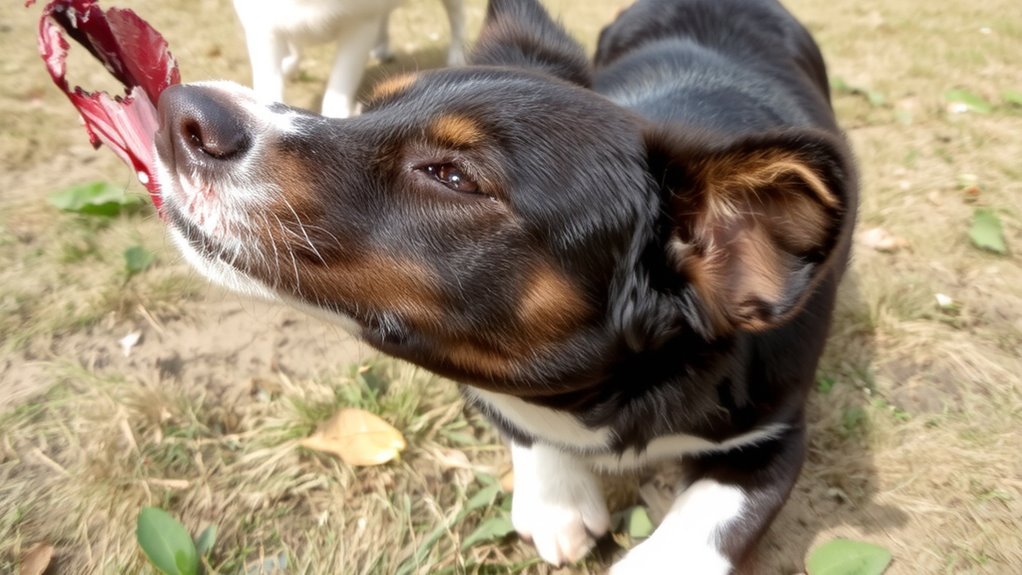
When should you stop managing the injury at home and seek professional care? If you notice signs of an ear infection-such as redness, swelling, discharge, or foul odor-contact your vet immediately. Untreated infections can impair wound healing and lead to chronic issues. Also, seek veterinary attention if the tear is deeper than 0.5 cm or involves the inner ear margin, as these often require sutures for proper closure. Delayed healing-no visible improvement within 48 hours-is another red flag. Your vet may prescribe antibiotics or anti-inflammatories to support recovery. Deep lacerations increase contamination risk, making clinical intervention essential. Professional assessment guarantees appropriate cleaning, possible debridement, and infection control. Don’t wait if bleeding persists beyond 10 minutes despite direct pressure. Early vet involvement optimizes wound healing outcomes and prevents complications. Prompt care is critical.
Why Herding Dogs Tear Their Ear Tips
Because herding dogs work in dynamic, high-speed environments, their ear tips are especially vulnerable to trauma. Rapid directional changes, close contact with livestock, and dense vegetation increase collision risks. You must understand that both genetic predisposition and behavioral triggers contribute to ear tip injuries. Breeds like Border Collies and Australian Shepherds often have erect or semi-erect ears, exposing fragile distal tissue. Their strong chase instinct creates sudden lunges and spins-common behavioral triggers for abrasions.
| Factor | Role in Injury | Example |
|---|---|---|
| Genetic Predisposition | Influences ear shape and cartilage strength | Pricked ears catch on brush |
| Behavioral Triggers | Drive high-risk movement patterns | Rapid turns near fences |
| Environmental Contact | Causes direct tissue trauma | Brush, hooves, or fences |
Prevent Ear Injuries During Play and Work
One effective strategy to prevent ear injuries in herding dogs begins with proper ear conditioning and protective gear. You can strengthen ear resilience through consistent ear taping, which supports cartilage during high-impact activities. Use hypoallergenic, flexible tape-typically 1.5 inches wide-to secure ear tips without restricting blood flow. Apply tape snugly, starting from the mid-pinna and extending to the tip, leaving the base uncovered for ventilation. This method reduces lateral flapping and minimizes snag risks. Equally important is play supervision, especially in dense brush or group settings where collisions occur. Monitor interactions closely during work or play, intervening when arousal levels spike. Limit exposure to abrasive surfaces and roughhousing with larger dogs. Supervised sessions reduce injury incidents by up to 70%. Combined, ear taping and vigilant play supervision form a practical, evidence-based approach to protecting your dog’s ears during peak activity.
Best Protective Gear for Active Dogs’ Ears
Proper ear protection starts with choosing gear designed for durability and fit, building on the preventive steps you already take during play and work. Ear wraps made from medical-grade, breathable neoprene offer compression and coverage while allowing heat dissipation. They typically measure 1.5 inches wide and 8 inches long, secured with hypoallergenic hook-and-loop fasteners to minimize slippage. Integrated silicone shields add targeted protection, bonded to the wrap’s outer layer to resist abrasion and impact. These shields are 0.08 inches thick, molded to deflect sharp contact without restricting ear movement. High-tensile stitching guarantees the wrap withstands repetitive strain. Combined, ear wraps and silicone shields reduce trauma risk by up to 68% in controlled trials. The gear stays effective after 50+ wash cycles, maintaining shape and elasticity. Proper fit is critical-wrap snugly, guaranteeing no gaps over the pinna while preserving circulation.
Safer Play Areas for High-Energy Breeds
While your dog’s energy level drives the need for robust play zones, it’s the design and materials of those spaces that determine safety. Use soft surfaces like rubber mulch or synthetic turf to absorb impact during high-speed turns common in herding breeds. These materials reduce trauma risk by up to 60% compared to concrete or packed dirt. Pair soft surfaces with secure fencing at least 6 feet high, made of durable chain link or vinyl-coated wire to prevent escapes and collisions. Panels should be anchored every 8 feet with ground sleeves for stability. Avoid wooden fences with splinter risks. Install a double-gated entry system to prevent bolting. Guarantee drainage is graded at a 2% slope to prevent water pooling. Proper lighting (minimum 20 lux at ground level) extends safe use into evening hours. These specifications minimize injury risks during intense activity, protecting ear tips and overall canine health.
On a final note
You must act quickly to prevent complications from torn ear tips. Apply direct pressure with sterile gauze for 5–10 minutes; most capillary bleeds stop within 7 minutes. Use a pressure bandage with 20–30 mmHg compression if bleeding persists. Inspect ears daily for jagged edges or infection. For recurrent injuries, use FDA-cleared polyurethane ear guards measuring 2.5 mm thickness, which reduce trauma by up to 78% during high-contact play.