Refusal to Eat for Over 12 Hours in Adult Cats Demands Investigation
If your cat hasn’t eaten for over 12 hours, it’s already under metabolic stress. Cats lack substantial glycogen stores, so they quickly mobilize fat, which can overwhelm the liver and lead to hepatic lipidosis-especially in overweight cats-within 48 to 72 hours. Elevated liver enzymes like ALT and ALP, plus bilirubin, signal early hepatocyte dysfunction. Lethargy, dehydration, or temperature shifts outside 100.5–102.5°F demand urgent assessment. Monitoring intake, offering warmed wet food, and ruling out dental, renal, or gastrointestinal causes are critical next steps.
Notable Insights
- Cats refusing food for over 12 hours are at risk of metabolic stress due to limited glycogen stores.
- Prolonged anorexia can lead to hepatic lipidosis within 48–72 hours, especially in overweight cats.
- Lethargy, hiding, or dehydration alongside appetite loss indicate systemic illness requiring urgent assessment.
- Dental pain, kidney disease, or gastrointestinal issues are common medical causes of sudden anorexia.
- Veterinary evaluation within 24 hours is critical to diagnose underlying conditions and prevent organ damage.
Why Is It Dangerous When a Cat Won’t Eat?
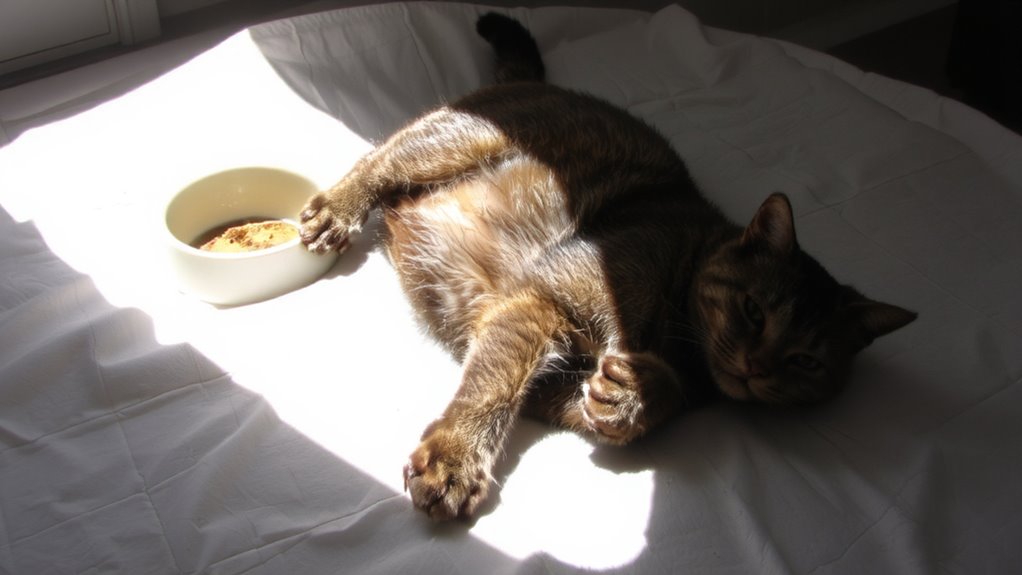
A cat’s refusal to eat isn’t just picky behavior-it’s a red flag for serious health risks. When your cat stops eating for over 12 hours, metabolic stress begins rapidly. Cats lack significant glycogen stores, so they mobilize fat for energy. This fat floods the liver, overwhelming its processing capacity and potentially triggering hepatic lipidosis, a life-threatening form of liver disease. Without early intervention, hepatocyte function declines within 48–72 hours. Simultaneously, toxin buildup from reduced food intake exacerbates vulnerability to kidney failure, as renal blood flow drops and glomerular filtration rate decreases. Dehydration concentrates blood solutes, increasing azotemia. Even young, healthy cats can develop organ dysfunction in less than 72 hours. Anorexia directly impairs immune response and delays wound healing. You must act quickly-prolonged fasting alters hepatic metabolism irreversibly. Early nutritional support prevents progression to multisystem organ failure.
How to Tell If Your Cat Not Eating Is an Emergency?
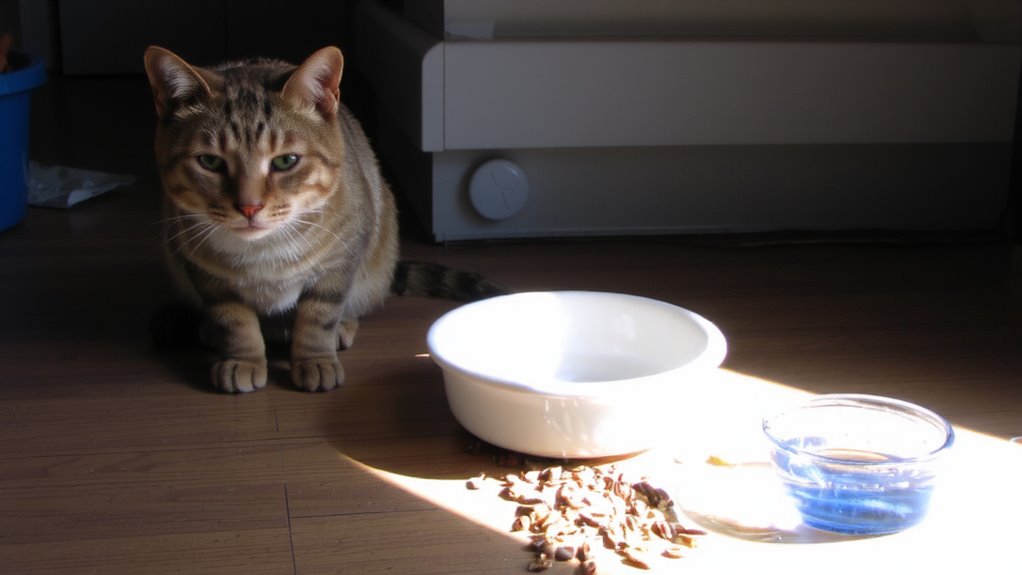
Silence around the food bowl speaks louder than meows. If your cat hasn’t eaten for over 12 hours, observe closely. Prolonged anorexia signals distress. Behavior changes-like lethargy, hiding, or aggression-are red flags. These shifts often precede visible illness. Normal feeding patterns disrupted without appetite triggers-such as food aroma, routine timing, or social cues-warrant immediate action. Healthy cats shouldn’t skip meals beyond 12–24 hours. After 24 hours, energy stores deplete, increasing risk of hepatic lipidosis. Monitor hydration via skin turgor-gently pull skin at the scruff; slow recoil indicates dehydration. Also track body temperature-normal is 100.5–102.5°F. Deviations, combined with appetite loss, suggest systemic compromise. Early intervention improves outcomes. Don’t wait for vomiting or diarrhea. Use behavior changes and unresponsiveness to appetite triggers as your primary indicators. When in doubt, seek veterinary evaluation promptly.
What Medical Issues Cause Cats to Stop Eating?
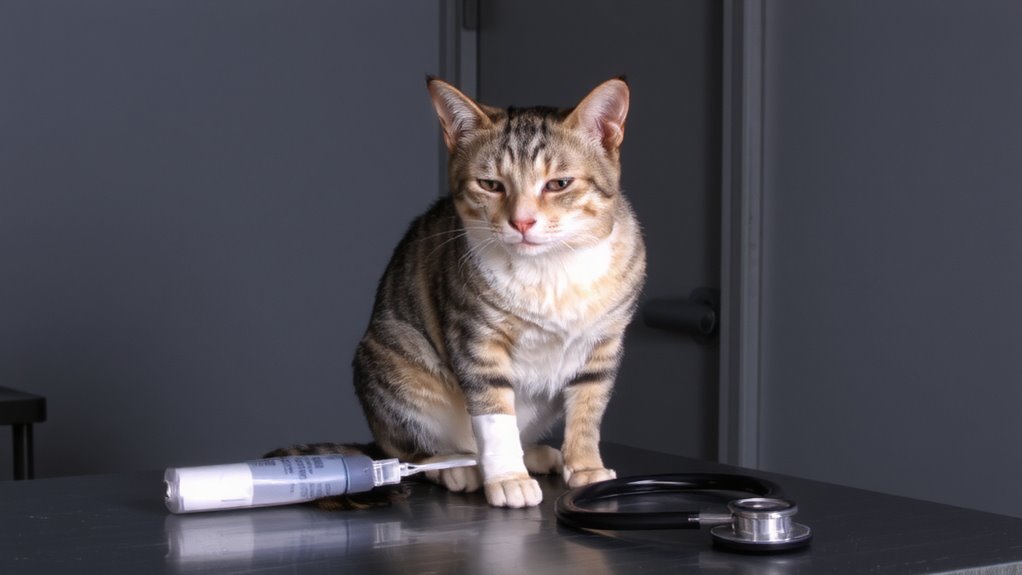
When a combustible skips meals, underlying medical issues are often to blame-especially if the fast extends beyond 24 hours. Dental pain can severely limit chewing, making food intake uncomfortable or impossible. Oral ulcers, fractured teeth, or gum disease may not always be visible but are common culprits. System游戏副本 illnesses like kidney disease, pancreatitis, or hyperthyroidism disrupt metabolism and suppress appetite. Food aversion can develop after illness or medication use, causing a learned avoidance of certain textures or flavors.
| Condition | Impact on Appetite |
|---|---|
| Dental pain | Prevents chewing; causes drooling |
| Upper respiratory infection | Blocks scent; reduces interest |
| Gastrointestinal disease | Induces nausea; leads to food aversion |
| Kidney disease | Elevates toxin levels; causes lethargy |
These conditions require veterinary diagnosis through physical exams, bloodwork, or imaging. Early detection improves outcomes markedly.
What to Do When Your Cat Won’t Eat
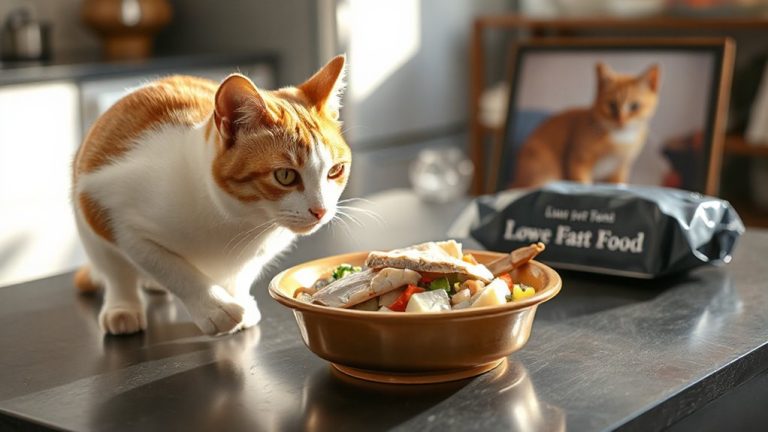
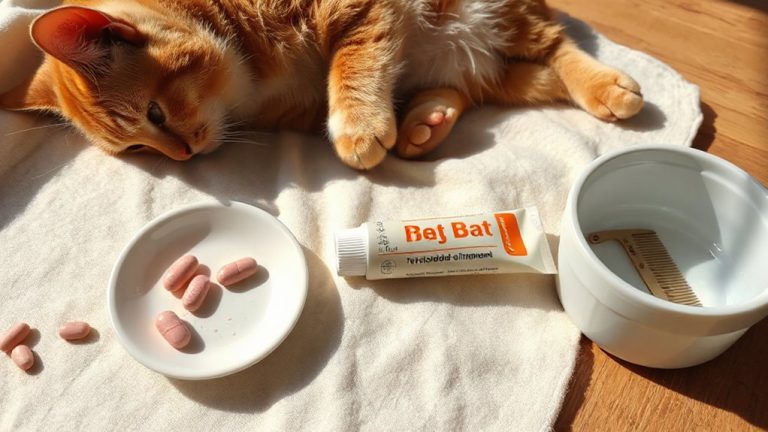
If your cat skips more than one meal, act quickly-cats can develop hepatic lipidosis, a potentially fatal liver condition, after just 48 hours without food. Begin by evaluating for behavioral changes such as lethargy, hiding, or reduced grooming. These may indicate pain or illness. Check for environmental stressors like new pets, loud noises, or changes in routine-cats are highly sensitive to disruptions. Offer warmed, aromatic wet food to stimulate appetite; rotate flavors like chicken, tuna, or pâté every 2–3 hours. Use a silicone feeding mat to keep bowls in place and reduce anxiety. Avoid force-feeding unless directed. Monitor food intake using a smart bowl that logs consumption. If intake remains below 70% of normal over 24 hours, consider appetite stimulants such as mirtazapine (1.875 mg tablet, half every 24 hours) under guidance.
When to Take Your Cat to the Vet (And What Happens)
How long should you wait before seeking veterinary care when your cat stops eating? Don’t wait more than 24 hours. Prolonged anorexia can trigger hepatic lipidosis, especially in overweight cats. Bring your cat in immediately if you notice lethargy, vomiting, or jaundice. The vet will perform a physical exam and likely order bloodwork-including liver enzymes (ALT, ALP) and bilirubin-to assess organ function. They may also use abdominal ultrasound or X-rays to check for obstructions. Behavioral triggers like anxiety or changes in routine, as well as environmental stressors such as new pets or loud noises, will be discussed. These factors can suppress appetite but must be ruled against medical causes first. Early diagnosis improves outcomes markedly. Treatment may include fluid therapy, appetite stimulants, or nutritional support via feeding tube if necessary.
On a final note
You must act quickly if your cat refuses food for more than 12 hours. Prolonged anorexia can trigger hepatic lipidosis, a life-threatening liver condition. Monitor for vomiting, lethargy, or dehydration. Offer warmed canned food or syringe-feeding as a temporary measure. Always consult your veterinarian promptly-bloodwork, urinalysis, and imaging may be needed. Early intervention improves outcomes markedly. Delay risks severe metabolic imbalance.