Why Dental Exams Are a Critical Part of Your Cat’s Annual Veterinary Care
Your cat hides dental pain due to instinctive survival behaviors, masking symptoms until disease progresses. Annual dental exams detect early signs like subgingival lesions, periodontal pockets exceeding 1 mm, or tooth resorption-present in up to 60% of adult cats. Without intervention, bacteria from plaque can enter the bloodstream, risking endocarditis, liver inflammation, and chronic kidney disease. Radiographs and professional scaling during exams reveal hidden pathology and prevent systemic complications, preserving long-term health. Further details reveal the full scope of preventive care.
Notable Insights
- Cats hide dental pain due to instinct, making annual exams essential for early detection of hidden oral issues.
- Regular dental exams identify common problems like tooth resorption and gingivitis before they cause severe damage.
- Chronic dental disease can lead to bacteria entering the bloodstream, harming the heart, liver, and kidneys.
- Signs like bad breath, chewing on one side, or drooling often indicate underlying dental disease needing professional care.
- Dental radiographs and cleanings during exams prevent advanced disease and detect hidden problems beneath the gumline.
Why Cats Hide Dental Pain: And How to Detect It
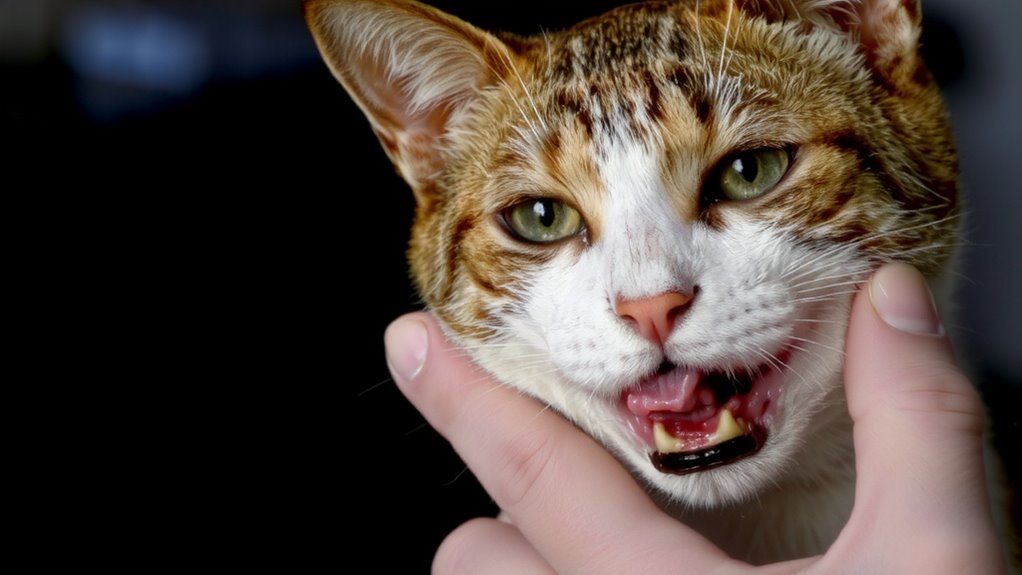
Why does your cat seem perfectly fine even when something’s wrong? Cats hide dental pain as a survival instinct; showing weakness in the wild increases vulnerability. You must rely on behavioral changes and subtle cues to detect discomfort. A cat with dental pain may groom less, drop food while eating, or resist chewing on one side. These signs are often mistaken for pickiness. Look for decreased activity, irritability, or withdrawal from social interaction-common behavioral changes linked to chronic pain. Subtle cues include slight tongue protrusion, excessive drooling, or pawing at the mouth. Tartar buildup or red, swollen gums are visible markers, but early disease may not show. Annual dental exams allow veterinarians to perform oral assessments under anesthesia, detecting issues like resorptive lesions at Stage 1-before irreversible damage occurs. Early detection improves outcomes markedly.
Common Dental Problems in Cats
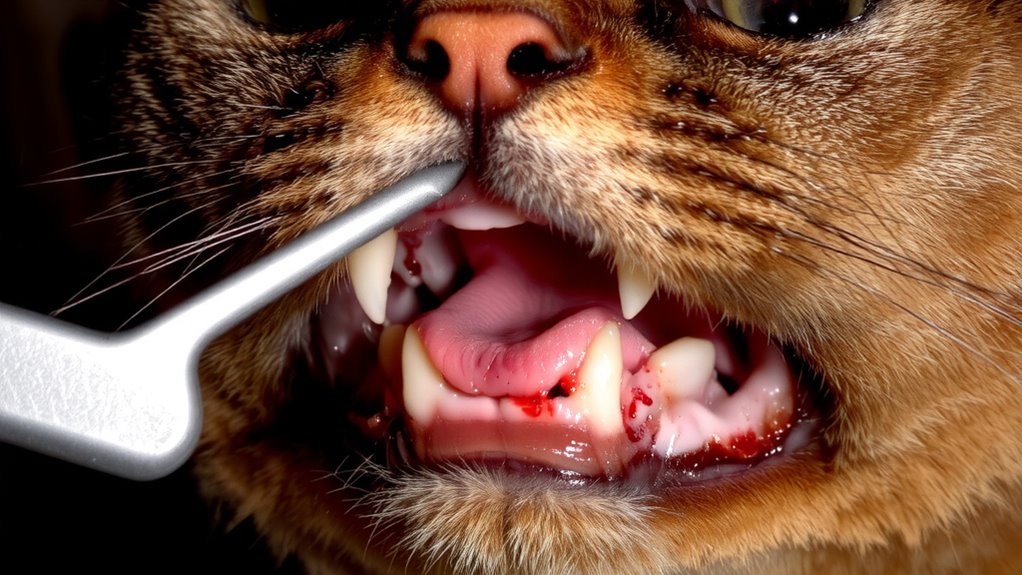
A routine dental exam often reveals one or more of the most common oral conditions affecting cats. Tooth resorption affects up to 60% of adult cats, causing progressive destruction of the tooth structure. Lesions typically start at the enamel and extend into the dentin, often leading to pulp exposure. These are most common in premolars and molars. Gingivitis flare ups occur when plaque accumulates along the gumline, triggering inflammation. Left untreated, this can progress to periodontal disease, resulting in bone loss and tooth instability. Stomatitis, a severe form of gingivitis, involves widespread oral inflammation. Resorptive lesions are diagnosed via dental radiographs, which detect subgingival damage. Treatment usually requires extraction of affected teeth. You’ll need consistent home care and professional cleanings to manage these conditions. Early detection improves outcomes markedly.
Signs Your Cat Needs a Dental Exam
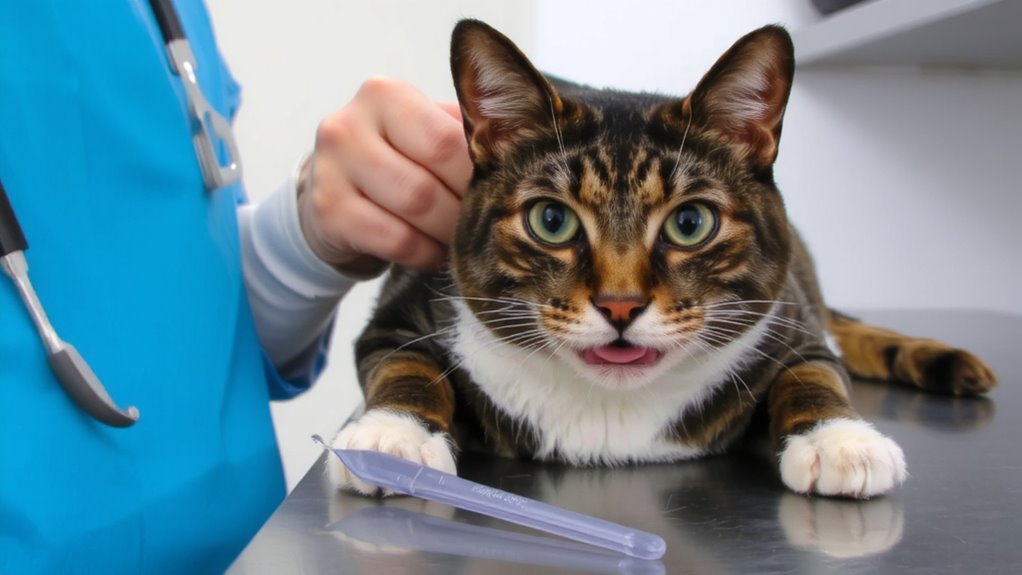
How do you know when it’s time to schedule a dental checkup for your cat? Persistent bad breath is one of the earliest indicators of oral disease. Unlike transient odors, chronic halitosis results from bacterial overgrowth in dental plaque. You may also notice your cat favoring one side when chewing or dropping food mid-meal-signs of discomfort. Visually inspect the mouth: swollen gums appear red, inflamed, and may bleed easily upon contact. This gingival enlargement is a clinical response to plaque accumulation and a hallmark of active periodontal disease. Additional signs include drooling, pawing at the face, or visible tartar-hardened calculus typically found near the gumline. Cats often hide pain, so subtle behavioral shifts, like withdrawal or reduced grooming, can signal underlying issues. Any combination of bad breath, swollen gums, or eating difficulty warrants prompt veterinary evaluation. Early detection improves treatment outcomes. Using a high-quality cat dental kit can help manage plaque buildup between veterinary visits.
How Dental Exams Prevent Organ Damage
Could something as routine as a dental exam really protect your cat’s internal organs? Yes. Untreated tooth decay leads to bacterial infection, and those bacteria don’t stay in the mouth. They enter the bloodstream and travel to essential organs. This systemic spread can damage the heart, liver, and kidneys over time. Regular dental exams detect early signs of decay and infection before they escalate. Early intervention stops the progression of disease and reduces the risk of organ damage. Consider the following effects of untreated dental disease:
| Organ | Risk from Bacterial Infection | Outcome if Untreated |
|---|---|---|
| Heart | Bacterial endocarditis | Valve damage, heart failure |
| Liver | Bacterial hepatitis | Inflammation, impaired function |
| Kidneys | Glomerulonephritis | Reduced filtration, kidney disease |
Detecting tooth decay early is critical. It prevents chronic bacterial infection and protects your cat’s long-term health.
What Happens During a Cat Dental Exam
While your cat sits quietly on the exam table, the veterinarian begins the dental assessment with a thorough visual inspection of the oral cavity. You’ll observe redness, plaque buildup, or fractured teeth indicating underlying issues. The vet evaluates tooth anatomy, noting the shape and alignment of incisors, canines, premolars, and molars. Each tooth surface is probed for periodontal pockets, measuring depth in millimeters-values over 1 mm suggest abnormal detachment. Using a dental explorer, they check for resorptive lesions common in feline patients. Next, ultrasonic scaling removes tartar above and below the gumline, applying precise cleaning techniques. A polisher smooths enamel surfaces, reducing future plaque adherence. Full-mouth radiographs may be taken to assess root health and detect hidden pathology. The exam is thorough, focusing on early disease detection. You receive a detailed report outlining findings and recommended follow-up, ensuring your cat’s oral health remains ideal.
How Gum Disease Affects Your Cat’s Health
Your cat’s oral health directly influences their overall well-being, and untreated gum disease can lead to serious systemic complications. Bacteria from inflamed gums enter the bloodstream, potentially damaging the heart, kidneys, and liver. Poor oral hygiene allows plaque to accumulate, eventually mineralizing into tartar-hard calculus your cat can’t remove through grooming. This buildup irritates gingival tissue, leading to periodontal disease. Chronic inflammation impairs eating, which disrupts feline nutrition by reducing food intake or forcing consumption of softer, less balanced diets. Advanced gum disease may result in tooth loss, abscesses, or bone resorption-conditions requiring surgical intervention. Maintaining oral hygiene through dental diets, enzymatic chews, or brushing reduces plaque. Prescription dental foods often contain texture-modified kibble, 10–15% more fiber, and sodium polyphosphate to inhibit calculus mineralization. These formulations support long-term oral health while promoting proper nutrient absorption. For effective at-home care, consider using vet-recommended Life 4 Pets dental products that combine enzymatic action with plaque-fighting ingredients.
When to Schedule Your Cat’s Dental Checkup
How often should your cat see the vet for a dental checkup? Annual examinations are standard, but biannual visits are recommended for cats over seven years or those with known oral issues. Your cat’s diet impact on dental health is significant; dry kibble reduces plaque buildup by 20–30% compared to wet food. However, even cats on dry diets need professional evaluation. Chew toys help mechanically reduce tartar by encouraging gnawing action, stimulating gums and promoting saliva distribution, which neutralizes oral acids. Choose toys made from non-toxic, durable polymers under 3 inches in length to prevent choking. Schedule a dental checkup immediately if you notice halitosis, gingival redness, or eating reluctance. Early detection of periodontal disease prevents irreversible bone loss. Radiographs during exams assess subgingival lesions, which comprise 70% of dental pathology. Consistent scheduling supports long-term oral health and systemic well-being.
On a final note
You should prioritize your cat’s annual dental exam. It detects hidden issues like periodontal disease, which affects 70% of cats by age three. Vets assess plaque buildup, gingival recession, and tooth resorption using probing depths and dental radiographs. Untreated infections can lead to systemic conditions, including kidney or heart damage. Early intervention improves outcomes. Dental cleanings under anesthesia include ultrasonic scaling and polishing. These procedures reduce bacterial load and prevent long-term organ compromise. Prevention is more effective than treatment.