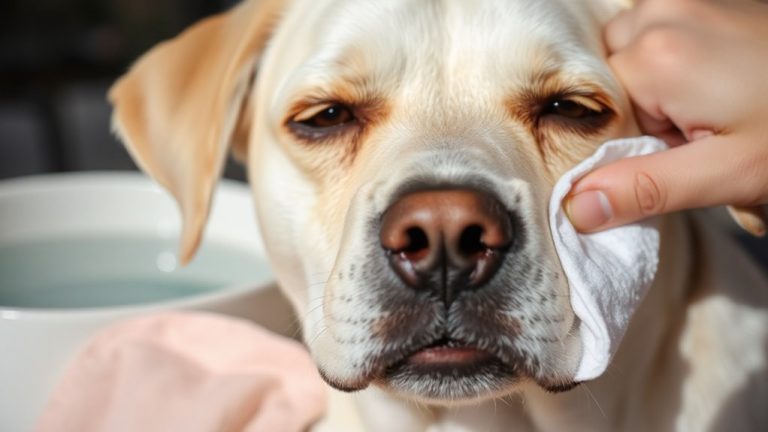
How to Clean Your Pet’s Face Without Getting Solution in Their Eyes
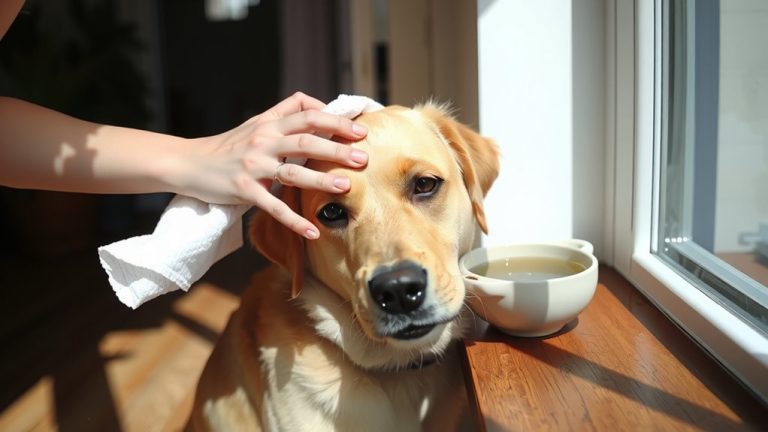
Use a soft, lint-free cloth or 7 x 8-inch pet-safe wipe made of nonwoven polyester, moistened with warm water (95°F–105°F), and wring out excess liquid to prevent drips. Apply gentle pressure to close the eyelids and wipe the muzzle, cheeks, and chin using upward strokes aligned with hair growth. Stick to pH-balanced cleansers between 6.2 and 7.5; avoid alcohol, essential oils, or surfactants above 0.5%. You’ll find precise techniques that further reduce risk with the right approach.
Notable Insights
- Use a damp, wrung-out cotton pad to minimize solution runoff near the eyes.
- Apply cleanser to the fur and skin only, never directly on or near the face.
- Keep eyelids closed with gentle fingertip pressure during facial cleaning.
- Use upward strokes with a soft, lint-free cloth to avoid eye exposure.
- Avoid sprays and use pH-balanced pet wipes formulated for safe facial use.
Keep Your Pet’s Eyes Safe While Cleaning Their Face
Why risk damaging your pet’s vision when a simple precaution can prevent harm? Eye protection is critical during facial cleaning. Use a damp, wrung-out cotton pad-no dripping-to minimize solution exposure. Commercial pet wipes should have pH-balanced formulations, ideally between 6.2 and 7.5, matching canine and feline ocular tolerance. Avoid solutions containing alcohol, essential oils, or surfactants above 0.5% concentration-they compromise corneal integrity. Apply cleansers only to fur and skin, never directly on the face. Keep the eyelids closed with gentle fingertip pressure if needed. For aerosol products, use a shield or sponge barrier to block mist dispersion. Solution safety guarantees non-irritating, ophthalmologist-tested ingredients. Always check labels for veterinary approval and ISO 10993-10 biocompatibility certification. These steps prevent conjunctivitis, corneal ulcers, and chemical burns. Prevention beats treatment every time.
Use Soft Cloths and Pet-Safe Wipes for Face Cleaning
Gentle materials matter when cleaning your pet’s face. Use only soft, lint-free cloths or veterinarian-approved pet-safe wipes designed for facial use. These wipes typically measure 7 x 8 inches and are made of nonwoven polyester with a thickness of 0.3 mm, minimizing abrasion. Apply gentle pressure-no more than 2 psi-to avoid irritating sensitive facial skin. Always moisten cloths with warm water (between 95°F and 105°F) to help loosen debris without shocking your pet’s system. Avoid human wipes, which often contain alcohol or fragrances that disrupt the skin’s pH balance. Pet-safe wipes maintain a neutral pH (6.2–7.4) compatible with dermal health. Pre-moistened wipes retain 30–40% moisture content for effective cleaning without dripping. Microfiber cloths should be washed after each use at 140°F to eliminate bacteria. Choose products proven safe in clinical pet trials with ophthalmologist oversight. For overall paw and face hygiene, consider using a dog paw cleaner recommended by veterinarians for thorough yet gentle cleaning.
How to Wipe Your Pet’s Muzzle, Cheeks, and Chin Safely
Start by positioning your pet in a stable, well-lit area where they feel secure. Use a soft, lint-free cloth dampened with a pet-safe wipe solution to gently clean the muzzle, cheeks, and chin. Assess facial symmetry before beginning-this helps identify swelling, injury, or irritation that may require veterinary attention. Work in small sections, using upward strokes to follow natural hair growth. Muzzle texture varies by breed; dogs with short, coarse fur need firmer wiping action, while those with fine or sensitive skin require lighter pressure. Apply minimal moisture to avoid skin maceration. Focus on skin folds, where debris accumulates, but avoid over-saturation. Check the cloth frequently and switch to a clean section as needed. Complete the process in under two minutes to reduce stress. Consistent technique preserves skin integrity and prevents irritation.
If Cleaner Gets in Your Pet’s Eyes: What to Do
If a cleaning solution accidentally gets into your pet’s eyes, act quickly but calmly to minimize discomfort and potential damage. Immediately perform eye irrigation using sterile saline solution at body temperature (37°C). Flush the affected eye for at least 10–15 minutes, gently holding the eyelids open to guarantee thorough rinsing. Use a minimum of 500 mL of saline to dilute and remove irritants. Avoid tap water, which can damage ocular tissues. Even if your pet seems to improve, schedule a veterinary consultation without delay. Some chemical injuries may not show immediate symptoms but can cause corneal ulceration or vision loss within hours. A veterinarian will assess ocular pressure, staining, and inflammation using tools like a tonometer and fluorescein dye. Prompt professional evaluation greatly improves recovery outcomes. Do not administer over-the-counter eye drops unless directed. Timely irrigation and veterinary consultation are critical for preserving eye health. For routine cleaning between accidents, consider using vet-recommended dog eye wipes to safely remove discharge and reduce irritation.
Don’t Touch the Eyes: Common Cleaning Mistakes to Skip
Skipping direct contact with your pet’s eyes isn’t just a precaution-it’s a requirement for safe facial cleaning. The eye’s surface is delicate, with a pH between 7.2 and 7.6; even mild irritation can disrupt its protective tear film. Avoid cotton swabs-they’re too narrow and rigid, posing a high risk of corneal abrasion if your pet moves suddenly. Instead, use soft, nonabrasive cotton pads or gauze squares measuring at least 2×2 inches for better control and coverage. Skip harsh chemicals like alcohol, bleach, or ammonia-based cleaners-they degrade ocular tissues and increase tear evaporation. Always choose veterinary-approved, ophthalmic-safe wipes or saline solutions with isotonic pH (6.5–7.5) and zero perfumes. Never spray directly toward the face; apply solution to the pad first. Even natural ingredients like vinegar or essential oils can trigger inflammation-precision and ingredient transparency are non-negotiable in periorbital hygiene.
Calming Techniques for a Stress-Free Face Wipe
Why does your pet tense up during face cleaning? Facial sensitivity and unfamiliar movements trigger stress responses. Use positive reinforcement to create a calm association. Offer treats immediately after each successful wipe, reinforcing cooperation. Begin sessions when your pet is relaxed, ideally post-exercise, when heart rate and cortisol levels are lower. Apply gentle handling by supporting the jaw and neck with one hand while using the other to wipe. Restrict movement minimally-excessive restraint increases resistance. Use a soft, lint-free cloth, 4×4 inches in size, dampened with vet-approved solution. Wipe from inner to outer eye to avoid contamination. Limit contact to 10–15 seconds per side. Repeat twice daily if needed. Consistent routines with positive reinforcement increase compliance. Gentle handling reduces flight-or-fight activation, ensuring safer, more effective face wipes. A well-prepared adventure kit can help keep your dog calm and comfortable after outdoor activities, making facial cleaning easier with the right outdoor gear for adventure-loving dogs.
On a final note
Always prioritize eye safety during facial cleaning. Use only soft, non-abrasive cloths or veterinary-approved wipes with a pH of 6.5–7.5. Wipe around, never into, the orbital area. Hold the wipe flat, apply 2–3 lbs of pressure, and move outward from the nose. Avoid applying liquids within 1 inch of the medial canthus. If contact occurs, flush eyes with sterile saline at body temperature (98.6°F) for 30 seconds. Restrict movements near sensitive zones.