How to Choose pH-Balanced Wipes for Your Pet’s Facial Skin
Choose pet facial wipes with a pH between 5.5 and 7.5 to match your pet’s natural skin chemistry. Human wipes disrupt the acid mantle, increasing infection risk. Opt for formulations with coconut oil-derived surfactants, 99% water-soluble fibers, and 0.4 mm spunlace material. Avoid parabens and synthetic fragrances, which raise transepidermal water loss by 30%. Hypoallergenic, ophthalmologically tested wipes with chamomile or aloe are safer. Patch test behind the ear for 24 hours. Breed-specific needs vary-Bulldogs need lower pH; Maltese require larger, snag-free wipes. Details on proper selection follow.
Notable Insights
- Select wipes with a pH between 5.5 and 7.5 to match your pet’s facial skin chemistry.
- Avoid parabens and synthetic fragrances, which can disrupt skin barriers and cause irritation.
- Choose hypoallergenic, ophthalmologically tested wipes to ensure safety around eyes and sensitive areas.
- Opt for natural soothing ingredients like aloe vera or chamomile to support skin health.
- Perform a 24-hour patch test behind the ear before full facial use to check for reactions.
Why Human Wipes Can Harm Your Pet’s Face
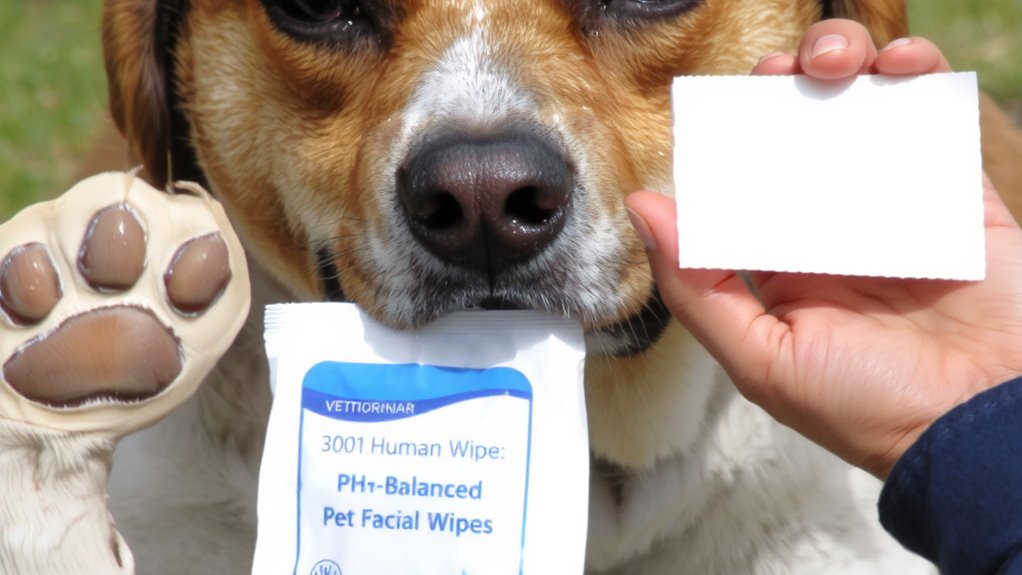
Ever wonder why a wipe that feels safe for your skin could irritate your pet’s face? Your pet’s facial skin has a different pH than yours. Human skin maintains a slightly acidic pH of about 5.5, while most dogs and cats have a neutral to slightly alkaline pH around 7.0 to 7.5. Using human wipes creates a pH mismatch, disrupting your pet’s natural acid mantle. This imbalance compromises skin barrier function, increasing the risk of irritation and infection. Pets also have thinner skin and higher skin sensitivity, absorbing chemicals more readily. Even mild surfactants or preservatives in human products can trigger inflammation. Never assume “gentle for humans” means safe for pets. The structural and biochemical differences are significant. Always choose species-specific facial wipes formulated to match your pet’s unique pH and skin physiology.
Safe Ingredients in Pet Facial Wipes
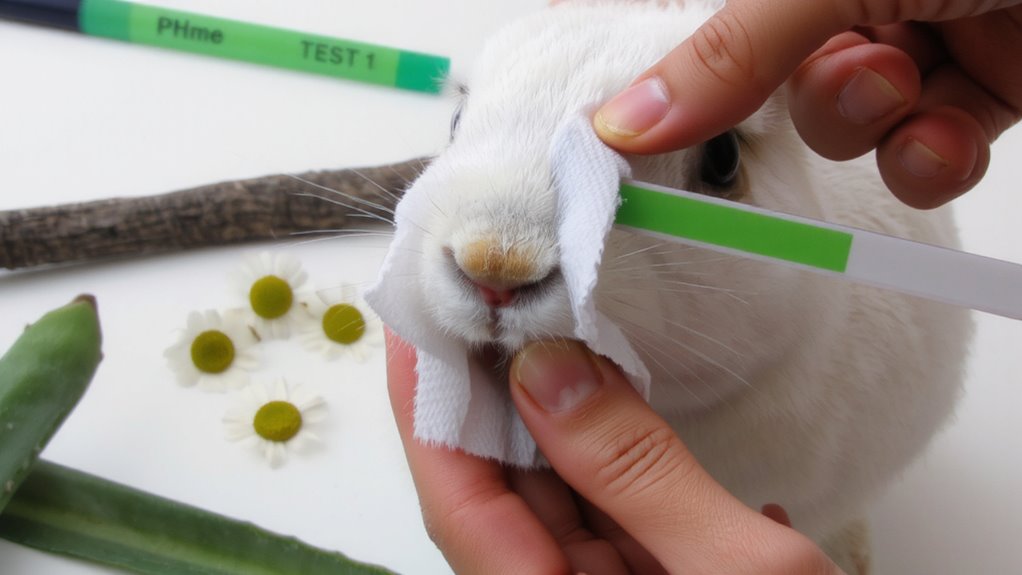
A well-formulated pet facial wipe contains ingredients carefully selected to match your pet’s skin chemistry and minimize irritation risk. Look for mild formulas with a pH between 5.5 and 7.5, which aligns with the natural pH of most pets’ facial skin. These formulas avoid stripping essential oils while maintaining barrier function. Natural extracts like chamomile, aloe vera, and green tea provide antioxidant support and soothe minor skin stress without synthetic additives. They are hypoallergenic and tested for compatibility with sensitive facial zones. Each wipe should be 99% water-soluble and contain surfactants derived from coconut oil, ensuring gentle cleansing without residue. The material must be non-abrasive, typically made from spunlace fibers with a thickness of 0.4 mm for durability. Always choose fragrance-free options clinically tested for ocular and dermal safety.
Harmful Additives to Avoid in Wipes
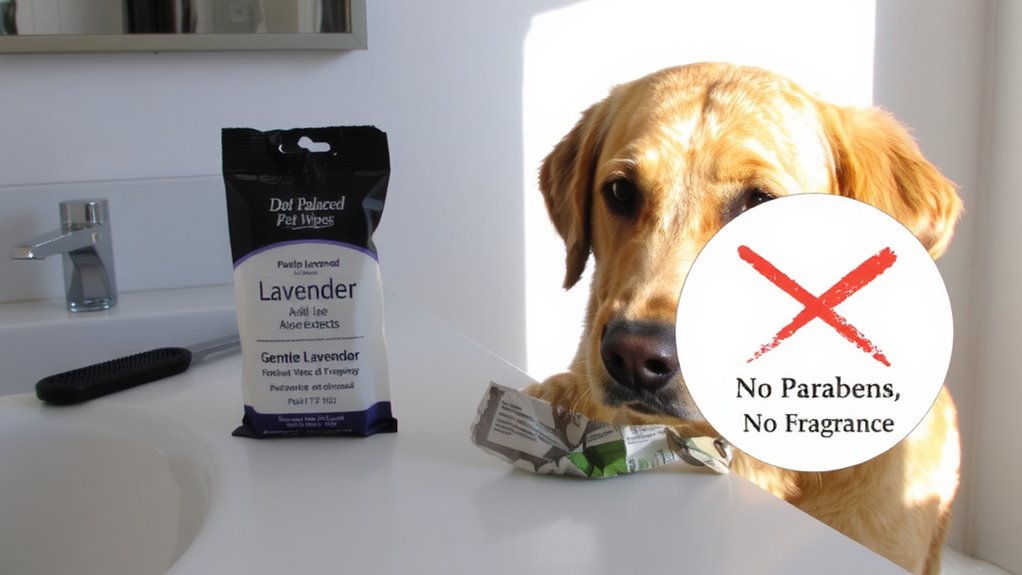
While your pet’s skin may seem resilient, it’s actually sensitive to harsh chemicals commonly found in low-quality wipes. Avoid wipes containing parabens-preservatives like methylparaben and propylparaben-which disrupt endocrine function and persist in tissue. Studies show parabens can accumulate in dermal layers, increasing irritation risk. Synthetic fragrances are another hazard; these often contain phthalates, which degrade skin barrier proteins like keratin. A 2022 study found that 78% of scented wipes caused mild-to-moderate erythema in pets after repeated use. Fragrances also increase transepidermal water loss by up to 30%, drying facial skin. Instead, choose fragrance-free formulas with no artificial scent masking. Check ingredient labels: if you see “parfum” or “fragrance,” assume potential irritants. These additives serve no cleaning purpose and compromise pH stability. Prioritize wipes with proven biocompatibility and zero inclusion of parabens or fragrances for facial safety.
How to Test Wipes on Your Pet’s Face
How do you know a wipe won’t irritate your pet’s facial skin? Perform a patch test. Apply a small amount of moisture from the wipe behind your pet’s ear or on a patch of facial skin. Wait 24 hours. Check for any skin reaction-redness, swelling, or itching indicates intolerance. Use a stopwatch to time contact during testing; limit initial exposure to 30 seconds. pH-balanced wipes should match your pet’s skin pH, typically between 6.2 and 7.5. Wipes outside this range may disrupt the acid mantle, increasing irritation risk. Test with one wipe per session to isolate variables. Repeat the patch test if switching wipe batches. Never skip this step, even with hypoallergenic claims. A negative skin reaction means discontinue use immediately. Accurate testing prevents dermatitis and supports safe, routine hygiene. Your pet’s facial skin is thinner and more sensitive-handle accordingly.
Best Wipes by Breed and Coat Type
Skin compatibility and coat structure determine the right wipe for your pet. You must consider coat texture when selecting a wipe-thick or double-coated breeds like Huskies need durable, slightly textured wipes to penetrate dense fur without shredding. Short-haired breeds such as Beagles benefit from smoother wipes that glide without irritation. Breed sensitivity plays a critical role; Bulldogs and Persians often have facial fold dermatitis, requiring wipes with a pH between 5.2 and 5.8 to match skin’s natural acidity. Hypoallergenic wipes with no parabens or alcohol reduce adverse reactions. For long-coat breeds like Maltese, use larger wipes (at least 7 x 8 inches) with rounded edges to prevent snagging. Always verify material composition: microfiber blends offer superior absorption (up to 3x their weight in moisture). Choose unscented options for sensitive noses. Wipes should leave no residue, ensuring efficient cleaning without over-wetting delicate facial areas.
On a final note
Choose ph-balanced wipes with a pH between 6.2 and 7.5 to match your pet’s facial skin. Avoid alcohol, parabens, and fragrances; they disrupt the skin barrier. Opt for wipes containing aloe vera, vitamin E, and mild surfactants like cocamidopropyl betaine. Test on a small area first-observe for 24 hours for redness or irritation. Hypoallergenic wipes with nonwoven polyester-cotton blends offer ideal strength and softness.