Gradual Desensitization Protocol for Dogs Afraid of Car Rides
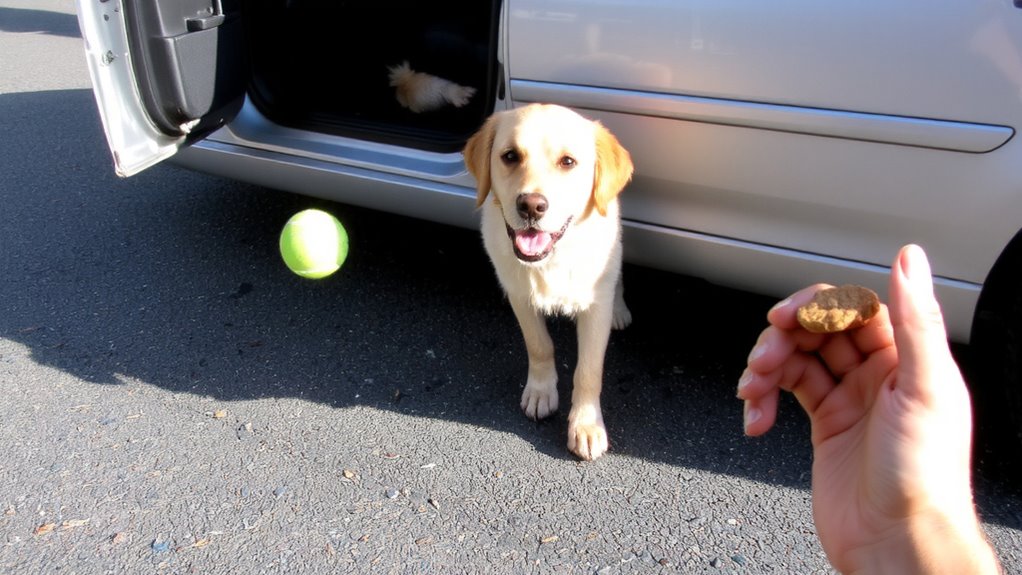
You can retrain your dog’s fear of car rides using gradual desensitization. Start by making the parked car a safe space-leave doors open, place high-value treats inside, and let your dog enter freely. Once comfortable, turn the engine on while feeding treats every second for up to three minutes. Then, progress to 10- to 15-second drives at under 5 mph in quiet areas, keeping windows closed and reinforcing calm behavior. Use a crash-tested harness rated for 50+ pounds of force. Keep sessions short, predictable, and stress-free-consistency resets the fear response more effectively than time alone. A structured plan with these exact steps yields measurable improvement within days.
Notable Insights
- Begin by transforming the parked car into a positive space using high-value treats and open doors to encourage voluntary entry.
- Pair engine sounds with one-second treat intervals while the dog remains calm inside the stationary car.
- Introduce short engine-on drives at under 5 mph, lasting 10–15 seconds, in quiet, low-stimulus areas.
- Keep windows closed during initial drives to maintain sound levels below 70 decibels and reduce sensory overload.
- Conduct brief trips to positive destinations, gradually increasing duration by no more than 10% per session.
Know Why Your Dog Fears Car Rides
What causes your dog to tremble at the sound of jingling car keys? Past trauma often underlies this fear response. Dogs with negative prior experiences, such as accidents or forced vet visits, may associate car travel with distress. This conditioned reaction triggers elevated cortisol and heart rate. Additionally, motion sickness can contribute, especially in puppies or dogs with underdeveloped vestibular systems. Symptoms like drooling, panting, or whining occur within minutes of movement. The inner ear disturbance mimics human vertigo, impairing balance. These physiological responses are measurable via respiratory and cardiac monitoring. Identifying whether fear stems from psychological or physical causes determines treatment direction. You need clear observation: note onset time, duration, and context. Some dogs exhibit both trauma and motion sickness. Accurate diagnosis guarantees correct intervention, preventing worsening aversion through misapplied training techniques.
Make the Parked Car a Positive Place
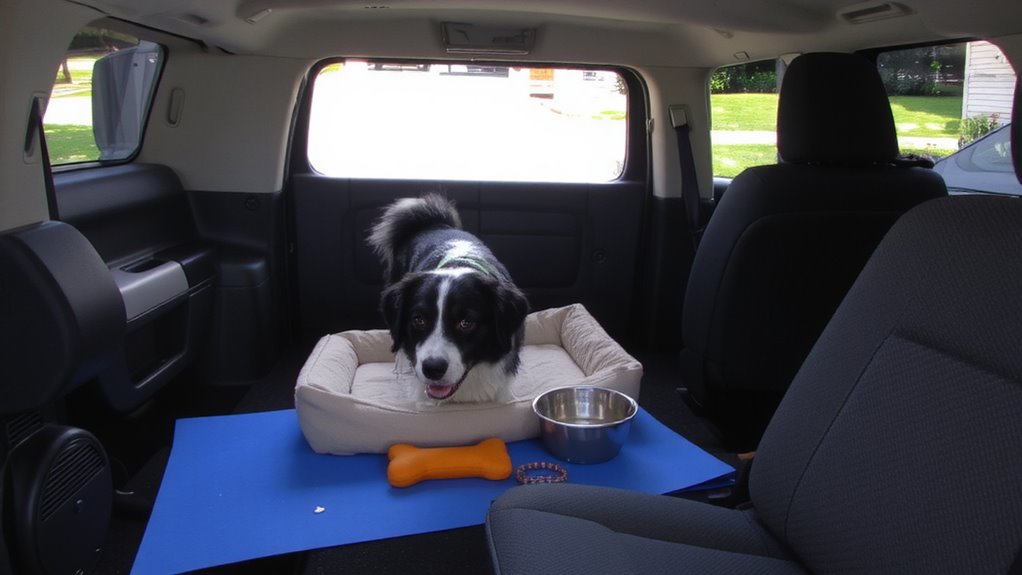
A safe space starts where the engine stays off. You build trust by transforming the parked car into a reward zone. Begin with proximity-let your dog approach voluntarily. No pressure, no force. Use high-value Car treats exclusively here. Each positive interaction strengthens conditioning. Practice short sessions daily, increasing duration only when your dog shows relaxed body language.
Seat bonding occurs when your dog associates the interior with safety and rewards.
| Action | Purpose |
|---|---|
| Open car doors | Reduce enclosure anxiety |
| Place treats inside | Create incentive to enter |
| Let dog exit freely | Build autonomy |
| Use verbal markers | Reinforce desired behavior |
| Limit session time | Prevent overstimulation |
Deliver Car treats only in or near the vehicle. This specificity sharpens associative learning. Conduct sessions at consistent times, same side entry, same mat placement. Control variables to enhance predictability. Success is measurable: willing entry, lowered pulse, steady breathing. Record baseline metrics and track progress weekly.
Get Your Dog Comfortable in the Car
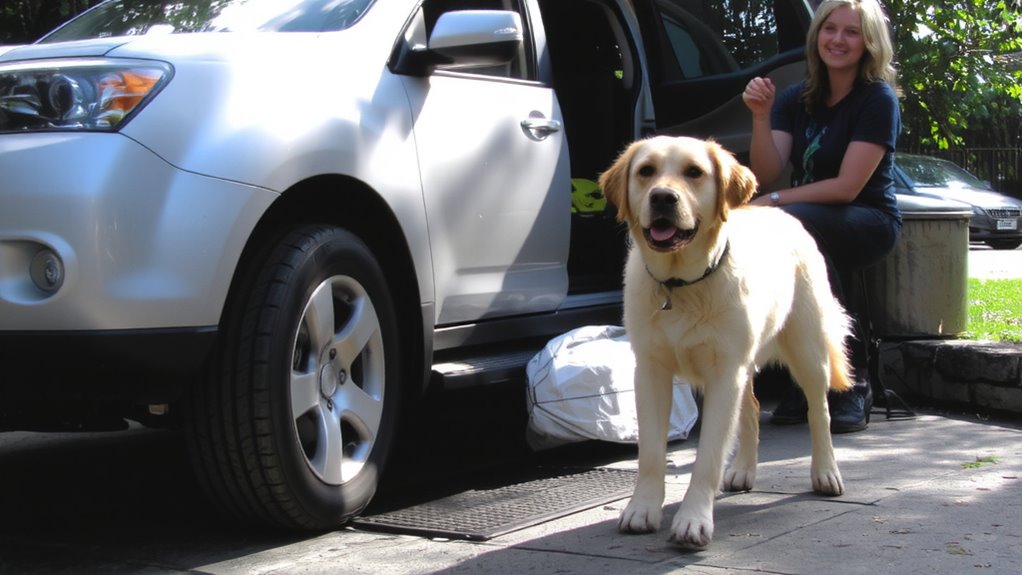
You’ve taught your dog that the parked car is a source of rewards and safety, and now it’s time to shape their behavior around engine sounds and light motion. Start by turning the engine on while your dog remains inside the stationary vehicle. Keep sessions under three minutes to prevent distress. Offer car snacks-bite-sized, high-value treats-at one-second intervals to reinforce calm behavior. Introduce favorite toys to encourage positive association with the sound and vibration of the engine. Use a seat anchor or harness rated for 50+ pounds of force to guarantee safety during later stages. A crash-tested harness ensures your dog stays secure and protected during travel. Maintaining safety with a crash-tested harness is essential for both comfort and accident prevention. Maintain ambient temperature between 68–72°F for ideal comfort. If your dog stands, whines, or paces, end the session immediately-this indicates arousal exceeding threshold. Repeat daily until your dog remains relaxed for three consecutive sessions. This establishes baseline tolerance before introducing movement.
Try Engine-On, Drive-Off Sessions
Once your dog consistently remains calm during engine-on sessions, you can progress to short drive-off exercises that build tolerance to motion. Begin with brief 10- to 15-second drives in a quiet area, minimizing visual and auditory stimuli. These sessions provide controlled motion simulation, helping your dog adapt to movement without overwhelm. Maintain a consistent speed below 5 mph to reduce vestibular disruption. Pair the experience with treats to reinforce passive acceptance. Gradually increase duration by 5-second increments across multiple sessions. Sound exposure remains critical-keep windows closed to dampen external noise, maintaining a decibel level below 70. Monitor your dog’s respiration and posture for signs of stress. Repeat sessions twice daily, allowing full recovery between trials. Success is indicated by relaxed muscle tone and steady breathing during motion. Do not advance until your dog shows consistent calmness for three consecutive sessions.
Start With Happy Short Drives
Now that your dog handles short drives with the engine running and brief movement without distress, it’s time to shape those experiences into positive associations. Begin with short trips limited to one to two miles, lasting no more than five minutes. These outings should end at a neutral or rewarding location, such as a park or quiet street. Use positive reinforcement immediately upon arrival-offer treats, praise, or play. Maintain a consistent routine: same seat, same harness (e.g., a crash-tested harness like the SleepyPod Atom, which meets FMVSS 208 standards), and minimal stimuli. Keep windows slightly cracked for pressure equalization and reduce auditory input by avoiding loud music. Gradually increase trip duration by no more than 10% per session. Monitor heart rate and panting frequency as behavioral indicators. Repetition solidifies conditioning. Successful short trips build procedural memory, reducing anticipatory anxiety. For secure restraint during these outings, consider using a dog seat belt tested for safety in motor vehicles.
On a final note
You’ve completed the protocol. Gradual desensitization works by pairing controlled exposure with positive reinforcement. Each step targets specific stress thresholds, reducing cortisol levels over time. Dogs typically show improvement within 2–4 weeks, with 10–15 minute sessions, 3–5 times weekly. Use high-value treats (e.g., boiled chicken, freeze-dried liver) at 2-second intervals during calm behavior. Success is measured by relaxed respiration (18–30 breaths per minute) and absence of avoidance cues.