How to Recognize Subtle Signs of Pain During Your Pet’s Vet Visit
Your pet may hide pain due to instinct, so watch closely. Squinted eyes or a 15-degree ear rotation can signal discomfort. A hunched back or stiff gait often points to spinal or joint pain. Rapid breathing over 50 breaths per minute at rest suggests distress. Flinching when touched, especially in the abdomen or joints, indicates localized pain. Subtle cues like weight shifting or ear flicking matter. You’ll discover how behavior changes align with clinical signs.
Notable Insights
- Pets often hide pain due to instinct, so subtle behavioral changes may be the only signs during a vet visit.
- Watch for facial cues like eye squinting or flattened ears, which correlate with discomfort in cats and dogs.
- A hunched posture, stiff gait, or reluctance to move can indicate spinal, abdominal, or joint pain.
- Rapid, shallow breathing or open-mouth breathing in cats may signal severe pain or respiratory distress.
- Flinching, vocalizing, or tensing when touched can reveal localized pain in sensitive areas like the abdomen or joints.
Know Why Pets Hide Pain
Although pets can’t tell you when they’re in pain, their bodies often show subtle signs-if you know where to look. Pets hide discomfort due to instinctual survival mechanisms rooted in the wild. In natural environments, showing weakness increases vulnerability to predators. This behavior persists in domestic animals despite safety. Social hierarchy also influences pain expression-subordinate animals suppress pain cues to maintain rank or avoid isolation. Cats, for example, may retreat and reduce activity. Dogs might tolerate discomfort until it severely impacts function. These responses complicate diagnosis. Observing changes in mobility, appetite, or interaction provides critical clues. Physiological indicators like elevated heart rate or respiration can confirm suspected pain. Understanding these evolutionary drivers enhances detection accuracy. Recognizing hidden pain improves treatment outcomes. You must rely on objective observation, not assumed behavior. Early intervention prevents worsening conditions and supports better recovery.
Look for Facial Signs of Pain
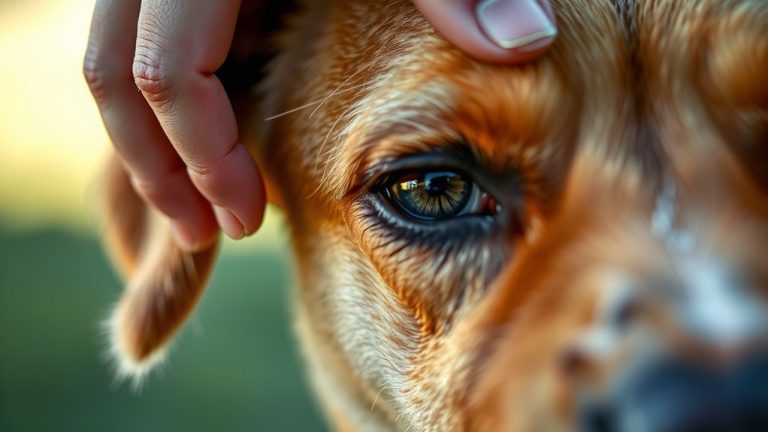
Facial expressions offer a reliable window into your pet’s pain level, especially when interpreted using scientifically validated scales. Eye squinting is a key indicator-partial or sustained narrowing of the eyes correlates with discomfort in cats and dogs. In the Feline Facial Pain Scale, this trait is scored 0 to 2 based on eyelid closure severity. Ear positioning also provides critical data. Flattened or rotated ears, particularly when held back for prolonged periods, signal distress. In dogs, the Glasgow Composite Measure Pain Scale includes ear position as a measurable parameter, scored from neutral to fully pinned. These signs are objective, repeatable, and observable within 30 seconds. Changes may be subtle-a 15-degree ear rotation or 20% eye aperture reduction can be clinically significant. Unlike behavioral cues, facial indicators are less influenced by environment, making them stable metrics during vet exams. Always assess them early, before handling alters baseline expressions.
Spot Pain in Posture and Movement
Pain often reveals itself in how your pet carries their body. Subtle shifts in posture and movement can signal discomfort. A stiff gait, for example, indicates joint or muscle distress, often seen in arthritis. A limp tail may reflect spinal pain or neurological issues, especially in dogs. Avoid dismissing these signs as normal aging.
| Observation | Possible Pain Indicator |
|---|---|
| Hunched back | Abdominal or spinal pain |
| Reluctance to move | Generalized or limb-specific pain |
| Limp tail | Neurological or back injury |
| Stiff gait | Osteoarthritis or muscle strain |
| Shifting weight | Joint discomfort or lameness |
Changes in weight distribution or ambulation speed provide measurable clues. Track movement patterns over time. Use video if needed. Early detection improves treatment outcomes. These behaviors require veterinary assessment.
Listen for Pain in Breathing and Sounds
Ever wonder why your pet’s breathing seems uneven or why they make soft noises when resting? These vocal cues may signal underlying pain. Abnormal breathing patterns, like rapid shallow breaths or labored inhalations, often indicate respiratory distress. You might hear faint grunts, whimpers, or even growls during exhalation-especially when internal pain is present. Unlike normal panting, which cools dogs efficiently at 30–40 breaths per minute, painful respiration exceeds 50 breaths per minute at rest. Cats may exhibit open-mouth breathing, a rare behavior outside extreme duress. Listen closely during sleep; pain-related sounds persist even when your pet appears calm. Respiratory distress isn’t always loud-subtle clicks, wheezes, or throaty rumbles can reflect pleural inflammation or abdominal pressure. These auditory signals, combined with elevated respiratory rate, provide clinically relevant data. Monitoring them helps differentiate discomfort from fatigue. Always report such vocal cues to your veterinarian.
Notice When They React to Touch
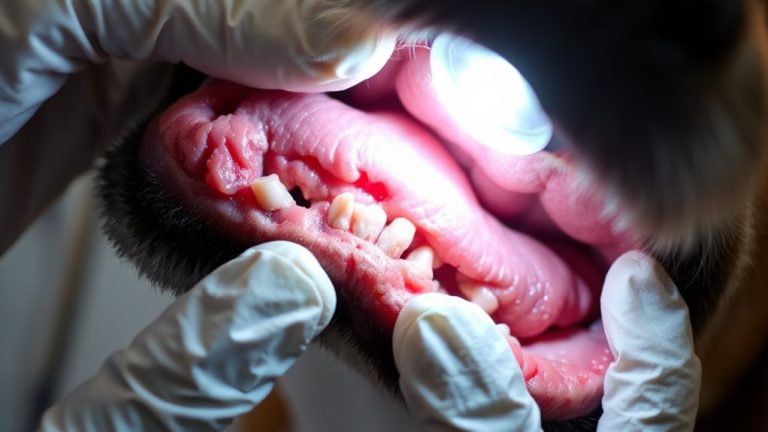
You might not realize it, but your pet’s reaction to touch can reveal a lot about their underlying discomfort. A tender touch during examination may trigger flinching, vocalization, or withdrawal. These responses often indicate pain in specific regions. Sensitive areas-such as the abdomen, joints, spine, or limbs-commonly elicit pronounced reactions when affected by injury or disease. For example, a dog with arthritis may stiffen when pressure is applied to swollen joints. Cats with dental pain might resist chin handling. Observe subtle cues: muscle tension, ear flicking, or dilated pupils can accompany tactile discomfort. These signs are measurable indicators of nociception. Avoid abrupt pressure; use light, systematic contact to assess response. Note exact locations where your pet reacts. This data helps localize pathology. Recognizing discomfort during palpation supports early diagnosis. Pain-related touch responses are objective markers clinicians use to evaluate severity and guide treatment planning.
Tell Your Vet What You’ve Seen
Noticing how your pet responds to touch gives you real-time data about their discomfort, and sharing these observations with your veterinarian strengthens diagnostic accuracy. You’re in the best position to report subtle behavioral changes, such as reluctance to climb stairs or decreased grooming. These shifts may indicate musculoskeletal pain or neurological issues. Appetite fluctuations-like eating less or refusing food-are objective markers of distress. Document duration, frequency, and severity. For example, note if your dog skips two meals over 24 hours or your cat licks a specific joint 10–15 times per hour. Such specifics help rule out systemic disease. Mention vocalizations, posture changes, or altered sleep patterns. Avoid assumptions; stick to observable facts. Your input complements clinical exams and diagnostic imaging, improving differential diagnosis precision. Accurate history-taking reduces misdiagnosis risk by up to 30%. Your detailed account is a critical diagnostic tool-use it.
On a final note
You must observe your pet closely during veterinary visits. Subtle pain signs often go unnoticed but can indicate serious issues. Changes in facial expression, like narrowed eyes or flattened ears, suggest discomfort. Altered posture, such as a hunched back or shifted weight, may signal musculoskeletal pain. Rapid, shallow breathing or vocalizations during palpation are red flags. Always report these behaviors to your vet-timely recognition improves diagnosis and treatment outcomes.