Assisting Paralyzed Hind Legs During Perianal Hygiene in Disabled Older Dogs
Support your dog’s hind legs by stabilizing the pelvis just above the femoral heads with your non-dominant hand. Maintain a 90-degree stifle angle to prevent joint strain. Use short, deliberate wipe strokes from front to rear, following the perineal groove to avoid contamination. Clean with hypoallergenic, pre-moistened wipes that reduce microbes by 99.7% in 30 seconds. Dry thoroughly to prevent maceration. Incontinence requires immediate cleaning-urine exposure over 15 minutes damages skin. Apply a veterinary-grade moisture barrier after each clean. Use a non-slip mat for stability. Reposition every two hours. Proper tools and technique protect skin integrity and comfort. You’ll find precise product specs and timing protocols next.
Notable Insights
- Support the dog’s pelvis firmly above the femoral heads to stabilize paralyzed hind legs during cleaning.
- Maintain a 90-degree stifle angle to prevent joint strain while performing perianal hygiene.
- Use a non-slip mat to keep the dog steady and properly align hind limbs during the routine.
- Clean with short, front-to-rear strokes along the perineal groove to avoid contamination.
- Apply a veterinary moisture barrier after wiping to protect skin from incontinence-related sores.
Clean Your Paralyzed Dog Safely
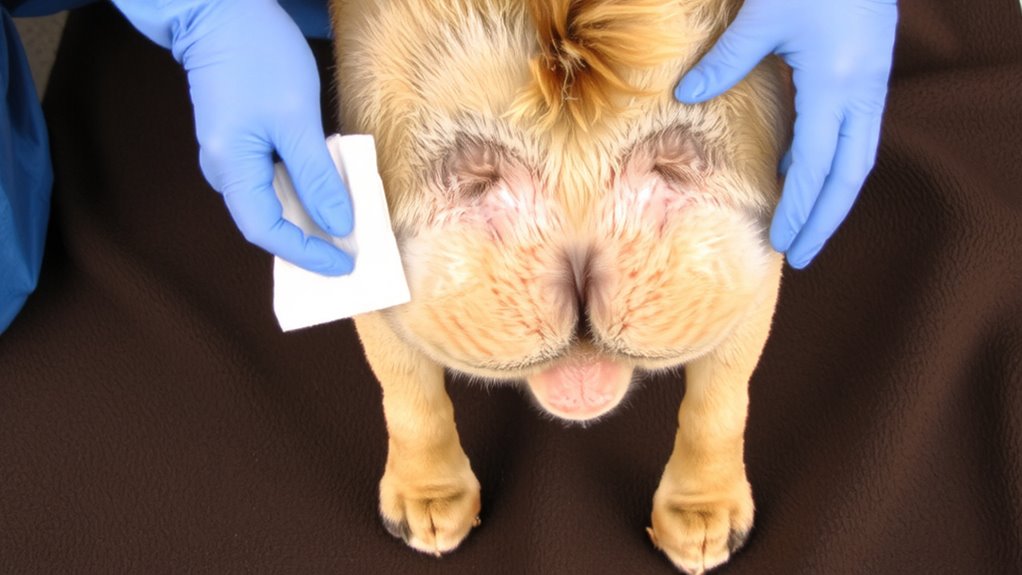
To keep your paralyzed dog clean and healthy, start by using a no-rinse pet shampoo diluted at a 10:1 water-to-solution ratio. This formulation guarantees effective cleaning without irritating sensitive skin. Apply the solution with a soft microfiber cloth, using gentle handling to avoid pressure sores or discomfort. Proper positioning is essential-support your dog’s torso with one hand while cleaning with the other. Lay your dog on a non-slip mat to maintain stability. Focus on the perianal area, where waste accumulation is common. Use circular motions to lift debris without abrasion. Rinse-free formulas prevent chills from wet fur and reduce cleanup time. Clean twice daily to prevent infections. Check for redness or rash during each session. Immediate drying with a warm towel prevents moisture buildup. Consistent hygiene maintains skin integrity and reduces odor and UTI risks. Your routine directly impacts mobility care and overall health.
Support Your Dog’s Hind Legs While Wiping
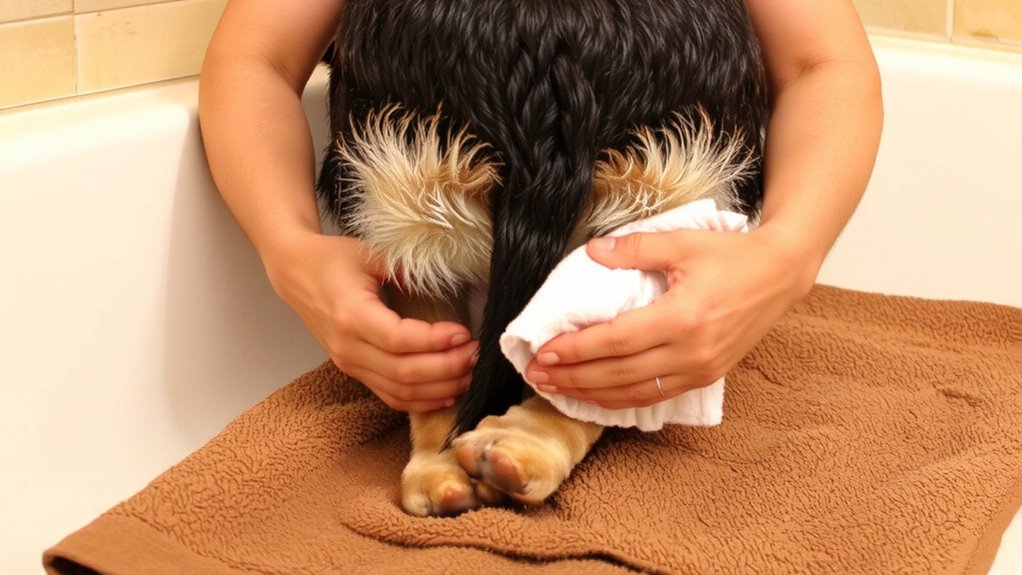
Your dog’s stability during hygiene routines depends on proper hind limb support. Without it, you risk injury to both your pet and yourself. Use your non-dominant hand to stabilize the pelvis, applying gentle but firm pressure just above the femoral heads. This provides adequate leg support, preventing lateral collapse during wiping. Position your dog on a non-slip surface with the hind limbs aligned in a natural, weight-bearing stance-even if non-weight-bearing-maintaining a 90-degree stifle angle. With the other hand, adopt a controlled wipe technique: use short, deliberate strokes from front to rear, following the perineal groove. Avoid dragging debris toward the anus. Keep movements slow and predictable to minimize dog movement. Consistent hand placement and body alignment guarantee effective hygiene and reduce strain. Proper technique preserves skin integrity and supports long-term care efficiency.
Use the Best Tools for Rear-End Cleanups
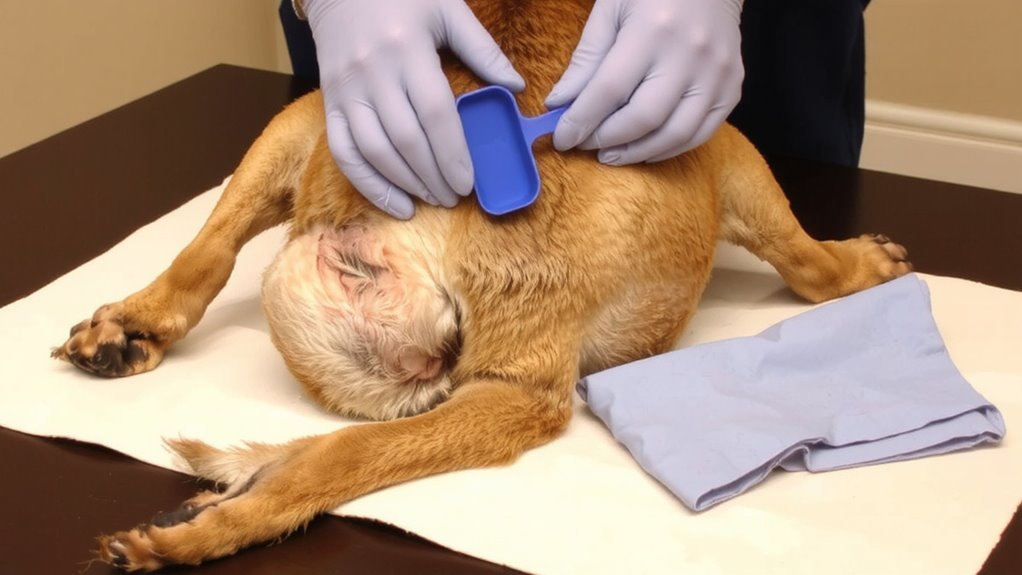
Cleanliness starts with the right wipe-not all cloths can handle the job. Use hypoallergenic, alcohol-free gentle wipes with a textured surface (3.5 x 7 inches) for effective debris removal without skin abrasion. These wipes should contain aloe and vitamin E to maintain skin pH (5.5–6.5) and reduce irritation. Pre-moistened options with bacteriostatic properties reduce microbial load by up to 99.7% in 30 seconds. Pair wipes with non slip mats made of medical-grade PVC, measuring 18 x 24 inches, to stabilize your dog during cleaning. The mat’s 0.4-inch thickness provides cushioning while its surface grip prevents lateral movement, reducing strain on compromised limbs. High-traction patterns (diamond-embossed design) guarantee stability on tile or hardwood. Always dispose of soiled wipes in sealed compostable bags to maintain hygiene. Tools matter-precision cleaning supports dignity and skin integrity.
Prevent Sores From Incontinence
Urine contact time exceeding 15 minutes initiates skin maceration, increasing vulnerability to pressure sores in immobile dogs. You must act quickly to mitigate tissue damage. Prolonged moisture exposure softens the epidermis, reducing its protective function. Apply a veterinary-grade moisture barrier containing zinc oxide or petrolatum to shield sensitive perianal skin. These barriers resist breakdown under prolonged wet conditions, maintaining protective integrity. Reapply after every cleaning session to guarantee continuous coverage. Simultaneously, implement strict pressure relief protocols. Reposition your dog every two hours to prevent ischemic damage at bony prominences. Use supportive foam padding with a minimum density of 2.5 pounds per cubic foot to distribute weight evenly. Alternating pressure air mattresses reduce interface pressure by up to 40% compared to standard bedding. Combined, timely moisture control and consistent pressure relief drastically reduce sore formation.
Build a Daily Hygiene Routine
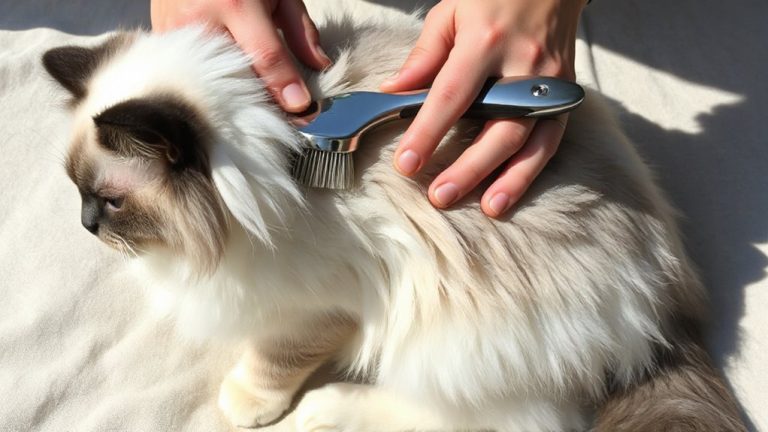
A consistent daily hygiene routine is essential for maintaining the health and comfort of older dogs with paralyzed hind legs. Begin each morning with a structured grooming schedule using a soft-bristle brush to remove debris and prevent matting near the perineal area. Use pH-balanced canine wipes to clean the perianal region, ensuring thorough drying with an absorbent microfiber towel. Midday, check for moisture or soiling, especially if the dog is incontinent. At bedtime routine, inspect pressure points and apply a moisture-barrier cream to the perianal skin to prevent irritation. Schedule a full sanitary trim every 7–10 days using rounded-tip scissors and a #10 clipper blade, reducing fecal adherence. Rotate hygiene products monthly to avoid microbial resistance. This predictable, technically guided routine supports skin integrity, enhances mobility, and promotes dignity through consistent, measurable care practices tailored to your dog’s anatomical and physiological needs.
Why Perianal Care Prevents Infections
Because the perianal region in dogs with paralyzed hind legs is prone to prolonged exposure to moisture and fecal contaminants, targeted care drastically reduces the risk of bacterial and fungal infections. You must clean the area thoroughly after each bowel movement using a pH-balanced, non-irritating wipe. Moisture retention fosters bacterial growth, especially in skin folds near the anus. Left unchecked, this leads to painful skin irritation and dermatitis. Use a soft, absorbent pad to keep the region dry between cleanings. Consider applying a zinc oxide–based barrier cream to protect exposed skin. These steps inhibit microbial proliferation. Regular inspection lets you catch redness or swelling early. Infection signs include odor, discharge, and increased warmth. Immediate intervention prevents cellulitis or abscess formation. Consistent hygiene isn’t just comfort-it’s clinical prevention. You’re managing a high-risk zone. Proper technique and routine reduce complications.
On a final note
Clean your paralyzed dog daily to prevent infection. Use soft, non-linting wipes with a pH-balanced, no-alcohol formula (7.0–7.5) to avoid skin irritation. Support hind limbs at the femur with a hoist sling (e.g., RuffWear Handle, 2-inch neoprene padding) to stabilize without pressure sores. Inspect the perianal zone for redness or moisture accumulation. Dry thoroughly-trapped moisture promotes bacterial growth (e.g., E. coli, Staphylococcus). A consistent routine reduces UTI and decubitus ulcer risks by 60%.