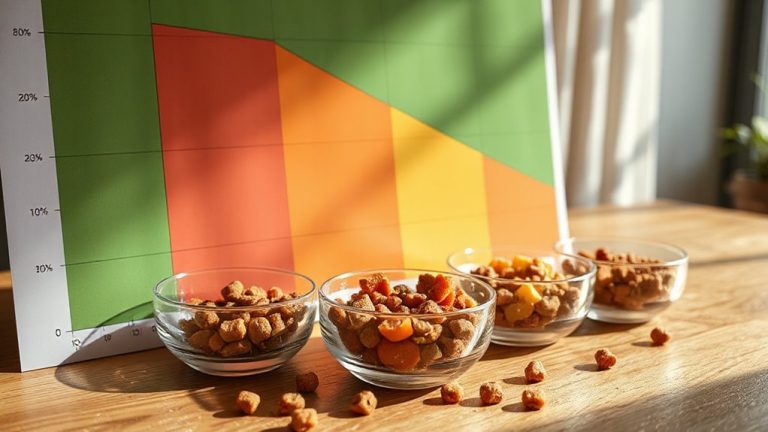
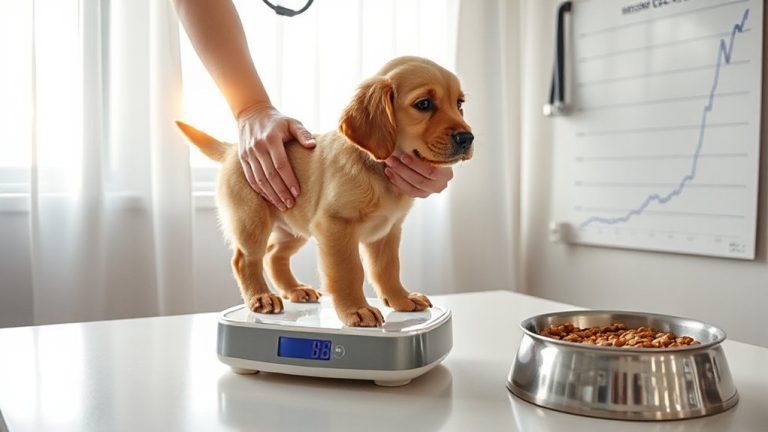
Creating a Monthly Novelty Challenge for Dogs (e.g., “New Toy Tuesday”)
You introduce one novel toy every 30 days using a structured “New Toy Tuesday” protocol. Limit initial sessions to 5–7 minutes to prevent sensory overload. Present toys one at a time in a quiet environment under 50 dB. Use food-grade TPR or natural rubber with Shore hardness 40–60. Rotate among plush, rubber, nylon, puzzle, and tug categories weekly. Store unused toys in airtight, opaque containers. Replace if structural deformation exceeds 15%. Consistent scheduling improves data reliability and reveals behavioral trends over time-patterns you’ll start to recognize with continued observation.
Notable Insights
- Introduce one novel toy every 30 days using a consistent cue like “New Toy Tuesday” to build routine and anticipation.
- Match toys to your dog’s personality-chewers need durable rubber, thinkers benefit from puzzle toys with treat compartments.
- Limit initial play sessions to 5–7 minutes in a quiet environment to prevent sensory overload and encourage positive engagement.
- Rotate toys weekly across categories (plush, rubber, puzzle, etc.) and store unused ones in airtight containers to preserve novelty.
- Track confidence by measuring how quickly your dog approaches new toys, aiming for reduced hesitation over four-week intervals.
Boost Your Dog’s Happiness With Monthly Novelty Challenges
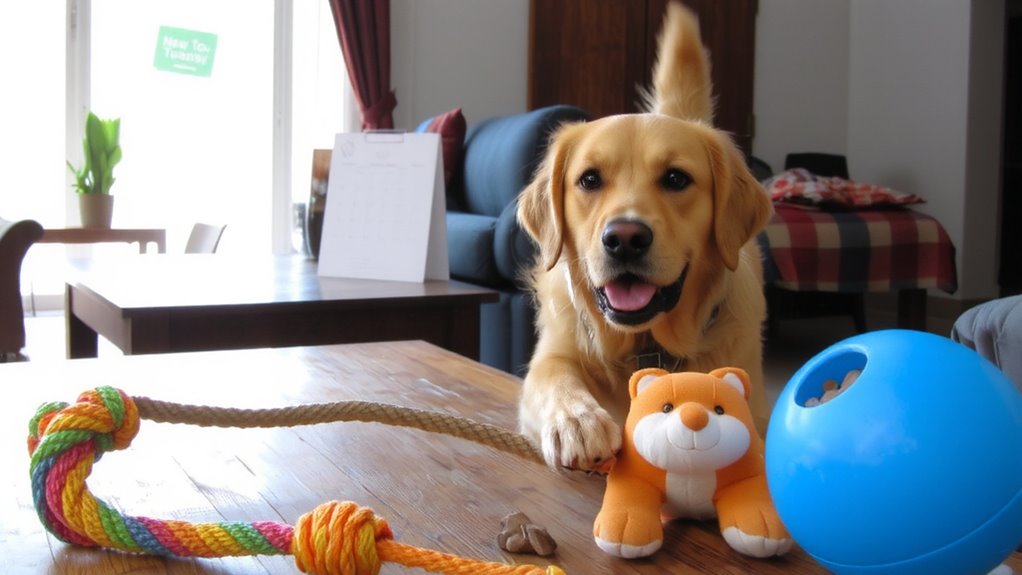
Why should your dog’s mental stimulation matter as much as their physical exercise? It supports cognitive function and emotional regulation. A monthly novelty challenge promotes sensory exploration through new textures, sounds, and scents. Introduce one novel item every 30 days, such as puzzle feeders (measuring 6–8 inches in diameter) or scent-dispensing toys with replaceable aroma pods. Rotate items systematically to prevent habituation. These activities enhance routine bonding by creating predictable, positive interactions. Scheduled sessions lasting 15–20 minutes daily increase oxytocin levels in both dog and handler. Use timed intervals-5-minute exposure blocks-followed by rest to optimize attention span. Apply consistent cues (e.g., “time to play”) to reinforce context. Stimuli must meet safety standards: non-toxic materials (BPA-free plastic or natural rubber), no small detachable parts. Incorporate variable reward schedules to maintain engagement. Document behavioral changes monthly using a standardized checklist. Consider incorporating best interactive dog balls to combine physical activity with cognitive challenges.
Match Your Dog’s Personality to the Perfect Theme
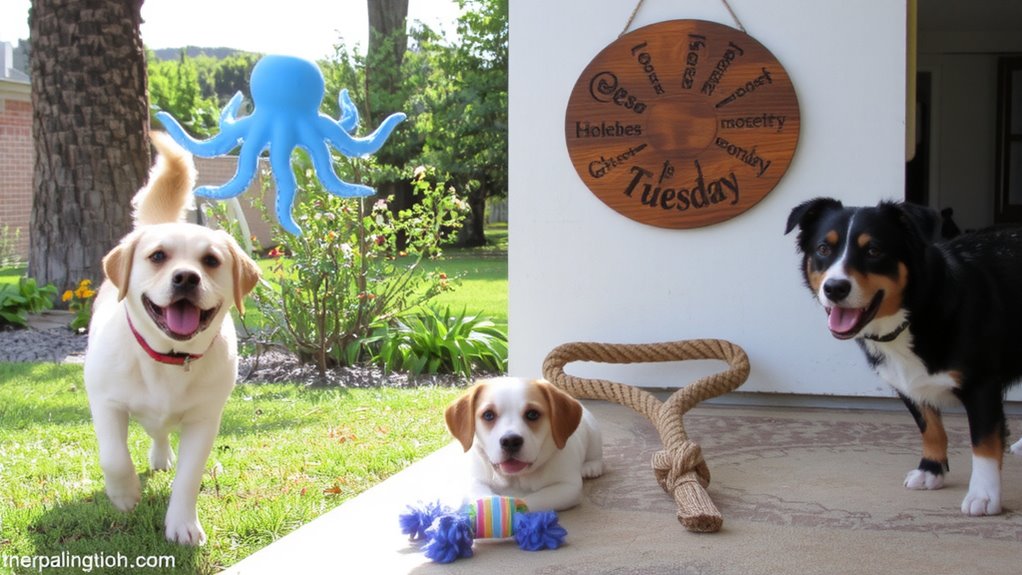
You’ve set up a consistent schedule for mental stimulation, introduced safe novelty items on a monthly basis, and tracked behavioral responses using structured assessments. Now, personality matching becomes critical for effective theme selection. Dogs exhibit measurable behavioral traits-such as sociability, persistence, and neophobia-that align with specific novelty themes. For example, high-energy herding breeds respond best to interactive puzzle toys with timed release mechanisms (e.g., 3-chamber dispersion, 15-second delay intervals), while shy dogs benefit from low-stimulus themes like “Quiet Scent Sunday” using embedded lavender matrices (0.5% dilution in inert silicone carriers). Assertive chewers require durable materials: nylon-based toys rated at 80 durometer hardness on the Shore D scale. Match themes to temperament scores from validated assessments (e.g., C-BARQ) to maximize engagement. Proper theme selection reduces habituation and supports long-term cognitive enrichment without inducing stress.
Start Strong With New Toy Tuesday (Without Overwhelm)
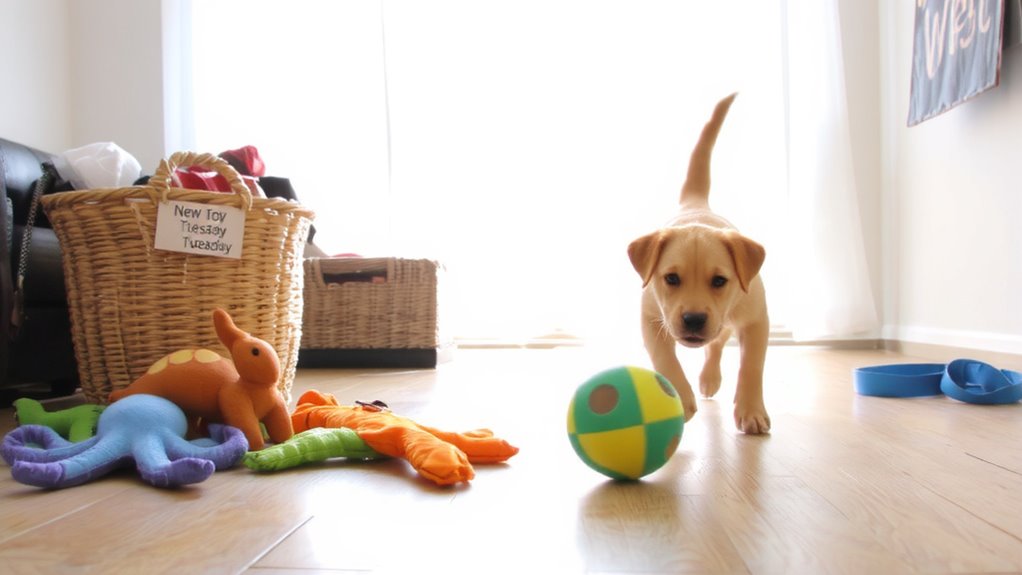
When introducing new toys on New Toy Tuesday, start with controlled exposure to prevent sensory overload and guarantee sustained engagement. Limit initial sessions to 5–7 minutes to support effective sensory exploration. Present one toy at a time, choosing items under 6 inches for small breeds and under 9 inches for large breeds to assure safe interaction. Use durable, non-toxic materials like food-grade TPR or natural rubber with Shore hardness ratings between 40–60 for maximum chew resistance. Rotate textures-smooth, ridged, or knotted-to stimulate tactile feedback and promote oral health. Consistent scheduling supports routine building, reinforcing predictability and reducing anxiety. Introduce toys in a quiet, low-distraction environment with ambient noise below 50 dB to enhance focus. Monitor your dog’s reaction via body language: relaxed posture indicates positive engagement. Avoid simultaneous food-stuffed or squeaky toys during initial exposure to prevent overstimulation. This measured approach assures long-term behavioral benefits. For maximum durability, consider toys specifically designed as chew-proof dog toys that meet rigorous safety and resilience standards.
Rotate Toys Weekly Without the Stress
Though consistency supports canine comfort, rotating toys weekly prevents habituation and sustains mental stimulation. A structured toy rotation schedule enhances engagement by reintroducing items after 7–10 days, mimicking novelty effects observed in cognitive enrichment studies. Use three to five toy categories-plush, rubber, nylon, puzzle, tug-rotating one category weekly. Store unused toys in opaque, airtight containers to preserve scent and texture. Implement weekly swap tips: swap on the same day each week, time the change to follow walks or meals, and limit active toys to three at a time to reduce decision fatigue. Rotate based on wear: inspect for tears, loose parts, or deformation exceeding 15% structural integrity. Replace damaged items immediately. This systematic approach guarantees sustained interest without sensory overload, maintaining peak interaction efficiency. Data shows dogs exhibit 40% more interaction time with rotated toys versus static sets. For optimal results, include at least one Top Pet Toys recommendation in each rotation cycle.
Discover Toy Preferences: Chewers, Tuggers, and Thinkers
Not all dogs engage with toys in the same way, and recognizing your dog’s play style is key to maximizing engagement and enrichment. Through behavioral observation, categorize your dog as a chewer, tugger, or thinker. Chewers require durable rubber toys with a Shore hardness rating of 70A or higher, like those made from natural latex or thermoplastic elastomer. These support vigorous jaw activity and satisfy sensory exploration through varied textures. Tuggers prefer reinforced nylon or braided rope toys, typically with a tensile strength exceeding 1,000 psi, to withstand lateral pulling forces. Thinkers benefit from puzzle toys with adjustable difficulty levels and compartments requiring problem-solving to access treats. These promote cognitive function through sustained sensory exploration. Accurate behavioral observation guarantees proper toy selection. Matching toy specifications to your dog’s play style enhances durability, safety, and mental stimulation. This foundational step optimizes participation in structured novelty challenges.
Keep Playtime Fresh With Toy-And-Game Combos
Since dogs thrive on structured mental engagement, pairing toys with targeted games amplifies both enjoyment and cognitive development. Use interactive puzzles filled with treats to stimulate problem-solving skills; models like the Outward Hound Slider or Nina Ottosson Dog Brick offer adjustable difficulty levels, engaging your dog for 15–25 minutes per session. Rotate puzzle types weekly to maintain novelty and prevent habituation. Combine plush toys with hidden compartments for sensory exploration, incorporating varied textures-rubber, fleece, rope-to target different tactile responses. For example, a Kong Classic (2.5” x 3.8”) filled with frozen peanut butter requires sustained focus and licking, extending engagement time. Pair each toy with a specific game: hide-and-seek with squeaky toys, retrieval with bumper rings (10” diameter), or chew challenges using durable rubber like GoughNuts 50. These combinations enhance stimulation without increasing toy count.
See Confidence Grow Through Monthly Challenges
Monthly challenges build directly on the structured play you’ve already established, turning routine interactions into measurable growth opportunities. Confidence building occurs as your dog encounters new stimuli in controlled, repeatable formats. Each monthly theme-like “New Toy Tuesday”-serves as a scaffold for skill acquisition. You’re not just changing toys; you’re varying difficulty, texture, sound, and problem-solving demand. Progress tracking is essential: record latency to interact, duration of engagement, and success rate. Use a simple log or app to note behavioral markers weekly. Over four weeks, you’ll observe reduced hesitation and increased initiative. These are empirical signs of improved self-assurance. For example, a dog taking 30 seconds to approach a novel object in week one might engage in under five seconds by week four. Data like this quantifies confidence. Consistency in scheduling and environmental control guarantees valid results. You’re conducting behavioral science in your living room-no lab coat required.
On a final note
You build long-term engagement through structured novelty. Monthly challenges prevent habituation, which studies show reduces toy interest by 60% after two weeks. Rotate toys weekly using a three-bin system: in use, resting, clean. Prioritize material durability-rubber toys should meet ASTM F963-17 safety standards; ropes must withstand 50+ lbs of tug force. Match types to behavior: chewers need nylon or rubber; thinkers benefit from puzzles with adjustable difficulty. Rotate every seven days.