Including Emergency Pet Ear Cleaning Supplies in Your First Aid Kit
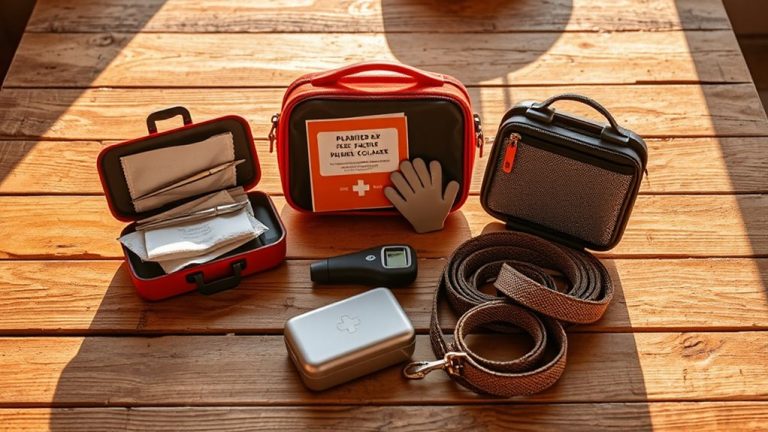
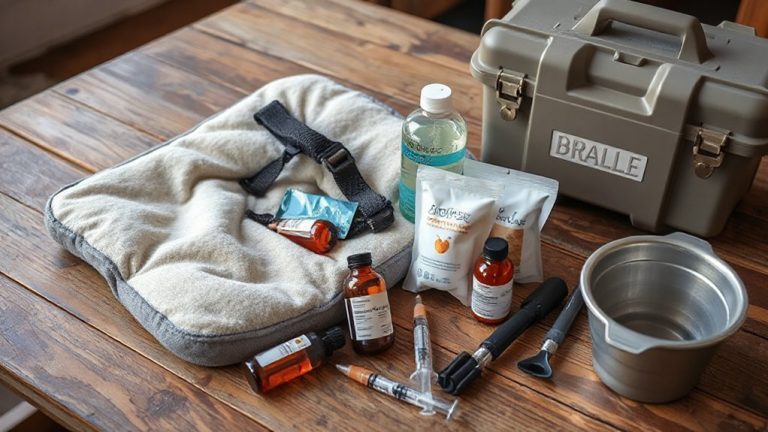
Keep emergency pet ear supplies in your first aid kit to act fast if your dog shows head shaking or ear odor. Include a vet-approved otic solution with boric acid, sterile gauze, a 3cc syringe, 4.5-inch soft-tipped hemostats, and gloves. These tools safely clean debris without damaging delicate ear structures. Use pH-balanced, alcohol-free cleansers to avoid irritation. Immediate care reduces risks of eardrum injury or infection spreading. Proper prep puts you ahead when every minute counts.
Notable Insights
- Include a veterinarian-approved otic cleaning solution with boric acid to safely flush and clean infected ears.
- Pack sterile gauze pads for drying and wiping ear canals without causing irritation or damage.
- Add a 3cc ear flush syringe to deliver cleaning solution with controlled, gentle pressure.
- Keep soft-tipped, curved hemostats on hand to safely remove debris from deep ear folds.
- Store disposable gloves and a magnification headlamp to ensure hygiene and visibility during emergency cleaning.
Signs Your Pet Needs Emergency Ear Care
If you notice your pet shaking their head violently or pawing at their ears, these could be early warnings of a serious ear issue requiring immediate attention. Ear odor is a key indicator-bacterial or yeast overgrowth often produces a pungent, musty smell detectable within inches of the ear canal. You may also observe visible redness, swelling, or discharge. Head tilting occurs when inner ear balance mechanisms are disrupted, often due to infection or inflammation affecting the vestibular system. The tilt usually leans toward the affected side and may be accompanied by loss of coordination. Persistent scratching can lead to aural hematomas-swollen ear flaps from ruptured blood vessels. If untreated, these conditions can progress to permanent hearing loss or systemic infection. Immediate care is critical. Monitoring these signs allows rapid response before complications escalate. Early detection improves prognosis markedly. Check ears weekly, especially in breeds with floppy ears or excessive hair in the canals.
Essential Supplies for Emergency Ear Cleaning
When seconds count, having the right tools on hand makes all the difference in addressing your pet’s ear emergency effectively. You’ll need specialized cleaning tools designed for animal ear anatomy. Include a veterinarian-approved otic cleaning solution with pH-balanced ingredients like boric acid and sodium borate to maintain ear health. Pair this with sterile gauze pads-never cotton swabs, which risk damaging the ear canal. A 3cc ear flush syringe delivers controlled pressure without injury. Soft-tipped hemostats help remove debris in deep folds, especially in breeds with complex ear anatomy. Add curved hemostats (4.5 inches) for precision. Include disposable gloves and a magnifying headlamp (3x magnification) for better visibility. These tools guarantee safe, effective cleaning during urgent situations. Store everything in a sealed, labeled case, ready for immediate use.
Emergency Pet Ear Cleaning: Step by Step
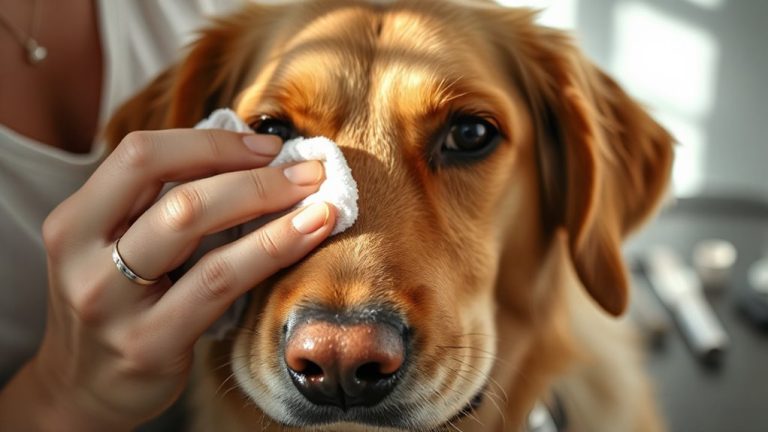
Start by securing your pet gently but firmly to prevent sudden movements during the procedure. This guarantees safety and accuracy. Apply ear irrigation using a veterinarian-recommended solution; fill the ear canal completely to loosen debris and wax. Massage the base of the ear for 20–30 seconds to distribute the solution and dislodge buildup. Allow your pet to shake its head, which expels loosened material. Use clean gauze or cotton balls to wipe the outer ear canal-never insert anything deep into the canal. Cotton swabbing is acceptable only for visible, accessible areas of the outer ear; avoid pushing debris inward. Use soft, lint-free cotton material to prevent irritation. Perform irrigation no more than once weekly unless directed otherwise. Monitor for redness, odor, or discharge post-cleaning. Proper technique minimizes trauma and supports ear health. A clean and precise grooming approach can also aid in ear care, especially when using high-quality dog grooming scissors to trim hair around the ear canal.
Pick the Right Vet-Approved Ear Cleanser
Why do some ear cleansers work better than others for your pet? The answer lies in vet recommendations and ingredient safety. You should choose a cleanser specifically formulated for pets, as human products can damage your pet’s sensitive ear tissue. Look for vet-approved solutions with pH-balanced formulas-ideally between 6.5 and 7.5-to match your pet’s natural ear environment. Effective cleansers contain ingredients like boric acid or acetic acid, which support microorganism control without irritation. Avoid alcohol, parabens, and fragrances, which can cause inflammation. A quality cleanser dissolves wax efficiently, typically within 30 seconds of contact, and promotes aeration to reduce moisture. Always follow label directions and confirm compatibility with your pet’s species. Using the right product guarantees safe, effective cleaning during emergencies and routine care. For natural options that meet these criteria, consider best natural dog ear cleaners.
When to See a Vet Immediately
A properly chosen ear cleanser keeps your pet’s ears clean and reduces the risk of infection, but even the best product can’t replace professional care when serious issues arise. Seek immediate veterinary attention if you notice signs of ear trauma or suspect foreign objects lodged in the ear canal. These conditions can cause permanent damage and require specialized tools for safe removal.
| Symptom | Action Required |
|---|---|
| Bleeding, swelling, or bruising | Visit vet within 1 hour |
| Visible foreign objects or pus | Do not attempt removal-seek care |
Piercing wounds or hematomas need sterile handling. Delaying treatment risks hearing loss or systemic infection. Foreign objects like grass awns can migrate deeper, causing severe pain and secondary infection. Always err on the side of caution-your pet’s hearing and comfort depend on prompt, professional intervention.
Keep Ear Care Supplies Handy: Best Storage Tips
Your pet’s ear care routine depends on having the right supplies accessible when trouble arises. Store items in a dedicated, sealable container labeled clearly-proper labeling prevents confusion and guarantees rapid access. Use waterproof pouches for liquid solutions to prevent leakage. Maintain climate control: temperatures between 60°F and 77°F (15°C–25°C) preserve product integrity. Avoid humid areas like bathrooms, as moisture degrades cotton swabs and gauze. Opt for opaque, UV-resistant containers to shield solutions from light exposure, which can reduce efficacy. Keep ear cleaners in their original bottles with child-resistant caps-most contain active ingredients like chlorhexidine or acetic acid that degrade under poor storage. Include a printed supply checklist taped inside the lid. Rotate stock every six months. A well-organized kit with proper labeling and climate control guarantees readiness without compromising safety or performance. Choosing a pet first aid kit designed for comprehensive care ensures you have critical supplies like ear cleaners, gauze, and antiseptics all in one accessible location.
Common Causes of Pet Ear Emergencies
Having organized and properly stored your ear care supplies, you’re better prepared to respond when problems arise. Ear injuries are a frequent cause of pet ear emergencies, often resulting from vigorous scratching or head shaking due to underlying infections or allergies. Trauma from fights or accidents can lead to hematomas or lacerations, requiring immediate cleaning and veterinary care. Foreign objects, such as grass awns, dirt, or insects, commonly enter the ear canal during outdoor activities, causing irritation, inflammation, or infection. These obstructions can impair hearing and lead to secondary damage if not promptly removed. Moisture from swimming or bathing creates an ideal environment for bacterial and fungal growth, increasing the risk of otitis externa. You should inspect your pet’s ears regularly using an otoscope with 3–6x magnification. Early detection improves outcomes markedly.
On a final note
You’ll protect your pet’s hearing with quick action and the right supplies. Store a vet-approved ear cleanser, sterile gauze pads (2 in x 2 in), cotton-tipped applicators, and gloves. Use cleansers with pH 6.5–7.5 to match your pet’s ear canal. Follow label instructions precisely. Irrigation should flush debris without pressure. Persistent odor, redness, or discharge means see a vet-delay risks permanent damage.