Training Your Cat to Recognize a Designated “Go to Bed” Cue
Choose a short, unique cue like “bedtime” or a click, under 2 seconds and at 2,000–4,000 Hz, to avoid confusion. Use it consistently within 10 minutes of nightly bedtime in a quiet, dimly lit space. Reinforce immediately with a 1 cm³ high-value treat within 1–2 seconds of compliance. Train twice daily in 3–5 minute sessions. Most cats respond in 5–14 days, with younger cats learning faster. Persistent non-response suggests environmental or reinforcement issues worth exploring further.
Notable Insights
- Choose a unique verbal or sound cue under 2 seconds, delivered consistently at 2,000–4,000 Hz to avoid confusion.
- Reinforce the cue immediately with a high-value treat within 1–2 seconds of correct behavior for effective learning.
- Conduct short 3–5 minute training sessions twice daily in a quiet, dimly lit environment to minimize distractions.
- Perform the routine within 10 minutes of bedtime each day, ideally after feeding to utilize natural drowsiness.
- Expect full recognition in 5–14 days, with consistent repetition and reinforcement leading to reliable compliance.
Choose the Right “Go to Bed” Cue
Why should the cue you choose matter? The right cue establishes clear bedtime signals your cat can understand and respond to reliably. Select a verbal cue like “bedtime” or a consistent sound such as a click or tap-ideally one not used in other contexts. Use a distinct tone and repeat it identically each time to maintain cue consistency. Cats respond best to cues under 2 seconds in duration, delivered at a moderate pitch (2,000–4,000 Hz), within their sensitive hearing range. Avoid overlapping cues with daily noises exceeding 60 dB to prevent confusion. Pair the cue with the action of going to bed immediately. Consistency in timing, location, and delivery strengthens association. Effective cues are simple, unique, and repeated with precision. Over time, this reliability conditions your cat to interpret the signal accurately, streamlining training without reliance on rewards.
Reinforce the Cue With Rewards
Every successful training session begins with immediate reinforcement. Use positive reinforcement to strengthen your cat’s association between the cue and the desired behavior. The moment your cat moves toward the bed after hearing the cue, deliver a high-value reward-such as a small piece of freeze-dried chicken or a commercially available treat no larger than 1 cm³. Consistent timing is critical: deliver the reward within 1–2 seconds of correct behavior to guarantee accurate association. Delayed rewards reduce learning efficiency by up to 70%, according to behavioral studies. Use a clicker or verbal marker like “yes” to bridge the behavior and reward precisely. Repeat this sequence in short sessions of 3–5 minutes, twice daily, for maximum retention. Avoid variable reinforcement early on; provide a reward every time to solidify understanding. This method leverages operant conditioning principles, guaranteeing reliable behavioral response.
Build a Routine Your Cat Will Follow
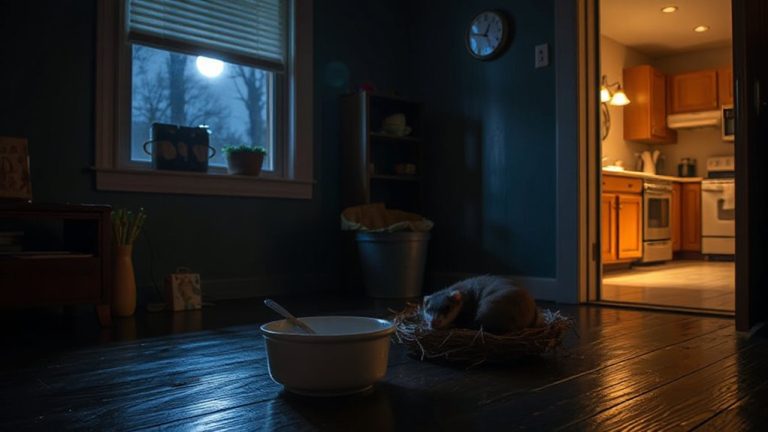
Consistency turns isolated successes into lasting behavior. Establish a predictable schedule using consistent timing each night. Cats thrive on routine, so initiate the “go to bed” cue within 10 minutes of the same bedtime daily. Perform the sequence in a quiet environment, minimizing auditory and visual stimuli that could distract or stress your cat. Reduce ambient light levels by 50–75% and maintain room temperature between 68–72°F to signal sleep onset. Conduct this routine immediately after a feeding session, leveraging postprandial drowsiness. Exclude interactive play or loud devices 30 minutes prior. Repeat the auditory cue-such as a soft chime or verbal phrase-at the same point in the sequence nightly. This temporal precision strengthens associative learning. Environmental stability enhances predictability. Over several days, this structured repetition supports neural encoding of the behavior-response link. Your cat will begin anticipating the cue.
How Long It Takes for Cats to Learn
Learning timelines vary, but most cats begin responding to a “go to bed” cue within 5 to 14 days of consistent training. Training consistency is critical-missing sessions delays progress. Cats rely on predictable sleep patterns, so aligning cue delivery with their natural rest cycles improves retention. Younger cats often learn faster due to higher adaptability.
| Age Group | Average Learning Time |
|---|---|
| 6 months–2 years | 5–8 days |
| 3–7 years | 9–14 days |
| 8+ years | 14–21 days |
Neurological responsiveness declines with age, affecting cue association speed. Senior cats may need repeated reinforcement. Environmental distractions and inconsistent timing reduce training efficacy. For best results, deliver the cue at the same time daily, paired with low-stimulus conditions. You’ll notice reliable compliance after approximately 20–25 repetitions. Sleep patterns stabilize once the cue becomes a conditioned trigger.
What to Do When Your Cat Ignores the Cue
Your cat might not respond to the “go to bed” cue even after meeting the typical learning timeline, and that’s normal. Bedtime resistance often stems from unresolved playful distractions or inconsistent reinforcement. First, assess the environment: remove toys, block access to climbing structures, and reduce lighting to signal sleep. Use a consistent verbal cue paired with gentle physical guidance-such as guiding your cat with an open palm-to reinforce the desired behavior. Avoid punishment; it degrades conditioning. Instead, apply positive reinforcement with a 3-second treat delivery upon compliance. Training sessions should last no more than 5 minutes and occur 15 minutes before bed. Repeat nightly. If non-response persists beyond 14 days, reassess stimulus control or consult a feline behavior specialist. Consistency and timing reduce resistance.
On a final note
You can train your cat to respond reliably to a “go to bed” cue with consistency. Use a distinct verbal or auditory signal every night. Pair the cue with immediate positive reinforcement, such as a 3–5 second treat reward. Most cats learn within 2–4 weeks using daily 5-minute sessions. Make certain the target sleep area remains quiet, dimly lit, and consistently accessible. Ignore noncompliance; repeat the cue without punishment. This method leverages operant conditioning, shaping behavior through repetition and reinforcement timing.