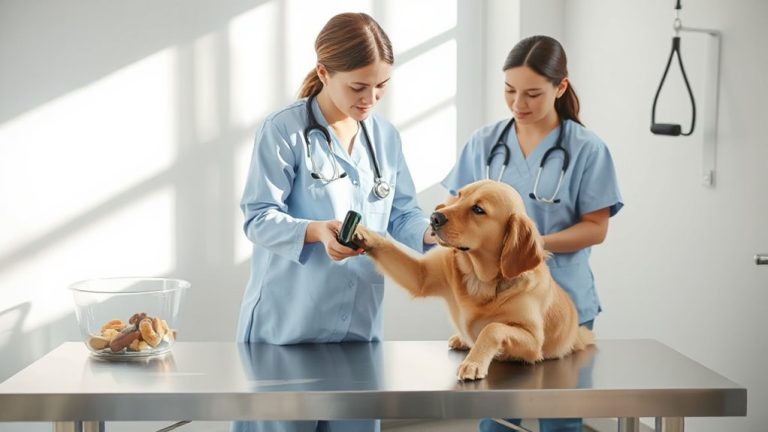
How to Clean Your Dog’s Eyes Before a Grooming Appointment
Clean your dog’s eyes before grooming to prevent infection and irritation during facial trimming. Use a veterinarian-approved, isotonic eye cleaner with a pH of 7.0–7.4 and natural ingredients like aloe vera. Moisten a lint-free pad and wipe from the inner to outer corner of the eye to avoid contaminating the tear duct. Use a fresh pad for each eye to prevent cross-contamination. Proper cleaning guarantees safe, effective grooming and sets the stage for deeper care strategies.
Notable Insights
- Clean your dog’s eyes before grooming to remove bacteria-laden discharge and reduce infection risk during facial trimming.
- Use a vet-approved, isotonic eye cleaner with natural ingredients and avoid alcohol or harsh chemicals.
- Wipe gently from the inner to outer corner of each eye with a fresh, lint-free pad to prevent contamination.
- Clean daily for flat-faced breeds or every other day for long-coated dogs to prevent tear stain buildup.
- Never apply cleanser directly into the eye; always use a moistened pad to avoid pressure or irritation.
Why Clean Your Dog’s Eyes Before Grooming?
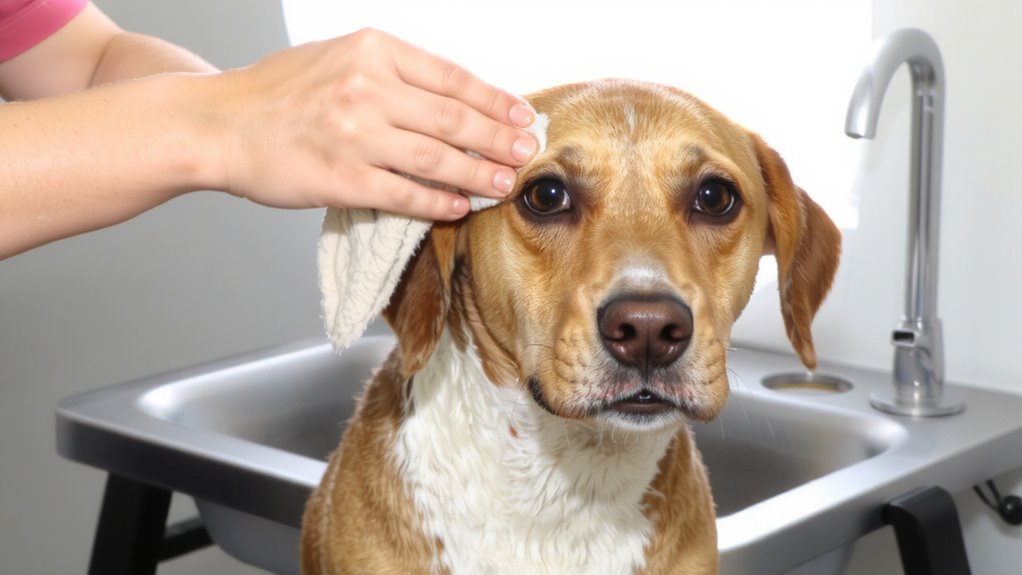
Your dog’s eye health sets the foundation for a safe and effective grooming session. Eye discharge can trap bacteria, increasing infection risk during facial trimming. Left uncleaned, secretions harden and irritate delicate periocular skin. Tear staining, caused by porphyrin pigments in excessive tearing, promotes moisture buildup-ideal for fungal growth near eyelids. You must address both issues before clipper use. Moist debris conducts vibration, heightening discomfort when tools pass nearby. Dry, clean tissue guarantees precise instrument control. Chronic staining may signal blocked nasolacrimal ducts, especially in brachycephalic breeds. Cleaning minimizes cross-contamination between grooming implements. A clear ocular surface allows visual assessment of corneal integrity prior to handling. This preventive step reduces ocular trauma risk from accidental snags. Proper pre-groom hygiene improves both safety and efficiency. You maintain workflow continuity by preventing mid-session irritation flare-ups. Using high-quality dog eye wipes can effectively remove discharge and reduce tear stains without irritating sensitive eye areas.
Choose the Right Dog Eye Cleaner and Tools
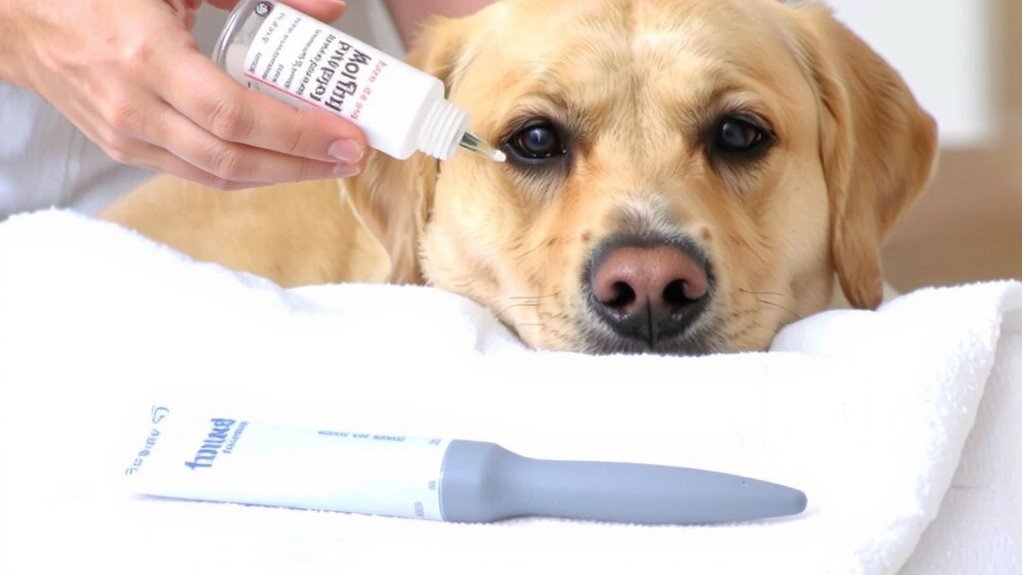
While selecting the proper eye cleaner and tools may seem straightforward, making informed choices guarantees both efficacy and ocular safety during grooming prep. Use a veterinarian-approved eye cleaner formulated with natural ingredients like chamomile, aloe vera, or green tea extract to minimize irritation. Avoid products with alcohol, parabens, or artificial fragrances, which can disrupt the eye’s pH balance. Opt for sterile, isotonic solutions with a pH of 7.0–7.4, matching canine tear composition. For tools, choose lint-free, non-abrasive pads or gauze sponges-rough fabrics can scratch the cornea. Microfiber cloths offer superior debris retention. Apply cleaner with gentle application using a fresh pad for each eye to prevent cross-contamination. Pre-moistened wipes are convenient but verify they contain no harsh surfactants. Use rounded-tip tweezers only for external debris. All products should carry a shelf life and sterile seal.
How to Clean Your Dog’s Eyes Safely: Step-by-Step
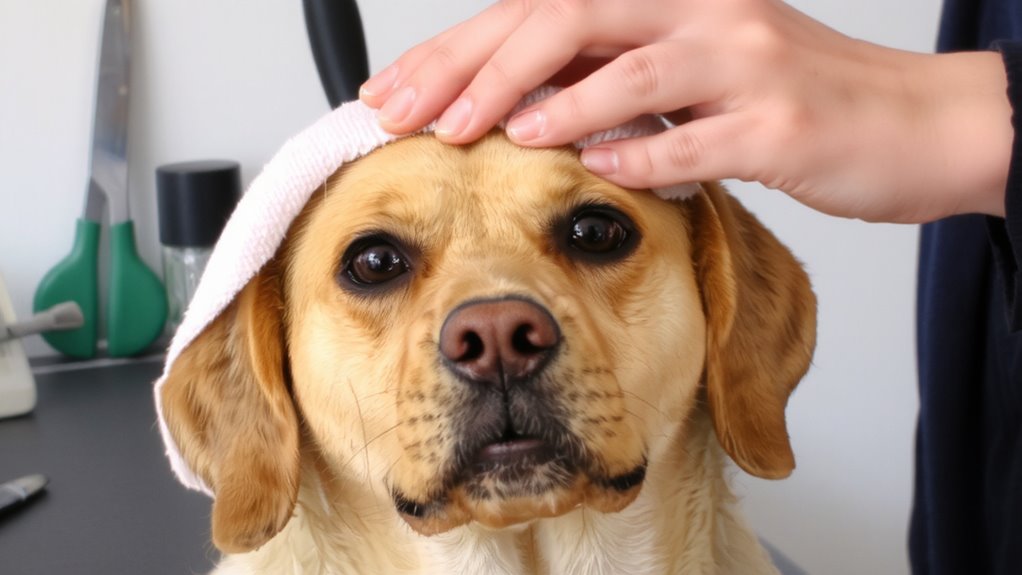
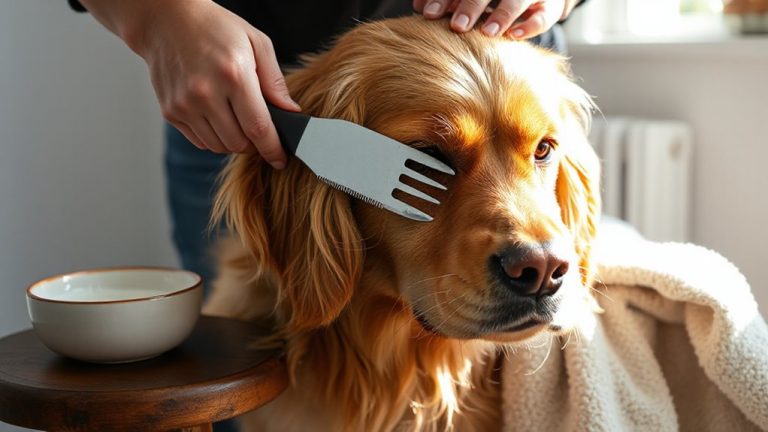
A proper eye-cleaning routine starts with positioning and restraint. Gently hold your dog still, preferably with help, to minimize movement and avoid accidental injury. Use a clean, soft, lint-free cloth or cotton ball moistened with a vet-approved eye-cleaning solution. Never use dry wipes or alcohol-based products, as these can worsen eye irritation. Starting from the inner corner of the eye, wipe outward in gentle strokes to remove discharge and debris. This motion reduces the risk of pushing contaminants into the tear duct. For dogs with persistent tear staining, use a hypoallergenic cleaner designed to neutralize porphyrins, the compounds responsible for reddish-brown stains. Repeat for each eye with a fresh section of the cloth or a new cotton ball to prevent cross-contamination. Consistent technique helps prevent infection and discomfort.
How Often Should You Clean Your Dog’s Eyes?
Frequency of eye cleaning depends on your dog’s breed, health, and tear production levels. Breeds prone to excessive eye discharge or tear staining require more frequent maintenance. Below is a general guideline based on common factors:
| Breed Type | Cleaning Frequency | Reason |
|---|---|---|
| Flat-faced (e.g., Pug) | Daily | High tear staining risk |
| Long-coated (e.g., Maltese) | Every other day | Traps eye discharge easily |
| Short-coated (e.g., Beagle) | Weekly | Low tear production, minimal staining |
Inspect eyes daily for redness, swelling, or abnormal eye discharge. Clean when residue accumulates near the medial canthus-the inner corner where tear staining often begins. Use a lint-free pad moistened with sterile saline solution. Consistent cleaning prevents crust buildup and reduces bacterial growth. Adjust frequency if your dog develops allergies or eye irritation.
Dog Eye Cleaning Mistakes to Avoid
Why do some dog owners end up worsening eye irritation despite regular cleaning? Using harsh chemicals disrupts the eye’s natural pH, which is typically between 7.0 and 7.4 in dogs. Avoid household cleaners or alcohol-based solutions-they damage sensitive ocular tissues. Always use sterile saline or veterinarian-approved ocular cleansers. Never reuse cotton pads; each swipe should be on a fresh surface to prevent bacterial contamination. Ignoring discharge color risks missing infections. Yellow or green discharge may indicate bacterial conjunctivitis, while clear discharge is usually benign. Brownish crusts around the eyes are common in breeds with prominent eyes but should be monitored. Apply cleanser to a gauze pad, not directly into the eye, to avoid pressure on the globe. Use single-use, lint-free wipes if preferred. Cleaning too aggressively causes micro-abrasions. Limit sessions to once daily unless directed otherwise.
On a final note
Clean your dog’s eyes before grooming to prevent irritation and infection. Use a sterile, saline-based eye cleaner with pH balanced for canine physiology (typically 6.5–7.5). Apply with a lint-free pad or cotton ball-never reuse. Gently wipe from inner to outer eye to reduce tear duct contamination. Limit sessions to 30 seconds per eye to avoid corneal irritation. Avoid alcohol-based solutions or human products, which disrupt ocular barriers. Consistent, proper cleaning supports ideal eye health.