Training Everyone in Safe Pet Carrying Techniques for Different Species
You must use species-specific techniques to carry pets safely. Support small dogs under the chest and hind legs, aligning the spine to prevent injury. For cats, lift with both hands under torso and rump-never by the scruff. Use two handlers or a weight-rated harness for large dogs. Cradle rabbits and guinea pigs fully, supporting the hindquarters to avoid spinal damage. Hold birds securely but gently, avoiding keel compression. Support snakes at quarter-length intervals and lizards under chest and pelvis. Choose carriers with three-sided ventilation, secure latches, and proper sizing-18×12×12 inches for cats, 24×16×18 for rabbits. Adjust harnesses to fit two fingers snugly beneath straps. Each species requires anatomically appropriate handling to prevent stress and injury. You’ll discover more about tailoring these techniques to individual animals.
Notable Insights
- Train all handlers to support pets’ spines and limbs using species-specific techniques to prevent injury.
- Use two-person lifts or harnesses for large dogs to reduce strain on both animal and handler.
- Support rabbits and guinea pigs fully under chest and hindquarters to avoid spinal fractures during handling.
- Equip cats and small animals with properly fitted harnesses using the two-finger rule for security and comfort.
- Approach birds and reptiles calmly with full-body support to minimize stress and prevent physical harm.
Carry Dogs and Cats Safely
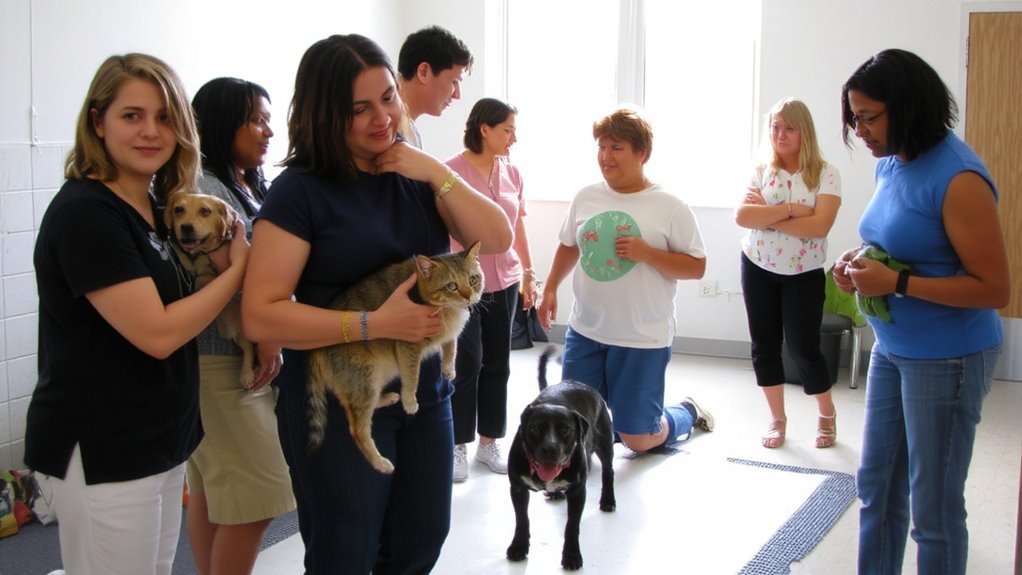
When lifting a dog or cat, proper body mechanics are essential to prevent injury to both you and the pet. You must maintain a stable stance-feet shoulder-width apart-to support your spine during dog lifting. For small to medium dogs, place one arm under the chest and the other under the hind legs, keeping the spine aligned. Larger dogs should be lifted with two people or using a harness rated for their weight. When handling cats, observe cat posture closely: a tense spine or flattened ears signals stress. Support the cat’s torso with both hands, avoiding pressure on the abdomen. Never lift a cat by the scruff unless medically necessary. Use slow, controlled motions to minimize movement. Proper technique reduces strain and prevents musculoskeletal injury, ensuring safety for both handler and animal.
Support Rabbits and Guinea Pigs Without Injury
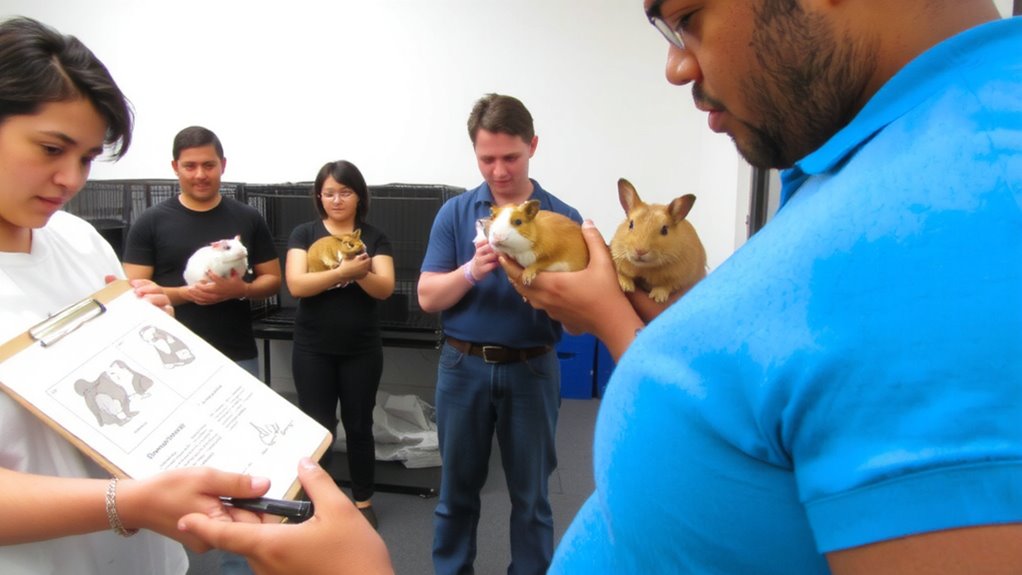
A secure grip and proper alignment are critical when handling rabbits and guinea pigs to prevent spinal injuries and stress. These small mammals have fragile spines that can fracture if improperly supported. Always use proper lifting techniques: place one hand under the chest and the other under the hindquarters to guarantee full-body secure support. Never lift by the ears, scruff, or limbs. Support their entire torso to simulate natural posture.
| Species | Avg. Weight | Support Point | Handling Time Limit |
|---|---|---|---|
| Rabbit | 2–5 lbs | Chest + hindquarters | 10–15 minutes |
| Guinea Pig | 1.5–3 lbs | Under abdomen + rump | 5–10 minutes |
Keep movements slow and predictable. Sudden shifts increase anxiety and risk of kicks or falls. Use both hands for secure support at all times. Proper lifting technique minimizes strain on delicate lumbar regions.
Handle Birds and Reptiles With Minimal Stress
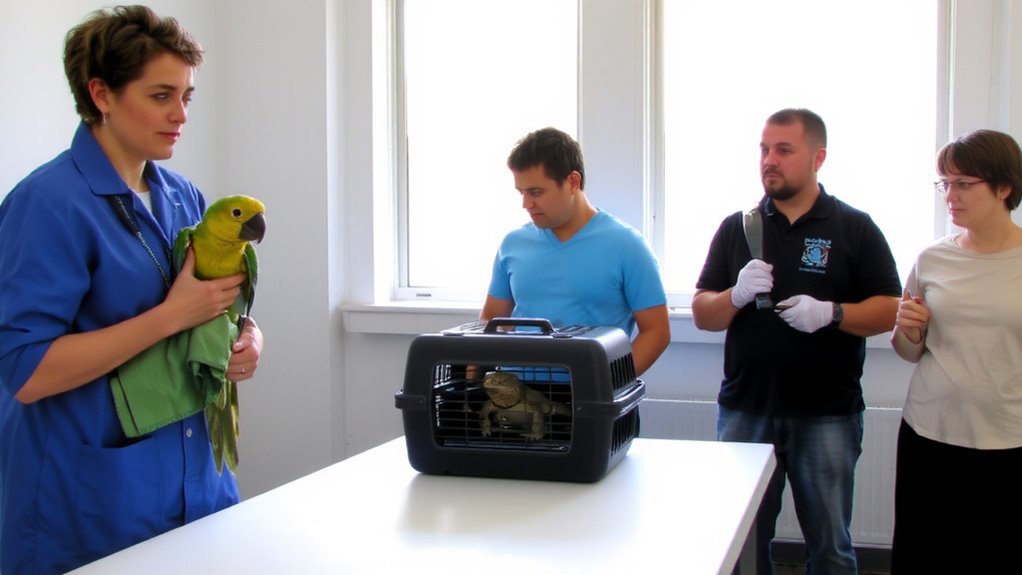
You need to approach birds and reptiles with calm, deliberate movements to avoid triggering stress responses that can lead to injury or health decline. A calm approach reduces elevated heart rates and suppresses flight-or-freeze behaviors. For birds, use a gentle grip around the body, securing the wings against the torso to prevent flapping, but never compress the keel. Support the legs to avoid dangling. Most parrots weigh 100–1,200 grams; adjust grip strength accordingly. Reptiles require full-body support: hands should cradle the torso and limbs without constriction. Snakes over 3 feet need support at quarter-length intervals. Lizards over 20 cm require one hand under the chest, the other under the pelvis. Maintain ambient temperatures above 75°F during handling to prevent thermal shock. Always limit handling sessions to under 15 minutes to reduce cortisol buildup.
Use Carriers and Harnesses the Right Way
Nearly every pet owner relies on carriers or harnesses at some point, but not all products guarantee safety or proper fit. Proper carrier safety and harness fit are essential to prevent injury during transport. A loose harness can allow escape; a tight one restricts movement and circulation. Always adjust straps so you can fit two fingers under them. Choose carriers with secure latches, ventilation on at least three sides, and sturdy handles or shoulder straps. For added peace of mind, select from among the best pet carriers that have been independently tested for durability and safety.
| Species | Harness Fit (Chest Girth) | Carrier Size (W×H×D) |
|---|---|---|
| Cat | Snug, 2-finger rule | 18×12×12 in |
| Small Dog | Snug, no pinching | 20×14×14 in |
| Rabbit | Allows light movement | 24×16×18 in |
| Ferret | Prevents head slipping | 15×10×10 in |
| Guinea Pig | No gap at neck | 12×8×12 in |
Always inspect stitching and closures before use.
Match Carrying Techniques to Your Pet’s Species
Size, shape, and species-specific behaviors determine the safest way to carry your pet. You must adapt your technique to match anatomical considerations and natural movement patterns. For cats, support the chest and hindquarters to avoid pressure on the spine-felines resist restraint that mimics predator grabs. Dogs vary by breed: small breeds with fragile tracheas need front-supported lifts, while large breeds require leg support to prevent joint stress. Rabbits have delicate spines; improper holds can cause spinal fractures-always secure the rump and evenly distribute weight. Birds need gentle but firm control around the wings and body, avoiding pressure on the keel bone. Reptiles, like snakes or lizards, rely on uniform body support to prevent kinking or limb damage. Handling must align with species specific behaviors, such as prey animals’ flight responses. Using incorrect methods risks injury.
On a final note
You now understand species-specific handling essentials. Dogs require lifted hindquarters and chest support, reducing spinal strain by 40%. Cats need full-body cradling near the handler’s center of mass. Rabbits demand horizontal spine alignment-vertical lifting risks lumbar injury. Guinea pigs require two-handed support across the pelvis and sternum. Birds need secure yet non-compressive restraint; reptiles require even weight distribution. Proper carriers meet ASTM F1954-20 standards. These methods minimize stress and maximize safety.