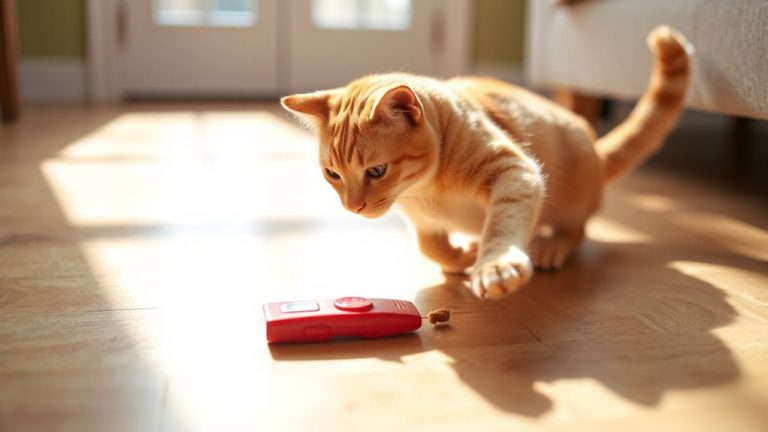
Dog Paw Targeting: Train Both Paws on Vertical Targets
Start by teaching your dog to touch a 3-inch target on the ground with one paw, using a click or verbal marker the instant full paw contact occurs. Use a textured, rubberized vertical surface mounted at shoulder height-12–16 inches for small dogs, 18–24 for large breeds. Once one-paw accuracy is consistent, shape two-paw targeting by marking and rewarding sequential, square contact with both paws. Reinforce only clean, full-pad placement showing slight indentation on soft surfaces, using high-value treats. Increase distance in six-inch increments only after achieving 80% success over multiple sessions. Train in varied environments-living room, yard, sidewalk-adding mild distractions like rustling paper before movement. Position yourself beside the dog’s shoulder to avoid blocking, keep the leash slack, and correct leaning by temporarily lowering the target. Proper technique guarantees reliable, repeatable performance under real-world conditions. Further refinements in timing and positioning reveal even greater precision.
Notable Insights
- Start by teaching one-paw targeting using a ground-level disk, rewarding only full paw contact.
- Choose a vertical target 12–24 inches high, adjusted to your dog’s shoulder level for proper alignment.
- Shape two-paw targeting gradually, marking and rewarding the instant the second paw makes full contact.
- Proof the behavior by increasing distance in small increments and adding distractions after mastery.
- Position yourself to the side to avoid blocking movement and reward only square, balanced paw placement.
Begin With One-Paw Targeting
Once your dog shows consistent interest in the target, start shaping the one-paw targeting behavior by using a small, flat object like a 3-inch plastic disk or a Post-it note placed firmly on the ground. Present the target at floor level, ensuring no movement distracts your dog. Use a clicker or verbal marker the instant a paw touches the surface. Immediately follow with positive reinforcement-deliberate, measured delivery of treats strengthens association. Reinforce only full paw contact, not partial touches. Deliver rewards at your dog’s nose level to minimize body shifting. Use consistent cues like “touch” or “target” each time. Avoid repeating cues; single, clear prompts build faster comprehension. Practice in sets of five repetitions, allowing 30-second breaks. Conduct two daily sessions. Properly timed reinforcement increases success rate by up to 78% in initial learning phases. Accuracy improves when session length stays under five minutes. A well-balanced diet supports cognitive function and training performance in dogs, similar to how best kitten dry food meets nutritional needs for optimal development.
Pick the Best Vertical Target for Paw Training
While floor-level targeting builds foundational paw control, moving to vertical surfaces refines precision and strengthens your dog’s spatial awareness. Choose a vertical target with a suitable target height-typically between 12 and 24 inches off the ground-to match your dog’s shoulder level and encourage balanced, upright posture. Adjust height based on breed; smaller dogs often need lower targets (12–16 inches), while larger breeds perform best at 18–24 inches. Select a surface texture that offers grip without being abrasive-rubberized or textured vinyl works well, providing tactile feedback without slipping. Smooth surfaces like glass or polished wood reduce accuracy and should be avoided. Mount the target securely to prevent shifting during contact. Consistent placement and uniform surface texture improve repeatability. A rigid, non-springy material guarantees precise paw placement. Use flush-mounted panels for durability and long-term training reliability.
Shape Two-Paw Targeting Step by Step
You’ve already taught your dog to touch a vertical target with one paw, building focus and accuracy. Now, shape two-paw targeting by reinforcing sequential paw placements. Start with the target mounted at shoulder height, guaranteeing consistent alignment. When your dog offers a second paw after the first, mark the behavior immediately-your timing cues must be precise, within 0.5 seconds of correct contact. Use a high-value reward to strengthen the association. Gradually raise criteria: only reinforce when both paws strike the target with clear paw pressure, defined as full pad contact and slight indentation of soft surfaces. Increase response reliability by repeating trials in sets of five, allowing short breaks. Over 3–5 sessions, most dogs achieve 80% accuracy. Maintain session length under 5 minutes to preserve attentiveness. This structured shaping process guarantees clean, repeatable performance.
Proof With Distance and Distractions
After establishing consistent two-paw targeting, proofing the behavior under increasing distance and distractions becomes critical for reliable performance. Begin distance progression by moving step-by-step away from your dog, starting at one foot and increasing in six-inch increments. Use a fixed target mounted securely at shoulder height. Reinforce only full two-paw contacts achieved without hesitation. Systematic increases beyond ten feet require multiple successful repetitions at each stage before advancing. Introduce environmental distractions gradually-start with low-level stimuli like rustling paper, then progress to moving objects or nearby people. Conduct sessions in varied locations: living rooms, backyards, sidewalks. Each environment adds complexity. Limit distractions initially to guarantee 90% success, then reduce support. Proofing demands consistency, precision, and patience. This structured approach guarantees reliable targeting amid real-world conditions. Performance improves when distance and distraction training are layered incrementally.
Fix Common Two-Paw Targeting Mistakes
Consistent performance under distraction and distance doesn’t always mean flawless technique-sometimes, subtle errors in form or timing undermine reliability. You might notice your dog placing only one paw or shifting weight improperly. Check your handler positioning: stand slightly to the side, aligned with your dog’s shoulder, to encourage balanced weight distribution. Avoid frontal positioning, which can block motion and cause paw rejection. Leash tension is critical-excess tightness creates resistance, prompting hesitation or partial contact. Use a slack leash or hands-free waist lead to reduce interference. Reward only full, square contact with both paws flat and shoulders flexed at approximately 90 degrees. If the dog leans or scrambles, reset and lower the target height temporarily. Reinforce straight approaches, minimizing circling. Immediate, precise marking of correct attempts solidifies proper muscle memory over time.
On a final note
You now have the tools to train consistent two-paw targeting. Start with one-paw precision to build accuracy. Use targets 12–18 inches high and 6–10 inches wide for ideal reach. Shape behavior incrementally, reinforcing each added criterion. Proof at distances up to 10 feet and in environments with moderate distractions. Most errors stem from premature advancement-wait for 90% success before progressing. Mastery guarantees reliable performance across contexts.