Lighting Needs and Photoperiods: Creating a Natural Environment for Your Pet
You need proper light cycles to maintain your pet’s circadian rhythm, which regulates sleep, hormones, and immunity. Diurnal animals require 12–14 hours of full-spectrum light with UVB (290–315 nm), while nocturnal species need dim, red-shifted lighting at night. Use 5–7% UVB fluorescent or mercury vapor bulbs placed 12–18 inches from basking sites, replaced every 6–12 months. Pair with programmable timers for accurate photoperiods. You’ll discover species-specific setups that optimize health and natural behavior.
Notable Insights
- Match light cycles to your pet’s natural activity pattern to support circadian rhythms and overall health.
- Provide 12–14 hours of full-spectrum light daily for diurnal pets like bearded dragons and birds.
- Use low-intensity, red or moonlight bulbs for nocturnal animals to enable nighttime activity without disruption.
- Supply UVB radiation (290–315 nm) for reptiles and birds to enable vitamin D3 synthesis and prevent metabolic bone disease.
- Automate lighting with programmable timers to simulate natural dawn/dusk transitions and seasonal photoperiod changes.
Why Proper Light Cycles Keep Pets Healthy
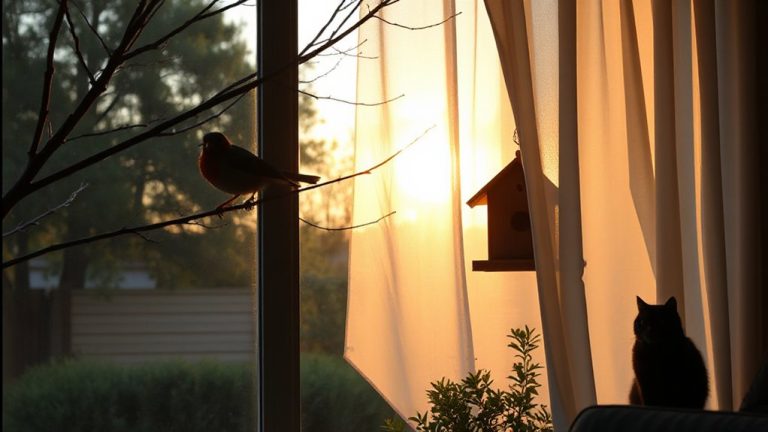
How would your pet’s health change if its day and night patterns were constantly out of sync? Disrupting the circadian rhythm impairs immune function, sleep, and behavior. This internal clock relies on consistent light cycles to regulate physiological processes. Without proper photoperiods, hormone secretion becomes erratic, affecting stress levels and metabolism. Importantly, light exposure drives vitamin synthesis-especially vitamin D3 in reptiles and birds-through UVB radiation (290–315 nm wavelength). Inadequate UVB leads to metabolic bone disease and poor calcium absorption. Diurnal animals need 12–14 hours of light daily; nocturnal ones require dim, red-shifted lighting at night. LED and fluorescent lights must mimic natural intensity (200–500 lux for daytime) and spectral distribution. Maintaining a stable 24-hour cycle supports long-term health, metabolic efficiency, and neurological function. Consistent lighting prevents chronic stress and sustains essential biological rhythms fundamental to your pet’s well-being. Proper temperature regulation, often supported by equipment like aquarium water heaters, ensures that light cycle benefits are not undermined by thermal stress.
Mirror Wild Light Patterns by Species
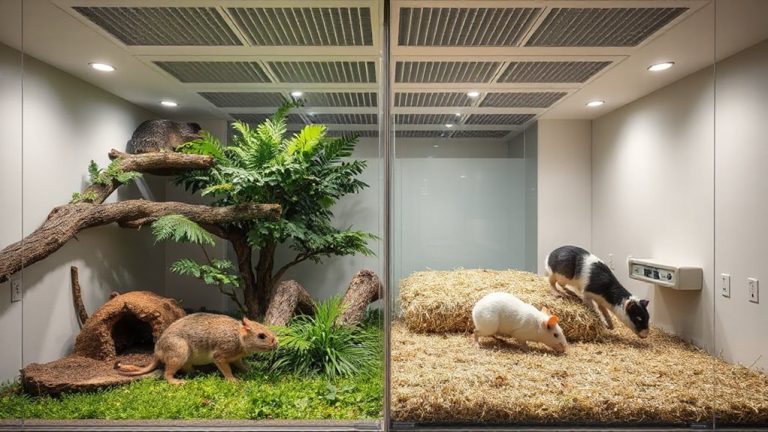
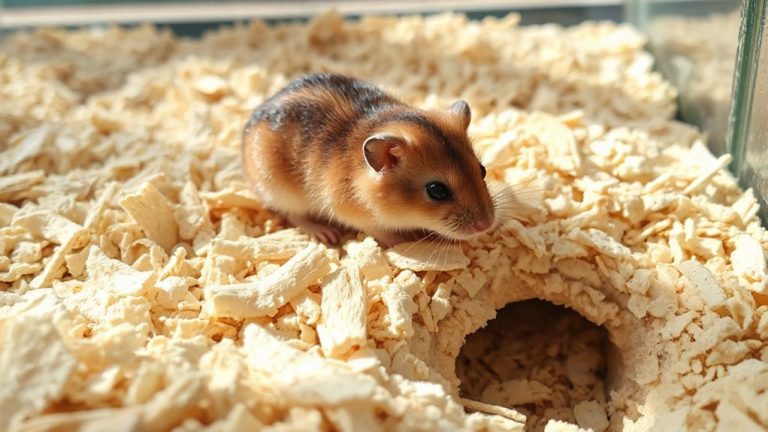
While natural light cycles vary considerably across habitats, replicating these patterns is essential for your pet’s physiological balance. You must align artificial photoperiods with your pet’s native diurnal rhythms to support hormone regulation and metabolism. For example, diurnal reptiles like bearded dragons require 12–14 hours of light daily, mimicking equatorial patterns with consistent day length year-round. Nocturnal species, such as leopard geckos, need reversed cycles with low-intensity lighting at night. Seasonal adaptation plays a critical role for temperate-zone animals; some amphibians rely on shorter photoperiods and cooler temperatures in winter to trigger hibernation or breeding. Use programmable timers to adjust light duration and intensity monthly, simulating natural shifts. Accurate simulation maintains circadian health, reduces stress, and promotes natural behaviors. Guarantee UVB exposure matches species-specific basking needs, typically 2–5% for desert dwellers. For optimal thermal regulation, pair proper photoperiods with a high-quality heat bulb designed specifically for reptile enclosures.
Choose the Right Bulb for Your Pet’s Needs
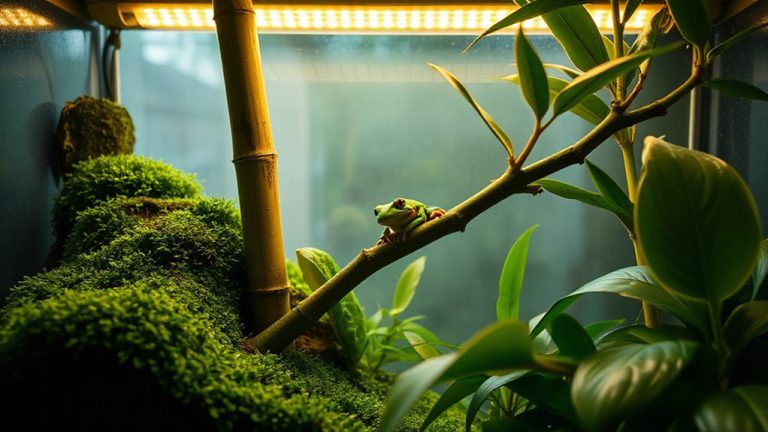
Matching your pet’s lighting needs to its natural behavior starts with selecting the right bulb type, building on the light cycle you’ve already established. Choose bulbs that replicate the UV spectrum essential for vitamin D3 synthesis, especially for reptiles. Full-spectrum fluorescent or mercury vapor bulbs emitting 290–320 nm UVB wavelengths support proper calcium metabolism. LED and incandescent bulbs don’t provide UV unless specially designed. Guarantee UV output matches your pet’s basking distance-typically 12–18 inches-and replace bulbs every 6–12 months as UV degrades. Bulb wattage determines heat and brightness; select based on enclosure size and thermal gradient needs. For example, a 50W to 100W basking bulb suits a 40-gallon terrarium. Always pair wattage with fixture ratings to prevent fire risk. Use a digital thermometer and UV meter to verify output. Never rely on visible light alone-UV is invisible but critical. Your pet’s health depends on accurate spectral and thermal conditions. For aquatic pets like corals, proper illumination includes full-spectrum lighting with intense blue hues to support photosynthesis, similar to those found in high-quality reef aquarium lights.
Automate Light Schedules With Timers
Since maintaining consistent light cycles is critical for your pet’s circadian rhythm, automating with timers guarantees accuracy and reduces human error. You can rely on mechanical or digital timers to power lights on and off at precise times daily. Timer reliability secures your pet receives consistent photoperiods, mimicking natural day-night cycles. Digital models offer programmable settings for dawn-to-dusk simulations, with some supporting seasonal adjustments. A 7-day programmable timer costs $15–$30 and handles up to 1800 watts, suitable for multiple enclosures. Timer use also improves energy efficiency by preventing lights from running unnecessarily. LED bulbs paired with timers consume 75% less energy than incandescent bulbs. For example, running a 10W LED 12 hours daily uses 0.12 kWh/day versus 0.6 kWh/day for a 50W incandescent. Reliable automation supports health and reduces electricity costs effectively.
Fix Common Lighting Mistakes by Species
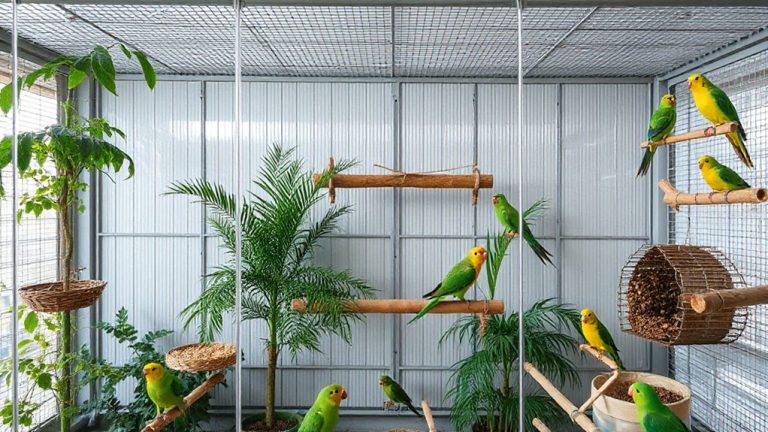
You’ve set up timers to maintain accurate photoperiods, but improper lighting choices for specific species can still disrupt your pet’s health. Inadequate intensity is common in reptiles like bearded dragons, which require 10–12 hours of UVB light at 5.0–10.0 UV Index levels. Standard household bulbs don’t provide this; you need a 5–7% UVB tube or mercury vapor bulb. Improper placement reduces effectiveness-mount UVB lights 12–18 inches above basking areas, replacing them every 6–12 months. For nocturnal species like leopard geckos, visible moonlight bulbs prevent light pollution during night cycles. Birds need full-spectrum lighting with 5000–6500K color temperature for 12–14 hours to prevent feather plucking. Place avian lights 18–24 inches from cages, avoiding direct exposure. Always verify output with a lux meter or UV meter. Correct intensity and placement prevent metabolic and behavioral disorders.
On a final note
You maintain your pet’s health by replicating natural photoperiods. Use full-spectrum bulbs with 5,000–6,500K color temperature for accurate daylight simulation. Set timers to guarantee 12–14 hours of light for diurnal species, 8–10 for nocturnal ones. UVB output (2%–5%) is critical for reptiles’ vitamin D synthesis. Mismatched cycles disrupt circadian rhythms. Automated systems prevent inconsistency. Correct wattage and placement-per manufacturer specs-maintain ideal irradiance without overheating.