How to Use Scent Marking to Reduce Anxiety in Multi-Cat Homes
You can reduce cat stress by encouraging natural scent marking to build a shared olfactory environment. Let cats rub and bunt to exchange facial pheromones from sebaceous glands, reinforcing group identity. Place one sturdy, sisal-covered scratching post per cat-32″ tall, anchored to withstand 20–30 lbs of force-10–12 feet apart in high-traffic areas to create communal scent zones. Use synthetic pheromone diffusers in core living spaces, covering up to 700 sq ft for 30 days, to mimic calming signals. Proper litter box numbers, placement, and enzymatic cleaning prevent conflicts while preserving scent communication. More solutions follow the same science of feline olfactory stability.
Notable Insights
- Use facial pheromone diffusers in shared areas to signal safety and reduce stress in multi-cat homes.
- Encourage bunting and rubbing between cats to promote scent sharing and group cohesion.
- Place scratching posts in high-traffic zones so cats can mark territory and build familiar scent profiles.
- Neuter cats to decrease inappropriate spraying while preserving healthy scent communication.
- Clean soiled areas with enzymatic cleaners to prevent re-marking and reduce anxiety triggers.
Why Scent Marking Reduces Cat Stress
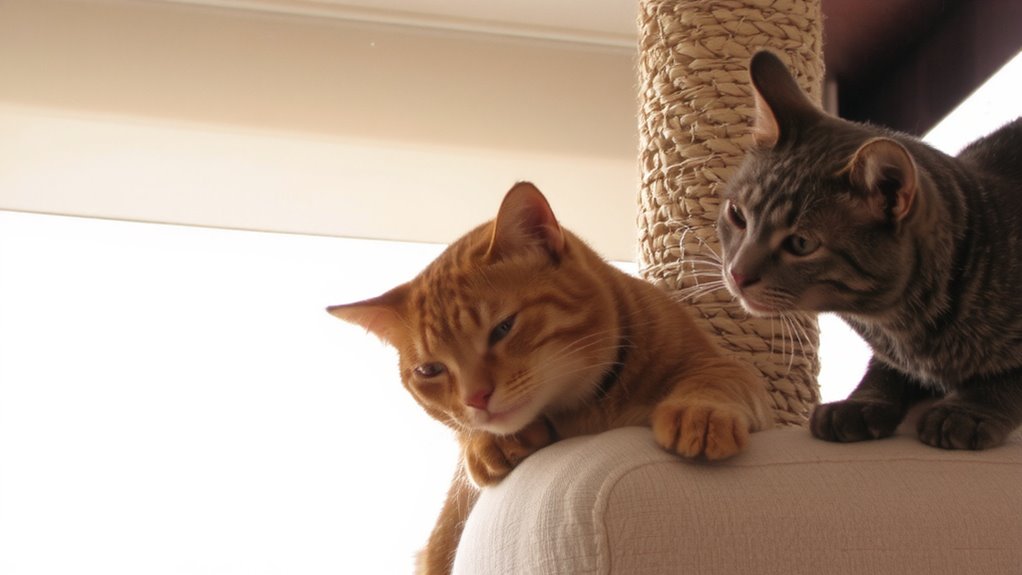
While cats naturally engage in scent marking to establish familiarity in their environment, this behavior plays a critical role in reducing stress in multi-cat households. Scent marks provide territorial reassurance, signaling to other cats that resources are shared and boundaries respected. This reduces conflict and aggressive encounters by up to 65%, according to behavioral studies. Each mark contains a unique chemical signature from facial glands, primarily sebaceous secretions rich in lipids and proteins. These deposits act as olfactory identifiers, offering emotional security across shared spaces. In multi-cat homes, consistent scent profiles lower cortisol levels, decreasing anxiety-related behaviors like urination or scratching. Environmental stability improves when cats recognize communal odors, promoting social cohesion. You’ll notice fewer confrontations when scent patterns remain undisturbed. Avoid cleaning marked areas with strong chemicals, as this disrupts olfactory cues. Preserving these signals maintains a balanced, low-stress household where cats feel predictably safe.
Encourage Scent Sharing Through Rubbing and Bunting
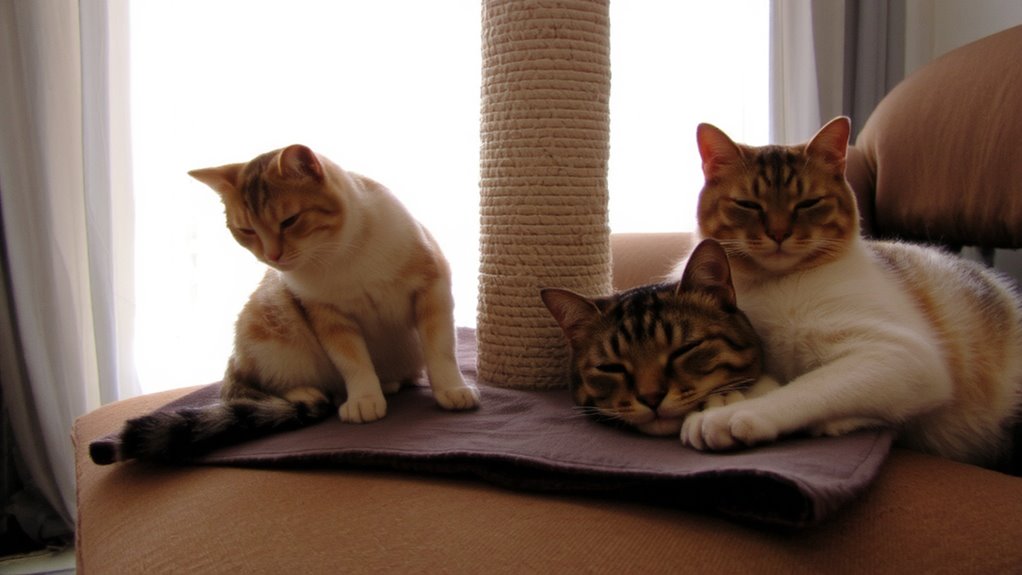
Bunting behavior-your cat’s head-butting and cheek-rubbing actions-serves as a primary method for scent exchange among cats in shared environments. Facial rubbing deposits sebaceous gland secretions from facial areas, promoting social cohesion. Encourage this by placing cats near each other during calm moments to stimulate natural bunting. Tail wrapping often accompanies bunting, transferring scent from caudal glands to companions. This tactile communication reinforces group identity. Facilitating regular, stress-free interactions increases scent-sharing frequency.
| Behavior | Scent Source |
|---|---|
| Facial rubbing | Sebaceous glands on cheeks |
| Bunting | Temporal and perioral areas |
| Tail wrapping | Caudal dorsal glands |
Promote positioning that allows full contact during greetings. Guarantee cats have unobstructed access to each other in neutral zones. Avoid handling during interactions to prevent disruption. Consistent, unimpeded scent sharing reduces intercat tension by establishing a communal odor profile.
Use Scratching Posts to Build Shared Scent Zones
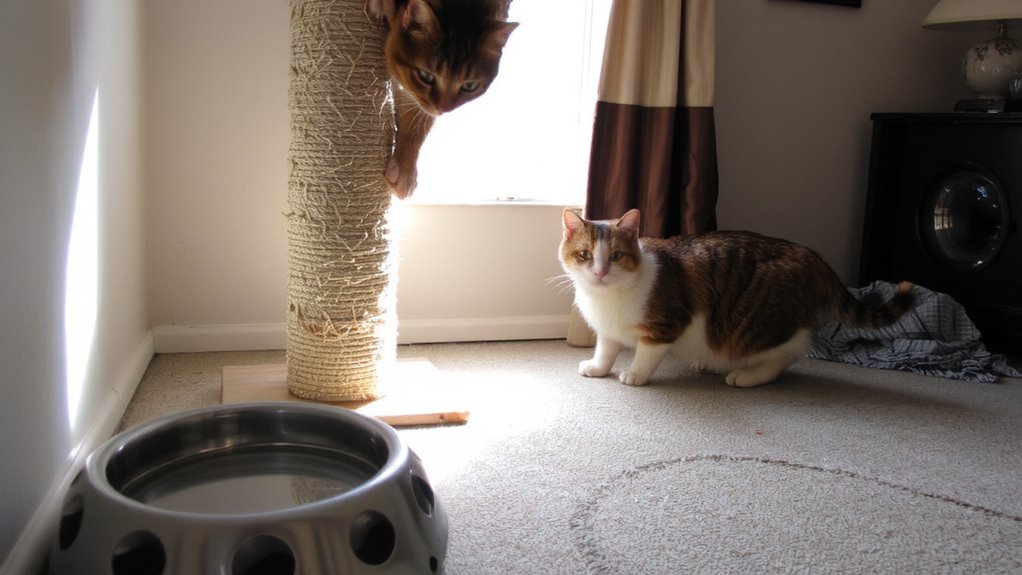
Your cat’s scratching habit isn’t just about nail maintenance-it’s a targeted method of scent marking that helps establish territorial familiarity in multi-cat homes. You can leverage this behavior by placing sturdy scratching posts (minimum 32 inches tall, 18 inches wide) in high-traffic zones. Posts covered in natural sisal (diameter 3–5 inches) retain more pheromones than soft alternatives. Each cat contributes to the scratching hierarchy, leaving both visual cues and interdigital scent marks. Over time, these shared zones reduce conflict by supporting passive territory negotiation. Place at least one post per cat, spaced 10–12 feet apart, to prevent resource guarding. Vertical posts should be anchored to prevent tipping under 20–30 lbs of force. Consistent use builds a communal scent profile, reinforcing group identity. This structured approach transforms individual marking into collective calming-no emotional cues needed, just precise environmental design.
Add Calming Pheromone Diffusers to Reduce Anxiety
How do you reduce tension in a multi-cat household when natural territorial behaviors start to cause stress? You introduce synthetic feline pheromones through calibrated diffusers designed for continuous anxiety relief. These devices emit species-specific messages that mimic a cat’s facial pheromones, signaling safety and familiarity. Plug-in diffusers cover up to 700 square feet, operating 24/7 for 30 days per refill. Clinical studies show a 90% improvement in stress-related behaviors within four weeks of consistent use.
| Behavior Before | After 4 Weeks |
|---|---|
| Frequent hiding | Increased exploration |
| Aggressive posturing | Calmer interactions |
| Excessive grooming | Normal self-care |
| Avoiding shared spaces | Using common areas |
Place diffusers in core living zones, not near air vents. Replace refills monthly. Feline pheromones work subconsciously-cats respond within hours, though full anxiety relief may take days. This method supports scent-based harmony without altering your cats’ natural communication. For optimal results, choose from the best pheromone diffusers for cats based on coverage area and refill longevity.
Stop Inappropriate Spraying Without Blocking Communication
Synthetic pheromone systems help manage stress, but they don’t stop urine marking when territorial instincts override environmental calming signals. To prevent inappropriate spraying, you must reinforce natural territorial boundaries without disrupting scent communication. Neutering reduces spraying in 90% of males, decreasing the urgency for scent markers. Use enzymatic cleaners on soiled areas to eliminate odor cues that prompt repeat marking. Provide one litter box per cat plus one extra, placed in quiet, low-traffic zones. Maintain clean litter box habits-scoop daily, replace litter weekly. Position boxes on multiple levels if your home has stairs, supporting vertical territory use. Motion-activated deterrents (e.g., SSSCat) emit a harmless air puff at 15-dB, discouraging approach without causing harm. These tools block unwanted spraying while preserving normal facial marking and scent rubbing. Respecting feline communication guarantees long-term behavioral success.
On a final note
You maintain harmony in multi-cat homes by aligning with natural feline behavior. Scent marking reduces stress through familiar olfactory cues. Pheromone diffusers like Feliway release synthetic analogs of facial pheromones (F3) for up to 30 days, covering 500–1,000 sq ft per unit. Scratching posts promote scent deposition via paw glands. Shared rubbing stations encourage bunting, distributing recognizable scents. You prevent conflict without blocking communication.