Creating a Scented “I Spy” Game for Dogs Using Household Items
You can build a scent-based “I spy” game using household items like PVC pipes, clean cotton rags, and sealed plastic containers. Only use non-toxic, essential oil-free materials and pair target scents like anise or clove with high-value, heat-treated baits such as boiled chicken or cheddar cheese. Start with single-item hides on open floors within a 3-foot radius to sharpen olfactory focus. Use 3–5 minute sessions, reinforcing correct finds with immediate rewards. Once your dog achieves 90% accuracy, introduce distractors or layered containers-this gradual progression mirrors neural conditioning seen in odor discrimination studies. Cognitive gains increase with structured repetition, and you’ll soon see how small changes boost problem-solving skills.
Notable Insights
- Use non-toxic, essential oil-free items like cotton rags, PVC pipes, or sealed plastic containers for safe scent games.
- Choose high-value, heat-treated baits such as boiled chicken or cheddar cheese, stored airtight and replaced every 24 hours.
- Start by hiding scented items in simple, accessible spots like open floors or low furniture edges.
- Pair a target scent like anise with rewards to build odor discrimination using positive reinforcement.
- Keep sessions under 5 minutes, gradually increasing difficulty only after your dog achieves 90% success.
Why Sniffing Games Help Your Dog Think
While many assume dogs rely primarily on sight, their cognitive function thrives when engaging their olfactory system, which contains up to 300 million scent receptors-compared to about 5 million in humans. Sniffing games provide essential cognitive stimulation by activating neural pathways linked to memory and problem-solving. Each scent detection requires attention, discrimination, and recall, strengthening mental acuity over time. These activities deliver consistent mental enrichment, reducing idle behavior and improving focus. Studies show dogs engaged in scent work exhibit up to 40% lower cortisol levels, indicating reduced stress. The prefrontal cortex, responsible for decision-making, shows increased activity during odor identification tasks. Unlike physical exercise alone, sniffing demands sustained concentration, mimicking natural foraging behaviors. You can measure improvement through faster target acquisition and fewer errors in repeated trials. Incorporating structured sniffing into daily routines enhances neuroplasticity, especially in aging dogs. This targeted mental engagement supports long-term brain health, making sniffing games a scientifically supported tool for canine cognitive maintenance.
Pick Dog-Safe, Smelly Items for the Game
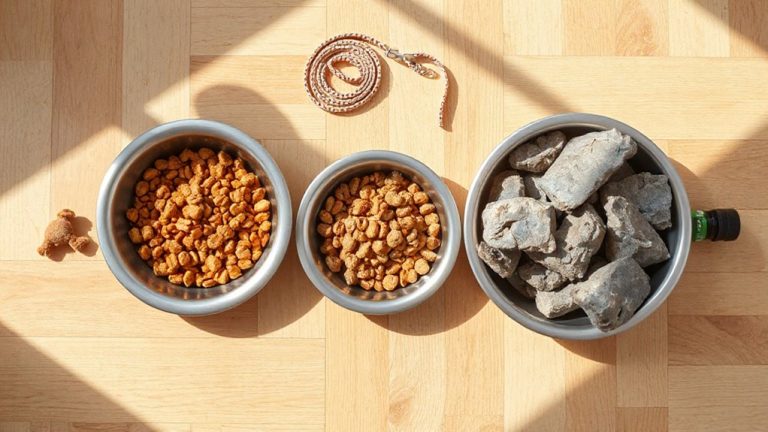
You can make your dog’s scent game both safe and effective by choosing the right materials. Select only safe scents that are non-toxic and free from essential oils, which can be harmful if inhaled or ingested. Use common household items like plain PVC pipes, clean cotton rags, or plastic food containers with secure lids to prevent choking hazards. Avoid porous materials such as sponges or foam, which retain moisture and promote bacterial growth. Introduce high-value, odor-rich baits like boiled chicken, dried liver, or cheddar cheese-these provide strong, consistent scent trails. Each scent source should be heat-treated to eliminate pathogens and stored in airtight containers to preserve volatility. Replace organic materials every 24 hours to prevent spoilage. Never use chocolate, onions, garlic, or xylitol-containing products. Safe scents paired with inert household items guarantee reliable, repeatable performance during training sessions.
Choose Easy Hiding Spots to Start
Begin with visibility in mind-place scent items in locations your dog can easily access and detect. Start with unobstructed surfaces like open floor areas, low furniture edges, or fabric corners at nose level. These spots reduce search complexity, promoting immediate success. Easy locations build underlying trust by confirming the game has consistent rules and rewards. Mental stimulation remains high when your dog locates items quickly, reinforcing motivation. Avoid enclosed spaces, elevated ledges, or cluttered zones during initial trials. Use a consistent 3-foot search radius to limit spatial confusion. Hard flooring and minimal air currents help scent particles accumulate, improving detectability. Each placement should allow direct approach within five seconds of release. This controlled exposure sharpens olfactory focus without overwhelming cognitive processing. Success in plain areas establishes a reliable foundation for later challenges. You’re shaping behavior through precision, not chance.
Teach Your Dog to Find Hidden Scents
Your dog’s natural ability to detect scents gets sharper each time you guide them through focused training. Begin with scent pairing by linking a target odor to a reward. Use a cotton ball with a few drops of essential oil like anise or clove-distinct, safe, and easy to identify. Pair it consistently with a treat to create positive reinforcement. This establishes odor discrimination-the skill to distinguish the target scent from background smells. Start with short sessions of 3–5 minutes to maintain focus. Present one hidden item at a time in easy locations. As your dog improves, increase difficulty subtly.
| Trial | Scent Used | Success Rate |
|---|---|---|
| 1 | Anise | 60% |
| 2 | Clove | 75% |
| 3 | Basil | 80% |
| 4 | Anise | 90% |
| 5 | Clove | 95% |
Odor discrimination improves with repetition, enhancing accuracy and confidence.
Add Challenges as Your Dog Gets Better
Once the dog consistently locates target scents with over 90% accuracy across multiple trials, it’s time to introduce structured challenges that elevate cognitive engagement and physical precision. Increase difficulty by adding distractor scents-use three non-target household items like coconut oil, dried lavender, or lemon peel. Place the target scent inside nested containers, such as a sock inside a cup, to require sequential problem-solving. Vary locations frequently: start indoors, then shift outdoors where wind, terrain, and ambient odors affect scent dispersion. Elevate hides from floor level to countertops (ensure safety) or bury items shallowly in grass. Limit search zones using physical boundaries like baby gates or taped lines. Reduce verbal cues and hand signals to promote independent tracking. Each session should last 5–7 minutes, with trials repeated across 3 days weekly. Performance gains plateau after 4 weeks without variation-rotate target scents monthly to maintain discrimination accuracy.
Avoid Frustration: Signs Your Dog’s Overwhelmed
You might notice subtle shifts in your dog’s behavior when the scent game becomes too demanding. These changes often indicate signs of stress. Common examples include yawning, lip licking, and turning the head away-recognized as calming signals. Prolonged sniffing in one spot or sudden disengagement suggests cognitive overload. Your dog may also exhibit increased panting or paw lifting without intent to move. These actions are not misbehavior but communication. Calming signals serve to reduce tension, both for the dog and surrounding environment. If repetitive or exaggerated, they signal the task exceeds current ability. Reduce difficulty immediately by using fewer hiding spots or stronger scent sources. Maintain session length under 10 minutes initially. Monitor closely, especially during early learning stages. Adjust variables like scent concentration and location complexity. Recognizing these signs guarantees training remains effective and humane.
End on a Positive Note: Wrap Up the Game Right
Stopping the game at the right moment guarantees your dog retains a favorable association with scent work. End sessions while your dog is still engaged, ideally after a successful find. This guarantees motivation remains high for future training. Deliver consistent encouragement throughout the final minutes, reinforcing focus and effort. Use calm praise or a familiar marker word like “yes” immediately after correct identification. Follow with positive reinforcement-offer a treat, toy, or brief play session within five seconds to solidify the connection. Avoid prolonging play past three successful finds per round to prevent mental fatigue. Keep each session under 10–15 minutes for peak cognitive retention. Conclude with a known command, such as “all done,” to signal closure. This predictable structure reduces anxiety. A clean ending strengthens learning by clearly distinguishing work from rest. Your dog will anticipate the next game with confidence and enthusiasm.
On a final note
You strengthen your dog’s cognitive function through scent discrimination tasks. These games activate the olfactory cortex, improving neural connectivity. Use non-toxic, strongly aromatic items like dried herbs or unsalted meats. Start with shallow hides-under a half-cup bowl, within a 2-inch gap behind furniture. Gradually increase complexity: add multiple rooms, layer scents. Monitor latency to search initiation;超过15 seconds indicates stress. End after three successful finds. Reinforce with 3–5 seconds of praise.