How to Reduce Fear of Vacuums and Loud Noises in Anxious Cats
You can reduce your cat’s fear of vacuums using gradual desensitization starting at 20–30 dB, increasing in 5 dB increments every few days. Play recorded vacuum sounds for 5–10 minutes, 2–3 times daily. Pair calm behavior with immediate treats and a verbal marker like “good.” Use a white noise machine at 50–60 dB to mask environmental sounds. Provide a quiet retreat lined with acoustic foam and consider a low-decibel vacuum under 60 dB for cleaning. Further strategies include wearable trackers to monitor stress and professional guidance if progress stalls.
Notable Insights
- Use white noise machines at 50–60 dB to mask loud sounds and reduce auditory stress in cats.
- Begin desensitizing cats to vacuum noises at 20–30 dB, increasing volume by 5 dB every few days.
- Reward calm behavior during noise exposure with high-value treats delivered within 1–2 seconds.
- Create a quiet, safe retreat with soft bedding, acoustic materials, and a pheromone diffuser like Feliway.
- Reduce home noise with rugs, curtains, and low-decibel vacuums, cleaning when the cat is away.
Help Your Cat Handle Loud Noises
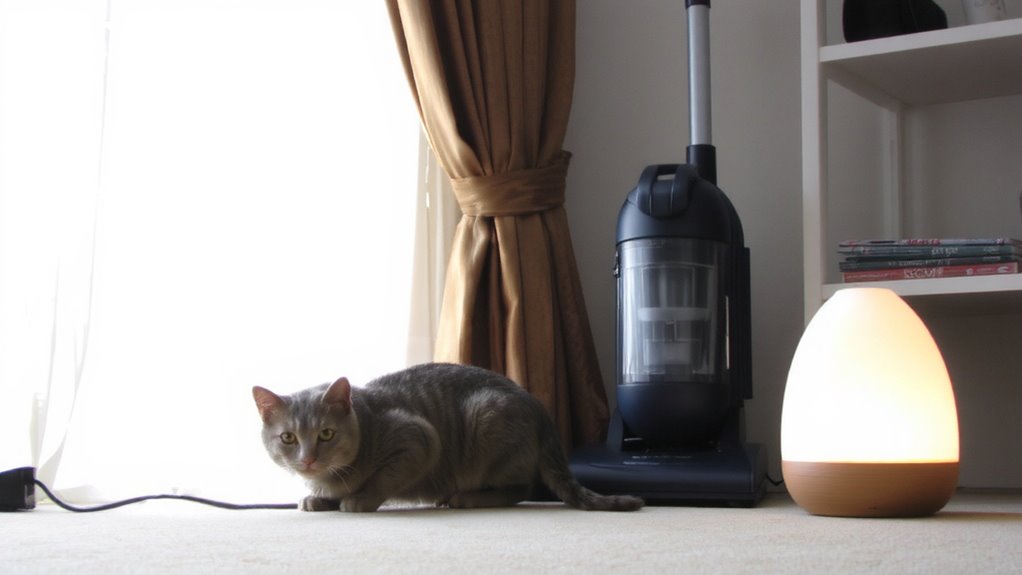
While loud sounds can trigger a stress response in cats due to their sensitive hearing, you can help your cat adapt through controlled exposure and environmental management. Sound masking reduces auditory stress by introducing consistent background noise. Use white noise machines set to 50–60 decibels, which effectively cover sudden loud sounds like vacuums. Place devices in rooms where your cat spends most time, ensuring even sound distribution. Anxiety tracking helps monitor your cat’s physiological and behavioral responses. Wearable pet trackers measure heart rate variability and activity levels, identifying stress spikes during noise events. Pair data with a daily log to detect patterns. These tools allow precise interventions before acute fear develops. Combine sound masking with safe zones-enclosed spaces lined with absorbent materials like acoustic foam. These reduce sound reflection and offer psychological comfort. Consistent use of both strategies improves habituation over time. For optimal results, choose devices specifically designed for pet anxiety, such as top-rated noise machines for anxious pets.
Start Desensitization With Low-Volume Sounds
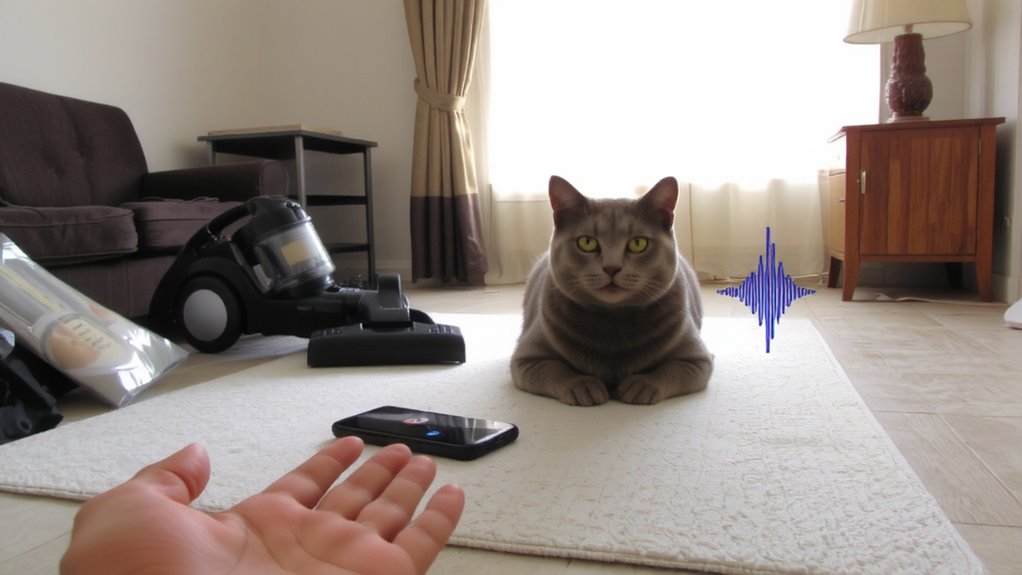
Since fear responses in cats are often tied to the intensity and suddenness of sounds, starting desensitization with low-volume exposure gives you control over the stimulus level. You can build sound tolerance through gradual exposure, using a sound system that allows precise volume adjustments. Begin at 20–30 decibels-comparable to a whisper-to avoid triggering anxiety. Play vacuum-related noises for 5–10 minutes daily, ensuring your cat remains relaxed.
| Volume (dB) | Perception for Cat |
|---|---|
| 20–30 | Barely audible, safe start |
| 40 | Quiet room, low stress |
| 50 | Moderate, monitor closely |
| 60 | Normal conversation level |
| 70+ | Risk of fear response |
Gradual exposure conditions the auditory system, improving long-term sound tolerance. Use consistent timing and volume increments no greater than 5 dB every 3–4 days.
Reward Calm Reactions During Noise Exposure
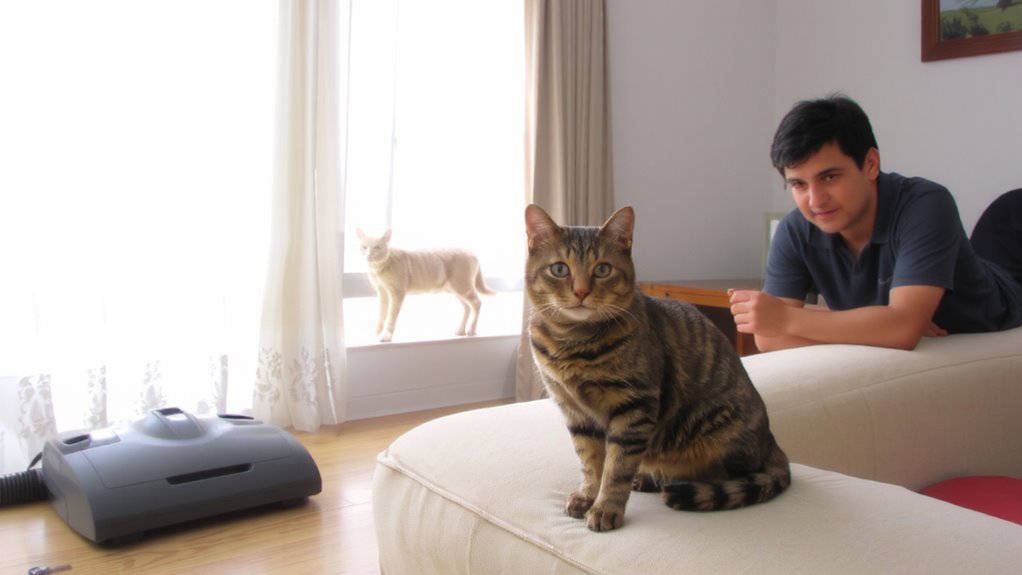
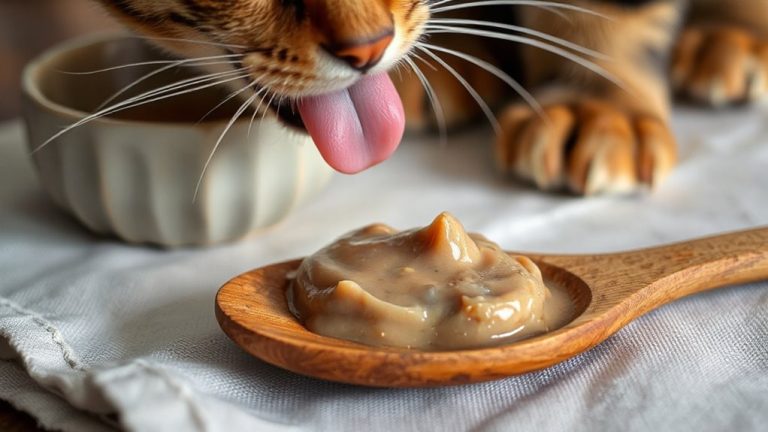
Pairing calm behavior with positive reinforcement strengthens your cat’s confidence during noise exposure. When your cat remains relaxed while hearing a vacuum or loud sound, immediately offer a high-value treat, such as freeze-dried chicken, within 1–2 seconds. This precise timing guarantees your cat links the calm state to the reward. Use a consistent verbal marker like “good” to signal correct behavior. Apply gradual exposure by increasing sound volume in 5-decibel increments only after your cat shows no stress at the current level. Sessions should last 5–10 minutes, conducted 2–3 times daily. Each step must be mastered before progressing. Positive reinforcement must be delivered intermittently but reliably to maintain learned behavior. Avoid rewarding fearful reactions. Over time, this process reshapes your cat’s emotional response, reducing anxiety through operant conditioning. Track progress using a daily log noting duration, volume level, and reaction. A clean environment can also support your cat’s sense of security, so consider using a cat litter box mat to minimize tracked debris near noise-prone areas like vacuum storage spots.
Build a Safe, Quiet Retreat for Your Cat
You can make a real difference in your cat’s stress levels by creating a dedicated safe space. Designate a quiet space away from high-traffic areas and appliances. Ideal locations include interior closets, unused bedrooms, or quiet corners of a basement. Equip the area with a cozy hideout-such as a covered cat bed or enclosed carrier-measuring at least 18 x 12 x 10 inches to accommodate average adult cats. Use soft, washable fabrics like microfleece for lining. Include a waterproof, non-slip base to prevent shifting. Maintain ambient temperatures between 68–75°F. Add a pheromone diffuser, such as Feliway Classic, which releases species-specific calming signals shown to reduce stress behaviors by up to 61% in controlled studies. Position the hideout off the floor, if possible, to provide elevated security. Guarantee the area remains consistently accessible, unobstructed, and free of loud disturbances. Incorporate proven anxiety comfort items to further soothe your cat during episodes of noise-related stress.
Clean Smarter: Reduce Noise Stress at Home
While many household tasks are unavoidable, how and when you clean can greatly affect your cat’s stress response to noise. Use sound dampening materials like thick rugs, heavy curtains, and upholstered furniture to absorb high-frequency cleaning sounds. These materials reduce noise levels by 20–30%, creating a calmer environment. Install noise insulation in walls or use freestanding acoustic panels rated at NRC 0.8 or higher to block sudden sound spikes. Clean during times your cat isn’t present or is deeply relaxed, preferably in another room. Choose low-decibel appliances-vacuums under 60 dB are ideal. Operate them at maximum distance whenever possible. Strategic placement of sound barriers, such as bookshelves filled with books, offers effective mid-frequency noise reduction. Consistent use of noise control methods lowers ambient stress. These precise, measurable changes enhance acoustic comfort and minimize auditory triggers in home environments.
Know When to See a Vet or Behaviorist
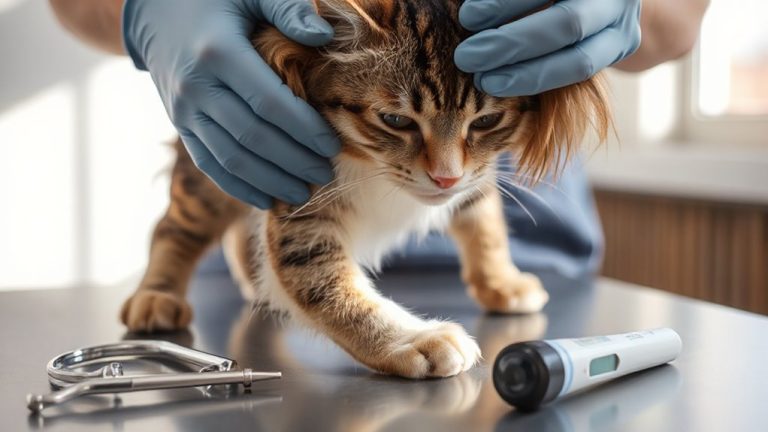
When does your cat’s fear cross the line from normal caution to a clinical issue? If your cat consistently panics at everyday sounds, hides for hours, or shows aggression, it’s time to seek help. Persistent fear can indicate underlying medical conditions. Begin with a medical evaluation to rule out pain, hyperthyroidism, or hearing issues that may amplify noise sensitivity. If no physical cause is found, consult a veterinary behaviorist for professional guidance. Conditions like noise aversion or generalized anxiety disorder may require targeted interventions, including pheromone therapy, desensitization protocols, or prescription anxiolytics. Early diagnosis improves treatment efficacy. A behaviorist uses systematic assessments-like stimulus threshold testing-to create evidence-based plans. Don’t wait until the fear impacts your cat’s quality of life. Timely professional guidance guarantees accurate diagnosis and long-term behavioral improvement.
On a final note
You can manage your cat’s noise anxiety effectively with structured desensitization. Begin by playing vacuum sounds at 30–40 decibels, below the typical 70–80 dB fear threshold. Reward calm behavior immediately with high-value treats. Gradually increase volume over days, not exceeding 5 dB per session. Provide a sound-dampening hideout with walls rated STC 30+. Use white noise machines set to 50 dB to mask sudden sounds. Consult a vet if avoidance behaviors persist beyond four weeks.