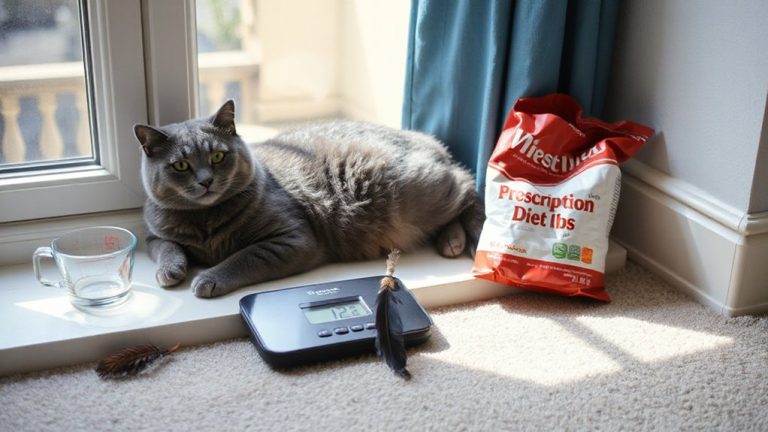
Introducing Novel Movement Like Swinging Toys for Indoor Cats
You need to stimulate your indoor cat’s hunting instincts with novel movement like motorized swinging toys. These devices mimic prey with swing arcs of 15–30 cm and speeds of 0.5–1.2 m/s. Adjustable arms (12–20 inches) and 360-degree rotation adapt to all play styles. High-torque motors run quietly at 60 RPM, using non-toxic, chew-resistant materials for safety. Mount securely to studs using #8 screws for stability. There’s more to optimizing this enrichment effectively.
Notable Insights
- Swinging toys mimic erratic prey movement, providing essential mental stimulation for indoor cats.
- Adjustable height and swing speed customize play to match a cat’s natural hunting behaviors.
- Motorized toys with 360-degree rotation prevent habituation through unpredictable motion patterns.
- Durable, non-toxic materials ensure safety during prolonged interactive play sessions.
- Regular toy rotation maintains novelty and sustains a cat’s interest in physical activity.
Why Indoor Cats Need Swinging Toys
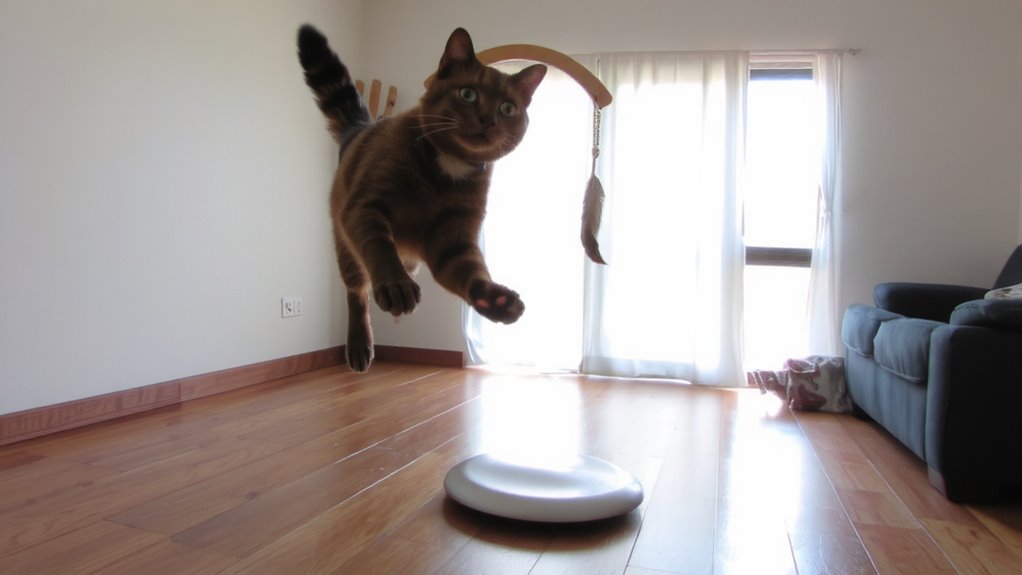
Why should your indoor cat’s play environment matter? It directly impacts their health and behavior. Swinging toys provide essential cat enrichment by introducing unpredictable motion that mimics prey movement. These toys deliver consistent mental stimulation, reducing stress-related behaviors like overgrooming or aggression. Models with adjustable arm lengths (ranging from 12 to 18 inches) allow height customization for kittens and adults. High-torque, quiet motors (operating at 60 RPM) enable continuous 360-degree rotation. Toys made from non-toxic, chew-resistant materials (such as natural rubber or food-grade PVC) maintain safety during prolonged interaction. Swinging toys with replaceable attachments-feathers, faux fur, or crinkle balls-maintain novelty, vital for sustained engagement. Position units at waist height (approximately 28–36 inches from the floor) for ideal paw-swipe access. Rotation speed and arc width simulate natural prey trajectories, sustaining predatory interest. Without such stimuli, indoor cats face under-stimulation, leading to cognitive decline. Top-rated models often feature expert-recommended designs that balance durability and interactive functionality.
How Swinging Toys Trigger Hunting Instincts
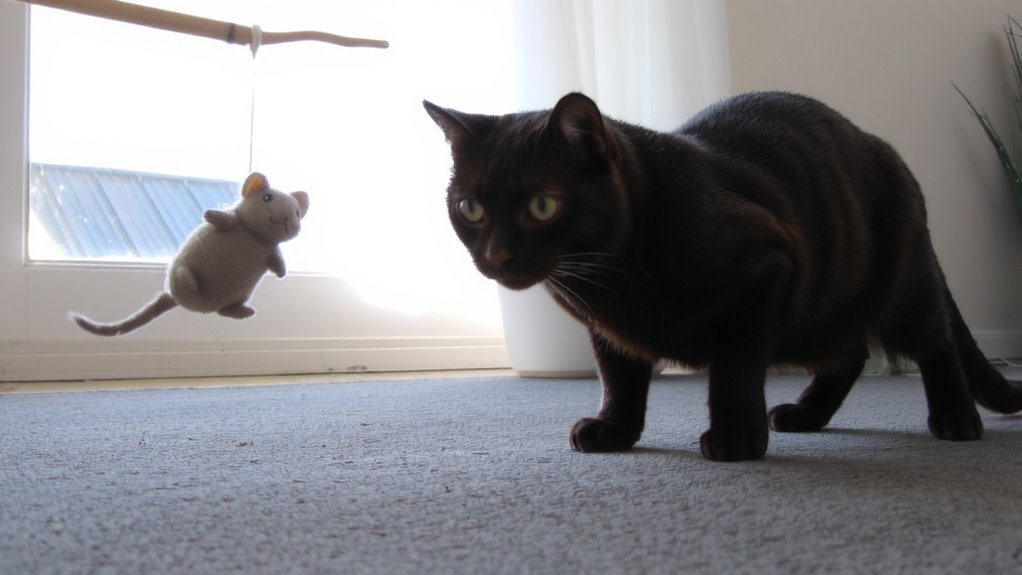
A well-designed swinging toy taps directly into your cat’s hardwired predatory sequence. These toys use precise motion simulation to replicate the erratic movements of live prey, triggering instinctual chase and pounce behaviors. Prey mimicry is achieved through lifelike materials, feather attachments, and irregular swing patterns between 15–30 cm in arc distance. The ideal swing speed of 0.5–1.2 meters per second closely matches the escape velocity of small rodents and birds. Swinging toys with adjustable height (typically 25–60 cm from the floor) align with a cat’s preferred striking zone. Motion variance, including pendular and zigzag trajectories, prevents habituation. Built-in pivot joints allow 360-degree movement, enhancing realism. The combination of visual stimulus, motion simulation, and prey mimicry sustains engagement. This targeted stimulation fulfills psychological needs, offering functional enrichment beyond simple play.
5 Best Swinging Toys for Cats
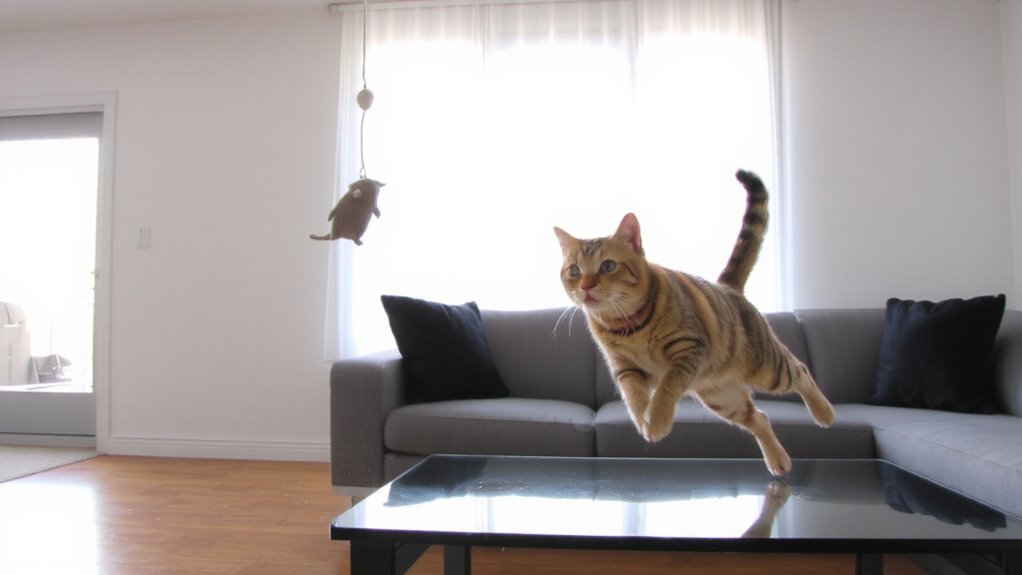
Swinging toys that effectively engage your cat’s predatory instincts must also deliver in durability, adjustability, and motion realism. The Da Bird wand toy uses a 22-inch telescoping rod and aviation-grade mylar lines to simulate erratic flight patterns, matching natural cat behavior. Its replaceable feather attachments resist shredding, thanks to reinforced nylon threading. Another top choice is the SmartyKat Flutter Mouse, which swings on a 15cm flexible arm from a weighted base. It uses non-toxic PVC and organic catnip, meeting strict toy materials safety standards. Motion sensors trigger unpredictable swings at 0.8–1.2 Hz frequencies, closely mimicking prey movement. The PetFusion Smart Tail operates at 90 cm height with a motorized pendulum swing up to 140° arc. ABS plastic and food-grade silicone guarantee long-term indoor use. Each toy undergoes 50+ hours of stress testing.
How to Choose Based on Your Cat’s Personality
What kind of play style does your cat favor-stealthy pounces or relentless chases? Observing your cat’s behavior reveals key cat preferences that guide toy selection. Shy or methodical hunters prefer softer toy materials like fleece or plush, paired with slower, pendulum-style swings. These mimic prey movement with predictable arcs, ideal for ambushing. High-energy cats thrive on rapid, erratic motion. Choose toys with durable nylon or rubber components that withstand aggressive batting. Swing amplitude should exceed 18 inches for dynamic engagement. Models with adjustable arm length (12–20 in) and 360-degree rotation increase stimulation. Prioritize motorized units with variable speeds-options like 20, 40, and 60 RPM let you match your cat’s tempo. Always match toy materials to play intensity. Rough play demands reinforced stitching and chew-resistant elements. Understanding these traits guarantees lasting interaction and meets your cat’s instinctual needs efficiently.
Keep Your Cat Safe: Mounting Swinging Toys the Right Way
For secure installation, always anchor swinging toys to solid structural elements like wall studs or ceiling joists-never rely on drywall anchors alone. Mounting height matters: set toys at your cat’s shoulder level, typically 24–30 inches from the floor, to encourage natural pouncing. Wall safety depends on proper placement-avoid locations near furniture that could aid uncontrolled jumps. Use #8 or larger screws, inserted at least 1.5 inches into wooden studs, to guarantee load capacity exceeds 50 lbs. Confirm stability by applying firm pressure before use. Position toys away from blinds or cords to prevent entanglement. Check monthly for wear or loosening. Proper mounting prevents falls and guarantees long-term use. Swinging toys must move freely without wobbling, mimicking prey motion accurately. Incorrect installation risks injury and reduces engagement. Prioritize structural integrity over convenience. When selecting accessories for pets, consider products like dog diapers for female dogs to manage hygiene during indoor play.
How Swinging Toys Fit Into a Full Play Routine
Now that you’ve secured your swinging toy with proper mounting techniques, it’s time to integrate it into a structured play routine. Play timing is critical: engage your cat for 10–15 minutes twice daily, aligning with their natural dawn and dusk activity peaks. This consistency supports circadian rhythm synchronization and prevents overstimulation. Position the toy at cat shoulder height-approximately 10–12 inches above floor level-for ideal strike zone access. Toy placement should allow 360-degree approach angles, enabling stealth, pounce, and capture sequences. Mount it in a low-traffic zone with at least 3 feet of clearance to prevent collisions. Rotate focus between swinging toys and other types every few days to maintain novelty. Use motion range (arc of 180 degrees) and variable suspension heights (9–15 inches) to simulate prey movement. This approach maximizes motor skill development and environmental enrichment within a predictable framework.
When to Rotate or Replace Swinging Toys
While your cat’s initial enthusiasm for a swinging toy may seem endless, performance data shows most lose sustained interest after 10–14 days of daily exposure. Rotating toys every two weeks aligns with observed play frequency patterns, maintaining novelty and engagement. Replace toys showing clear toy degradation signs, such as frayed strings, loose stitching, or compromised structural joints. Inspect hinges and pivot points weekly; plastic components should remain flexible but not cracked-brittleness indicates UV or thermal stress. For motorized units, a 15% drop in swing amplitude suggests battery or motor fatigue. Manual toys with reduced arc travel beyond 20° from original design warrant replacement. Use rotation logs to track effectiveness. Introduce new motion profiles-side-to-side, pendulum, or erratic bobbing-to exploit innate predatory sequencing. Monitor interaction duration via timed sessions; sustained play under 3 minutes signals diminished stimulus value.
On a final note
Swinging toys enhance indoor cat health by promoting movement. They mimic prey motion, stimulating hunting instincts critical for mental and physical wellness. Choose models with adjustable height, durable materials like polycarbonate or reinforced nylon, and pivot joints allowing 180° motion. Mount securely using wall anchors rated for 50 lbs or more. Replace worn components every 3–6 months. Integrate into daily 10–15 minute play sessions. Rotate toys biweekly to sustain engagement.