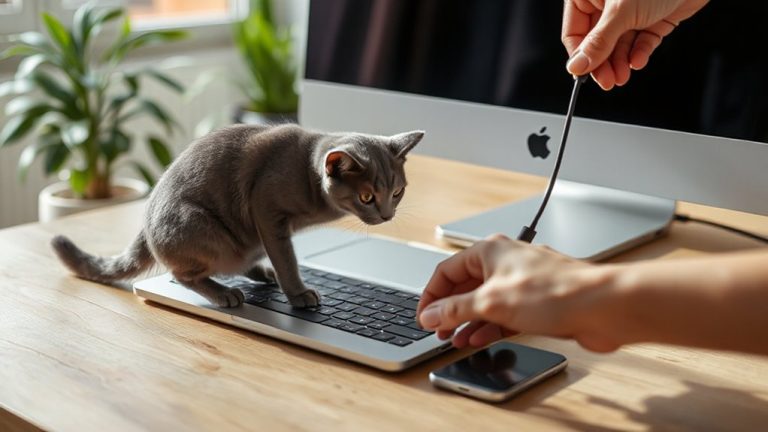
The Impact of Indoor Living on Cat Weight and Dietary Adjustments Needed
Indoor cats burn 20–30% fewer calories due to limited foraging and activity, slowing metabolism and increasing fat storage. Their resting energy needs drop 20–25%, raising obesity risks like diabetes and joint stress. Most need just 180–250 kcal daily; overfeeding by 50% is common. Use measured portions, low-calorie wet food (70–90 kcal/can), and high-fiber diets to manage intake. Food puzzles boost exertion by up to 30%. Adjusting feeding routines with timed meals and enrichment supports long-term metabolic health-key strategies can markedly improve outcomes.
Notable Insights
- Indoor cats burn up to 30% fewer calories daily due to limited foraging and activity.
- Sedentary lifestyles reduce metabolic rate by 20–25%, promoting fat storage even on standard diets.
- Obesity increases diabetes risk fourfold and shortens lifespan by 2–3 years in cats.
- Accurate portion control using measured feeding prevents overfeeding, which often exceeds needs by 50%.
- Low-calorie, high-moisture wet foods and food puzzles support weight management and natural behaviors.
Why Indoor Cats Gain Weight
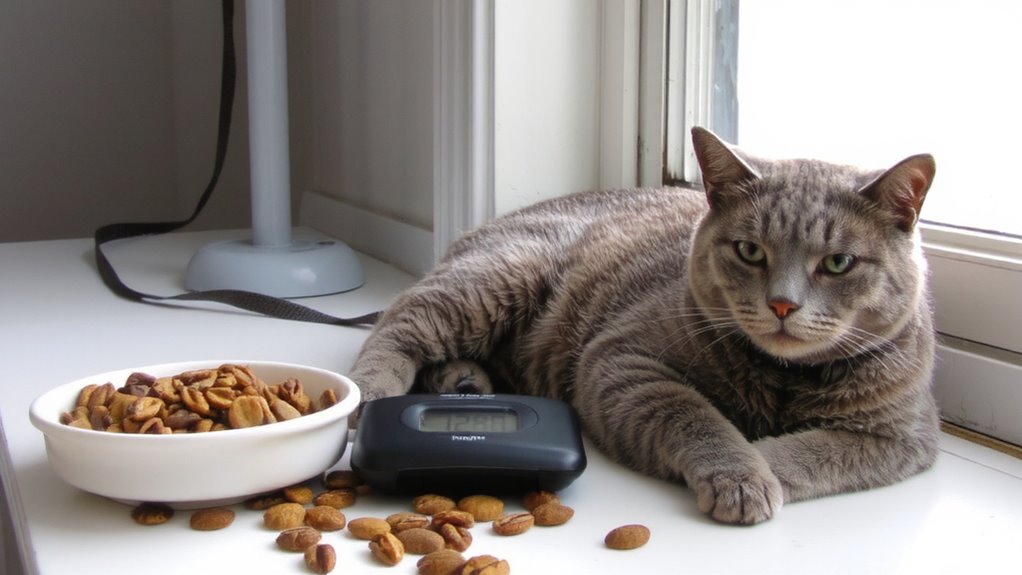
While indoor cats enjoy safety and comfort, those same conditions can lead to weight gain if not carefully managed. You must monitor your cat’s caloric intake relative to activity level. Indoor environments reduce natural foraging, decreasing daily energy expenditure by up to 30% compared to outdoor counterparts. Lower activity correlates with inconsistent litter box habits, often signaling stress or obesity-related mobility issues. Excess weight also hampers flexibility, reducing grooming frequency and increasing matting and skin infections. Overweight cats spend 25% less time self-grooming due to restricted spinal rotation. Poor grooming further elevates the risk of hairballs and dermal inflammation. You should assess body condition scores monthly, aiming for a visible waistline and palpable ribs without excess fat cover. Adjust diet to high-protein, moderate-fiber formulas (crude fiber: 8–10%, protein: 30–35% on dry matter basis). Control portion sizes using metabolic rate calculations-typically 20–30 kcal/kg BW/day for adult cats.
How Inactivity Slows Your Cat’s Metabolism
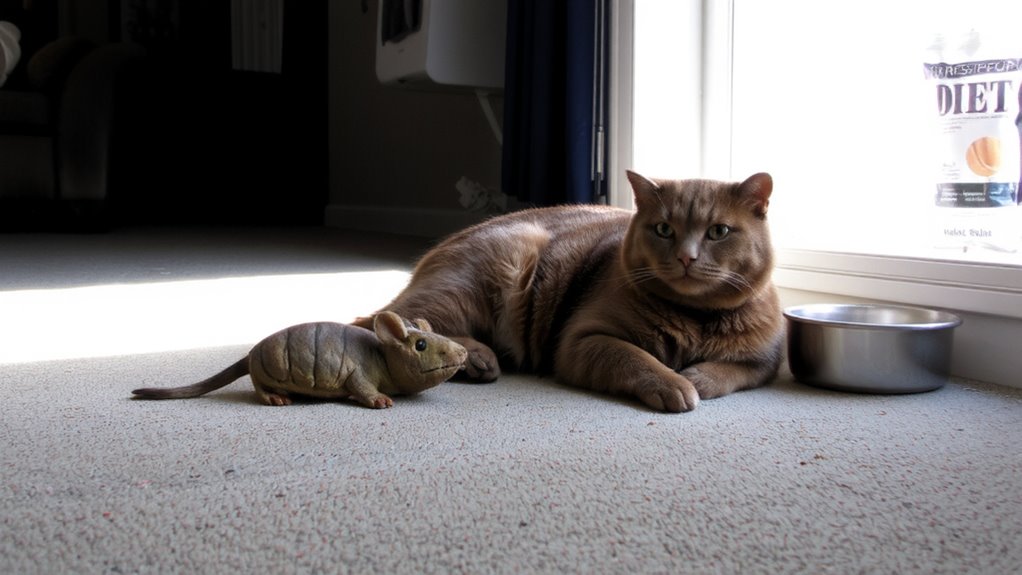
Because movement directly influences metabolic efficiency, a sedentary lifestyle can depress your cat’s resting energy expenditure by as much as 20–25%. This reduced energy expenditure triggers a metabolic slowdown, meaning fewer calories are burned at rest. Even minor activity declines-like less climbing or stalking-diminish muscle activation and mitochondrial activity, directly lowering caloric needs. Indoor cats often receive the same diet as active outdoor cats, but their reduced movement means excess energy is stored as fat. Metabolic slowdown isn’t age-related alone; it’s primarily driven by physical inactivity. Without regular exercise to stimulate thermogenesis and maintain lean mass, basal metabolic rate declines measurably. You should adjust food portions based on actual energy expenditure, not just weight or age. Ignoring metabolic slowdown leads to gradual positive energy balance-calories in exceed calories out-increasing obesity risk even on “normal” rations.
Common Health Risks of Overweight Indoor Cats
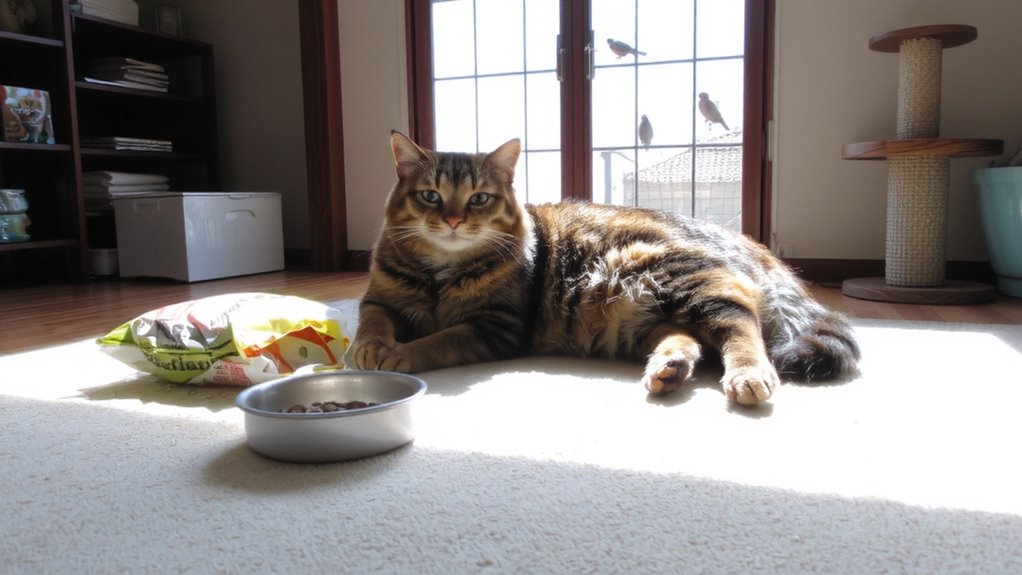
Excess weight in indoor cats isn’t just a cosmetic issue-it’s a serious health risk. You’re likely unaware that obesity increases diabetes risk by up to 4 times in cats over 12 pounds. Excess body fat disrupts insulin function, leading to type 2 diabetes. Additionally, every extra pound adds significant joint stress-feline knees and hips bear load similar to human biomechanics under 20–30% increased force. Chronic joint stress accelerates osteoarthritis, reducing mobility and quality of life.
| Health Risk | Effect on Indoor Cats |
|---|---|
| Diabetes risk | Insulin resistance increases 300–400% |
| Joint stress | 20% more load per pound over ideal weight |
| Reduced lifespan | Obese cats live 2–3 years less on average |
Early intervention prevents irreversible damage. Monitoring weight and activity mitigates these conditions effectively.
Feed the Right Amount for an Indoor Cat
Overfeeding is one of the primary causes of weight gain in indoor cats, and adjusting portion size is the most direct way to prevent obesity-related health issues. Portion control is essential-many owners overestimate daily needs by 50% or more. Most indoor cats require just 180–250 kcal per day, depending on body weight and activity level. Calorie counting allows you to tailor intake precisely; use the metabolizable energy (ME) value on food labels, typically listed in kcal/cup or kcal/can. Measure food with a standard 8-oz measuring cup or digital kitchen scale for accuracy-eyeballing leads to 20–30% more food than intended. Split meals into two daily portions to stabilize blood sugar and reduce begging. Automated feeders with portion control settings can dispense exact amounts, improving consistency. Always consult your vet to calculate your cat’s resting energy requirement (RER) and adjust as weight or health changes.
Best Low-Calorie Foods for Indoor Cats
While managing calorie intake is essential for maintaining a healthy weight, choosing the right low-calorie food makes all the difference for indoor cats. Wet food benefits include higher moisture content-typically 70–80%-which supports hydration and promotes satiety with fewer calories. Most low-calorie wet formulas contain 70–90 kcal per 5.5-ounce can, making portion control easier. You’ll find many high fiber options in this category, with 2–4% crude fiber from sources like cellulose or beet pulp. Fiber slows digestion, helping your cat feel full longer. Look for foods labeled “light” or “reduced calorie” with AAFCO approval. These diets maintain essential nutrient ratios while reducing fat to 3–5%. Prioritize animal-based proteins-chicken, turkey, or fish-as the first ingredient. Avoid fillers like corn or wheat. Shift gradually over 7 days to prevent digestive upset. A high-quality diet is just as important for cats as best guinea pig hay is for maintaining optimal digestive health in small pets.
Interactive Feeders That Encourage Natural Hunting
Since indoor cats often lack opportunities to engage in natural foraging behaviors, interactive feeders can effectively simulate the physical and mental challenges of hunting. You can use a food puzzle to slow eating and increase mealtime engagement. These devices require manipulation-rolling, pawing, or nudging-to release kibble, mimicking prey simulation. Studies show cats using food puzzles expend 20–30% more energy during feeding than those using bowls. Devices vary in difficulty: basic models dispense food with slight movement; advanced versions require sequence-based actions. Ideal feeders have non-slip bases, chew-resistant plastic (ABS or TPE), and adjustable openings to control portion size. For example, the Nexio Puzzle Ball has a 2.5-inch diameter and dispenses 1–2 kibbles per roll. You’ll find that consistent use improves focus, reduces binge eating, and supports weight management. Prey simulation through structured challenge aligns with feline behavioral biology.
Build a Daily Routine for Indoor Cat Health
How do you guarantee your indoor cat maintains peak health every day? Establishing a structured routine supports weight management, mental stimulation, and physiological stability. A consistent schedule enhances sleep pattern balance, aligning with your cat’s natural circadian rhythms. Begin with timed meals using interactive feeders to mimic hunting, regulating caloric intake. Daily play sessions lasting 15–20 minutes with wand toys maintain activity levels. Guarantee peak litter box placement-quiet, accessible, and away from feeding areas-to encourage regular use. For senior cats, consider switching to a high-quality wet food formula to support hydration and kidney function as they age.
| Activity | Recommended Time |
|---|---|
| Morning Feeding | 7:00 AM |
| Play Session | 8:00 AM |
| Litter Check | 12:00 PM |
| Evening Routine | 6:00 PM |
Maintaining this rhythm improves digestion, reduces stress, and prevents obesity. Adjust timing based on your cat’s age, breed, and health status. Consistency is key.
On a final note
You must adjust your indoor cat’s diet and activity to prevent weight gain. Inactivity reduces metabolic rate by up to 30% compared to outdoor cats. Feed measured portions of low-calorie, high-protein food-look for 250–300 kcal per cup and 30–40% crude protein. Use timed or puzzle feeders to slow eating and simulate hunting. A consistent routine with 15-minute interactive play sessions twice daily supports weight management and metabolic health.