Teaching Bite Inhibition to Young Puppies Without Creating Fear
Teach bite inhibition by ending play immediately when your puppy bites too hard-use a firm “ouch” and withdraw attention for 10 to 20 seconds. This clear cause-and-effect response, delivered within 1–2 seconds, reduces bite force by 60–80% over 2–3 weeks. Resume play only when mouthing is gentle. Use calm redirection to durable chew toys with skin-like texture. This method builds self-control without fear. A consistent, non-punitive approach strengthens trust and sets the foundation for lifelong bite control; further refinement follows naturally.
Notable Insights
- Use calm verbal cues like “ouch” followed by immediate play pauses to teach bite pressure without fear.
- End interaction briefly when biting is too hard, resuming only when the puppy mouths softly.
- Redirect hard biting to chew toys with skin-like texture to satisfy oral needs safely.
- Keep play sessions short and practice redirection 5–7 times daily to reinforce gentle habits.
- Respond within 1–2 seconds of hard biting to create clear, consistent, and non-punitive feedback.
What Is Bite Inhibition (And Why Your Puppy Needs It)?
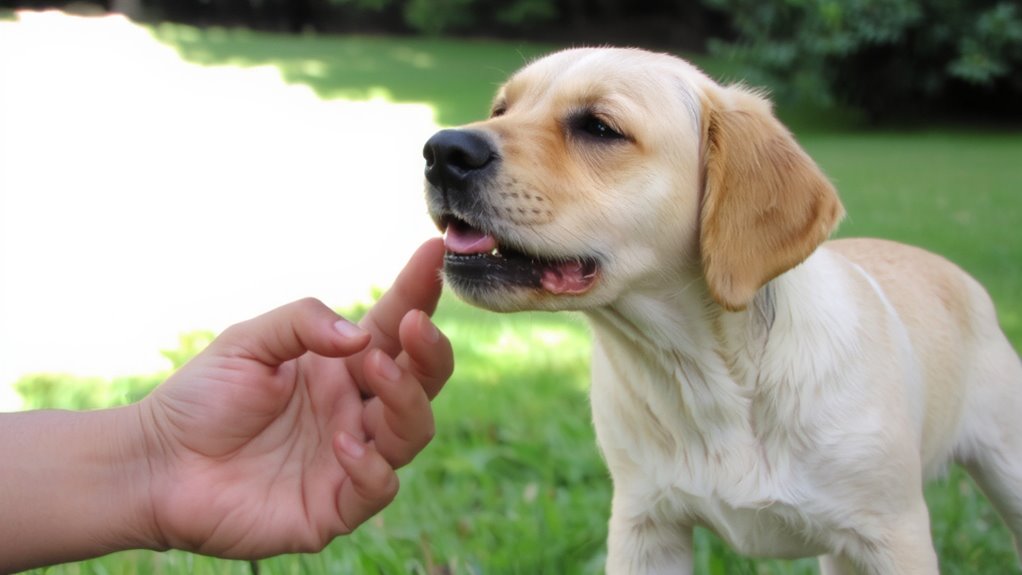
Bite inhibition is the ability a puppy learns to control the force of their bite during interactions. You need this skill to prevent accidental injury as your puppy grows. It develops through repeated social learning, primarily during early play with littermates and humans. When puppies chew too hard, play stops-teaching them gentle chewing through immediate feedback. This process mimics natural littermate interactions, where yelps or withdrawal enforce bite pressure limits. Studies show puppies with consistent social learning exhibit up to 70% less intense mouthing by 16 weeks. Bite inhibition isn’t about stopping chewing; it’s about modulating force. Without it, adult dogs may cause harm during excitement or stress. You can shape this behavior by responding consistently to pressure: pause play at firm contact, resume when chewing softens. This method relies on timing-feedback must occur within 1–2 seconds for effective conditioning. Properly trained puppies learn precise jaw control, reducing future bite risks.
Playful Nips vs. Problem Bites: Know the Difference
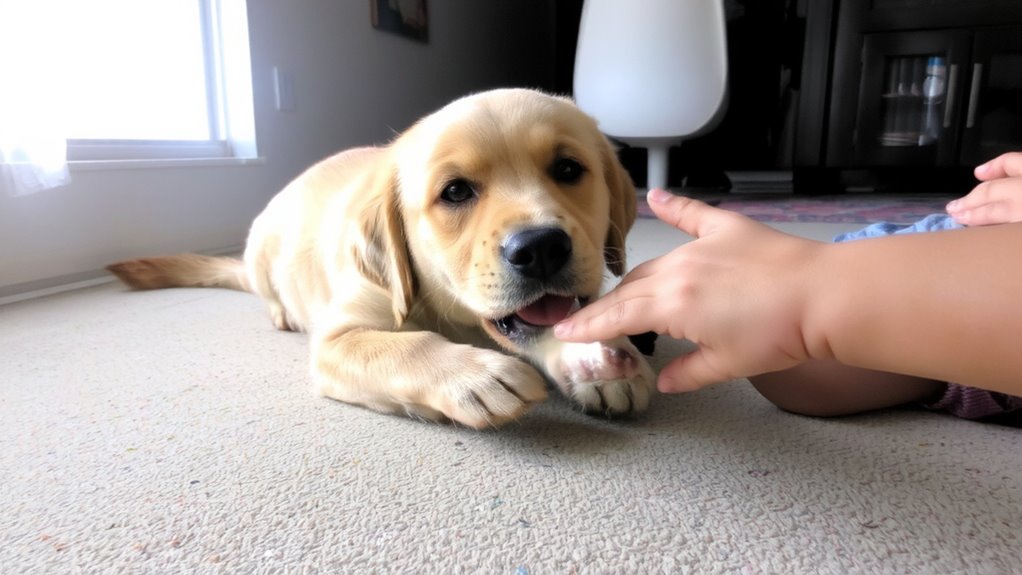
You already know how puppies learn to soften their bite through feedback during play, but not all mouth behaviors follow the same pattern. Playful nips are common during exploration and socialization, typically low-pressure and inhibited, registering under 15 psi in force. These nips occur during games and diminish as bite inhibition develops. Problem bites, in contrast, involve higher pressure-often exceeding 30 psi-and may stem from overarousal, fear, or lack of early social feedback. They appear sudden, targeted, and repetitive, with clear intent to grip or shake. Unlike playful nips, problem bites rarely stop after verbal cues and may escalate without intervention. Differentiation relies on context, pressure, and behavioral triggers. Identifying the distinction guarantees appropriate responses that support learning without suppressing necessary exploration. Monitoring duration, frequency, and situational triggers provides measurable data for accurate assessment and timely correction.
How to Respond When Your Puppy Bites Too Hard
| Behavior | Response | Purpose |
|---|---|---|
| Hard bite | Say “ouch,” stop play | Teaches bite threshold |
| Soft mouthing | Resume play | Reinforces acceptable touch |
| Withdraws | Wait, then re-engage | Builds self-control |
| Repeats hard bite | End session briefly | Guarantees consistent response |
Use Play Pauses to Build Bite Inhibition
When your puppy bites too hard during play, stepping away immediately creates a clear consequence. This technique, known as play pauses, halts all interaction for 10 to 20 seconds. You disengage completely-no eye contact, touch, or speech. The abrupt end to stimulation teaches your puppy that gentle mouthing keeps play going, while hard biting stops it. Consistent application of play pauses strengthens bite inhibition within 2–3 weeks with daily sessions. Puppies learn pressure modulation, typically reducing bite force by 60–80% over time. Significantly, play pauses support trust building by maintaining a predictable, non-punitive response. You remain calm and neutral, avoiding intimidation. The method relies on social feedback, not fear, aligning with canine learning principles. Use this timed, repeatable intervention to shape behavior precisely. Each pause reinforces cause and effect, making it a foundational tool in ethical, effective puppy training.
Redirect Biting to Teach Gentle Mouth
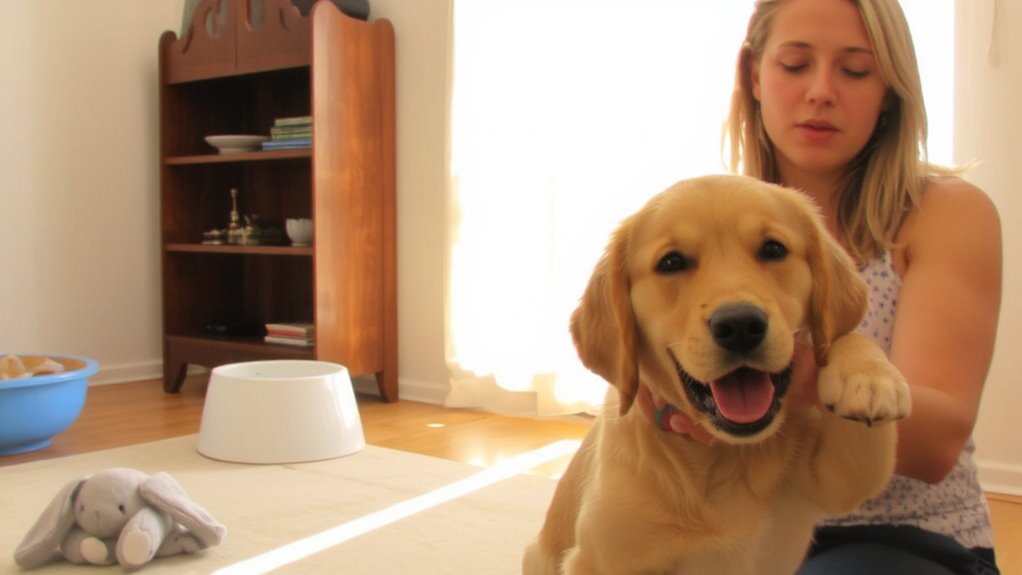
Redirecting biting behavior is a strategic method to teach puppies appropriate mouth pressure. When your puppy bites too hard, immediately stop interaction and offer an acceptable chew toy. This enforces consistent boundaries while guiding oral exploration toward appropriate items. Use positive reinforcement by praising or treating when the puppy engages with the toy instead of your skin. Redirecting provides clear, real-time feedback without fear-based corrections. Choose toys made of safe, durable rubber with a texture mimicking skin to enhance acceptance. Rotate toys every 48 hours to maintain novelty and interest. Each redirection session should last under 2 minutes to prevent overstimulation. Practice 5 to 7 times daily to reinforce learning. Consistent repetition strengthens neural associations between soft mouthing and rewards. This method supports reliable bite inhibition within 4 to 6 weeks when applied systematically across developmental stages.
Stay Calm, Keep Trust
You must remain composed during biting correction because your emotional state directly influences your puppy’s stress response and learning capacity. Calm body language signals safety, supporting trust building. Sudden movements or raised voices elevate cortisol, impairing association and memory consolidation. Maintain neutral facial expressions, relaxed shoulders, and slow breathing to model self-regulation.
| Behavior | Physiological Effect | Impact on Learning |
|---|---|---|
| Calm tone | Lowers heart rate | Enhances attention and retention |
| Abrupt gesture | Triggers startle reflex | Impairs bite inhibition recall |
| Soft eye contact | Promotes oxytocin release | Strengthens trust building |
| Tense posture | Increases arousal | Reduces impulse control |
Consistent, neutral responses create predictable feedback. This reliability improves neural conditioning. Your body language must align with corrective intent-never aggression. Trust emerges from stability, not force.
On a final note
You teach bite inhibition by responding consistently to pressure. When your puppy bites too hard, immediately stop play for 10–20 seconds. This mimics littermate feedback and teaches bite control. Redirect to appropriate chew toys to reinforce acceptable behavior. Use calm body language to maintain trust. Avoid punishment-it suppresses learning. Properly trained, your puppy learns to apply minimal jaw pressure, typically achieving reliable inhibition by 16 weeks.