Time-Based Feeding Protocols for Pets With GERD or Esophageal Motility Concerns
Feed your pet four to six small meals daily, spaced 4–7 hours apart, to reduce gastric pressure and minimize reflux. Each meal should provide 150–200 kcal for a 20 kg dog, adjusted by metabolic needs. Timing meals at 7:00 AM, 12:00 PM, 5:00 PM, and 10:00 PM supports natural gastric emptying. Always give omeprazole 20–30 minutes before feeding. You’ll discover how precise scheduling improves esophageal clearance and symptom control.
Notable Insights
- Feed pets 4–6 small, frequent meals daily to reduce gastric pressure and minimize esophageal acid backflow.
- Space meals 4–6 hours apart, aligning feeding times with peak acid suppressant levels from medications like omeprazole.
- Administer omeprazole 20–30 minutes before the largest meal to maximize proton pump inhibition.
- Avoid fasting longer than 12 hours to prevent low gastric pH and esophageal irritation.
- Monitor regurgitation frequency and adjust meal size or timing if symptoms occur more than twice weekly.
Why Your Pet’s Reflux Gets Worse After Meals
Although feeding your pet is essential, mealtime can trigger a spike in gastric pressure that worsens reflux symptoms. Large meals increase intragastric volume, promoting esophageal backflow. Your pet’s reflux often intensifies postprandially due to delayed gastric emptying and transient lower esophageal sphincter relaxations. Meal timing plays a critical role-infrequent feeding prolongs fasting intervals, increasing acid accumulation. Long gaps between meals allow gastric pH to drop below 2.0, irritating the esophageal lining. Food acidity further modulates reflux severity; high-acid ingredients (pH < 4.5) stimulate additional hydrochloric acid release. Commercial diets with citrus byproducts or fermented components can lower digesta pH, exacerbating discomfort. You should avoid these, especially in pets with confirmed esophagitis. Immediate postprandial recumbency elevates risk-wait at least two hours before allowing rest. Proper meal scheduling and pH-balanced diets (target food pH 5.5–6.5) reduce symptom frequency and mucosal exposure.
How Smaller, More Frequent Meals Reduce GERD Symptoms
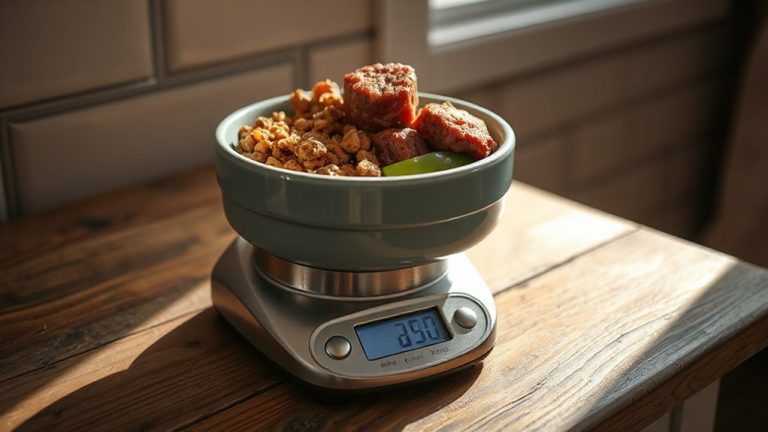
Feeding your pet multiple small meals throughout the day helps stabilize gastric pressure and minimize acid reflux episodes. Proper meal timing prevents prolonged fasting, which can trigger excess acid production. When you divide your pet’s daily intake into four to six smaller portions, you maintain consistent digestive activity without overfilling the stomach. Portion control reduces intragastric volume, lowering the risk of transient lower esophageal sphincter relaxations that allow acid backflow. Smaller meals digest faster, decreasing gastric residence time and pressure on the esophageal junction. This approach mimics natural feeding patterns in prey species, supporting motility. Adjust caloric distribution evenly across meals to avoid spikes in gastric distension. Precision in meal timing and portion control is critical-use calibrated measuring tools to guarantee consistency. This strategy directly reduces reflux frequency and severity in pets with GERD.
Build a Meal Schedule That Supports Digestion
When planning your pet’s daily feeding routine, consistency in timing and portion size plays a critical role in supporting digestive health. Feeding consistency helps regulate gastric acid secretion and prevents esophageal irritation. Portion timing guarantees the stomach isn’t overloaded, reducing reflux risk. A structured schedule aligns with natural motility cycles, promoting efficient digestion.
| Meal Number | Recommended Time |
|---|---|
| First Meal | 7:00 AM |
| Second Meal | 12:00 PM |
| Third Meal | 6:00 PM |
Administer meals every 5–7 hours to maintain stable gastric pH. Each meal should be measured precisely-typically 1/3 of daily caloric intake for dogs, slightly more frequent for cats. Use a calibrated scoop or digital scale for accuracy. This approach enhances gastric emptying, minimizes acid exposure, and supports esophageal sphincter function. Follow this regimen daily, including weekends, to sustain digestive rhythm.
Time Feeding and Medication for Better Results
Since gastric acid production follows a circadian pattern, timing your pet’s meals to align with their natural physiology can enhance the effectiveness of prescribed medications. You should administer acid-suppressing drugs like omeprazole 20–30 minutes before a meal to maximize proton pump inhibition. Proper medication timing guarantees peak plasma concentrations coincide with gastric activity. Feeding intervals matter too-small, frequent meals every 4–6 hours reduce gastric distension and lower regurgitation risk. With once-daily dosing regimens, synchronize feeding intervals so the largest meal aligns with peak drug action. For pets on twice-daily therapy, split feedings into four equal portions to maintain consistent gastric pH control. Avoid late-night meals, as nocturnal gastrointestinal motility slows, increasing reflux potential. Aligning medication timing and feeding intervals stabilizes intragastric pressure and supports esophageal clearance, improving clinical outcomes in GERD and motility disorders.
Track Symptoms and Adjust the Plan
How do you know if your pet’s feeding and medication schedule is truly working? Symptom tracking is essential. Record vomiting, regurgitation, appetite changes, and discomfort daily. Use a log to note exact times and severity. Correlate episodes with meal timing and medication administration. If regurgitation occurs more than twice weekly, adjust the plan. Delay post-meal lying down by at least 30 minutes. Elevate feeding positions by 30 degrees using a Bailey chair. If symptoms persist after 7–10 days, reduce meal volume by 20% and increase frequency. Reassess every 48 hours. Persistent signs may require prokinetic dose adjustments. Monitor weight weekly; a loss over 2% indicates inadequate nutrition. Symptom tracking paired with precise meal timing improves diagnostic accuracy. Adjustments must be data-driven. This protocol enhances treatment efficacy. Always consult your vet before modifying medication.
On a final note
You manage reflux effectively with timed feeding. Smaller meals every 4–6 hours reduce gastric pressure and acid exposure. Feed upright, wait 30 minutes post-meal before lying down-this minimizes regurgitation. Pair prokinetics or PPIs with meals as directed-timing enhances drug absorption by 20–30%. Monitor symptoms weekly; adjust intervals if dysphagia or vomiting persists. Consistency in schedule stabilizes motility. Your pet’s esophageal pH improves by maintaining strict feeding control.