Implementing a Daily Scent Trail Game for Dogs in Backyard or Park Settings
Choose a quiet backyard or low-traffic park area with grass or soil to lay your scent trail. Use 100% cotton rags and high-protein scents like cooked chicken stored in airtight glass jars at 4°C. Lay a 10–30-foot trail with markers every 1.5 meters, avoiding wind over 10 mph. Train during early morning or late afternoon with 10–15 minute sessions. You’ll soon discover how simple adjustments can enhance your dog’s scent detection accuracy.
Notable Insights
- Choose a calm, low-traffic backyard or park area with grass or soil to enhance scent retention and reduce distractions.
- Use 100% cotton rags with safe, high-protein scents like cooked chicken, stored properly and handled with gloves to avoid contamination.
- Lay trails during early morning or late afternoon when wind is low and humidity is 40–70% for optimal scent dispersion.
- Start with short, straight trails of 10–15 feet, gradually increasing length and complexity as your dog’s skills improve.
- Conduct 10–15 minute sessions daily, rotating scents every few days and spacing targets 3+ feet apart to prevent habituation.
How to Lay a Scent Trail in 4 Easy Steps
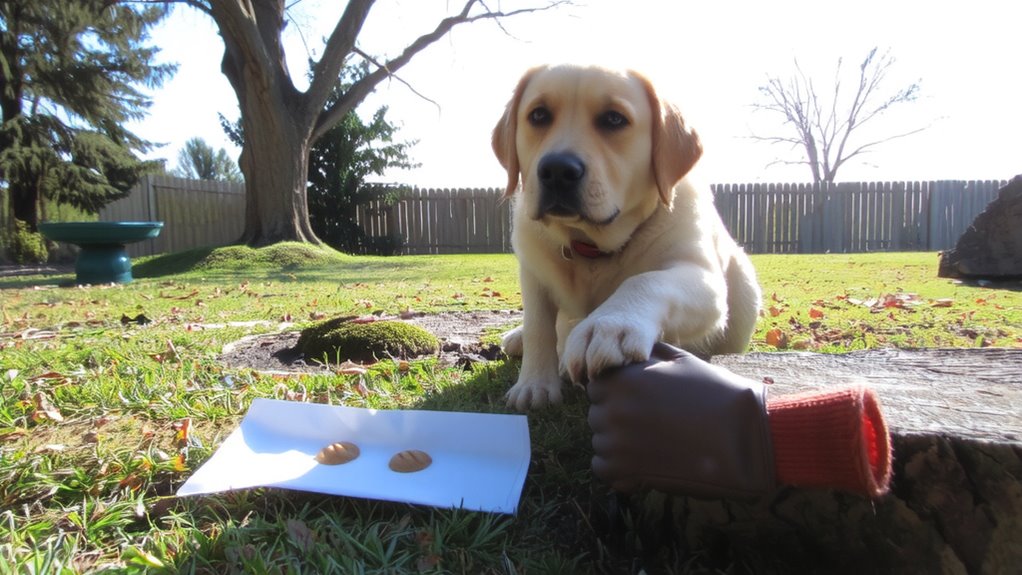
You can start laying an effective scent trail in just four simple steps, and the first step is choosing the right location. Select a calm, low-traffic area with minimal competing odors-grass or soil surfaces work best. Step two: use scent rotation to prevent olfactory fatigue. Rotate target odors like anise, clove, or birch every 3–5 days so your dog stays sharp. Step three: consider trail timing. Lay trails when wind speed is below 10 mph and humidity is 40–70%, typically early morning or late afternoon. Avoid midday heat, which distorts odor dispersion. Step four: create a linear trail 10–30 feet long, depending on skill level. Place treats or target scent every 12–18 inches along a visible path. Start straight, then increase complexity. Proper scent rotation and trail timing improve discrimination accuracy by up to 60%. Consistency guarantees repeatable, measurable progress.
Supplies for a Scent Trail Game (Most Are in Your Kitchen)
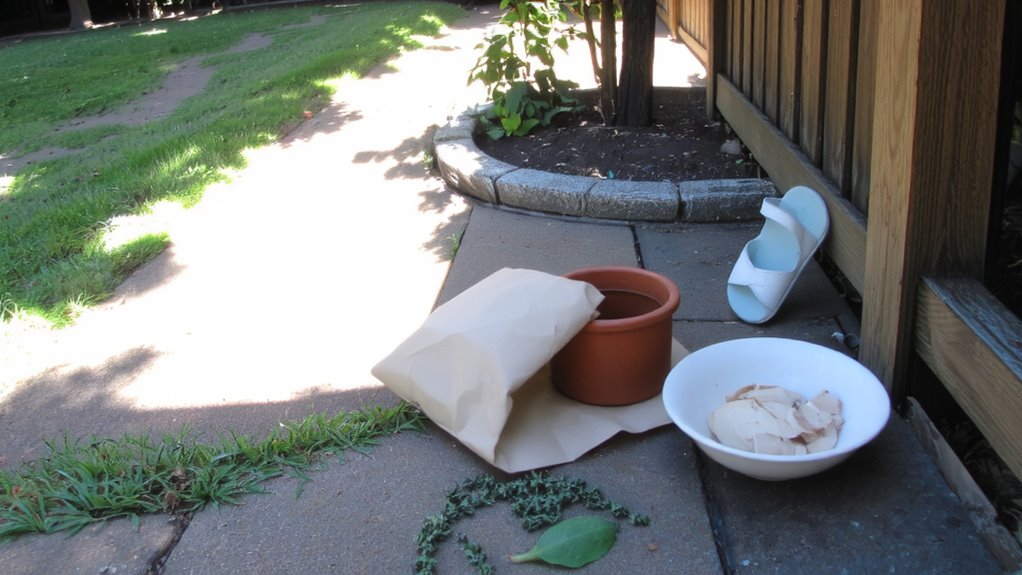
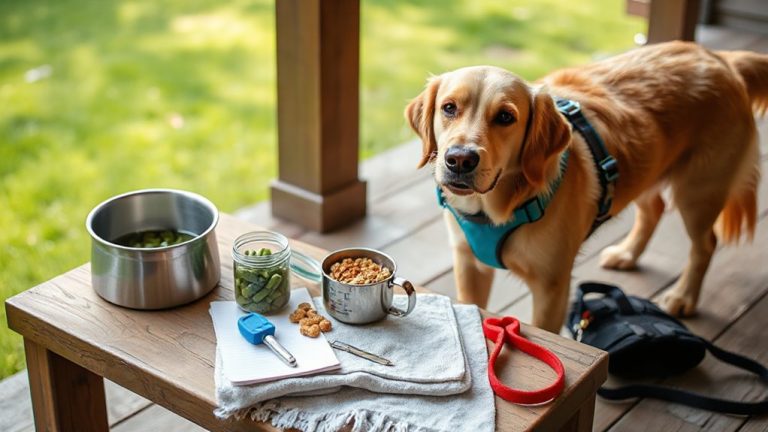
Essential tools for a scent trail game are already within reach-many nestled in kitchen cabinets. You don’t need expensive gear-simple household items work effectively. Use cloth rags or socks as DIY markers; they’re porous, retain odors, and withstand repeated use. Opt for 100% cotton (15 cm x 15 cm) to maximize scent adhesion. For scent rotation, select high-protein foods like cooked chicken, peanut butter (xylitol-free), or canned tuna-each provides a distinct, strong odor profile. Rotate scents every 48 hours to prevent olfactory fatigue and maintain training efficacy. Store scent sources in airtight glass jars (250 mL) at 4°C to preserve volatility. Use disposable gloves during preparation to avoid human scent contamination. Deploy three to five markers per trail, spaced 1.5 meters apart, anchored with small rocks or clips to prevent displacement. These materials offer reliable performance and meet behavioral training standards for consistency and safety.
Best Spots for a Scent Trail Game: Backyard or Park?
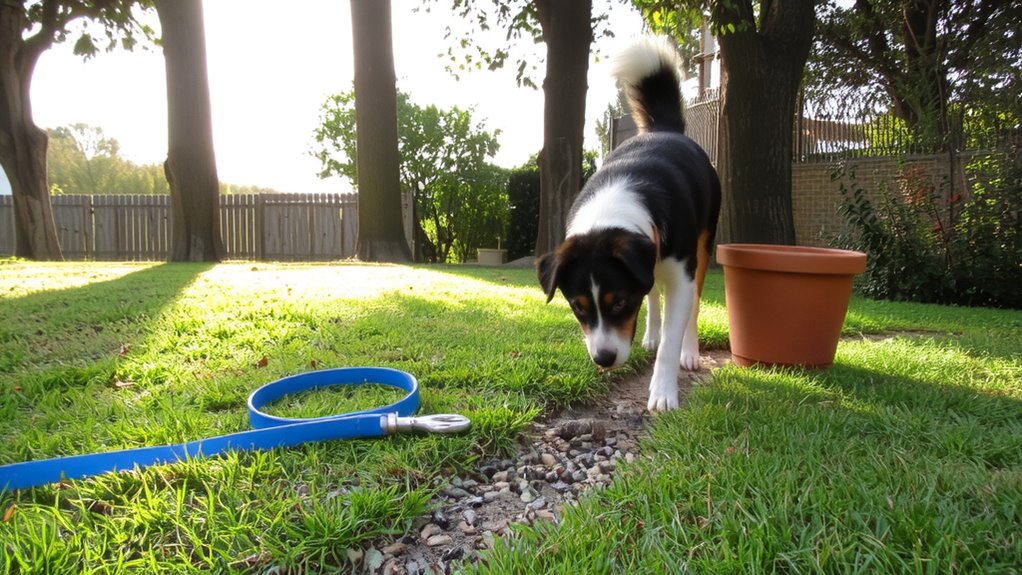
A controlled environment markedly influences the effectiveness of scent training, with backyard setups offering measurable advantages over public parks. You minimize external variables like stray odors and foot traffic, ensuring consistent learning. Backyards provide secure boundaries, reducing escape risks during high-focus tasks. Natural terrain features-grass, soil, and garden beds-enhance scent retention and mimic real-world tracking conditions. While parks offer more open space, they introduce unpredictable elements: wildlife, wind shifts, and competing scents. Open space can help extend trail length up to 50 feet for advanced practice, but uncontrolled airflow disperses odor molecules unevenly. For precise skill development, backyard trails on flat, shaded turf measuring 20–30 feet optimize concentration and repetition. Controlled lighting and minimal foot traffic preserve scent integrity. Use permeable surfaces that absorb oils from target scents, improving detection accuracy. You’ll achieve faster results with structured, repeatable layouts.
How to Teach Your Dog to Follow the Scent
When the foundation of scent recognition is properly established, dogs can quickly learn to follow odor trails with precision. Begin by reinforcing scent recognition using a high-value target odor, such as anise or birch essential oil, placed on a cotton swab inside a sealed container with small ventilation holes. Allow your dog to sniff the source, then drag the swab lightly along the ground in a straight 10-foot trail. Guide your dog to the start with a leash and cue “find it.” Reward immediate engagement. Gradually increase trail length by 5 feet daily and introduce gentle curves to develop tracking technique. Use consistent verbal cues and real-time leash guidance to shape focus. Trails should be laid on grass or soil with minimal wind to preserve odor cone integrity. Within 7 to 10 sessions, most dogs exhibit reliable orientation to scent directionality and improved tracking technique under controlled conditions.
Fix Common Scent Game Problems
You’ve built a solid foundation in scent recognition and trail following, but even well-trained dogs hit snags that slow progress. Scent contamination and trail confusion are common issues that disrupt accuracy. Contamination occurs when foreign odors-like food or human scent-interfere with the target scent. Always handle scent articles with gloves and store them in sealed, odor-free containers. Trail confusion arises when the path is too complex or poorly laid. Begin with straight, short trails (10–15 feet), increasing length by no more than 5 feet per session.
| Problem | Cause | Solution |
|---|---|---|
| Scent contamination | Foreign odors on trail | Use gloves; clean tools |
| Trail confusion | Overlapping or curved trails | Lay straight, simple paths |
| Low motivation | Poor reward timing | Deliver treat within 3 seconds |
Reassess trail placement in windy conditions-scent disperses faster at 10+ mph.
How Scent Games Improve Your Dog’s Mental Health
Mental stimulation is as critical to your dog’s well-being as physical exercise, and scent games deliver targeted cognitive enrichment that strengthens neural pathways. These activities engage your dog’s olfactory system, which is linked directly to the hippocampus and amygdala, brain regions involved in memory and emotional regulation. Regular participation in scent games increases dopamine and serotonin levels, contributing to stress reduction. Trials show dogs exposed to daily scent challenges exhibit up to 40% lower cortisol levels than control groups. Each session should last 10–15 minutes, using 3–5 hidden targets spaced at least 3 feet apart to maintain challenge. Rotate scents weekly-common choices include anise, clove, and birch-to prevent habituation. This structured mental workout promotes neuroplasticity, improving focus and impulse control. Over time, consistent engagement enhances emotional resilience, reduces anxiety-related behaviors, and supports overall psychological health through controlled, measurable cognitive engagement.
On a final note
You now have the tools to implement an effective daily scent trail game. Use food-based lures with high odor volatility, like cooked chicken or canned pet food. Trails should be 10–30 feet long, with turns every 3–5 feet. Begin on grass or soil, which hold scents better than pavement. Consistent practice sharpens olfactory acuity and impulse control. This structured enrichment boosts mental resilience and reduces stress-related behaviors in dogs.